
 Worksheets
Lorenzo
Total questions: 26
Worksheet time: 16mins
An algorithm iteratively learns how to classify data by maximising the accuracy of its performance. However, what would likely happen when the dataset is highly unbalanced (e.g., 99% of positives and 1% of negatives)?
the algorithm is not able to learn because the accuracy will always stay too low (~0.01)
the algorithm is not able to learn because the accuracy will always stay too high (~0.99)
accuracy is never related to the balancement of the classes
I don't know
An algorithm iteratively learns how to classify data by maximising the accuracy of its performance. However, what would likely happen when the dataset is highly unbalanced (e.g., 99% of positives and 1% of negatives)?
the algorithm is not able to learn because the accuracy will always stay too low (~0.01)
the algorithm is not able to learn because the accuracy will always stay too high (~0.99)
accuracy is never related to the balancement of the classes
I don't know
You are developing a model for sick patient detection (sick=positive, healthy=negative). Which metric would you use?
Accuracy
Precision
Recall
I don't know
You are developing a model for sick patient detection (sick=positive, healthy=negative). Which metric would you use?
Accuracy
Precision
Recall
I don't know
You are developing a model for email spam detection (spam=positive, non-spam=negative). Which metric would you use?
Accuracy
Precision
Recall
I don't know
You are developing a model for email spam detection (spam=positive, non-spam=negative). Which metric would you use?
Accuracy
Precision
Recall
I don't know
You are developing a model for fraudolent transaction detection (fraudolent=positive, non-fraudolent=negative). Which metric would you use?
Accuracy
Precision
Recall
I don't know
You are developing a model for fraudolent transaction detection (fraudolent=positive, non-fraudolent=negative). Which metric would you use?
Accuracy
Precision
Recall
I don't know
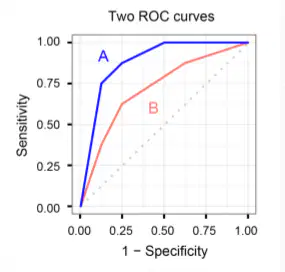
Which model would you choose?
A
B
I don't know
Which model would you choose?
A
B
I don't know
You are developing a model that fits the luminosity profile of a Galaxy. You know that your image can be affected by cosmic rays, hot pixels, dead pixels. Which metric would you use?
MSE
MAE
F1-score
I don't know
You are developing a model that fits the luminosity profile of a Galaxy. You know that your image can be affected by cosmic rays, hot pixels, dead pixels. Which metric would you use?
MSE
MAE
F1-score
I don't know
When is cross-validation preferable over train/test split?
On small datasets
On large datasets
Cross-validation is always preferable
I don't know
When is cross-validation preferable over train/test split?
On small datasets
On large datasets
Cross-validation is always preferable
I don't know
Which one of the following is the best strategy (typically)?
Very small eta
Very high eta
Eta starts small and gets bigger and bigger at each iteration
Eta starts big and gets smaller and smaller at each iteration
I don't know
Which one of the following is the best strategy (typically)?
Very small eta
Very high eta
Eta starts small and gets bigger and bigger at each iteration
Eta starts large and gets smaller and smaller at each iteration
I don't know
Which is the main pitfall of Stochastic descent?
It is too fast to converge to the minimum
It is too slow to converge to the minimum
It never settles at the minimum
I don't know
Which is the main pitfall of Stochastic descent?
It is too fast to converge to the minimum
It is too slow to converge to the minimum
It never settles at the minimum
I don't know
Do all optimizers lead to the same model if you let them run long enough?
Yes
No
I don't know
Do all optimizers lead to the same model if you let them run long enough?
Yes
No
I don't know
How do you fix that?
I use the Batch Gradient Descend
I don't know
I reduce the batch size
I increase the batch size
I decrease the learning rate
How do you fix that?
I use the Batch Gradient Descend
I don't know
I reduce the batch size
I increase the batch size
I decrease the learning rate
Which is the model that is overfitting?
Left panel
Central panel
Right panel
I don't know
Which is the model that is overfitting?
Left panel
Central panel
Right panel
I don't know
Suppose you are using Ridge Regression and you notice that the training error and the validation error are almost equal and fairly high.
It is ok as long as the two errors are similar
I increase the regularization hyperparameter
I decrease the regularization hyperparameter
I don't know
Suppose you are using Ridge Regression and you notice that the training error and the validation error are almost equal and fairly high.
It is ok as long as the two errors are similar
I increase the regularization hyperparameter
I decrease the regularization hyperparameter
I don't know

