
NEW
Font size
 Worksheets
End of Year- Last Quiz
Total questions: 55
Worksheet time: 45mins
The passage below comes from the Preamble of the U.S. Constitution.
"We the People of the United States,.. do ordain and establish this Constitution for the United States of America.
Based on the passage, which foundational principle is being described?
rule of law
limited government
due process of law
equality of mankind
Common Sense was written by Thomas Paine to influence the colonist to create ________?
habeas corpus
natural rights
due process of the law
representative self- government
Creating legislative, executive, and judicial branches of government illustrates which idea of Montesquieu?
natural rights
social contract
separation of powers
checks and balances
Which event started the causes to the writing of the Declaration of Independence?
Colonial agricultural trade increases
Colonial religious rights are restricted
British enact a series of taxes in the colonies
British grant colonist representation in Parliament
Based on the Declaration of Independence, where should the government get its power?
from God
from the people
from the legislative branch
from the executive branch
What was the significance of Thomas Paine's pamphlet Common Sense?
It was an influential work calling for independence from Great Britain.
It was published document outlining personal rights in Great Britain
It was the framework of colonial government
Which weakness of the Articles of Confederatin was highlighted by the events of Shay's Rebellion?
no power to tax
no national armed forces
lack of legislative branch
lack of nation court system
In the Preamble to the U.S. Constitution, what is the meaning of the phrase "We the People"?
The people express their will through political parties
The people express their will by directly creating laws
Government receives taxes from the people and exist to support them
The government receives its power from the people and exist to serve them
The President nominates New Supreme Court Justice; now approval goes to the Senate to confirm.
rule of law
judicial review
checks and balances
separation of powers
Which of the following best describes the importance of the rule of law?
Allows police to keep evidence a secret during a criminal trial
Exempts government leaders from having to follow procedures
Ensures different laws can be applied to people of different social classes
Protects citizens from arbitrary and abusive uses of government power
Which of the following describes the eligibility requirements of the naturalization process?
reside in the U.S. for 5 years, be of good moral character, and be able to speak and read basic English
be of good moral character, achieve permanent residency, and pledge to serve in the armed forces
be of good moral character, pass U.S. government test, and pay $15000
Which of the following is a freedom of the 1st amendment?
Freedom to vote
Freedom of assembly
freedom to trial by jury
freedom to habeas corpus
The list below describes the characteristics of a form of government.
1. Limited personal freedoms
2. Rulers are chosen by a higher power
3. laws and decisions are based on religious beliefs
Which form of government is being described?
Republic
Theocracy
Monarchy
Oligarchy
Which service is performed by local government?
delivering mail
granting teacher certificates
minting quarters
providing fire protection
For a U.S. Amendment to be ratified(approved) how many people have to agree?
2/3 Congress
3/4 State Legislations
For a U.S. amendment to be proposed, how many people have to agree?
2/3 both house of Congress
3/4 State legislation
Why is a formal amendment process important?
To prevent the Supreme Court from being eliminated
to keep some states from being too powerful
to allow the Constitution to be adjusted as times changes
to give the president a role in changing the government
The chart below lists powers of the executive branch.
1. Proposes laws
2. Vetoes laws
3. Grants federal pardons
4. Negotiates foreign treaties
Which of the following is also a power of the executive branch?
Appoints federal judges
declares the Constitution unconstitutional
ratifies treaties
impeaches and removes judges
Which statement describes a difference between the state and federal governments under the U.S. Constitution?
Only the federal government provides from public welfare
only the federal government charters banks
only the federal government borrows money
only the federal government regulates interstate trade
What is the term for a type of government in which one person possesses unlimited power?
Socialism
Communism
Democracy
Autocracy
Kayla sat in the meeting hall and listened to different candidates for her state's open Senate seat. The candidates debated about their positions on issues. When Election Day came along, she voted for the candidate she thought would best serve her community's interests. What form of government does Kayla have?
Direct democracy
Representative democracy
Oligarchy
Monarchy
Who has the most power in a unitary system?
Central government
Local government
State government
Regional government
Which example involves changing foreign policy?
Congress lifting the oil embargo on a formerly communist government
A Supreme Court hearing on worker discrimination
Congress voting to construct an aid center in Florida for political refugees
A Supreme Court justice voting to take a case involving his country of birth
Which action illustrates citizen participation in an international organization?
Samatha teaches others about the history of the UN
Jada volunteers to help raise funds for the United Nations Children's Fund
Ethan writes a report on the origins of the North Atlantic Treaty Organization
David reads the annual report published by the World Trade Organization
The statement below justifies an international action.
" The issue is the future of Southeast Asia as a whole. A threat to any nation in that region is a threat to all, and a threat to us."
Which international action is President Johnson justifying with this speech?
Sending troops to stabilize a region
Using sanctions against a country
Sending humanitarian aid to a country
Using nuclear weapons to end a war
Which system of government does the states have all the power?
Confederal
Federal
Unitary
The Declaration of Independence included these complaints:
Taxation without representation
Limiting judicial powers
Quartering Troops
Dissolving legislature
Which complaint should be added to this list?
Requiring colonist to send representation to Parliament
Suspending trial by jury in many cases
Ordering Colonist to move from Native American land
Allowing the wealthy to avoid local laws
Which document was an agreement by early American settlers that provided for self- government?
Mayflower Compact
The U.S. Constitution
The Articles of Confederation
The Declaration of Independence
A newspaper article reads " Widespread Protests"- "We're being drafted to fight in Vietnam," says on man. "Shouldn't we be able to vote?"
How did opinions like the one shown in this news story affect the political process in the United States?
It led to the 15th amendment, allowing racial minorities to vote.
It led to the 19th amendment, allowing women to vote.
It led to the 26 amendment, allowing 18 year olds to vote
It led to the 26th amendment, allowing 21 year olds to vote
The excerpt below is from Article II of the U.S. Constitution.
Article II Section 4: The President, Vice President, all civil Officers of the United States, shall be removed from Office on Impeachment for and Conviction of treason, bribery, and other high crimes and misdemeanors.
How has the excerpt affected society in the United States?
No one is outside the law
No one is without legal representation
Everyone is guaranteed equal representation in government
What happened in American schools after the 1954 U.S. Supreme Court decision in Brown v Board of Education?
States could continue segregation as long as facilities were separate by equal
Individuals of different races voluntarily stopped all forms of school segregation
The federal government ordered that states desegregated classes.
Desegregation was ordered for only high schools.
Following the 1966 Supreme Court decision in Miranda v Arizona, police began informing people placed under arrest that they " have the right to remain silent." What basic freedom is this meant to protect, and how does it affect arrested individuals?
The right to freedom of speech; it provides them with the ability to speak to their attorneys
The protection against self-incriminiation; it informs them that speaking to law enforcement could incriminate them.
The protection of due process; it prevents convicted offenders from receiving cruel and unusual punishment
James Madison wrote that " liberty is to faction what air is to fire." After reading this, Jack points out that the Founders would have wanted more restrictions on lobbyist, special-interest groups, and media influencing the government. What would be a good counterargument?
Elected officials are better able to measure public opinion if there are no interfering factions
Lobbyist will balance one another in government influence if they are subject to fewer laws.
The media, despite its biases, are best able to monitor the government when they are free.
The newspaper headline below describes an event in U.S. history
" President of the United States Impeached"
Which part of the national government initiated (started) the process described in the newspaper headline?
Senate
Vice President
House of Representatives
Supreme Court
Why are people required to pass a U.S. citizenship test as part of the naturalization process?
to create a safer society
to create a healthier society
to encourage to be a more informed citizenry.
The excerpt below is from President Lincoln's Gettysburg Address.
... government of the people by the people for the people.....
Which form of government does this excerpt describe?
autocracy
communist
republic
Which statement describes a difference between civil law and criminal law?
only civil cases can be appealed to the highest court
criminal cases involve offenses harmful to the public
civil cases involve offenses punishable by jail time
only criminal cases are ruled on by a jury.
Below is an excerpt from the Magna Carta (1215 AD)
“No freemen shall be taken or imprisoned…or exiled or in any way destroyed…except by the lawful judgment of his peers or by the law of the land.” —Section 39
The quote directly relates to which guiding principle found in the U.S. Constitution?
natural rights
due process of law
limited government
equality of mankind
In the Preamble, what is the meaning of the phrase “to form a more perfect Union”?
to preserve states’ rights
to create a separation of powers
to unite the states more fully under one government
to guarantee the well-being and happiness of every citizen
What are the four principles followed by both the U.S. Constitution and state constitutions?
Popular sovereignty, separation of powers, check and balance, and limited government
Federalism, judicial review, equal protection, and due process
Freedom of speech, religion, press, and assembly
Right to bear arms, protection against unreasonable searches, right to a fair trial, and no cruel and unusual punishment
Which of the following best describes the concept of limited government?
Government must operate within certain bounds set by the people.
Government has unlimited power in national security matters.
Government can operate freely without any checks.
Government power is divided among many small local governments.
Which principle of the Constitution involves the people as the source of governmental power?
Republicanism
Popular Sovereignty
Federalism
Limited Government
The concept of judicial review allows the Supreme Court to:
veto legislation passed by Congress.
declare laws unconstitutional.
elect members of the legislative branch.
appoint the President.

Which government principle is illustrated in this diagram?
Federalism
Popular Sovereignty
Republicanism
Separation of Powers
According to the 10th Amendment of the Bill of Rights, powers not specifically delegated are reserved to the people or —
local governments
the courts
political parties
the states
Which Supreme Court case established the principle of judicial review at the national level?
Marbury v. Madison
Brown v. Board of Education
Plessy v. Ferguson.
Citizens United v. FEC
What does the principle of "Due Process of Law" guarantee?
Equal rights to practice any religion
A speedy and fair trial by jury or other hearing
All humans are equal
The government has limited powers
How does a federal system of government differ from a unitary system?
Voters elect some government leaders in a federal system
The central government collects taxes in a federal system
States hold some government powers in a federal system
The central government passes laws in a federal system
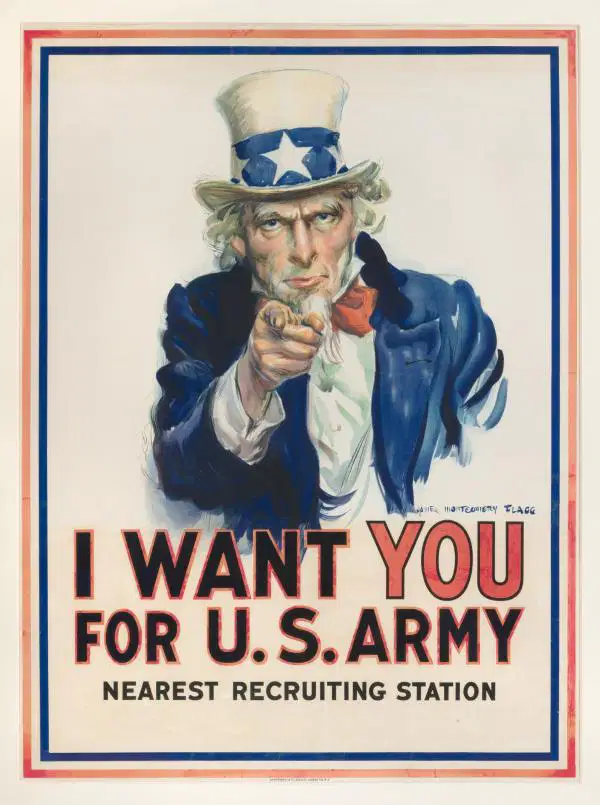
Which type of communication is shown in this poster?
accurate
propaganda
bias
informational
The diagram below outlines the appeals path through a state court system.
State Circuit Court--> State level court of appeals ---> ______________---> U.S. Supreme Court
Court of Veteran Affairs
Florida Supreme Court
U.S. Court of Appeals
State-level court of claims
Which of the following refers to laws created by judicial decisions and precedents?
Civil law
Natural Law
Common Law
Constitutional Law
Which is an action of power at the state level?
Coin money
sign treaties
establish post offices
establish school districts
Which is the definition of communism?
The economy is free of government regulation
Individuals and companies control major industries
Supply and demand are left to the free market, but the government manages wages
The government heavily regulates and controls all aspects of daily life and the economy
Suffrage means
The right to vote
The right to revolt
The right to pass a law

