
 Worksheets
Spanish 3 Final Review
Total questions: 45
Worksheet time: 51mins
David, do your homework! David, ¡ (a) tu tarea!
Aaron, tell me the truth! Aaron, ¡Dime la verdad!
(a)
Come to my house tomorrow. (a) a mi casa mañana.
Go to the store, please. (a) a la tienda, porfis.
Put your phone on the table. (a) tu cel en la mesa.
Hey, be nice. Oye, (a) amable.
Open the door, please. (a) la puerta, por favor. (abrir)
Speak out loud. (a) en voz alta. (hablar)
Eat your veggies. (a) tus verduras. (comer)
Carlos y Vivian están hablando de sus planes para el verano. Carlos irá a Perú para visitar a su sobrina porque ella estará de cumpleaños en julio. Vivian se quedará en casa, porque ella quiere ahorrar su dinero. Una amiga suya se casará en octubre, y ella querrá estar allá para su boda.
¿En cual tiempo verbal es la mayoría del párrafo?
tiempo pretérito
tiempo presente
tiempo futuro
tiempo condicional
Vivian is staying home because she wants to (a) her money.
Who is getting married?
Carlos and Vivian
Carlos
Vivian
A friend of Vivian's
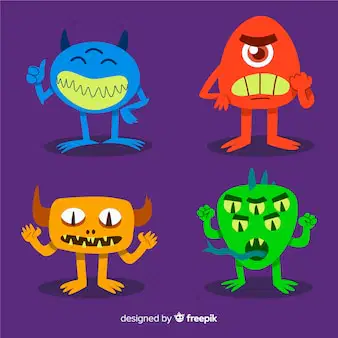
¿Cuántos ojos tiene el monstruo verde?
2
3
4
5
¿Cuántos dedos tiene el monstruo amarillo en sus dos manos?
4
6
8
10
El monstruo color naranja solo tiene una _____ arriba del ojo.
pestaña
rodilla
ceja
mantequilla
El monstruo azul está _________ (smiling).
riéndose
carcajando
sonriendo
sudando
poner la basura en el cesto. (tú command + object pronoun)
ponla en el cesto.
ponesla en el cesto.
póngala en el cesto.
______ (give me) tu mano (tú command + object pronoun)
me da
da me
dame
dadme
Oye,_______ ________ ________, mira. (open your eyes)
(a)
¿Cómo se dice rodilla en inglés?
ankle
knee
hip
leg
¿Cómo se dice tobillo en inglés?
ankle
knee
hip
leg
¿En cuál país sucedió el robo del siglo?
Uruguay
Paraguay
Argentina
Chile
La capital de Argentina es _______ ___________.
(a)
Matt is an engineer. Él es ___________.
engenir
ingeniero
diseñador
pobre
La señora Carlin ___ __________ pronto. (mudarse, future tense)
(a)
We will donate the clothing.
Donaremos la ropa.
Doníamos la ropa.
Donaríamos la ropa.
Dondremos la ropa.
They will bite the ice cream, because they're crazy.
Morderán el helado porque son locos.
Mordiren el helado porque son locos.
Muerdenselo el helado, esos locos.
Ellos huelen el helado porque de la locura.
To chew (infinitive, en minúscula)
(a)
To scratch (infinitive, en minúscula)
(a)
To bleed (infinitive, en minúscula)
(a)
To yawn (infinitive, en minúscula)
(a)
To jump (infinitive, en minúscula)
(a)
To grow (infinitive, en minúscula)
(a)
To breathe (infinitive, en minúscula)
(a)
Si fuéramos deportistas, (a) mucho. (sudar)
Si los hermanos Mesa-Cardenas fueran actores, no (a) muy famosos. (ser)
37-39.
Answer the questions below after watching the video
This lyric is asking....
What could do worse?
Who could be better?
Who will be older?
When will we improve?
This lyric makes reference to the (a) , an organ we learned about this year!
Choose the answer that best describes this song
The singer is hungry for chocolate
The singer is comparing their relationship to chocolate
The singer is a cannibal and wants to eat someone like chocolate
The singer is breaking up with their partner on Valentine's Day
40-41.
Answer the questions below after watching the video
What's the name of this book?
When I'm taller, I'll be a baller
When I'm older, I will be...
How much older do I have to be
This girl will be (a) when she's older. (Cook / chef in Spanish)
Future tense - Usted / trabajar
(a)
Future tense - nosotros / trabajar
(a)
Conditional tense - ellos / trabajar
(a)
An "aguda" word has its emphasis on the (a) syllable.
"Si yo tuviera" means
If I were
If I had
When I have
If you could
"Si fueras" means
If you were
If I were
If you could
If he knew
We use the future tense to....
discuss upcoming plans
talk about what happened last week
Make guesses about someone's backstory
discuss what could potentially happen
We use the conditional tense to....
discuss upcoming plans
discuss hypothetical situations
Make guesses about someone's backstory
discuss what could have been the cause of some event
Which of the following are direct object pronouns? DOPs
ella / él / tú / yo
el / la / los / las

