
 Worksheets
AI Basics for All
Total questions: 10
Worksheet time: 6mins
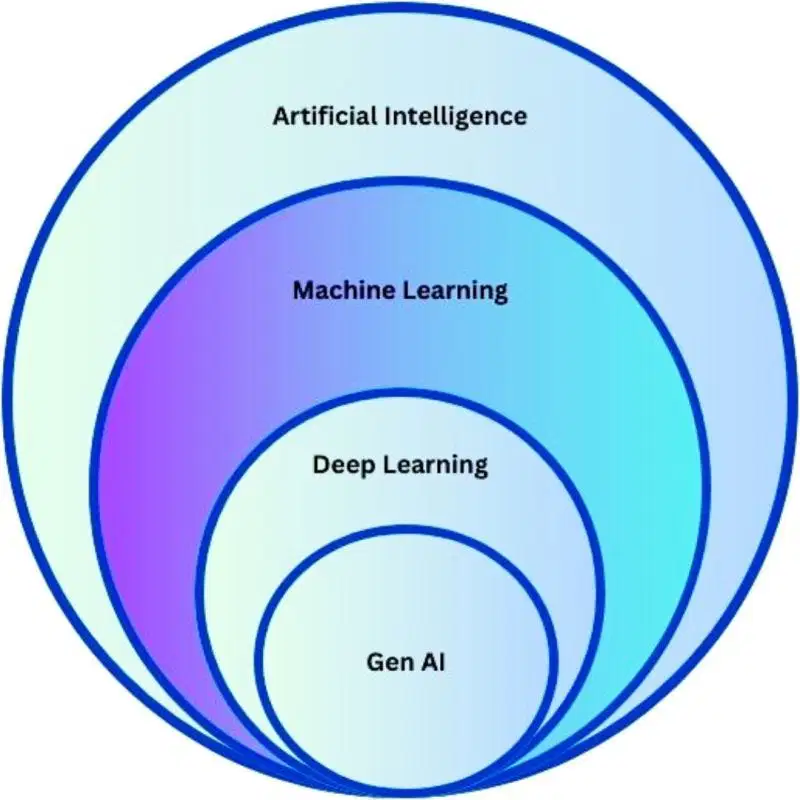
What is a subset of Al, uses advanced algorithms to detect patterns in large data sets, allowing machines to learn and adapt. Algorithms use supervised or unsupervised learning methods.
Artificial Intelligence
Machine Learning
Deep Learning
Generative Al
Explain the concept of supervised learning.
Supervised learning is unsupervised learning
Supervised learning involves training a model on labeled data to learn the mapping between input and output labels.
Supervised learning does not learn the mapping between input and output labels
Supervised learning does not involve labeled data
What are the benefits of using AI in supply chain management?
Decreasing operational efficiency
Reducing costs through increased expenses
Limiting supply chain visibility
The benefits of using AI in supply chain management include optimizing inventory levels, enhancing demand forecasting accuracy, improving decision-making processes, increasing operational efficiency, reducing costs, and enhancing overall supply chain visibility.
What is a subset of DL models that generates content like text, images, or code based on provided input. Trained on vast data sets, these models detect patterns and create outputs without explicit instruction, using a mix of supervised and unsupervised learning.
Artificial Intelligence
Machine Learning
Deep Learning
Generative Al
Not generative AI when output is ...
Audio
Number
Image
Class
What is the main difference between supervised and unsupervised learning?
Supervised learning requires labeled data, while unsupervised learning does not.
Supervised learning does not require labeled data, while unsupervised learning does.
Supervised learning and unsupervised learning both require labeled data.
Supervised learning and unsupervised learning do not require labeled data.
What is a subset of ML which uses neural networks for in-depth data processing and analytical tasks. Leverages multiple layers of artificial neural networks to extract high-level features from raw input data, simulating the way human brains perceive and understand the world.
Artificial Intelligence
Machine Learning
Deep Learning
Generative Al
What are the challenges of implementing AI in real-world applications?
AI implementation is always seamless and without challenges.
AI implementation does not require specialized skills or resources.
AI implementation may face challenges such as data privacy concerns, ethical considerations, and lack of interpretability.
AI implementation does not face any challenges.
What are examples of Gen AI outputs?
Probability
Natural Language
Image
Audio
What involves techniques that equip computers to emulate human behavior, enabling them to learn, make decisions, recognize patterns, and solve complex problems in a manner akin to human intelligence.
Artificial Intelligence
Machine Learning
Deep Learning
Generative Al

