
 Worksheets
Final Exam Review Part 1
Total questions: 165
Worksheet time: 3hrs 33mins


Describe the movement of molecules going through the proteins in the illustration.
Molecules are moving from a higher concentration to a lower concentration.
Molecules are moving from a lower concentration to a higher concentration.
Molecules are moving from a higher concentration to a lower concentration and then from a lower to higher concentration.
Molecules are moving from a lower concentration to a higher concentration and then from a higher concentration to a lower concentration.


This arrangement within the cell membrane allows it to


Which macromolecule is used as a primary energy source? (This is why many athletes will eat pasta before a big game.)
carbohydrates
lipids
proteins
nucleic acids

Some proteins are catalysts in chemical reactions, meaning they speed them up. What are these proteins called?
monomers
enzymes
quickens
neutrons
Which carbohydrate is matched correctly?
glucose; monosaccharide
cellulose; monosaccharide
chitin; monosaccharide
fructose; protein
This macromolecule provides the genetic code to pass on to offspring and the template to make proteins.
carbs
lipids
proteins
nucleic acids

This image depicts a
monosaccharide
disaccharide
polysaccharide
The building blocks or monomers of carbohydrates are?
amino acids
fatty acids
monosaccharides
nucleotides
What are the building blocks or monomers for proteins?
monosaccharides
fatty acids
DNA
amino acids
____________ are large molecules necessary for life.
Macromolecules
Monomers
Micromolecules
Substrates
In which of the following would you find lipids?
Olive Oil
Steak
DNA
Spaghetti Noodles
When you combine together multiple fatty acids & glycerols, you get which of the following macromolecules?
Carbohydrates
Proteins
Lipids
Nucleic Acids
What is the monomer for lipid?
Amino acid
Fatty acid
Monosaccharide
Nucleic acid
What is the most important element for life?
Hydrogen
Carbon
Oxygen
Nitrogen
What is the function of lipids?
short term energy
long term energy
genetic information
structure, movement, etc.
What are the building blocks or monomers for nucleic acids?
monosaccharides
amino acids
nucleotides
fatty acids


Which of the four macromolecules tend to form rings, or hexagons, with carbon at each corner?
Carbohydrates
Proteins
Lipids
Nucleic Acids

These macromolecules tend to form long chains of carbon and hydrogen to store excess energy and this particular molecule is
lipid
carbohydrate
essential amino acid
nucleotides

Many sugar molecules bonded together like the one shown below is a ___________________________.
Monosaccharide
Disaccharide
Polysaccharide
None of these are correct
This macromolecule make up cell membranes, store energy, and provide insulation
carbohydrate
lipids
protein
nucleic acid
What biomolecule allows for facilitated diffusion to occur across a membrane?
carbohydrate
protein
lipid
nucleic acid
Cell eating
(a) Blood Cells aid in fighting infection.
Which Blood cell carries oxygen?
White Blood Cells
Red Blood Cell
Red T Cell
Oxygen carrying cell

During phagocytosis, a cell
takes in solid food (eats)
takes in liquids (drinks)
How many total chromosomes do human cells contain?
23
46

What kind of tissue?
Epithelial
Muscular
Connective
Nervous

What kind of tissue?
Epithelial
Muscular
Connective
Nervous

What kind of tissue?
Epithelial
Muscular
Connective
Nervous

What kind of tissue?
Epithelial
Muscular
Connective
Nervous
Which tissue is highly branched and allows for messages to be sent around the body?
Connective
Muscular
Epithelial
Nervous
Which tissue is cells spaced apart from each other and surrounded by a non-cellular matrix?
Connective
Muscular
Epithelial
Nervous
Which tissue is arranged in fibres and designed to allow for contraction and movement?
Muscular
Nervous
Connective
Epithelial
Which tissue is either squamous, cuboidal or columnar and makes up the lining of all the body surfaces and cavities?
Epithelial
Nervous
Muscular
Connective
A form of connective tissue in which the cells are specialized for the synthesis and storage of energy-rich reserves of fat, or lipid.
Hyaline cartilage
Adipose tissue
Connective tissue
Areolar tissue
This type of muscle tissue is attached to bones which helps control voluntary movement
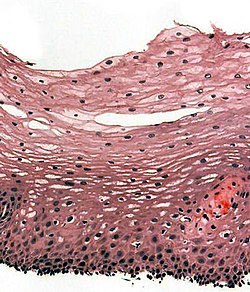
What type of epithelium is this and where might you find it?
stratified squamous ; skin
pseudostratified columnar ; trachea
simple squamous ; lung
simple cuboidal ; kidney tubules

What feature found on the surface of this epithelial layer greatly increases the surface area for absorption?
cilia
microvilli
endoplasmic reticulum
multiple nuclei
Which of the follwoing are not a type of connective tissue?
Adenosine
Areolar
Adipose
Blood
Hyaline Cartilage
Which of the following does not make up the components in the connective tissue?
Cells
Fibers
Basement membrane organelle
Ground substance
What are the 3 main types of eptithelial cells?
Dorsal, anterior, and deep.
Transitional, pseodostratified, and stratified.
Skeletal, smooth, and cardiac.
Sqamous, cubodial, and columnar.

Which of the following statement(s) are associated with this tissue type? (all that apply)
The presence of the multiple layers of tissue allows it to provide protection to the organ.
This tissue allows an exchange point for filtering of nutrients or waste.
This tissue's multiple layers allows for other tissue types to attach to connect to the organ.
The tissue's close and compacted multiple layers allow this tissue to communicate electro-chemical messages.
This tissue is a stratified squamous epithelial tissue.

Identify all true statements to this tissue type.
This tissue allows for contractions that create movement.
This is skeletal muscle tissue.
This tissue is attached to the skeleton by dense connective tissue.
This is smooth muscle tissue.
This is not a tissue that makes up the human body.
Identify all tissue types associated with this tissue. (all that apply)
Nervous tissue
Connective tissue
Epithelial tissue
Muscle tissue
Not a body tissue

Identify all tissue types associated with making up this tissue. (all that apply)
Epithelial tissue
Connective tissue
Muscle tissue
Stratified cuboidal epithelial tissue
Simple cubodial epithelial tissue

Identify all tissue types associated with this tissue. (all that apply)
Epithelial tissue
Connective tissue
Muscle tissue
Cartilage connective tissue
Dense connective tissue

Which tissues are categorized as epithelial tissue?


Which tissue(s) are considered to be connective tissue? (all that apply)


What kind of tissue is this?
hyaline cartilage
white adipose tissue
brown adipose tissue
bone

What kind of tissue is this?
hyaline cartilage
white adipose tissue
brown adipose tissue
bone

What kind of tissue is this?
hyaline cartilage
white adipose tissue
brown adipose tissue
bone
What is your most flexible cartilage?
Hyaline Cartilage
Fibrocartilage
Elastic Cartilage
Skeleton Cartilage
Which of these is NOT a function of the muscular system?
Allows for sensation
Creates body movement
Protects internal organs
Heat production
Maintain body posture and shape
Point of origin refers to .......
the place where the muscles attach to the bone, but no movement occurs
the place where the muscles attach the and movement occurs
where a muscle attaches to another muscle
the membrane the covers and supports muscles
Tendon
attaches a muscle to a bone
Ligament
attaches a bone to another bone
Fascia
creates a membrane-like covering for muscles
Match the following
Origin
the point of a muscle which attaches to a stationary bone
Insertion
the point of a muscle which attaches to a bone that performs the movement
Belly
the largest part of the muscle containing the muscle cells
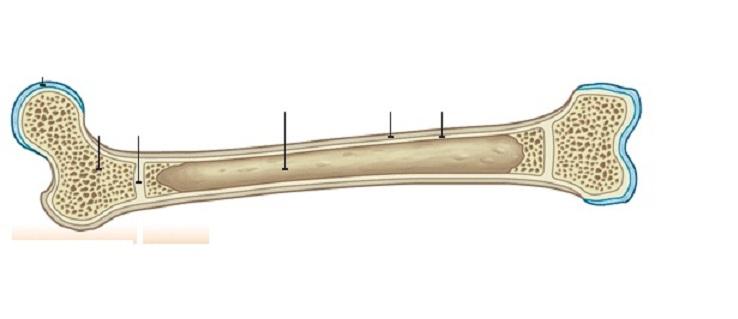
The ENDS of the long bone are anatomically referred to as the:
Epiphyseal plate
Medulary Cavity
Periosteum
Epiphysis

Identify 2
Proximal Epiphysis
Diaphysis
Distal Epiphysis
Epiphyseal Line

Identify 5, the type of bone tissue with red bone marrow
Spongy Bone
Compact Bone
Articular Cartilage
Epiphyseal Line
Structure 7 is the outer covering of the bone made up of fibrous connect tissue called
Medullary Cavity
Compact Bone
Yellow Marrow
Periosteum

What bones are shown in red?
carpals
metacarpals
metatarsals
tarsals

What bone is shown in red?
femur
fibula
patella
tibia

What bone is shown in red?
femur
fibula
patella
tibia
Endocrine glands secrete _
Hormones
Neurotransmitters
A wide range of chemical substances
What is the main function of the endocrine system?
It creates chemicals, or hormones, that are sent around the body to maintain homeostasis.
It creates electrical messages that are sent around the body to maintain homeostasis.
It maintains the correct level of oxygen in the body to maintain homeostasis.
It releases waste from the body to maintain homeostasis.


Letter J is pointing to
Ovaries
Pineal Gland
Adrenal
Testes
Cells that have receptors for a particular hormone.
gland cells
neurons
hormones
target cells

This structure releases what hormones?
insulin and glucagon
calcitonin and estrogen
Parathyroid hormone and antidiuretic hormone
epinephrine and testosterone
Glucagon
Increases blood glucose
Decreases blood glucose
Insulin
Increases blood glucose
Decreases blood glucose
Which hormone triggers the release of an egg from the ovary during the menstrual cycle?
Estrogen
Progesterone
Leutenizing Hormone
Follicle stimulating hormone
Which of the following is in the correct order of least complex to most complex?
tissue - organ - organ system- cell
cell - organ - tissue - organ system
organ system - tissue - cell - organ
cell - tissue - organ - organ system
The point at which the nerve cell reaches the sarcolemma of the muscle fiber is the _____.
Neurotransmitter
Acetylcholine
Synaptic cleft
Neuromuscular Junction
One neuron and all the skeletal muscle cells it stimulates is the ____ ___.
Neurotransmitter
Neuromuscular junction
Motor unit
Synaptic cleft
What is the specific neurotransmitter that stimulates the movement of skeletal muscles?
GABA
Acetylcholine
Serotonin
Dopamine
Once the action potential reaches the end of the axon terminal what takes place?
ACh is released into the synaptic cleft.
Calcium is pumped into the sarcolemma.
Calcium is pumped into the AT.
The muscle contracts.
Once calcium is pumped into the axon terminal what happens?
The muscle contracts
ACh is released into the synaptic cleft.
Sodium pumps into the sarcolemma.
The muscle contracts.
What is the name of the component that houses the neurotransmitters?
Synaptic cleft
Acetylcholine
Receptors
Synaptic vesicles
An action potential is
A positive charge that moves along the neurons
A negative charge that moves along the neurons
The neutral charge of cells at rest
Resting potential is
When a cell is being simulated. Negative charge.
When a cell is being simulated. Positive charge.
When a cell is not being simulated. Positive charge.
When a cell is not being stimulated. Negative charge.

Identify structure 4 in the diagram.
synaptic cleft
sarcolemma
vesicle
Ca2+ ion
___are thin filaments.
troponin
tropomyosin
actin
myosin
___are thick filaments.
actin
myosin
troponin
tropomyosin
Calcium is stored in the ___.
sarcoplasm
sarcolemma
sarcoplasmic reticulum
transverse tubules
___forms a crossbridge with actin.
actin
myosin
calcium
ATP
The action potential releases (a) from the Sarcoplasmic Reticulum (SR)
What illustration could be used to describe an action potential moving through membrane?
a wave at a stadium
waving to a friend
closing a door
parents/guardians being protective
Motor Neuron
Cardiac Muscle

What state is the sarcomere in B.
Relaxed
Contracting
Both
None of the above
What is a crossbridge?
Where myosin binds to actin
Where the calcium crosses into the cytoplasm
Where calcium binds with troponin
None of the answers are correct.

What body system includes a transport system (blood) and a pump (the heart) that keeps the transport system moving?
Digestive System
Respiratory System
Circulatory System
Muscular System
Nervous System
What is the role of sensory neurons in the reflex arc?
To detect stimuli
To bring about a response
To release chemicals
To communicate information to the coordinating centre
What triggers an electrical impulse in the motor neuron in the reflex arc?
Heat
Chemicals
Pressure
Light
What is the effector in the reflex arc when you touch a hot object?
Receptor
Motor neuron
Sensory neuron
Muscle

This part of the neuron receives chemical messages from the neurotransmitters of other neurons. It is labeled A in the diagram.
Dendrite
Axon
Axon Terminal
Cell Body

The long, fiber like part of a neuron which the cell sends information to receiving neurons. Labelled D in diagram.
Synapse
Axon
Axon Terminal
Dendrite

_____ neurons carry messages away from the central nervous system and out to muscles or glands. The RED neuron in diagram.
sensory
motor
inter
central

Select two examples of effectors.
Neuron
Gland
Muscle
Receptor
Which type of neuron causes a muscle to contract in a reflex arc?
Motor Neuron
Sensory Neuron
Interneuron
Effector

What type of neuron is A?
Sensory
Inter
Motor
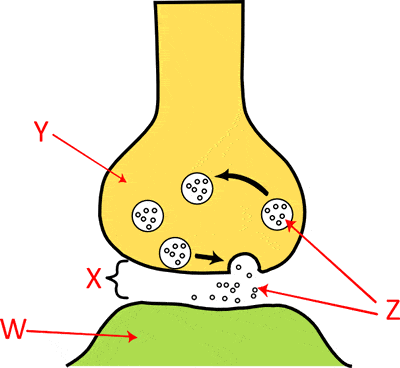
What do we call a nerve cell that is the basic working unit of the brain and nervous system?
axon
neuron
dendrite
neurotransmitter


When is the potassium channel open?
during rest only
during repolarization only
during depolarization only
all the time

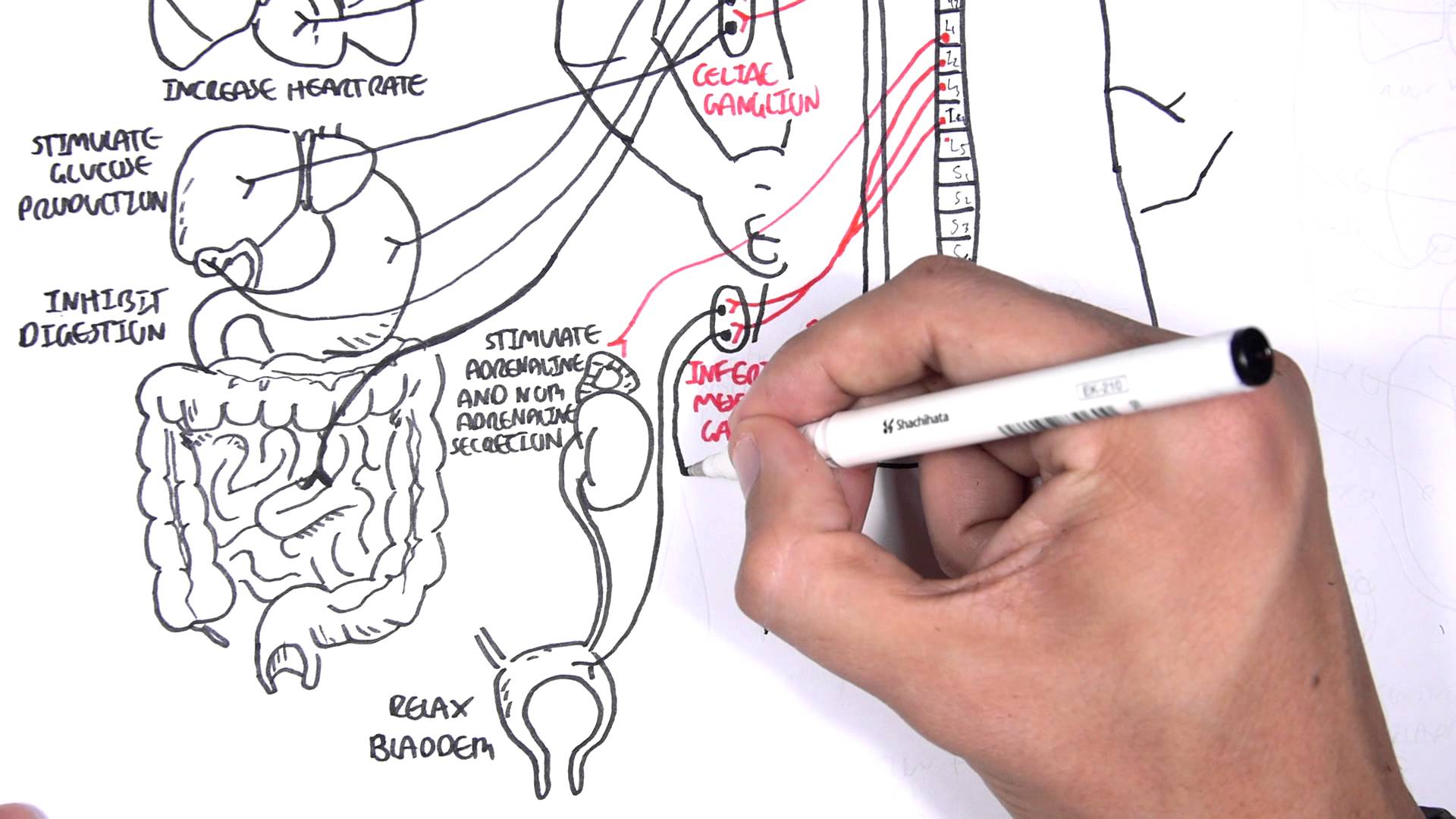
What is the largest part of the brain?
Brain stem
Cerebellum
Cerebrum
Dura mater
What do the motor neurons do?
carry messages from the brain and spinal cord to muscles and glands
carry impulses from skin and sends to organs the to spinal cord and brain
carry impulses from sensory neurons to motor neurons
store messages
What does the cerebrospinal fluid transport?
messages
nutrients
minerals
waste products
What part of the brain is responsible for conscious thought, judgement, memory, reasoning and will power?
Cerebellum
Hypothalamus
Cerebrum
Thalamus
FIGHT OR FLIGHT:
decreases heart rate
increase heart rate
reverses symptoms
makes you fly

