Wayground logo

Free Printable Worksheets

Font size

S
M
L
XL
Worksheets

CFE Review: Physicals Science Honors

Total questions: 121

Worksheet time: 4hrs 57mins

Name
Class
Date
1.

Label each as a "scalar" or a "vector"

a)

scalar (kg)

1.

mass

b)

scalar (s)

2.

time

c)

scalar (kg/m^3)

3.

density

d)

vector (N)

4.

force

e)

vector (m/s)

5.

velocity

2.

Scalars have ____ but no ____

a)

Magnitude -

Direction

b)

Direction - Magnitude

c)

Speed - Space

d)

Measurement - scale

3.

Vectors have ____ and ____

a)

Magnitude - Direction

b)

Value - Speed

c)

Acceleration - Mass

d)

Mass - volume

4.

This occurs when an object speeds up, slows down, or changes direction.

a)

Speed

b)

Velocity

c)

Acceleration

5.
Avery likes to walk 30 feet in 10 seconds. What is her speed?
a)
3 feet/sec
b)
6 feet/sec
c)
10 feet/sec
d)
2 feet/sec
6.
a)
Green object is faster than Red
b)
Red object is faster than Green
c)
Green object is slower than Red
d)
Red object is 2 times faster than Green
7.
a)
Object not moving
b)
Object accelerating
c)
Object slowing down
d)
Object at a constant speed
8.
a)
Object not moving
b)
Object accelerating
c)
Object slowing down
d)
Object staying at a constant speed
9.
a)
Object not moving
b)
Object accelerating
c)
Object slowing down
d)
Object at a constant speed
10.
A car starts from rest at a stop light and reaches 20 m/s in 3.5 s. Determine the acceleration of the car.
a)
2.2m/s2
b)
7.0m/s2
c)
5.7m/s2
d)
70m/s2
11.

What is the motion shown in this velocity time graph?

a)

moving with a constant positive velocity

b)

Speeding up in the positive direction

c)

slowing down in the positive direction

d)

speeding up in the negative direction

12.

What is the motion shown in this velocity time graph?

a)

moving with a constant positive velocity

b)

Speeding up in the positive direction

c)

slowing down in the positive direction

d)

speeding up in the negative direction

13.

Describe the motion of an object given by the velocity vs time graph.

a)

It is speeding up.

b)

it is not moving.

c)

It has a constant speed.

d)

It is slowing down.

14.

Describe the motion of an object given by the velocity vs time graph.

a)

It is speeding up.

b)

it is not moving.

c)

It has a constant speed.

d)

It is slowing down.

15.

Describe the acceleration of an object given by the velocity-time graph.

a)

acceleration is zero

b)

acceleration is positive

c)

acceleration is negative

16.
Is the speed constant or non-constant?
a)
constant
b)
non-constant
17.
What is the velocity?
a)
0 m/s
b)
positive m/s
c)
negative m/s
d)
decreasing
18.

a)
b)
c)
d)
19.

a)
b)
c)
d)
20.

a)
b)
c)
d)
21.

a)
b)
c)
d)
22.
What kind of acceleration is shown here?
a)
positive
b)
negative
c)
none
d)
varies
23.

What is this graph showing?

a)

At rest

b)

Acceleration

c)

Constant speed of 1 m/s

d)

Gradually speeding up

24.

Which of the following objects is accelerating?

a)

A car driving in a northwest at a constant speed of 35 mph.

b)

A car driving southwest at a constant speed of 35 mph.

c)

A car driving in a circle at a constant speed of 35 mph.

Back

d)

A car driving south at a constant speed of 45 mph.

25.

Match the following Law of motion with the correct example

a)

Newton's 1st law of motion

1.

Roll a ball across smooth/rough surfaces. The ball rolls faster on smooth because less fiction

b)

Newton's 2nd law of motion

2.

Hit a ball with 2 different forces, the ball will have greater acceleration due to larger force

c)

Newton's 3rd of motion

3.

Bouncing the ball on the court is the action, the floor pushing the ball back up is the reaction

26.
What is Newton's Third Law?
a)
Object in motion stays in motion and an object at rest stays at rest unless acted on by a outside force
b)
Force = mass x acceleration
c)
For every action there is an equal and opposite reaction
27.

Which best explains the law of force and acceleration (Newton's 2nd Law of Motion)

a)

Restraints keep passengers from falling out of a roller coaster

b)

Riders must be certain heights so they have enough mass to ride

c)

A larger force will be required to accelerate a roller coaster with more people

d)

A roller coaster that goes up must also come down due to the force of gravity

28.

A skater pushes another skater forward, but the one pushing moves backwards.

a)

Newton's 1st Law

b)

Newton's 2nd Law

c)

Newton's 3rd Law

29.
Which of these is an example of Newton's First Law, inertia?
a)
pushing against a brick wall, and the brick wall does not move
b)
pushing against a stationary wheelbarrow, and the wheelbarrow accelerates forward
c)
pushing a wheelbarrow full of bricks, and the bricks slide back toward the handles
d)
pushing a wagon to the top of a hill, and the wagon to the top of hill and the wagon accelerates down the hill without assistance
30.
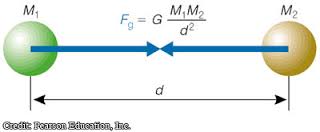
Two factors effecting the magnitude of the force of gravity between 2 objects are...
a)
mass and distance 
b)
mass and matter
c)
distance and weight 
d)
weight and mass
31.
Complete the following statement: The farther away two planets are the _______ the gravitational force between them.
a)
more
b)
same
c)
dosen't matter
d)
less
32.

Which configuration will result in the greatest gravitational force?

a)

small masses far apart

b)

large masses far apart

c)

small masses close together

d)

large masses close together

33.
Force of gravity is directly proportional to
a)
Mass
b)
Weight
c)
Distance
d)
Time
34.
Force of gravity is inversely proportional to
a)
Mass
b)
Weight
c)
Distance
d)
Time
35.
According to the Law of Conservation of energy, the amount of energy before and after a reaction must be the same. Which statement below is true?
a)
The total amount of energy is conserved
b)
The total amount of energy is less after a reaction
c)
The total amount of energy is more after a reaction
36.
a)
A
b)
B
c)
C
37.

When the roller coaster is at Point B (the bottom of a hill) it has

a)

High Potential Energy

b)

Low Potential Energy

c)

Kinetic and Potential Energy are equal.

38.

A mountain climber with a force of 90 N scales a 100 m cliff. How much work is done by the mountain climber?

a)

1.11 W

b)

9,000 J

c)

0.9 J

d)

9 W

39.

You do 90 joules of work in 30 seconds. How much power have you generated?

a)

30 watts

b)

3 watts

c)

120 watts

d)

270 watts

40.

What is an open system in physics?

a)

One that only exchanges matter with its surroundings

b)

One that can exchange both matter and energy with its surroundings

c)

One that cannot exchange matter or energy with its surroundings

d)

One that only exchanges energy with its surroundings

41.

What are the characteristics of a closed system?

a)

It exchanges both matter and energy with its surroundings

b)

It only exchanges matter with its surroundings

c)

It does not exchange energy with its surroundings

d)

It does not exchange matter with its surroundings, but it can exchange energy.

42.

Match the following.

a)

Open System

1.

Energy and Matter can enter and exit

b)

Closed System

2.

Only energy can enter and exit

c)

Isolated System

3.

Energy and Matter cannot enter or exit
43.

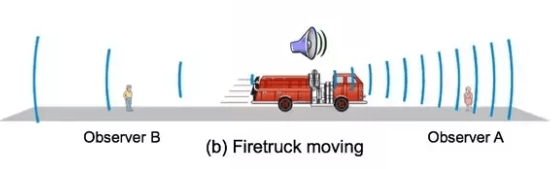
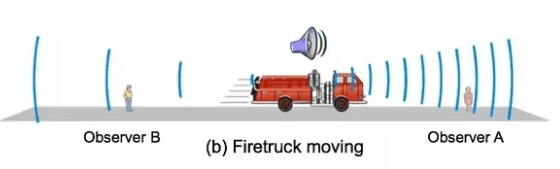
Look at the picture. Who is experiencing a higher pitched sound?

a)

Observer A

b)

Observer B

c)

There's no difference

44.

Look at the picture. Who is experiencing a lower pitched sound?

a)

Observer A

b)

Observer B

c)

There is no difference

45.

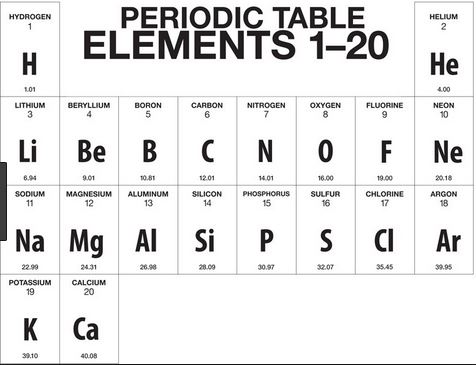
How many valence electrons are every atom trying to obtain?

a)

2

b)

4

c)

6

d)

8

46.

How many valence electrons?

a)

2

b)

3

c)

4

d)

5

47.
What is a valence electron?
a)
an electron that is found in the outermost shell of an atom. 
b)
an electron found in the innermost shell of an atom.
c)
an electron found in the middle shell.
48.

How many valence electrons does Nitrogen Have?

a)

1 Valence electron

b)

2 Valence electron

c)

3 Valence electron

d)

4 Valence electron

e)

5 Valence electron

49.

The vertical (up and down) columns in the Periodic Table are called

a)

groups

b)

towers

c)

periods

d)

atomic numbers

50.
Which group of the periodic table is composed of inert (not reactive)  gases?
a)
alkali metals
b)
alkaline earth metals
c)
halogens
d)
noble gases
51.
Elements in a ..................have similar chemical properties.  
a)
period
b)
group
c)
row
52.

Find an element with similar chemical properties to Barium (Ba).

a)

Ca an Ra, because they are in the same group and have similar chemical properties.

b)

Cs and La, b/c they are in the same period number.

c)

Ca and Y, b/c they are 90 degree angle and have similiar properties.

53.

Sort

Categorize the following

Electromagnetic

Weak Nuclear

Strong Nuclear

Gravity

Friction

Kinetic

Potential

Nuclear Fission

Nuclear Fusion

Fundamental Forces
NOT Fundamental Forces
54.
True or false Gravity is the weakest of the four fundamental forces
a)
True
b)
False
55.
What is strong nuclear force?
a)
Attracts everything with mass
b)
Repels everything with the same charge
c)
Responsible for radioactive decay
d)
Keeps nucleus of an atom together
56.

Sort the fundamental forces from WEAKEST to STRONGEST

a)

Gravity

b)

Weak Nucler

c)

Electromagnetic

d)

Strong Nuclear

1)
2)
3)
4)
57.

The weak forces is responsible for _____.

a)

radioactive decay

b)

fusion

c)

fission

d)

the nucleus

58.

The strong force is responsible for _____​ and _____​.

a)

fusion

b)
radioactive decay
c)
repulsion
d)
attraction
e)
fission
59.

Name the following: MgO

a)

Magnesium Oxide

b)

Monomagnesium monoxide

c)

Magnesium monoxide

d)

Magnesium (II) oxide

60.

Name the following: NO2

a)

Nitrogen oxide

b)

Mononitrogen dioxide

c)

Nitrogen dioxide

d)

Nitrogen (II) oxide

61.

Name the following: CF4

a)

Carbon fluoride

b)

Monocarbon tetrafluoride

c)

Carbon tetrafluoride

d)

Carbon fluorate

62.
An ionic compound of calcium and chlorine would be named
a)
calcium chlorine.
b)
calcium chlorite.
c)
calcium chloride.
d)
chlorine calcium.
63.
The chemical formula for an ionic compound of aluminum and chlorine is
a)
AlCl.
b)
ClAl.
c)
AlCl3.
d)
Al3Cl.
64.
The chemical formula for an ionic compound of potassium and oxygen is
a)
KO.
b)
K2O.
c)
K2O2.
d)
KO2.
65.
What type of bond forms when 2 or more electrons are SHARED?
a)
Covalent bond
b)
Incomplete bond
c)
Ionic bond
d)
Metallic bond
66.
Which of the following is an example of an IONIC COMPOUND?
a)
NaCl
b)
H2O
c)
CO2
d)
NO
67.
Which of the following is an example of a COVALENT COMPOUND?
a)
H2S
b)
KI
c)
CaCl2
d)
MgO
68.
How are ionic bonds formed?
a)
Transfer of electrons
b)
Sharing of electrons
69.
Large bodies of water do not quickly fluctuate in temperature. Why?
a)
Water is a solvent.
b)
Water has a high heat capacity.
c)
Water acts as a buffer.
d)
Water is non-polar.
70.
Water is a universal solvent because it...
a)
It can be found anywhere
b)
It freezes when it gets cold
c)
floats when frozen
d)
Dissolves most substances
71.
The fact that ice floats on liquid water is due to the fact that water's solid is ___________ than it's liquid form
a)
less polar
b)
more polar
c)
less dense
d)
more dense
72.
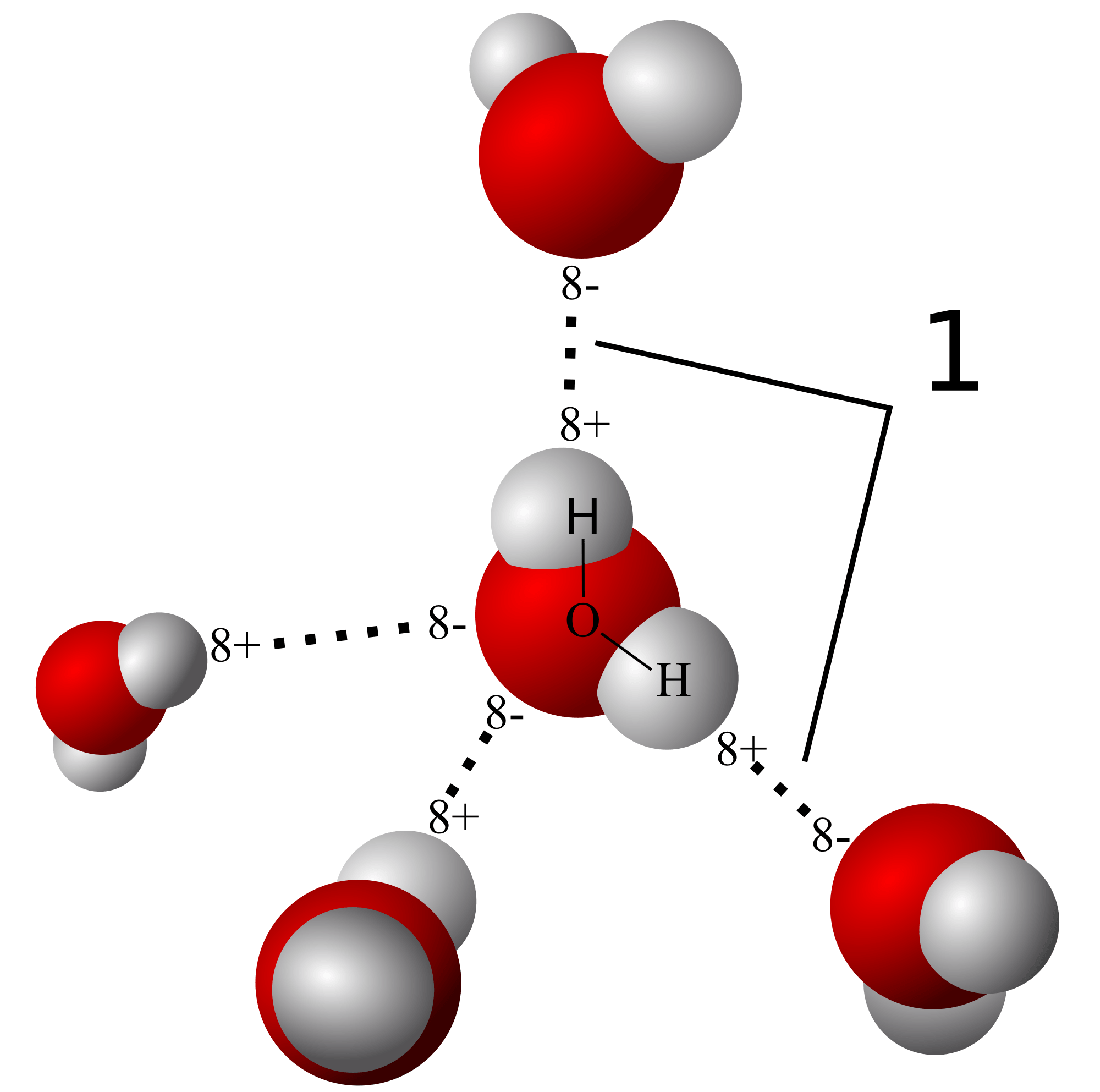
Which statement explains why water molecules stick together?
a)
both sides are negative
b)
one side has a positive charge and the other side has a negative charge
c)
one side has a negative charge adn the other side has a neutral charge
d)
both sides are positive
73.

When water sticks to itself, what is taking place?

a)

Cohesion

b)

Adhesion

c)

Capillary Action

d)

Surface tension

74.

Capillary action is the result of

a)

adhesion

b)

cohesion

c)

change in matter (heat of fusion)

d)

both adhesion and cohesion

75.
Why does ice float?
a)
As water freezes, it expands and its density decreases.
b)
As water freezes, it takes up more hydrogen from the atmosphere, causing it to have a greater buoyancy.
c)
As water freezes, air becomes trapped between the hydrogen bonds of water molecules.
d)
As water freezes, it takes up more oxygen from the atmosphere, causing it to have a greater buoyancy.
76.
What property of water allows it to be such a versatile solvent that it is often called the "universal solvent?"
a)
Purity
b)

Polarity

c)
High heat capacity
d)
Expansion upon freezing
77.
Which end of the water molecule has a slightly positive charge?
a)
the oxygen end
b)
the hydrogen end
c)
both ends are slightly positive
d)
neither end is positive
78.

Which property of water allows it to form droplets when in liquid form?

a)

adhesion

b)

cohesion

c)

specific heat

d)

nature as a solvent

79.
Attractions between water molecules are called
a)
Covalent bonds
b)
Ionic bonds
c)
Polar bonds
d)
Hydrogen bonds
80.

Living things are mainly water. Water has a

HIGH SPECIFIC HEAT (heat capacity). This helps with homeostasis because living things can

a)

absorb a lot of heat before changing temperature

b)

easily change temperature depending on their environment

81.

The fact that water can stick to other substances is called:

a)

Ph

b)

Adhesion

c)

Cohesion

d)

Insulation

82.
When a molecule has an opposite electrical charge on each end, it is known as what?
a)
cohesion
b)
polar molecule
c)
hydrogen bond
d)
solution
83.

Identify the type of chemical reaction (a)  

Choose from the below words
Synthesis
Decomposition
Single replacement
Double replacement
Combustion
84.

Identify the type of chemical reaction

a)

Synthesis

b)

Decomposition

c)

Single replacement

d)

Double replacement

e)

Combustion

85.

Identify the type of chemical reaction

a)

Synthesis

b)

Decomposition

c)

Single replacement

d)

Double replacement

e)

Combustion

86.

Identify the type of chemical reaction

a)

Synthesis

b)

Decomposition

c)

Single replacement

d)

Double replacement

e)

Combustion

87.

What is the general reaction scheme for a decomposition reaction?

a)

A + B --> AB

b)

AB --> A + B

c)

A + CD --> C + AD

d)

AB + CD --> CB + AD

e)

CxHy+O2 −> CO2+H2OC_xH_y+O_2\ ->\ CO_2+H_2O

88.

CxHy +O2 --> H2O + CO2

a)

Decomposition

b)

Double replacement

c)

Combustion

d)

Single Replacement

89.

Which of the following is a neutralisation reaction?

a)

metal + acid → salt + hydrogen

b)

metal + acid → salt + water

c)

carbonate + acid → salt+ carbon dioxide + hydrogen

d)

base + acid → salt + water

90.
In an exothermic reaction, heat is ...
a)
taken in
b)
given out
91.

In an endothermic reaction, heat is ...

a)

taken in

b)

given out

92.
During an endothermic reaction in a beaker if we are part of the surroundings and touched the beaker, it would feel _______. 
a)
Warm
b)
Cold
93.
If a chemical reaction is EXOTHERMIC, the temperature would....
a)
Stay the same
b)
Increase
c)
Decrease
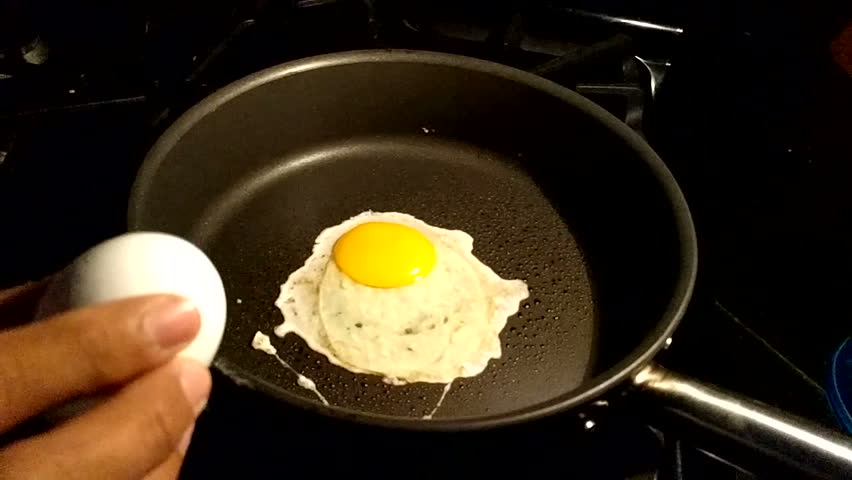
94.
Baking bread and cooking an egg are examples of....?
a)
Endothermic processes
b)
Exothermic processess
c)
None of these 
95.
What type of reaction is shown in the photo?
a)
Exothermic
b)
Isothermic
c)
Endothermic
d)
None of the  above
96.
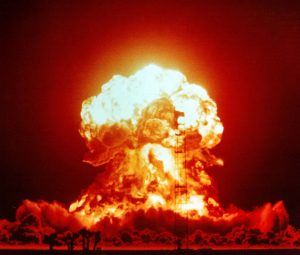
What is nuclear fission?
a)
Big nucleus splits to small nuclei
b)
Small nuclei fuse into a bigger nucleus
c)
Stars
d)
Making compounds
97.

What is the splitting of an atomic nucleus into two smaller parts?

a)

Fusion

b)

Separation

c)

Decay

d)

Fission

98.

Which reaction can be used to determine the age of objects such as rocks?

a)

chemical

b)

fission

c)

fusion

d)

radioactive decay

99.
When the temperature of matter increases the particles...
a)
speed up and move closer
b)
speed up and move farther apart
c)
slow down and move closer together
d)
slow down and move farther apart
100.

What type of relationship do pressure and temperature have?
a)
Inverse
b)
Direct
c)
Not enough information
d)
#goals
101.
When Pressure increases then the Volume must...
a)
Increase
b)
decrease
102.
When Volume increases then Pressure must...
a)
Increase
b)
Decrease
103.
What type of relationship to pressure and volume have?
a)
direct
b)
inverse
c)
no relationship
d)
I don't know
104.
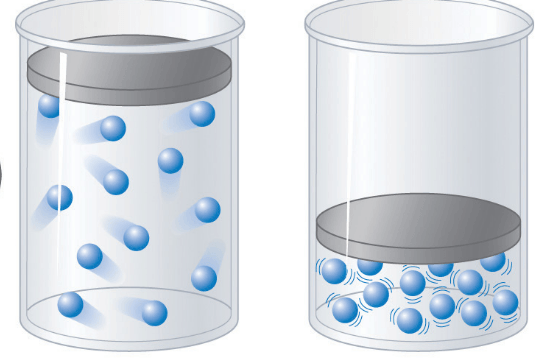
Which container will have a lower pressure?
a)
left
b)
right
c)
they both have the same pressure
d)
I don't know
105.
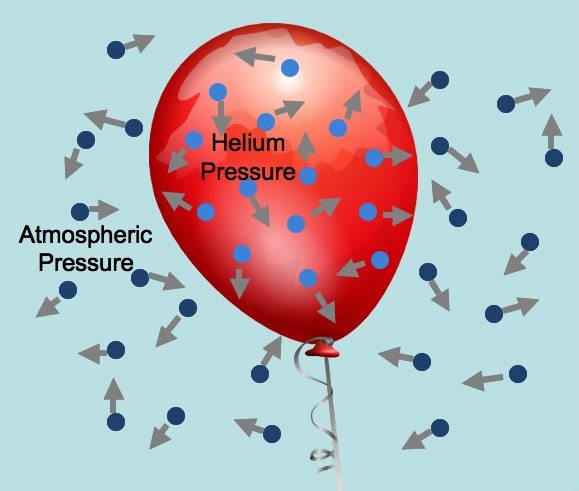
What causes pressure?
a)
The walls of the container
b)
The vacuum in the container
c)
The collisions of the particles
d)
Atmospheric pressure acting on the outside walls
106.
If a balloon is cooled what will happen to the volume?
a)
Volume will increase
b)
Volume will decrease
c)
Volume will not change
107.
As the resistance in a circuit increases, the electric current __________.
a)
increases
b)
decreases
c)
stays the same
108.
Electricity is the flow of _________.
a)
protons
b)
neutrons
c)
electrons
109.
What type of circuit is pictured?
a)
series
b)
Parallel
110.

is the opposition to the flow of charges in a material.

a)

Resistance

b)

Voltage

c)

Time

d)

Current

111.

What would happen if in a circuit the voltage is increase?

a)

The time would increase

b)

The current would increase

c)

The current would decrease

d)

The current would stay the same

112.

What would happen if in a circuit, the resistance increases but the voltage stays the same?

a)

The current would decrease

b)

The current would increase

c)

The voltage would decrease

d)

The voltage would increase

113.

If lamp 2 is unscrewed from its holder, what will happen to lamp1?

a)

It will stay lit

b)

It will go out

c)

It will get dimmer

d)

It will dissapear

114.

What is the resistance of a lightbulb that experiences 9 Volts and 3 amps of current?

a)

1/3 ohms

b)

3 ohms

c)

27 ohms

d)

9 ohms

115.

What is the voltage of a circuit with 4 ohms of resistance and 3 amps of current?

a)

12 V

b)

21 V

c)

4/3 V

d)

3/4 V

116.
What is Resistance?
a)
The flow of electrons
b)
Electric potential difference
c)
A battery
d)
The ability to reduce the flow of electrons
117.
What is the Voltage of a circuit that has a resistance of 5 Ω and a current of 2 A?
a)
25 V
b)
10 V
c)
2.5 V
d)
0.4 V
118.
If the Voltage is increased and the resistance stays the same, Current will
a)
Increase
b)
Decrease
c)
Stay the same
d)
X
119.
If the Voltage stays the same and Resistance is increased, Current will 
a)
Increase
b)
Decrease
c)
Stay the same
d)
X
120.
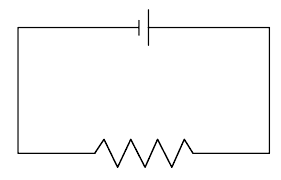
This circuit has a 24 volt battery and the resistor is 8 ohms. How many amps are running through the circuit?
a)
3 Amps
b)
192 Amps
c)
2 Amps
d)
4 Amps
121.

Which of the following snacks will you like on test day? The choice with the most votes will be the winner!

a)

Cheddar

b)

Blueberry or strawberry

c)

Blueberry, Dark Chocolate, or Cinnamon

d)

Glazed Donuts