wayground logo

Free Printable Worksheets

Font size

S
M
L
XL
Worksheets

S2 Final Exam Review

Total questions: 45

Worksheet time: 23mins

Name
Class
Date
1.
What do plants give off after photosynthesis?
a)
Oxygen
b)

carbon dioxide

c)

Hydroponic Plant Food

d)
hydrogen
2.
Plants make their own food through a process called ______________. 
a)

cellular respiration

b)
photosynthesis
3.

Plants need ________from the air for photosynthesis.

a)

oxygen

b)

soil

c)

carbon dioxide

d)

water

4.
These convert energy from sunlight into food for the plant through a chemical process called photosynthesis.
a)
Root
b)
Stem
c)
Leaves
d)
Flowers
5.
How do plants obtain energy for photosynthesis?
a)
Water is absorbed through the flower
b)
Soil is absorbed by the roots
c)
Oxygen is absorbed though the stem
d)
Sunlight is absorbed by the leaves
6.
How does carbon dioxide get into the leaves of a plant?
a)
it is absorbed by the roots
b)
it is made in a chemical reaction in the stem
c)
it goes through the stomata
d)
it enters through the flowers
7.

Which of these is the correct equation for photosynthesis? (select the best choice even if sunlight is not present in any of the choices)

a)

6O2 + C6H12O6 --> 6CO2 + 6H2O

b)

6O2 + 6CO2 --> C6H12O6 + 6H2O

c)

6CO2 + 12H2O --> C6H12O6 + 6H2O + 6O2

d)

6CO2 + 6H2O --> 6O2 + C6H12O6

8.

Which is NOT a part of PHOTOSYNTHESIS?

a)

"Breathing in" CO2 from the air

b)

Absorbing sugar from the ground

c)

"breathing out" oxygen

d)

Absorbing water and minerals from the soil

e)

Using sunlight to drive the process

9.
What is the main function of chloroplast?
a)

cellular respiration

b)
Photosynthesis
10.

Select all that are products of Photosynthesis.

a)

Water

b)

Carbon Dioxide

c)

Oxygen

d)

Sunlight (Light Energy)

e)

Glucose (Sugar/food)

11.
What is the correct equation for cellular respiration?
a)
6O2 + C6H12O6 -> 6CO2 + 6H2O + Energy
b)
6O2 + C6H12O6 + Energy -> 6CO2 + 6H2O
c)
6CO2 + 6H2O -> 6O2 + C6H12O6 + Energy
d)
6CO2 + 6H2O + Energy -> 6O2 + C6H12O6
12.

Which part of the cell performs Cellular Respiration?

a)

Chloroplast

b)

Mitochondria

13.
What main food group do we get most of our energy from?
a)
proteins
b)

carbohydrates

c)
meats
d)

fats

14.
What are the reactants for Cell Respiration?
a)
CO2 + H20
b)
Sugar + CO2
c)
Sugar + O2
d)
CO2 + H20 + 38 ATP
15.
What process occurs in a mitochondria?
a)
Cellular Respiration
b)
Photosynthesis
c)
Neither
d)
Both
16.
What molecule is broken down to provide energy for life processes?
a)
oxygen
b)
carbon dioxide
c)
glucose
d)
water
17.

Which option below is NOT a source of energy?

a)

water

b)

sunlight

c)

glucose

18.

_________​ + oxygen ⇒ water + ​ _________ + ​ _________

a)
glucose
b)
carbon dioxide
c)
Energy
d)
sunlight
19.

If decomposers are removed from Earth, would food still rot?

a)

yes

b)

no

20.

Which of the following provides nutrients to the soil?

a)

decomposers

b)

water from the sky

c)

dead plant matter

d)

dead animal matter

21.

Which of the following do plants need in order to grow?

a)

soil

b)

sunlight

c)

water

d)

nutrients

e)

air (carbon dioxide)

22.

Which of the following are examples of decomposers?

a)

worms

b)

mushrooms (fungus)

c)

bacteria

d)

snakes

23.
An apple tree is a
a)
producer
b)
consumer
c)
decomposer
24.
Fungi. Is it a...
a)
Producer
b)
Consumer
c)
Decomposer
25.
Earthworm. Is it a...
a)
Producer
b)
Consumer
c)
Decomposer
26.
Frog. Is it a....
a)
Producer
b)
Conusmer
c)
Decomposer
27.
A producer?
a)
Eats other plants and animals
b)
Makes its own food
c)
Eats dead plants or animals
d)
Makes toys for kids
28.
A consumer?
a)
Makes its own food
b)
Eats dead plants and animals
c)
Eats plants and other animals for energy
d)
Buys toys for kids
29.
A decomposer?
a)
Eats dead plants or animals and breaks down to put nutrients in the soil
b)
Eats plants or other animals for food
c)
Makes its own food
d)
Machine that gathers trash
30.

Bromothymol Blue is an indicator for which of the following?

a)

Glucose

b)

Starch

c)

Carbon Dioxide

d)

Fats

31.

Excess food that we eat gets

a)

used for energy

b)

stored as fat

c)

used for growth

d)

excreted out of the body

32.

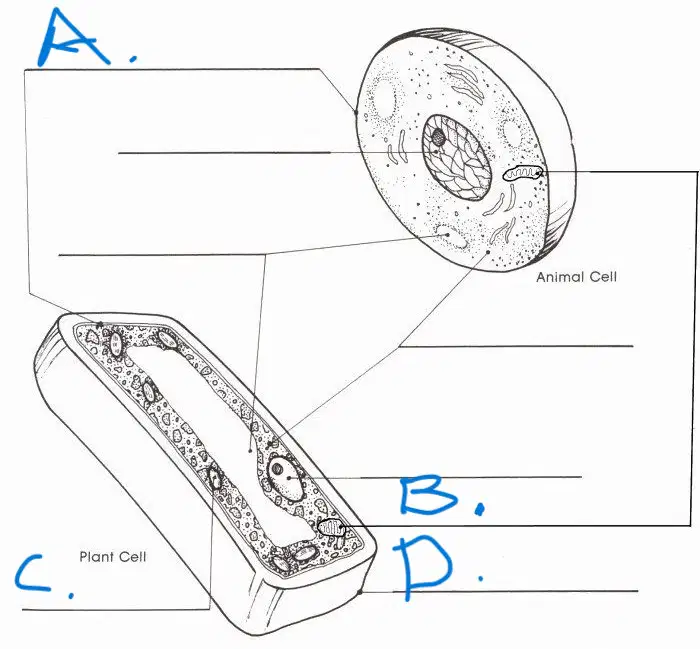
Letter A in the picture is

a)

Cell Membrane

b)

Mitochondria

c)

Chloroplast

d)

Cell Wall

33.

Letter B in the picture is

a)

Cell Membrane

b)

Mitochondria

c)

Chloroplast

d)

Cell Wall

34.

Letter D in the picture is

a)

Cell Membrane

b)

Mitochondria

c)

Chloroplast

d)

Cell Wall

35.

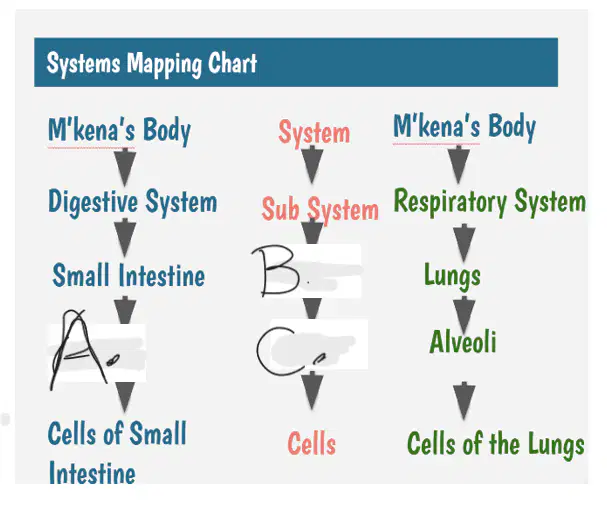
Which of the following goes in letter B?

a)

Organ

b)

Tissue

c)

Villi

36.

What happens when food is burned in an open system

a)

Mass is lost

b)

Mass stays the same

c)

Mass increases

d)

There is no mass

37.

How does food/resources impact the carrying capacity?

a)

More food or less food/resources = no change in carrying capacity

b)

More food/resources = less carrying capacity & less food/resources = more carrying capacity

c)

More food/resources = increase in carrying capacity & less food/resources = decrease in carrying capacity

38.

What are biotic factors in a habitat?

a)

sunlight

b)

soil

c)

plants

d)

clouds

39.

An environmental factor that causes a population to decrease is called a _________.

a)

limiting factor

b)

abiotic factor

c)

carrying capacity

d)

niche

40.

The Carbon Cycle

a)

b)

c)

d)

41.

The Phosphorus Cycle

a)

b)

c)

d)

42.

The Nitrogen Cycle

a)

b)

c)

d)

43.

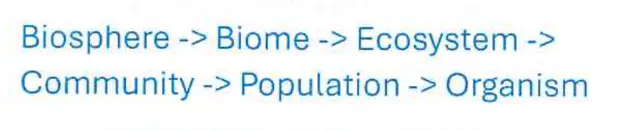
Which of these includes just one type of species?

a)

ecosystem & organism

b)

community & population

c)

community & organism

d)

population & organism

44.

Which of these includes both biotic & abiotic factors?

a)

biosphere, biome, & ecosystem

b)

biome, ecosystem, & community

c)

ecosystem, community, & population

d)

community, population, & organism

45.
Which two systems work together to transport nutrients to the body for energy?
a)
The nervous and digestive systems
b)
The respiratory and circulatory systems
c)
The digestive and circulatory systems
d)
The skeletal and digestive systems