
 Worksheets
fossils as a record
Total questions: 22
Worksheet time: 20mins

Most fossils form when living things die and are buried by _______________ that hardens into rock over time.
sediment
people
cement
ants

What type of fossils provide evidence of the activities of ancient organisms?
molds and casts
petrified fossils
trace fossils
carbon films

An organism is ______________ if it no longer exits and will never live again on Earth.
rare
extinct
plentiful
missing

A ______________________ is a scientist who studies fossils.
biologist
chemist
paleontologist
astronomer

Which of the following substances is not able to preserve entire organisms?
sticky tar
water
amber
ice

Scientist study the ____________________ to learn about the history of life, past environments on Earth, and how different groups of organisms have changed over time.
fossil record
animal record
historical record
Earth record



Where can the oldest layer be found?
The top layer
The middle layer
They are all the same age
The bottom layer

Which layer formed first?
Rock Layer W
Rock Layer X
Rock Layer Y
Rock Layer Z

Which animal part would most likely form a fossil?
Muscle
Fur
Lung
Bone

The remains of an organism studied by scientists is called a ____________.
paleontologist
fossil
dinosaur
shark

Which would be an example of a fossil?
Sedimentary Rock
Dinosaur Footprint
Oyster Pearl
Rotting Log

Which type of fossil is created when an organism gets trapped in tree resin?
Trace
Mold/Imprint
Amber
Cast

Which is NOT a way an organism could become a fossil?
It can be frozen in ice.
It can be quickly buried in sediment after death.
It can be trapped in the resin of a tree.
It can be left out in the sun to decompose.

An organism should be buried quickly after it dies if it has a chance of becoming a fossil
True
False

How do scientists learn about dinosaurs?
by studying fossils
by reading about them
by watching movies
by visiting Jurassic Park

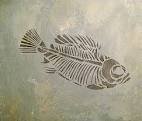
What conclusions could you make about the environment where the animal that made this fossil lived in?
It was under water because it has fins.
It might have been a grassland because it has 4 legs.
It could fly and live in trees because it has wings.

What is a good rule to follow when determining the age of rock layers?
The oldest is always on the top.
The rock layers get older as you dig deeper.
The youngest is always on the bottom.


