
Font size
 Worksheets
Basic Electronics MFP
Total questions: 150
Worksheet time: 1hrs 15mins
The unit of charge is _________
Voltage
Ampere
Coulombs
The resistance of a uniform Conductor is directly proportional to the ________of the conductor
Length
Cross Sectional Area
Conductivity
In a material where the resistance INCREASES with an increase in temperature, the material is said to have a ____________
Neutral Temperature Coefficient
Positive Temperature Coefficient
Negative Temperature Coefficient
________ is the capacity of energy
Current
Voltage
Power
You are given a resistor whose stripes are colored from left to right as orange, orange, brown, silver. Find the resistance value.
330 Ohms
33KOhms
3.3 Mega Ohms

What is this ?
Fixed Resistor
Resistor
Variable Resistor
If the volatge is 20V and the current flowing through the circuit is 2 mA . What is the resistance?
100 Ohms
1 K Ohms
10k Ohms

Look at this & say What type of source
Current Source
Voltage Source
Independent Source

What is the Name of this source?
Current Source
Resistive Source
Voltage Source
___________is the central part of an atom.
Protons
Neutrons
Nucleus
Materials which can conduct electricity better than insulator,but not as well as conductors. This is the definition of
diode
semiconductor
conductor
insulator
superconductor
Which is not one of the properties of semiconductor?
4 electrons in outermost orbit, in covalent bonding.
atoms vibrate causes electron to break free from the bonds.
Electron free leaves hole.
Semiconductor has 2 types of charge carriers.
all of the above are the properties of it
These are the characteristics of Trivalent impurities except
•3 valence electrons
•produce p-type semiconductors
•producing a "hole".
Antimony, arsenic, and phosphorus are the examples
The characteristics of p-type semiconductors is includes
Majority carriers are electron
Has tendency to gain electron
Has tendency to donor electron
Easy to conduct electricity
What is the most common semiconductor material used for producing integrated circuits
Quartz
Silicon
Diamond
Tantalum

Name this electronic component
How is conduction increased in an p-type semiconductor?
by increased applied electrical field
by decreased applied electrical field
by the availability of extra holes
by the availability of donor electrons
The potential difference created across the P-N junction due to the diffusion of electrons and holes is called___________
potential barrier
back emf
instantaneous speed

what is a diodes function
allows current to flow in one direction
allows current to flow in two directions
is a resistor
when a Diode is used as a half wave rectifier ....
It rectifies only one half of the input AC signal
It rectifies both the halves of the input AC signal
Which component of a circuit is used to measure current?


The number of diodes used to build a bridge rectifier
1
2
3
4
Efficiency of a centre tapped full wave rectifier is _________
a) 50%
b) 46%
c) 70%
d) 81.2%
50%
46%
70%
81.2%
The two legs of the diode are ________________ and _______________
(a)
Which image shows the output of a sine-wave after it has gone through a diode? (Half-wave rectified)


In a forward bias condition, further increase in the external applied voltage will increase the size of the depletion region.
True
False
In a forward bias condition, when the applied voltage is more than the potential barrier of this PN junction the resistance that is offered by the depletion region negligible.
True
False
In a reverse bias condition, the depletion region offers more resistance to these majority carriers.
True
False
Addition of pentavalent impurity to a semiconductor creates _____.
Free Electrons
Holes
Valence Electrons
Valence Ion
The forward voltage drop across a germanium diode is (a) .
Diode that is always connected in reverse bias condition.
(a)
A zener diode has ______ pn junction/s.
One
Two
Three
None
When a PN junction is connected to any external bias, it is considered in thermal equilibrium condition.
True
False
Which of the following is symbol of capacitor ?


Which of the following is the unit of inductance?
Ohm
Henry
Ampere turns
Webers/meter
What are the 3 legs of a transistor called?
Base, Electrode, Commiter
Bridge, Collector, Extruder
Base, Collector, Emitter
Brake, Collection, Emit

A transistor is essentially what?
An output device
An electronic switch
A deivce that limits the flow of power

The shorter leg of an LED is what?
Positive
Negative
a zener diode is used as
an amplifier
a rectifier
a voltage regulator

the picture is for
full wave rectifier bridge
half wave rectifier
switching circuit

halfwave rectified
fullwave rectified
sine wave
light bulb

What electrical component is used to smooth half wave current signals?
Resistor
Diode
Capacitor
Voltage regulator
Which image shows the output of a sine-wave after it has gone through a diode? (Half-wave rectified)
what is a diodes function
allows current to flow in one direction
allows current to flow in two directions
is a resistor
What is the function of a transistor?
Amplify signals
Regulate voltage
Store charge
What is the unit of frequency?
Watt
Hertz
Ohm
What is the purpose of a capacitor in an electronic circuit?
Store energy
Control current flow
Generate heat
The Maximum Efficiency of half wave rectifier is
20.4
40.6
81.2
10
The maximum amount of reverse voltage which can be applied on a diode before breakdown is reached
Zener Voltage
Peak Inverse Voltage
Breakdown Voltage
Threshold Voltage
In a forward bias condition, when the applied voltage is more than the potential barrier of this PN junction the resistance that is offered by the depletion region negligible.
True
False
In a reverse bias condition, the depletion region offers more resistance to the majority carriers.
True
False
A transistor has …………………
one pn junction
two pn junctions
three pn junctions
four pn junctions
The base of a transistor is ………….. doped
HEAVILY
MODERATELY
LIGHTLY
NONE OF THE ABOVE
A transistor is a …………… operated device
CURRENT
VOLTAGE
BOTH CURRENT AND VOLTAGE
NONE
The Direction of the arrow represents the direction of ___________ when the diode is forward bias
N Type material
P type material
PN Junction
conventional current flow
At what voltage the diode can conduct for silicon material
(a)
The minimum number of diode required for center tap full wave rectifier
1
4
2
3
The circuit which is used for converting the weak signal to strong signal
Rectifier
Amplifier
Oscillator
Clamper
Which among the following is a passive electronic component
Resistor
Capacitor
Inductor
All of these
Which among the following is not an example for active electronic component?
Diode
BJT
Inductor
FET
The components which are capable of processing / working (amplifying, Oscillating, Clamping, Clipping & etc…) on an electrical signal independently are called -------------------
(a)
In colour coding of resistors, the RED colour corresponds to the digit---------------
1
2
3
4
Potentiometer, Rheostat, Trimmer or Preset etc means --------------------resistors
(a)
Diode has
2 layer 2 junction
2 layer 1 junction
1 layer 1 junction
1 layer no junction
PN Diode is a uni directional device
True
False
AC to DC Conversion is called
Chopper
Inverter
Rectifier
Cycloconverter
Half wave rectifier has 2 diodes
True
False
Full wave rectifier conducts in both half cycles
True
False
What is the frequency of a square waveform if the period of that waveform is 1.25microsec?
8 kHz
0.8 kHz
0.8 MHz
Which resistive component is designed to be temperature sensitive?
Thermistor
Rheostat
Potentiometer
Photoconductive cell
When parallel resistors are of three different values, which has the greatest power loss?
The smallest resistance
The largest resistance
They have the same power loss.
Voltage and resistance values are needed.
The variation of a quantity such as voltage or current shown on a graph is known as ___________
Waveform
Peak value
Instantaneous value
Period
What is the duration of one cycle known as _________
Waveform
Peak value
Instantaneous value
Period
The repetition of a variable quantity, recurring at equal intervals, is known as ___________
Waveform
Instantaneous value
Cycle
Period
The value of a given waveform at any instant time is termed as ___________
Waveform
Instantaneous value
Cycle
Period
The maximum instantaneous value measured from zero value is known as?
Peak value
Peak to peak value
Cycle
Period
If the volatge is 20V and the current flowing through the circuit is 2 mA . What is the resistance?
100 Ohms
1 K Ohms
10k Ohms
The ratio of maximum to minimum resistance that can be obtained with N number of
3ohm resistors is
N
NxN
NxNxN
NxNxNxN

(a)
The reverse current in a diode is of the order of ………………
kA
mA
uA
A
In the breakdown region, a zener diode behaves like a …………… source.
Constant voltage
Constant Resistance
Constant Current
The ripple factor of a half-wave rectifier is …………………
0.48
1.21
2
2.5
The PIV rating of each diode in a bridge rectifier is ……………… that of the equivalent centre-tap rectifier
same
twice
half
three times
If the PIV rating of a diode is exceeded, ………………
the diode conducts poorly
the diode is destroyed
the diode behaves like a zener diode
none of the above
In a PN junction the potential barrier is due to the charges on either side of the junction, these charges are
Majority Carriers
Minority Carriers
Both of the above
Fixed Donor and Acceptor ions
The capacitance of a reverse biased PN junction
Increases as reverse bias is increased
Decreases as reverse bias is decreased
Increases as reverse bias is decreased
Is insignificantly low
When a diode is forward biased, the voltage across it
is inversely proportional to the current
is directly proportional to the current
remains approximately the same
is directly proportional to the source voltage
What are the 3 legs of a transistor called?
Base, Electrode, Commiter
Bridge, Collector, Extruder
Base, Collector, Emitter
Brake, Collection, Emit
Which terminal was heavily dopped....?
Emitter
Base
Collector
None of the above
transistor has 3 electrodes namely
PNP
NPN
Base/ Collector/ Emitter
Drain/ Gate/ Source
In a NPN Transistor, the current carriers are ………….
Acceptor Ions
Donor Ions
Free Electrons
Holes
In a Transistor ………………..
IE = IC + IB
IC = IE + IB
IE = IC – IB
IB = IC + IE
The arrow in the symbol of a transistor indicates the direction of ------
(a)
The number of depletion layer in transistor are
two
three
zero
none
Of the three regions,Emitter,Base,collector in a transistor which has the biggest size
collector
Base
Emitter
In PNP transistor the majority carriers are
Holes
Electrons
none
In NPN transistor _____________are minority carriers
holes
electrons
atoms
molecules
α of a transistor is -------
0.9 to 0.998
1
less than unity
>1
In a transistor,if β=100 and collector current IC =10mA then emitter current IE is -----
10.1 mA
12 mA
9 mA
2mA
Relationship between α and β is β =
1−αα
1+ββ
β
α
If the value of α is 0.9,then value of β is -----
9
90
50
500

A resistor's first three colour bands are brown, black, and red. What is its value?
10 ohms
10 Kohms
200 ohms
1000 ohms
A 47 Kohm resistor would have which colours on its first three bands?
yellow, violet, white
red, white, blue
yellow, violet, orange
orange, yellow, violet

The total current through this circuit is
0.02 amps
0.09 amps
50 amps
9 amps
As the resistance of a circuit increases, the current will...
increase
decrease
stay the same
What is the purpose of a resistor?
allow current flow
control current flow
prevent current flow
allow heat to build up
Four resistors in series 5ohms, 10ohms, 5ohms, 20ohms
Total resistance is -
5 ohms
30 ohms
40 ohms
50 ohms
Resistors in parallel, 5ohms, 5ohms, 5ohms
total resistance is
5 + 5 + 5 = 15 ohms
1/5 + 1/5 + 1/5 = 3/5 ohms
1/5 + 1/5 + 1/5 = 3/5 flipped = 5/3 ohms
1/5 + 1/5 + 1/5 = 3/15 ohms
2 resistors in parallel 4ohms and 8ohms, the total resistance will be
less than 4ohms
more than 4ohms
more than 8ohms
less than 1ohm

what is the total resistance of the circuit above?
8ohms
9ohms
4ohms
2ohms

what is the total resistance of this circuit?
5.5 ohms
6.5 ohms
2.5 ohms
4.5 ohms
If a circuit has 10 ohms resistance and 100 volts, what will the current be?
10 amps
100 amps
1000 amps
1 amp
If a circuit has 200 volts and total resistance is 20 ohms, what will the current be?
20 amps
30 amps
10 amps
50 amps

RT = ?
4.8 ohms
6.5 ohms
15 ohms
25 ohms

Identify which type of capacitor is shown in the figure?
Mica
Ceramic
Paper
Electrolyte

The resultant capacitance between and in the following figure is equal to
1 μ F
3 μ F
2 m F
1.5 m F
During charging a capacitor variation of potential V of the capacitor with time t is shown as


Tick the correct option/options
Equivalent capacitance in series combination is least among all capacitors
Equivalent capacitance in series combination is greatest among all capacitors
Charge on capacitor plates changes when dielectric is inserted between the plates
Capacitance of a capacitor does not depends on charge
Capacitor blocks__________ after long time.
alternating current
direct current
both alternating and direct current
neither alternating nor direct current
What is the value of capacitance of a capacitor which has a voltage of 4V and has 16C of charge?
2F
4F
6F
8F
The capacitance between two plates increases with
Shorter plate area and higher applied voltage
Shorter plate area and shorter distance between them
Larger plate area, longer distance between plates and higher applied voltage
Larger plate area and shorter distance between plates
The capacitance C is charged through a resistor R. The time constant of the charging circuit is given by
C/R
1/RC
RC
R/C
The capacitance of 1 μF equals
10 -12 F
10-8 F
10-6 F
10-4 F
Unit of capacitance is___________
Volts
Farad
Henry
Newton
What is capacitance?
The ability of a capacitor to store energy.
The ability of a capacitor to resist current flow.
The ability of a capacitor to generate a magnetic field.
What is the dielectric material used in capacitors?
Insulating material that separates two metal plates.
Conductive material that connects two metal plates.
Magnetic material that stores energy.
What is the difference between a fixed capacitor and a variable capacitor?
A fixed capacitor has a fixed value of capacitance while a variable capacitor can vary its capacitance.
A fixed capacitor can block DC current while a variable capacitor cannot.
A fixed capacitor has a smaller capacitance compared to a variable capacitor.
What is the capacitance number code used on small capacitors?
The first two numbers indicate the capacitance value and the third number indicates the number of zeros.
The first two numbers indicate the voltage rating and the third number indicates the capacitance value.
The first two numbers indicate the tolerance and the third number indicates the capacitance value.
What happens when capacitors are connected in series?
The total capacitance decreases.
The total capacitance increases.
The total capacitance remains the same.
When capacitors is arrange in series (3 capacitors), the equivalent capacitance C is
C = C1 + C2 + C3
1/C = 1/C1 + 1/C2 + 1/C3
C = QV1 + QV2 + QV3
C = CR1 + CR2 + CR3
If 4μF and 2μF capacitors are conneced in series, the equivalent capacitor is ___________.
1.33μF
0.75μF
6μF
2μF
If capacitors are connected in parallel, then potential difference across each capacitor is
same
zero
different
infinite
When a 4 V battery is connected to a capacitor, what is the voltage across the capacitor after a long period of time?
0.0 V
2.0 V
4.0 V
3.0 V

In the circuit, what is the output voltage?
a) 50 V
b) 70 V
c) 120 V
d) 170 V
Zener diodes are also known as
a) Voltage regulators
b) Forward bias diode
c) Breakdown diode
d) None of the mentioned
Which of the following is true about the resistance of a Zener diode?
a) It has an incremental resistance
b) It has dynamic resistance
c) The value of the resistance is the inverse of the slope of the i-v characteristics of the Zener diode
d) All of the mentioned
Which of the following is the correct symbol for the zener diode?


The depletion region of the Zener diode is ____________
a) Thick
b) Normal
c) Very Thin
d) Very thick
In the breakdown region, a zener diode behaves like a …………… source.
constant voltage
constant current
constant resistance
none of the above
The colour of emitted light from LED depends on
physical dimensions of LED
Number of available carriers
Type of semiconductor material used
Number of recombinations taking place
The advantage of LED is
Low operating voltage
Long Life
Small in Size
All the above

Identify
Potentiometer
Tangent galvanometer
Ammeter
multimeter
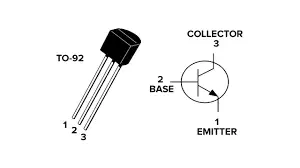
Identify
LED
Transistor
IC
Diode
The electronic component used in the process of rectification is...
Capacitor
Diode
Transistor

