
 Worksheets
Drama Final
Total questions: 75
Worksheet time: 2hrs 32mins

A list of characters that appear in the play or drama is called a (a) . They are also written in the brochure or program of the play.

The (a) is the time and place in which a story occurs. It can be in the past, present, or future. Examples include a classroom, the inside of a car during a traffic jam, or Mars.

Plays are broken up into _ and _ .
acts, scenes
books, chapters
acts, chapters
scenes, subscenes
Which of the following is NOT a component of PLOT?
exposition
rising action
characterization
climax
The words characters speak aloud are
dialogue.
stage directions.
props.
none of the above
The writer of a play is called the
author.
poet.
playwright.
composer.
Annie: I changed trains every time they stopped, the man who sold me that ticket ought to be tied to the tracks...you didn’t bring Helen. I was hoping you would.
Kate: No, she’s home.
Annie: You--live far from town, Mrs. Keller?
Kate: Only a mile.
Annie: Well. I suppose I can wait one more mile. But don’t be surprised if I get out to push the horse!
Based on the dialogue, which of the following is true?
Annie is reluctant to meet Helen and start working.
Kate brought Helen with her to the station.
Annie is very impatient to meet Helen.
Annie’s train ride was short and easy.
A drama is a
Story with no dialogue
Piece of scientific research
Story that's meant to be acted out
Short piece that's written in rhyme
Which of these is an example of a stage direction?
George: Hello Emily!
[Both face front, shy throughout]
George: You made a fine speech in class.
Emily: I was really ready to talk about the Monroe Doctrine.
Drag over the word that goes best with the image
Scene
Stage direction
Dialogue
Set
Things that drama will always contain (plot, characters, etc.)
Elements
Acts
Scenes
Playwrights
The written dialogue and directions provided by the playwright:
Script
Manuscript
Scenes
Acts
The series of events that form a plot:
Script
Elements
Forms
Action
A performer who assumes the role of a character in a play:
Director
Producer
Actor
Playwright
A dramatic speech by a single character (directed at other characters)
Soliloquy
Aside
Dialogue
Monologue
Any movable object on the set of a play
Prop
Set
Costume
Melody
A signal for an actor to speak or move
Monologue
Aside
Act
Cue
An actor's outfit and makeup
Costume
Greasepaint
Prop
Line
the exposition provides the audience with all of the following information except
setting
audience etiquette
conflict
characters
what part of the play marks the change in the protagonist's journey
exposition
rising action
climax
falling action
A person who performs a role in a play is called an
stage direction
actor
performance
playwright
The area where the actors perform is called the....
scene
stage
set
setting

What is the setting of this scene?
Gigi's house
Gigi's barn
A path in the forest
The woman's home
What is the theme of a story?
What the story is all about
The main plot
The dialogue between characters
The overall lesson or message


#1

#2
______________ is WHO the story is about.
Pantomime
Character
Setting

G
E
H
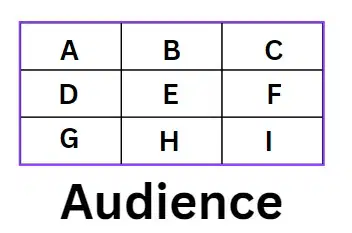
D
E
F
H
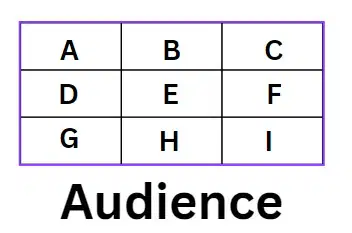
C
I
G
A
If you are walking away from the audience, you are walking _________________.
Upstage
Downstage
Stage Right
Stage Left

This raked stage illustrates the origins of what theatre blocking terms?
Stage Left, Stage Right
Backstage
Enter, Exit, Cross/Move
Upstage, Downstage
(a) , you need to speak louder.
The director tells the actors where to move on stage; the director gives the actors their (a)
Match the actor's blocking (where they are standing) with the correct stage direction (location on stage).

Down Center

Center Stage

Up Left

Down Right
What is a modulation (or variety) in pitch?
Upstaging
Blocking
Enunciation
Inflection
What is the act of improperly taking attention from an actor who should be the focus of interest?
Upstaging
Upstage
Downstage
Protagonist
What drives the behavior of a character?
Deprivation
Motivation
Degradation
Momentum
The clear and precise pronunciation of words is called _____________________.
improvisation
resonance
articulation
inflection
To make your voice fill the performance space means to ______________.
pantomime
improvise
project
inflect
______________________is a variety in speech; for example going from a yell to a whisper, a contrast.
Resonation
Inflection
Articulation
Improvisation
Name the elements for the 'Time' part
Quick
Direct
Heavy
Sustained
Free
Name the elements for the 'Weight' part
Light
Free
Direct
Heavy
Bound
Name the elements for the 'Flow' part
Heavy
Bound
Indirect
Free
Sustained
Which element of voice refers to how high or low your voice sounds?
Pace
Volume
Pitch
Tone
The speed at which a line is delivered or in which a series of lines is delivered
Pace
Volume
Tone
Pitch
What is the purpose of a pause in the context of delivering lines?
To add emotion to the voice
To emphasize the next line
To adjust the pitch of the voice
To increase the volume
The way that we add emotion to our voice
Pace
Tone
Volume
Pitch
How loudly or quietly a line is delivered.
Pace
Tone
Volume
Pitch
What does EMPHASIS/INFLECTION refer to in speech?
Using an accent associated with a region or culture
Speaking clearly and articulating words
Stressing a particular word or phrase
The components of Laban Movement
What is the primary purpose of using CLARITY in speech?
To perform better in dance and choreography
To stress certain words or phrases
To ensure the audience can hear and understand you
To identify and play characters physically and emotionally
What was Laban Movement primarily used for originally?
To create accents in speech
For dance and choreography
To stress words or phrases in a speech
To improve clarity in speaking
Which of the following is NOT a component of Laban Movement?
Direction
Weight
Accent
Flow
Which of the following best describes the flow of "FLOAT"?
Bound
Free
Restricted
Intermittent
What is the weight characteristic associated with the term "GLIDE"?
Heavy
Light
Variable
None of the above
DO NOW: What is the very first step a costume designer must take before beginning the design process?
Costume designers are important to the design team. Their work:
supports the mood.
supports the style.
supports the message of the play.
all of the above

Click on and analyze the image above. These are costume sketches created by a costume designer for the director of a musical production. After analyzing the sketches, the costume designs are for a production of:
Frozen
Rapunzel
Cinderella
The Frog Prince
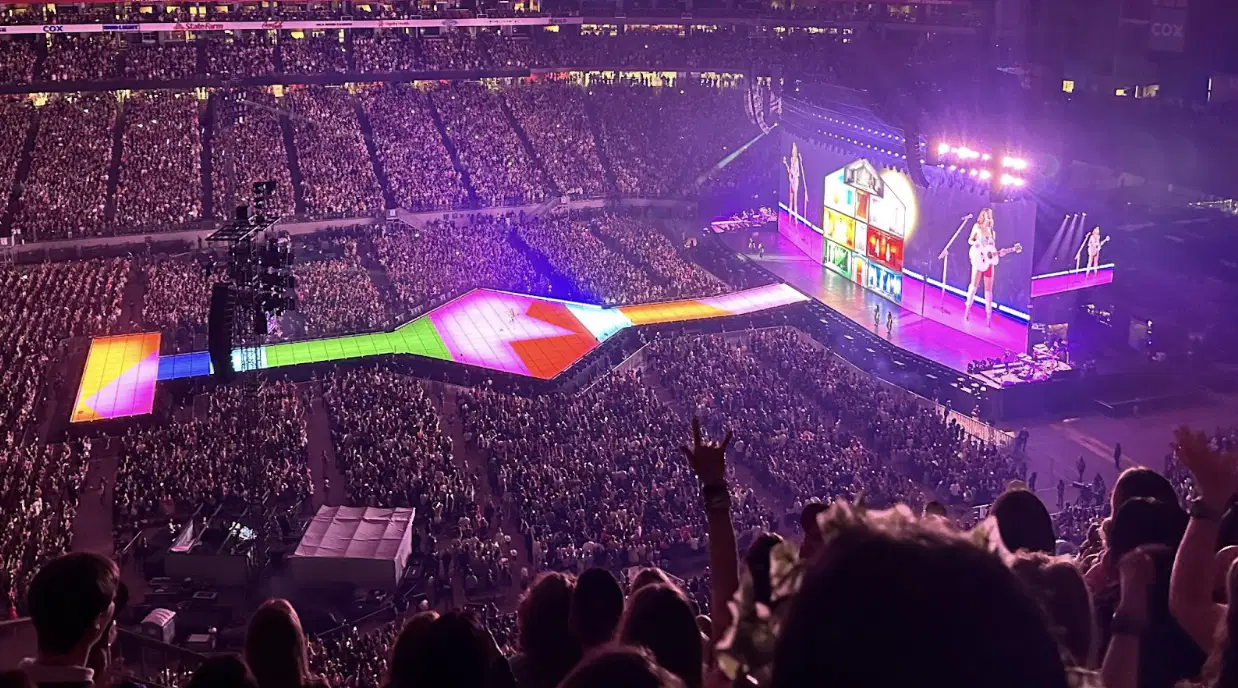
What type of stage does Taylor Swift use in her Eras Tour?
proscenium stage
in-the-round stage
thrust stage
traverse stage
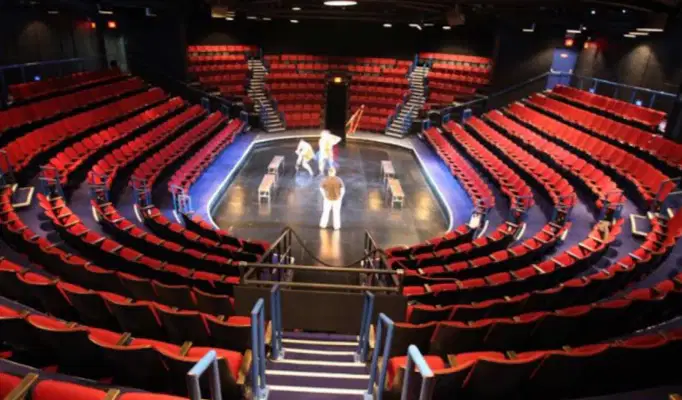
This is an image of...
thrust stage
proscenium stage
traverse stage
in the round stage

The stage used in "The Lion King" on Broadway is...
proscenium stage
thrust stage
in the round stage
traverse stage
What does a set design contribute to the story being told?
Creates the fun
Gives a visual experience
Creates the physical atmosphere and life of the play
Creates the physical atmosphere and the mood of the play
What must the set designer do first before creating design
Speak with the director
Read the play
Talk with the cast
help the scenic paint crew
Whose opinion does the set designer need to create the design of play?
Actors
Producer
House manager
Director

