
 Worksheets
EXAM Practice for World Geography Quiz
Total questions: 30
Worksheet time: 15mins
Which statement below BEST defines absolute location?
The cardinal directions that help you locate places on a map or globe
The exact spot at which the place is found on the map or globe.
The relative location at which the place is found on the map or globe.
It is a place with a physical and or human component
What are the two BEST ways a person is able to find the absolute location of a place? CHOOSE TWO
By using a grid system with coordinates
By using a GPS or Global Positioning System
By using a compass
By using the Equator and Poles as a reference point
By using the intermediate cardinal directions found on a map
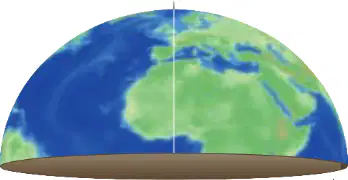
What is the importance of the equator in helping to determine the relative location of a place?
It breaks up the Earth into Northern and Southern Hemispheres
It breaks the Earth into colder and warmer climate zones
It breaks the Earth into drier and wetter regions
It breaks the Earth into Eastern and Western Hemispheres
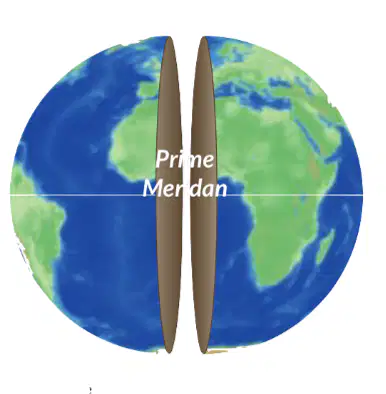
What is the importance of the prime meridian in helping to determine the relative location of a place?
It breaks up the Earth into Northern and Southern Hemispheres
It breaks the Earth into colder and warmer climate zones
It breaks the Earth into drier and wetter regions
It breaks up the Earth into Eastern and Western Hemispheres
What natural occurrence is primarily responsible for the development of both earthquakes and volcanoes?
a dramatic shift in climatic temperatures
movement of tectonic plates in the Earth’s crust
an excessive amounts of rainfall
catastrophic glacial and water erosion
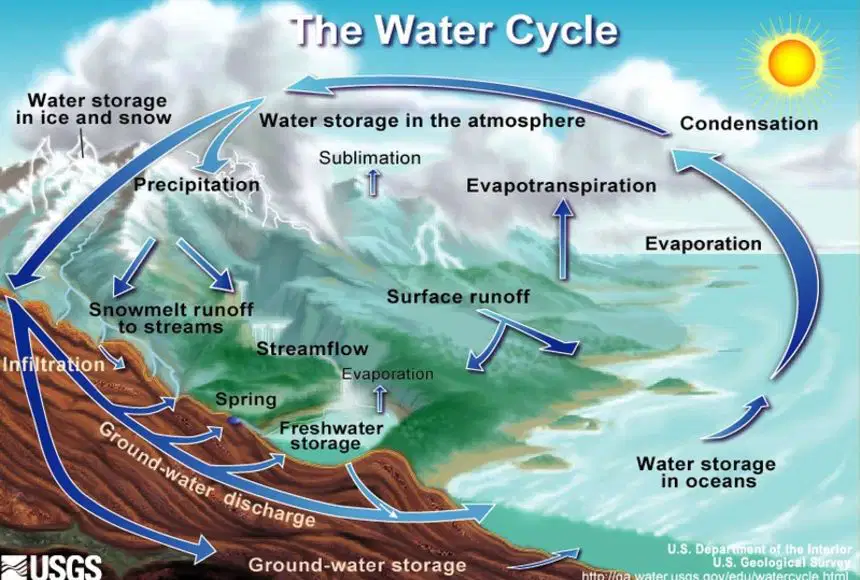
When analyzing the water cycle, what must occur to create the process of evaporation?
Precipitation cools as it falls to the Earth
Warmer air and water currents
Excess amounts of rainfall
Increased temperatures created in the mantle
Which statement below BEST represents how the weather and climate differ from each other?
Weather is considered a normal patterns of temperature and rainfall while climate is considered an extreme of both
Weather is the condition of the atmosphere at a specific time and place while climate is a typically weather pattern as evidenced over a longer period of time
Weather is considered the extreme patterns of temperature and rainfall while climate is considered the normal of both
Climate is the condition of the atmosphere at a specific time and place while weather is a typically weather pattern as evidenced over a longer period of time
What is the primary reason why the Earth experiences seasonal fluctuations in temperatures?
the extreme rotation of the Earth
the distance away from the North and South poles
the nearness of the Equator to the sun
the tilt of the Earth on its axis
The "Summer Solstice" marks the beginning of Summer and the __________ day of the year?
shortest
longest
coldest
warmest
What two seasons are begun on the equinoxes where there is an equal amount of both night and day?
Spring and Fall
Winter and Fall
Summer and Winter
Summer and Spring
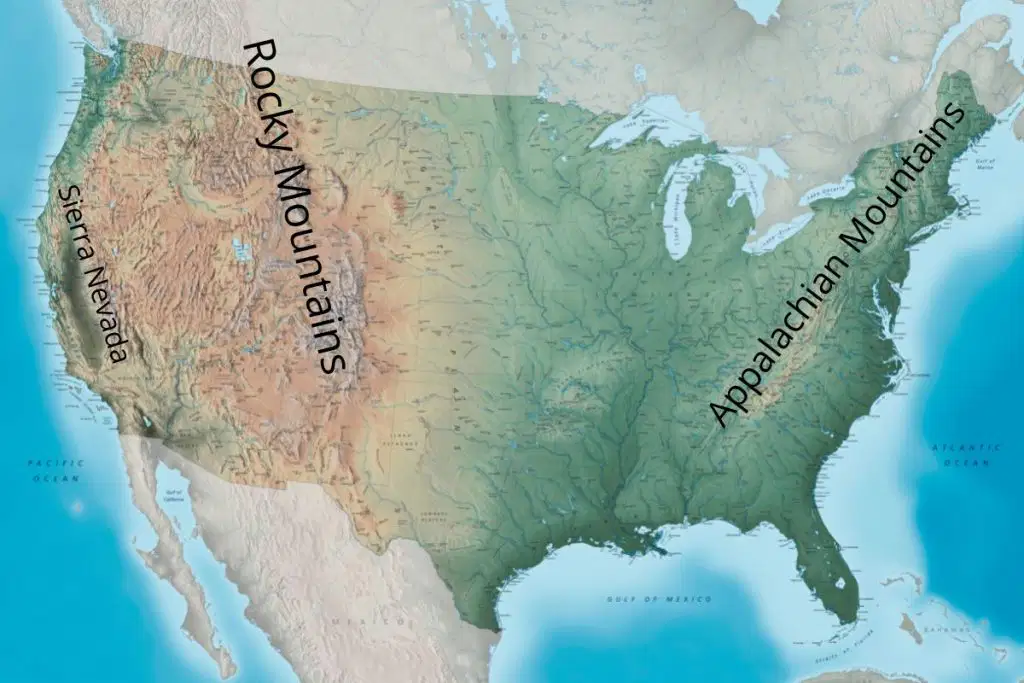
Which major mountain chain in North America is considered the "Continental Divide", the divide that determines which way rivers will flow?
Appalachians
Sierra Nevada
Coastal Ranges
Rocky Mountains
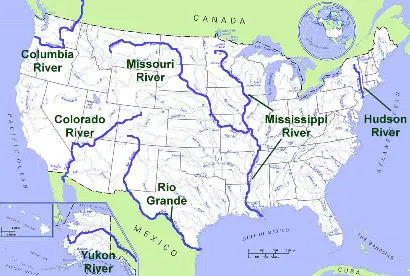
Which major river system in the United States shares a significant border with Mexico?
Rio Grande
Colorado River
Mississippi River
Brazos River
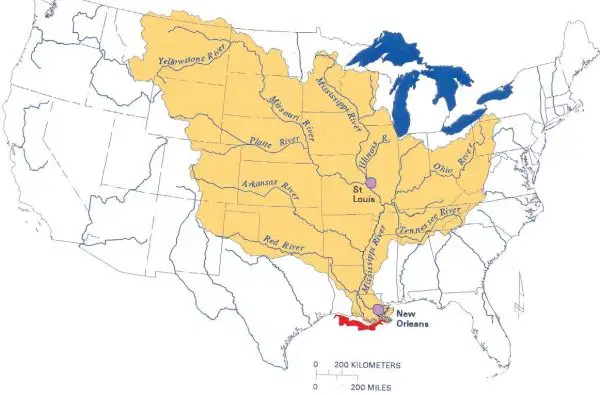
What TWO river systems that flow into the Mississippi River, making it the largest river in the Eastern United States? CHOOSE TWO
St. Lawrence River
Missouri River
Ohio River
Brazos River
Rio Grande
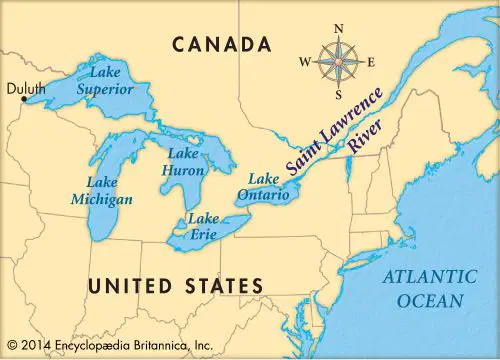
What TWO waterways share a significant border with the nations of Canada and the United States? CHOOSE TWO
St. Lawrence River
Columbia River
Yukon River
Great Lakes
Hudson Bay
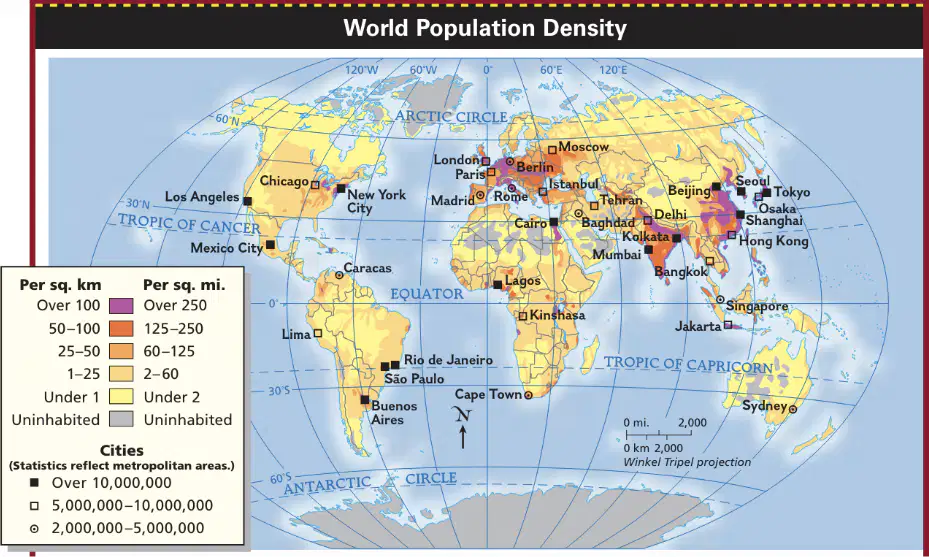
Based on the map, what conclusion can you draw about the population density of the United States?
The population is mainly concentrated in the central part of the United States
The population is mainly concentrated in the eastern part of the United States
The population is mainly concentrated in the western part of the United States
The population is evenly distributed across the United States
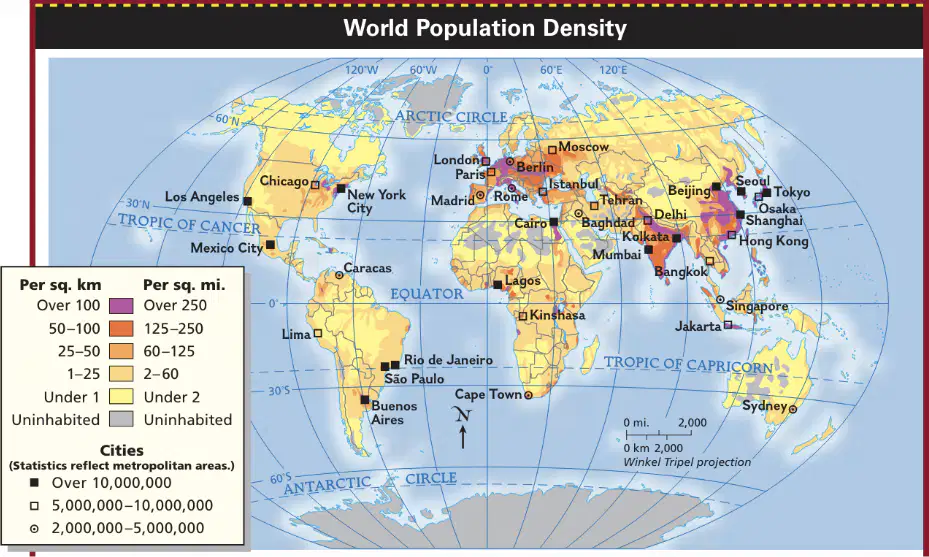
Based on the map, which two continents have the largest concentrations of population? CHOOSE TWO
Australia
Asia
North America
South America
Europe

Based on population, what are the two largest cities on the continent of Africa? CHOOSE TWO
Cape Town
Lagos
Cairo
Kinshasa
Mumbai

Based on the map below, which world religion would be considered the third largest?
Judaism
Christianity
Hinduism
Buddhism
Islam
What is the MOST important factor that makes western European climate much milder than the central and eastern parts of Europe?
Warm ocean currents from the Gulf Stream in the Atlantic Ocean
Large mountain chains like the Alps and Pyrenees block cooler air from blowing over Western Europe
Western Europe latitude makes it a warmer climate
The expensive river systems help bring warm water and air currents to the region
The steppe, a type of vegetation zone in large parts of Asia and Europe, is characterized by...
An abundance of lichen and mosses
Large stands of deciduous and coniferous forests
Significant quantities of permafrost
Large treeless expanse of grassland
Which two types of vegetation zones can be found in the colder climates of arctic and subarctic regions?
Deciduous forests and tundra
Coniferous forests and steppe
Tundra and coniferous forests
Steppe and deciduous forests
Which major river system in South America is considered the largest on the continent?
Orinoco River
Amazon River
Magdalene River
Parana River
________ is a region in south central South America that consists of short, clumpy grasses that is used primarily for cattle and horse raising.
Pampas
Llanos
Pantanal
Chaco
Based on your background knowledge, what conclusions can you draw about the majority of South America?
Much of South America is warm and dry for much of the year
Much of South America experiences cooler temperatures in the fall and winter
Using your background knowledge and the map provided, what best explains why the Atacama Desert produces little to no annual rainfall?
The rain shadow effect from the Andes Mountains
The relative location of South America to the equator
The lack of fresh water to provide evaporation for the continuation of the water cycle
The absence of river systems along the western coast of South America
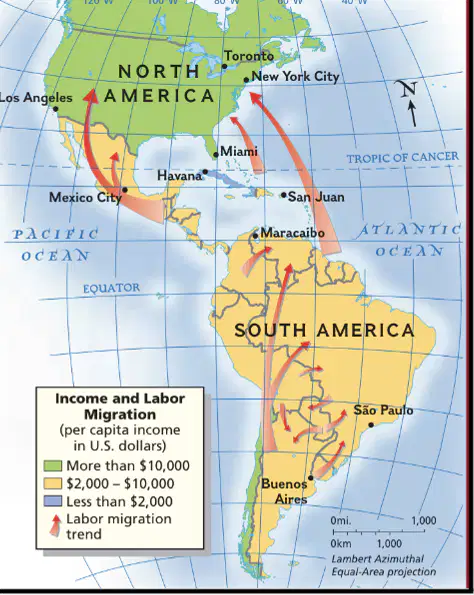
What best accounts for the migration patterns as evidenced on the map?
Climate is generally more agreeable in North America than in South America
The standard of living is higher in North America than in South America
The governments of North America are generally more democratic than in South America
The region of South America has a lack of natural resources as compared to North America
During the Cold War, which two emerged as “superpowers” that used money, resources, propaganda and proxy wars to convince other nations in Europe and around the world to take up the ideas of capitalism or communism?
The Soviet Union and Germany
China and the Soviet Union
China and the United States
The United States and the Soviet Union
What economic organization was created in 1950 in western Europe to counter the economic problems of the Cold War?
The Warsaw Pact
NATO
The European Union
The Iron Curtain
What region of Russia is known for its abundance of resources, but also experiences brutal winters and challenging terrain?
The Caucasus Mountain Region
Siberia
The Baltic Region
The Black Sea Region
Which statement best accounts for the headline "The Soviet Union: It's history"?
The Soviet Union loses the Cold War due to its economic collapse
The Cold War ends after surrendering to the U.S. Forces
Russia has remerges, agreeing to ally itself with western Europe
The European Union agrees to allow Russian to join as precursor to ending its communist government

