
 Worksheets
Enlightenment, Reformation, and Scientific Revolution
Total questions: 173
Worksheet time: 2hrs 45mins
Life, liberty, property are examples of
natural rights
social contract
state of nature
enlightenment
Enlightenment philosophers directly criticized the power of _______ Monarchs
Absolute
Enlightened
Malevolent
Russian
This philosopher believed there should be separate branches of government
Locke
Montesquieu
Rosseau
Voltaire
People give up some of their freedom in exchange for protection of their rights in the ...
Scientific Revolution
Age of Reason
State of Nature
Social Contract
Under the idea of the "consent of the governed," what happens if government fails to protect the peoples' rights?
Nothing, people must obey the government
The people would have a right to revolt
The people would be returned to a state of nature
People would be forced to enter into a social contract
Who did the Enlightenment thinkers have the greatest impact on?
The writers of the Bible
The writers of the U.S. Constitution
The writers of the Hunger Games
Latin American citizens who later elected their governments
Locke had a large influence on ________________ who ended up writing the Declaration of Independence and using Locke's words.
Thomas Jefferson
James Madison
Abraham Lincoln
George Washington
Before the scientific revolution the people believed kings got their power to rule
from Congress / Parliament
from the people (democratic elections)
from the worldwide web
from God (divine right)
Before the scientific revolution the people believed kings got their power to rule
from Congress / Parliament
from the people (democratic elections)
from the worldwide web
from God (divine right)

who was an inventor of one of the first telescopes?
Ptolemy
Nicolaus
Galileo
Abraham Lincon
The invention of the _______________________ helped spread old and new ideas
Printing Press
Microscope
Thermometer

John Locke believed in what three natural rights?
Life, Liberty, & Property
Life, Equality, & Happiness
Liberty, Equality, & Fraternite
Live Free, Die Hard

Who used a telescope to further support the Heliocentric Theory?
Galileo Galilei
Nicolas Copernicus
Johannes Kepler
Rene Descartes
Which of the following would be another good name for the Enlightenment?
The Age of Reason
The Age of Great Philosophers
The Age of Religion
The Age of Revolution
According to what you have learned, who said women should be treated as equal as men?
Hillary Clinton
Barbara Walters
Mary Wollstonecraft
Voltaire

Which philosopher thought that government should be separated into separate branches to protect the people’s freedom?
Rousseau
Voltaire
Montesquieu
Benjamin Franklin
John Locke

Which statement about the Scientific Revolution in Europe is accurate?
The existence of natural laws was rejected.
Scientists questioned traditional beliefs about the universe.
New ideas supported the geocentric theory of Ptolemy.
The Bible was used to justify new scientific findings.
Which pair of ideas were central to the Scientific Revolution?
social stability and economic self-sufficiency
observation and experimentation
technology and military expansion
scarcity and interdependence
Prior to the Scientific Revolution, who was the center of European power and knowledge?
the Catholic Church
the peasants
the merchants
political parties
3. Which statement represents a key idea directly associated with John Locke’s Two Treatises
of Government?
Freedom of speech should be denied.
The king’s power on Earth comes from God.
All people are born with the right to life, liberty, and property.
Individuals acting in their own self-interest will achieve economic success.
3. Jean-Jacques Rousseau and John Locke both agreed that a government should be based on the
consent of the governed
equal distribution of wealth
religious values of the people
separation of nationalities
Why is the Enlightenment considered a turning point in world history?
The factory system was used to mass-produce goods.
Martin Luther broke away from the Roman Catholic Church.
Europeans changed their thinking about the role of government.
The Columbian exchange occurred.

Which political philosophy is best supported by both documents?
Rule of law represents a social contract with the people.
Tyranny encourages liberty and security.
Separation of powers guarantees people fair treatment.
Oppression promotes the general will.
The idea that all people are born with the natural rights of life, liberty, and property is most directly associated with the writings of
(1) Baron de Montesquieu
(2) Thomas Hobbes
(3) Jacques-Bénigne Bossuet
(4) John Locke


John Calvin taught...
indulgences offer salvation
predestination determines salvation
salvation through faith
scripture alone should be studied

Which theory stated that the sun was the center of the solar system?
Geocentric Theory
Heliocentric Theory
Eurocentric Theory
Supercentric Theory

Nicolaus Copernicus (pictured) and Johannes Kepler have what in common?
They were both astronomers.
They both believed that planets orbited in circles
They both lived in ancient Greece
They both believed the sun was the center of the universe

Galileo Galilei used his telescope to confirm which astronomer's theory about the solar system?
Copernicus
da Vinci
Kepler
Ptolemy

Sir Isaac Newton thought of and wrote his three...
Laws of Motion
Theories of Light
Theses of Motion
Systems of Measurement
The period of time in early Modern Europe that saw many new scientific advancements is known as the...
Golden Age of Europe
Protestant Reformation
Renaissance
Scientific Revolution
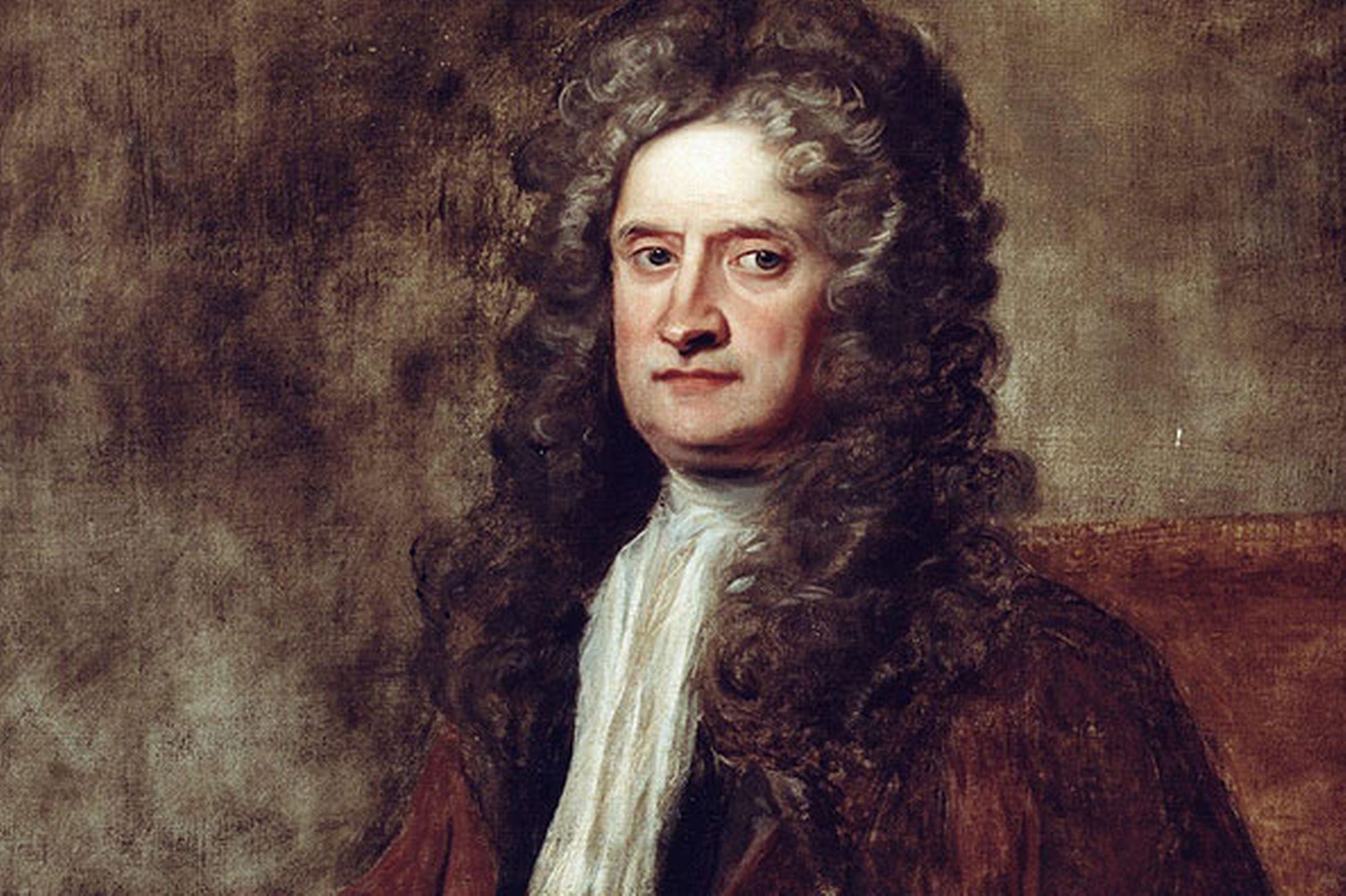
Who came up with the Universal Law of Gravitation?

"Divorced, Beheaded, Died, Divorced, Beheaded, and Survived...These are the destinies of what infamous King of England's wives?
Martin Luther
Henry VIII
Pope Leo X
Charles V
To be kicked out of the church.
excommunication
chivalry
feudalism
monastery
Scientist began questioning the teachings of the ___.
Roman Catholic Church
Jewish Church
God
The Government

During the Renaissance, there was a revival of interst in
perspective
humanism
Greek and Roman Civilizations
individual achievement
Why was the Printing press so important during the Renaissance?
It helped spread his ideas of Humanists
People began printing newspapers in America
People began writing mean articles about Kings
The bible was only printed in Latin

Why did the Renaissance begin in Italy?
Italians were better Catholics
Italy had better means of transportation
Italy sat in the middle of the Silk Road
Extreme wealth that Italians made from trade

A supporter of the Arts were called
Patrons
Kings
The church
What does the word renaissance mean?
recreate
reemerge
rebirth
reinvent
Which famous sculpture made Michelangelo the most famous sculptor in Italy?
Tribute Money
Venus di MIlo
Mary
David
How did scientists begin challenging authority during the Scientific Revolution?
By careful observation of nature and willingness to question old beliefs
By reading classic literature
By collecting samples of plant life
By forming new government ideas

Who proposed a mathematical system using REASON and LOGIC to find new truths through this type of scientific method.
Bacon
Newton
Boyle
Descartes
What was the first Protestant Christian religion called?
Lutheranism
Calvinism
Anglican
Mormon
Who was the founder of the Anglican Church, Church of England?
King Richard the Lionhearted
Queen Elizabeth
King Henry VIII
King Louis V
What is it called when someone was released from all or part of a punishment for sin in exchange for money?
Clemency
Indulgence
Appeasement
Gratification
Who was the German printer who developed movable type?
Niccolò Machiavelli
Johannes Gutenberg
Johann Straus
Nicolaus Copernicus
What is the word for local spoken language?
Vernacular
Simony
Indulgence
Heliocentric
What was the city-state that was the cultural center of Italy during the Renaissance?
Naples
Florence
Rome
Venice
Who was the first person to translate the Bible into English?
John Knox
John Calvin
John Wycliffe
John Deere
What was the Council of Trent?
An agreement to stop burning heretics
A treaty between Protestants and Catholics
An agreement to reform the Catholic Church
A treaty to end the War of Roses
The development of printing in Europe led to
increased corruption in the Catholic Church.
increased competition with China.
religious tolerance.
increased literacy.
What role did the ruling families of Italian city-states, like the Medicis, play in the Renaissance?
The ruling families built strong armies to keep outsiders from trading goods and exchanging ideas with their city-states.
The ruling families gave financial support to artists, poets, scientists, and scholars.
The ruling families forced peasants to build statues and buildings in the city-states.
Members of the ruling families pursued their own interests in the arts, literature, and science.
Humanist scholars differed from medieval thinkers in that humanists
tended to focus more on worldly subjects.
rejected the learning of Greece and Rome.
used Latin as their language for a scholarship.
tended to focus more on spirituality and religion.
Martin Luther believed that salvation could be achieved through
good works.
the purchase of indulgences.
faith and good works.
faith alone.
Martin Luther published his Ninety-five Theses against the Catholic Church for its
papal system of authority.
abuses in the sale of indulgences.
reliance upon faith as a means of salvation.
landholdings throughout Europe.
According to Martin Luther who gives salvation?
A priest
The pope
Jesus of Nazareth
God
What did the church do to educate and illustrate bible stories to their illiterate followers in the Middle Ages?
They used statues and stained glass art in churches
They used statues and pictures in the bible
The church ordered the bible to be printed in vernacular languages
They taught their parishioners Latin so they could read the Bible
How did Guttenberg’s improvement of the printing press help advance knowledge?
Books were now available to people for free
Books became more stylish
Books were cheaper to make/buy
Bibles were now harder to publish
Who were the inspiration for the Renaissance?
Ancient Greeks and Romans
Ancient Romans and Mongols
Ancient Chinese
Ancient Franks

Where did the Renaissance begin?

This is a famous Renaissance painting called the _______
Ms. Badamo
People who paid for art were called _______
Patrons
friends
Death

Who invented the printing press?
da Vinci.
Gutenberg.
Mrs. Spring.
What did the Renaissance of Italy refer to?
HIndu Beliefs
rebirth of art and learning
Who inspired Renaissance artists?
Chinese and Koreans
Romans and Greeks
__________ celebrates the individual
Humanism
Dogism
sonnets
Protestant

The _________ expanded ideas and increased cultural diffusion.
Perspective
Greece and Rome
Printing Press

Where did the Renaissance begin?
Mesopotamia
Japan
Florence, Italy
Mongolia
When was the Renaissance ?
1300s–1600s
1999-2009
2005- 2021
During the Renaissance, there was a "rebirth" of interest in
military strategies.
religion.
art and learning.
political freedom.
Which family helped fund the arts in Italy?
Shakespeare
Medici
da Vinci
Machiavelli
Where did the Renaissance begin?
Milan
Guatemala
Britain
Florence

Who invented the printing press?
Francesco Petrarch
Shogun
Gutenberg
Where did the Renaissance begin?
England
France
Italy
United States
What were the ideas behind the Renaissance?
Life after death
Christianity and the Bible
Black death
New ideas and exploration
What does the term Renaissance mean?
Reform
Rebirth
Restrict
Research
Which past civilizations influenced much of the Renaissance?
China and Japan
Rome and Greece
Mesopotamia and India
England and France
Machiavelli wrote a book giving advice to which group of people?
Priests wanting to convert the public
Teachers wanting to educate students
Princes wanting to maintain power
Bankers wanting to make money
In his book, Machiavelli's advice to leaders was to
Be fair and honest with people
Keep promises in order to build trust
Work with others to maintain peace and order
Do whatever was necessary to keep power
What is humanism's focus?
God, music, the BIble
Art of War
Black Death
Individual human achievement
What does it mean to be a patron of the arts?
To fund wars
To sponsor artists
To study science
To create art
Art flourished during the Renaissance because
Patrons funded their important work
Machiavelli wrote a book about the importance of art
Michelangelo and other artists came from wealthy families
Many artists were spared death during the plague
Which family sponsored many important artists?
Machiavelli
Romanov
Medici
da Vinci
What does it mean to be a "Renaissance Man"?
To be a man who lived between 1400-1500
To be knowledgable and skilled in many different subjects.
To believe that "the ends justify the means"
To be both an artist and a musician
Leonardo da Vinci was the original Renaissance Man.
True
False
What time period preceded (came before) the Renaissance?
WWII
American Revolution
Black Death
Cold War
Which of these events influenced the changing role of religion during the Renaissance?
the humanist movement
the removal of the pope
the burning of bibles
the invention of movable type
Which was a key intellectual movement or philosophy of the Renaissance?
Humanism
City State
Cultural relativism
Behavioralism
What is the definition of the Renaissance?
A dark period of history where there were many wars, deaths, and devastation.
A sustained period of renewed interest and remarkable developments in art, literature, science, and learning
Which of the following means non-religious?
Humanism
Single point perspective
secularism
Individualism
The Renaissance began in Italy because of its
Ideal location
Trading/wealth
Exchange of ideas
All of the above
closer stuff is bigger and further stuff is smaller
secularism
single point perspective
humanism
individualism
Art reflected the emphasis on the individual, not God, not the Church, not the community.
Single point perspective
secularism
individualism
humanism
Leonardo, Raphael, Donatello, Michaelangelo are all
Leaders
Priests
Artists
Chefs
Catholic schools are
Secular schools
Non-secular schools
Non-Religious school
A painting of "David" represents
Humanism
Single point perspective
Secularism
Individualism
The Renaissance led to what?
Reformation
Scientific Revolution
Age of Exploration
All of the above
During the Renaissance, there was a revival of interst in
perspective
humanism
Greek and Roman Civilizations
individual achievement

What is one way European society changed thanks to the printing press?
People quit the feudal system to find work else where
People began reading books in their vernacular
Literacy declined during the Renaissance
People began writing scripts for movies

How did Renaissance art differ from Medieval art?
It was more godly
It was more realistic, and had three dimensions
it portrayed religious subjects
it was more biblical

What economic change occurred during the Renaissance that allowed for the flourishing of the art?
Introduction of paper money
People began to Barter again
The Governments of Europe paid to educate Artists
Growth of a wealthy Merchant Class that became patrons the Arts
Why did the Renaissance begin in Italy?
Italians were better Catholics
Italy had better means of transportation
Italy sat in the middle of the Silk Road
Extreme wealth that Italians made from trade

What does the word "Renaissance" mean?

Which of these famous structures did Michelangelo paint?
the Louvre
the Coliseum
the Sistine Chapel
the Eiffel Tower
What event revolutionized the way people accessed and consumed ideas and information during the Renaissance?
Raphael's engraving technology led to mass produced art
Gutenberg invented a printing press with movable type
Erasmus called for the Bible to be printing in the vernacular
Shakespeare popularized literature by re-energizing the theater
Petrarch's work was an example of typical Renaissance characteristics because he
Studied poets and playwrights
valued education and classical learning
assembled manuscripts for churches
revived an interest in medieval scholarship

During Lorenzo's rule of Florence, in which years did he probably have more money to spend on the arts?
1434-1469
1469-1481
1421-1429
1397-1434
What central idea that Erasmus strived to achieve is implicit in this quotation? "Only a very few can be learned, but all can be Christian, all can be devout, and --I shall boldly add --- all can be theologians." -- Erasmus
to form a Protestant Church that is free from corrupt dictates of papal rule
to form theocratic societies based on a simpler version of Christianity
to promote the benefits of the printing revolution
to make religion more accessible by translating the Bible into the vernacular
What is an indulgence?
A piece of paper from the Church that people would buy to get their dead relatives into Heaven
A list of questions and complaints about the Church
A movement to go against and change the corrupt practices of the Church
Because of the Protestant Reformation...
The church split into two major groups- Catholics and Protestants
the Catholic Church began selling indulgences to people in order to get more money
European explorers were interested in science during this time because...
they realized there was a lot that they didn't know about the world.
they had travelled to Africa, Asia, and the Americas.
All of the above
Luther's main writing against the church was known as the
50 Reasons
95 Theses
10 Thoughts
The Church taught that the moon was in the center of the universe and that everything revolved around it.
True
False
People who challenged the church were sometimes threatened with death.
True
False
Renaissance Means
Start over
Redo
Rebirth
People say this invention started the Renaissance and helped Martin Luther spread his ideas.
Paintbrush
Cell phone
Printing press
During the Renaissance, there was a revival of interst in
perspective
humanism
Greek and Roman Civilizations
individual achievement
During the Renaissance, there was a revival of interst in
perspective
humanism
Greek and Roman Civilizations
individual achievement
How did Renaissance art differ from Medieval art?
It was more godly
It was more realistic, and had three dimensions
it portrayed religious subjects
it was more biblical
What economic change occurred during the Renaissance that allowed for the flourishing of the art?
Introduction of paper money
People began to Barter again
The Governments of Europe paid to educate Artists
Growth of a wealthy Merchant Class that became patrons the Arts
Why did the Renaissance begin in Italy?
Italians were better Catholics
Italy had better means of transportation
Italy sat in the middle of the Silk Road
Extreme wealth that Italians made from trade
A supporter of the Arts were called
Patrons
Kings
The church
Luther was ___________ by Pope Leo X because of his criticisms.
What mainly helped Martin Luther spread his teachings?
Word of mouth
Printing press
Food
Paintings
What was the treaty called that allowed kingdoms to choose whether they were protestant or Catholic?
Council of Trent
Peace of Augsburg
Jesuits
95 Theses