
 Worksheets
Semester 2 FINAL Review
Total questions: 64
Worksheet time: 52mins


Fall here tends to be dry and cool.
Weather
Climate
The temperature is currently 3oC.
Weather
Climate
We average 200 inches of snow each year.
Weather
Climate
There are only cirrus clouds in the sky today.
Weather
Climate

Warm air is (a) dense than cold air.
Which cloud looks puffy like cotton balls?
cirrus
cumulus
stratus
Which cloud is thin and feathery?
cirrus
cumulus
stratus
Which cloud covers the whole sky and looks like a blanket?
cirrus
cumulus
stratus
Which shows a cirrus cloud?


Which shows a cumulus cloud?
Which shows a stratus cloud?
What are clouds made of?
water droplets, ice crystals, and dust
water droplets and rocks
only water droplets
Which stage of the water cycle causes clouds to form?
evaporation
condensation
precipitation
collection/runoff
Why do cirrus clouds have more ice crystals in them than the other clouds?
they are "snow" weather clouds
they are the highest in the sky where it is colder
they are the biggest clouds, so they can hold more water
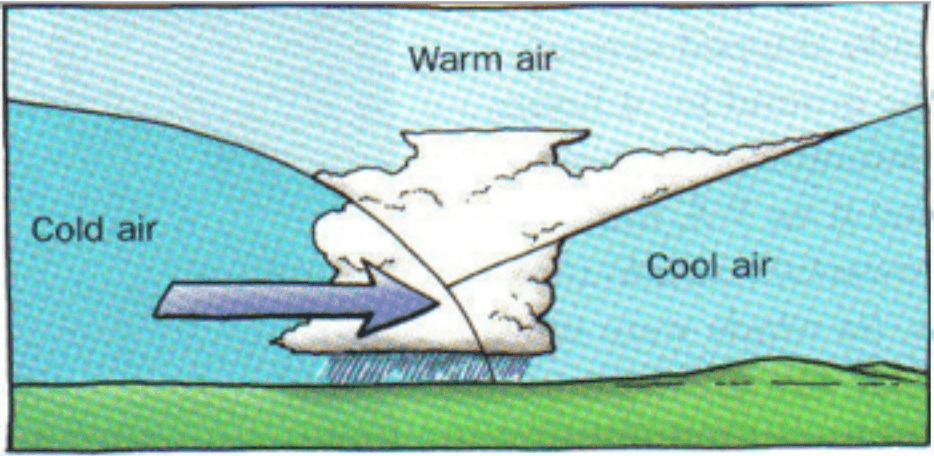
Name that front.
Cold Front
Warm Front
Stationary Front
Occluded Front

Name that symbol.
Cold Front
Warm Front
Stationary Front
Occluded Front
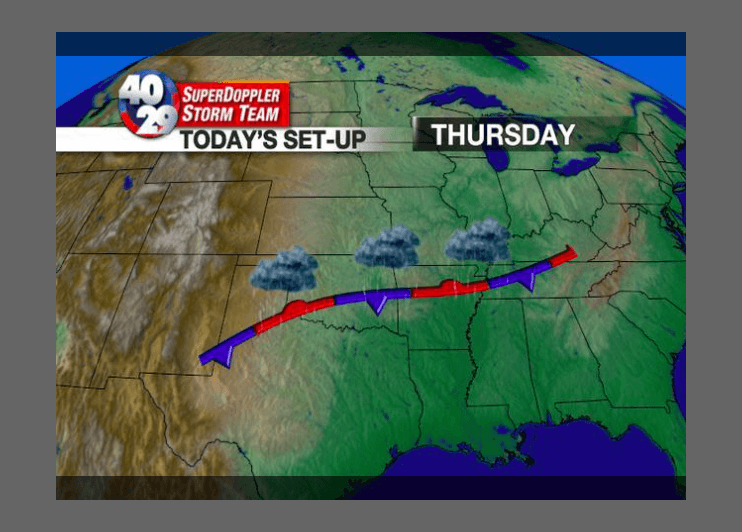
Name that symbol.
Cold Front
Warm Front
Stationary Front
Occluded Front
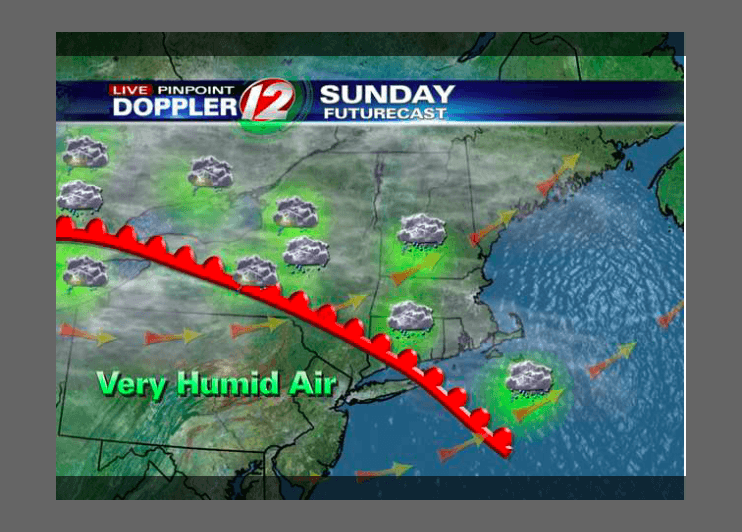
Name that symbol.
Cold Front
Warm Front
Stationary Front
Occluded Front
Which of the following can cause an increase in density that results in a deep ocean current?
The sun heats the water’s surface.
A warm wind blows across cold water.
An iceberg melts, adding fresh water to ocean water.
Warm water loses energy to its surroundings and cools.
Which of the following movements of ocean water has the greatest direct effect on the growth of producers?
upwelling
deep current
surface current
convection current
Which three factors most directly affect surface currents in the oceans?
upwelling, convection, and the sun’s energy
deep currents, convection currents, and surface winds
dissolved solids, dissolved gases, and the sun’s energy
surface winds, the Coriolis Effect, and continental deflection
Stream like movements of water
Ocean Currents
Continental Deflections
Coriolis Effect
Upwelling
Because the Earth rotates on its axis, circulating air is deflected toward the right in the Northern Hemisphere and toward the left in the Southern Hemisphere.
Ocean Currents
Continental Deflections
Coriolis Effect
Upwelling
Movements of ocean water located far below the surface.
Ocean Currents
Convection Currents
Deep Currents
Surface Currents
Currents are on the surface or less than a 100 meters deep (330 feet)
Ocean Currents
Convection Currents
Deep Currents
Surface Currents
The Gulf Stream carries _____________ water from the east coast of The United States to the West coast of Europe.
Cold
Warm
Freezing
Fresh
Warm water from surface currents replaces colder denser water that sinks to the ocean floor.
Ocean Currents
Convection Currents
Deep Currents
Surface Currents
Surface Currents are driven mainly by
Coriolis Effect
Wind
Upwelling
Moon

Ocean currents affect climates around the world. Based on the map, which area MOST likely has a warmer climate than expected?
1
2
3
4
Regular movements of water far below the oceans surface are called
Warm Currents
Deep Currents
Shallow Currents
Surface Currents
During a(n) ____ event, trade winds are much stronger than usual.
El Nino
La Nina
Normal
Partly sunny
Both El Nino and La Nina have this in common
Influence birds that migrate over the ocean
Influence rainy / dry weather world wide
The weather at the polar regions
The directions that ships travel in the oceans
During an El Nino, trade winds are typically...
about average
stronger
weaker

The image is of a(n):
El Nino event
La Nina event
Non-El Nino (normal conditions)

The picture below is of a(n) ____ event.
Non-El Nino (Normal)
El Nino
La Nina

The picture represents a(n) ___ event.
El Nino
La Nina
Non-El Nino (normal conditions)
Without question, ENSO events:
Are preventable
Eliminate sources of rain
Are really scary
Impact everyone on the planet somehow
La Niña is characterized by ______________ of the Western Pacific Ocean.
a warming
a cooling
average temperatures
El Niño ___________________ the trade winds causing the warm pool to move ___________.
weakens or reverses; west
intensifies; west
weakens or reverses; east
intensifies; east
In El Nino, rain moves east with the warm pool causing rainy/stormy weather in California and less hurricanes in the Atlantic Ocean.
True
False
When La Nina and hurricanes pull cold water to the surface and bring nutrient rich sediments from the seafloor, this is called ___________________.
upwelling
downwelling
El zapato
La Gloria
The sun provides the energy necessary to drive convection within Earth's oceans.
True
False
Hot air (a) and cold air (b)
What happens when heat rises?
Cool air takes its place
Becomes more dense
Energy is produced

This Image represents...
Downwelling
Upwelling
Thermohaline circulation
Rip Current

Which ocean is found between Africa, India, and Australia?
Pacific Ocean
Indian Ocean

Which ocean is between North America and Asia?
Pacific Ocean
Atlantic Ocean

What ocean is number 5?
Indian
Southern (Antarctic)
Pacific
Atlantic

What ocean is number 2?
Pacific
Indian
Arctic
Atlantic

What oceans border North America? Choose 3!
Arctic Ocean
Pacific Ocean
Atlantic Ocean
Southern Ocean
Indian Ocean

Which continents touch the Atlantic Ocean? Choose 4!
North America
Asia
South America
Africa
Europe

Select the ocean
the Arctic Ocean
the Atlantic Ocean
the Indian Ocean
the Pacific Ocean
the Southern Ocean

Select the ocean
the Arctic Ocean
the Atlantic Ocean
the Indian Ocean
the Pacific Ocean
the Southern Ocean

Select the ocean
the Arctic Ocean
the Atlantic Ocean
the Indian Ocean
the Pacific Ocean
the Southern Ocean

