
Font size
 Worksheets
EOY Social Studies 24
Total questions: 54
Worksheet time: 36mins
Where would an archaeologist find artifacts from different times? Match and label the dates with the soil picture below.
A stone weapon made by an early homosapien
A knife made out of bronze material made for a warrior

Hominids originated in what continent?
North America
Africa
Asia
Antartica

What is a fossil?
Remains of things that were once living
Remains of things that were made by man
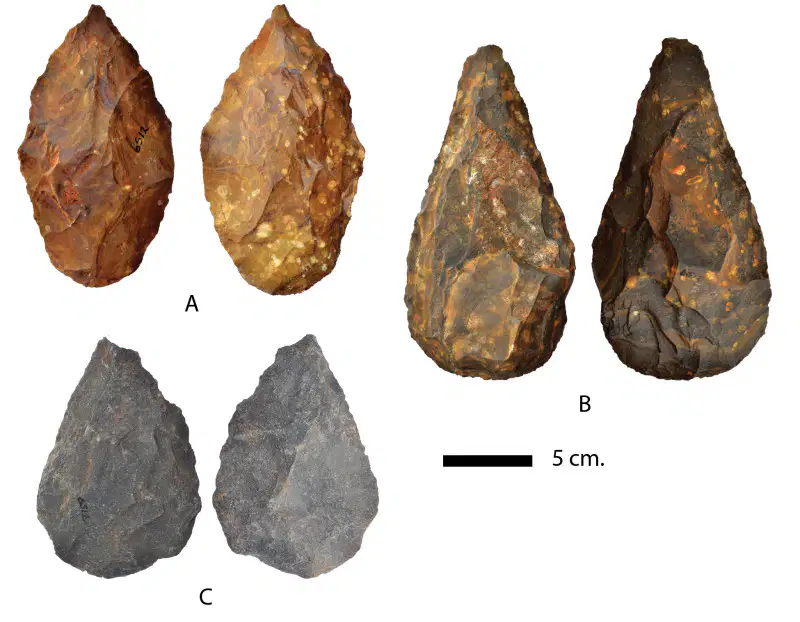
What is an artifact?
Remain of something once living
A piece of leftover plant
Remains of something that was made by man
Time before writing was invented
Which civilization invented the wheel?
Mesopotamia
Egypt
India or China
Greece
Rome
Match the Vocabulary Word to the correct definitions:
A ruling family, often passing leadership from one generation to the next.
dynasty
The King of a united Egypt
A system of many government officials who carry out government rules.
Bureaucracy
A way to preserve bodies so spirits may use them in the afterlife.
mummy
a place to store food surplus
Which river did Sumerians rely on?
The Nile
The Euphrates
The Jordan
If a common man cut out the eye of another common man, what would his punishment be according to Hammurabi’s Code?
He would have his eye put out
He would be put to death
He would have to pay certain amount of gold
Nothing
a place to store food surplus
Which statement is NOT true about pyramids?
They were built using the principles of mathematics and geometry.
They were palaces where pharaohs often held lavish parties in the summertime.
They were the largest man-made structures on earth for nearly 4,000 years.
They were made out of giant blocks of stone cut by hand and moved into place using a ramp.
What were people called who were trained to write?
Scribes
Writers
Good students
Government leaders
Why did the Egyptians preserve their dead?
To get them ready for the next life.
It was fun.
To show faith to their gods.
It was fashionable.
What two things did Egyptians do to prepare for an afterlife?
Build a pyramid; meet the pharaoh
Eat crocodile stew once a year; be buried in purple clothing
Be a good person; have their dead body preserved
Eat crocodile stew once a year; be buried in purple clothing

Which civilizations had the great Nile River for transportation and irrigation?
Mexico
Egypt
Rome

Which civilization built the pyramids of Giza?
Chinese
Roman
Egyptian
What god was killed by his brother and had to become god of the underworld?
Ra
Isis
Osiris
Set
Most Egyptians did what job?
Priest
Scribe
Merchant
Farmer
What did Narmer (King Menes) do that caused the start of Egypt's first dynasty?
invaded the country of Kush
brought settlers to the Nile Valley
built the first Egyptian city
united Upper Egypt and Lower Egypt
What was left in the body during mummification?
Heart
Liver
Brain
Stomach
Egyptians believed in an afterlife.
True
False
Pharaohs of Egypt were buried with lots of treasure and supplies for the afterlife
True
False
A _____________________ is a line of rulers from the same family.
nation-state
shaduf
papyrus
dynasty
Put the social classes in order from highest to lowest
Pharoah
priests
scribes
artisans/merchants/
craftspeople
peasants/farmers/
slaves
Which of the following can BEST be used as evidence that the ancient Egyptians had great knowledge of mathematics?
the use of hieroglyphics
the building of the pyramids
the technology of mummification
the development of ironworking
Why did the Egyptians obey the pharaoh and his officials?
The Egyptian people elected the pharaoh.
They only obeyed if they agreed with what pharaoh said.
They obeyed because everyone was equal.
Egyptians saw the pharaoh as a god-king.

In ancient times, only __________ could write in the Egyptian language.
scribes
artisans
peasants

What tool did ancient Egyptians use to raise water into canals?
papyrus
shaduf
sickle
Old Kingdom
Pharaohs buried in pyramids
Middle Kingdom
Time of Expansion, art, & literature
New Kingdom
Peak of Egyptian power & prosperity

Which way does the Nile River flow?
north to south
south to north
east to west
west to east
How did mummification contribute to advancements in the field of science?
Dermatologists learned how to keep skin clean and soft.
Artisans learned how to make sturdier furniture.
Engineers learned how to build stronger buildings.
Doctors learned about the structure of the body and its organs.
Egyptians were loyal to the pharaoh because they believed
he was the father of a sphinx
he was the reincarnation of Horus
he was half sphinx

True/False: Women were allowed to work and own property in Ancient Egypt.
True
False
Match the following

Papyrus

Sarcophagus

Hatshepsut

Canopic
To adapt wild plants or tame wild animals and breed them for human use
Hominid
Nomad
Hunter-Gatherer
Domesticate
A period of time during which hominids made tools from stone. The earliest known period of prehistoric culture
BC/BCE
The Stone Age
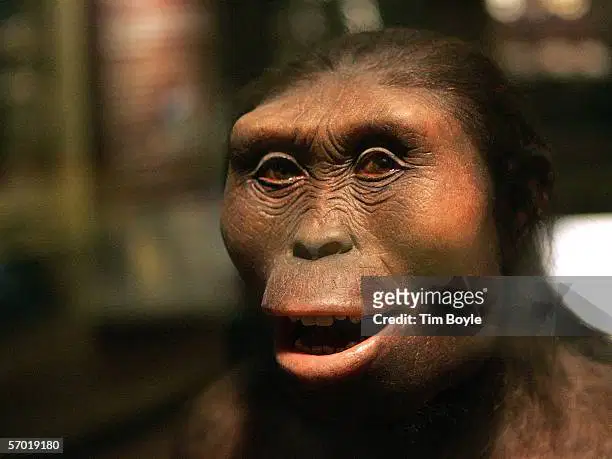
What was the name of the skeleton found in Africa believed to be one of the first hominids
Fred
Lucy
Adam
Brandy
What were the names of the eras in the Stone Age
Paleolithic
Mesolithic
Neolithic
All of the above
Why is it called the Stone Age?
People played rock paper scissors all day
People used tools made from stone
People had stone collections
Cars were made of stone
Make a prediction: The discovery of agriculture lead to a raise in population. This lead to the raise of cities. What do you think will happen next.
People will invent governments to help keep the population organized and safe.
People will go back to hunting to give themselves more time.
People will invent computers to help store information.
People will invent clothes to keep as they dwelled in caves.
An archaeologist is a scientist who studies past human life by analyzing fossils and artifacts.
True
False
What is agriculture?
Digging a ditch to bring water to a field
People that wander from place to place to find food
An area with cities and settled homes
Another word for farming, raising crops, and/or raising animals for food
What is a surplus?
Having more of something than is needed
People that wander from place to place when the food supply runs out
A person with a specialized job that usually makes something with their hands
Digging a ditch to bring water to a field
When did the Stone Age end?
when people got Iphones
We are still in the Stone Age
When technology developed smelting and the making of metal tools (copper, bronze,)
How did fire help the early humans?
They could not roast marshmallows.
They had something to entertain them.
It kept them warm.
Now they could have parties.
Match the Vocabulary Word to the correct definitions:
A ruling family, often passing leadership from one generation to the next.
dynasty
The King of a united Egypt
A system of many government officials who carry out government rules.
Bureaucracy
A way to preserve bodies so spirits may use them in the afterlife.
mummy
The writing system hieroglyphics belongs to which ancient civilization?
Mesopotamia
Egypt
India
China

