
 Worksheets
6G - EOY TEST
Total questions: 50
Worksheet time: 4hrs 1mins

Wegener develops the hypothesis that Earth's landmasses had once been fused together and then slowly broke apart in a process called:

The zipper-like mountain ranges that run across the floors of the ocean are called:
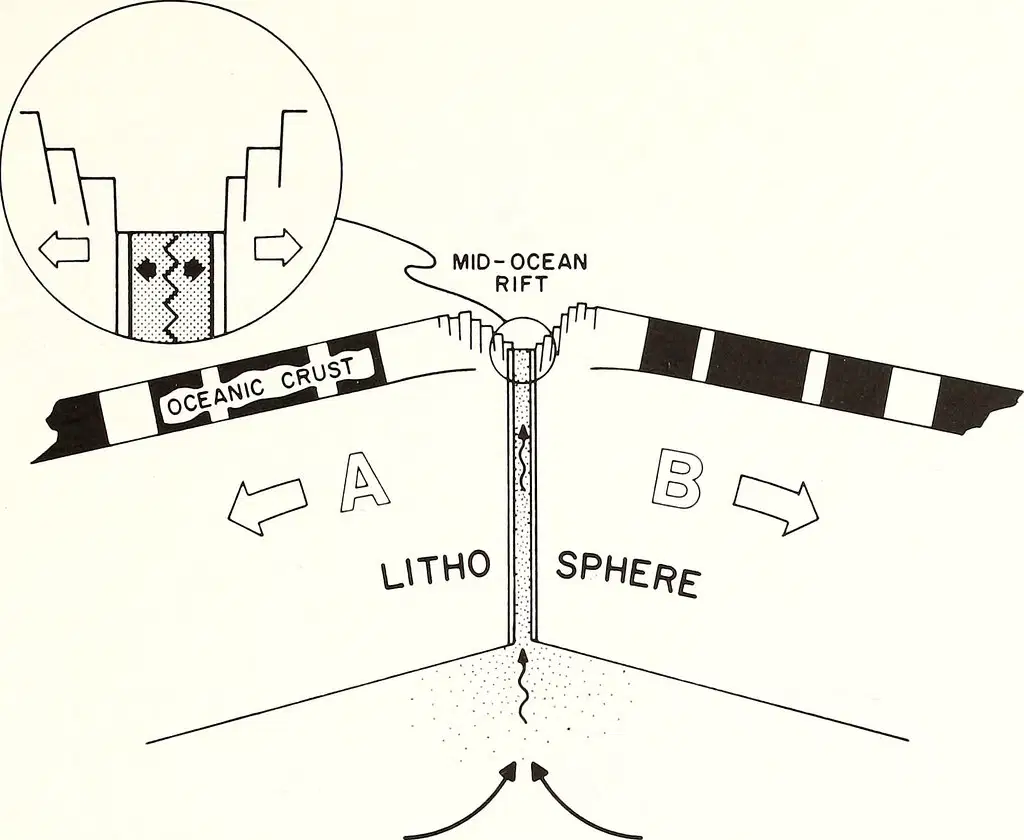
The following process is called:
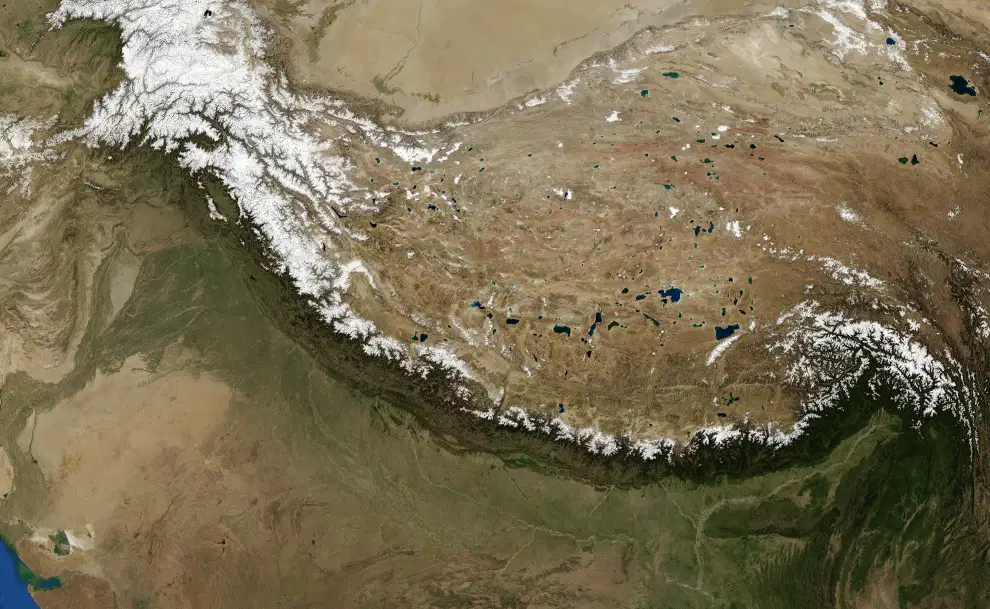
_______________ gives rise to the Himalayas.
What drives tectonic plate motion?
How does the plate tectonic move?
When might the continents we know today form a new supercontinent?
How do moving tectonic plates change Earth's crust?

The diagram represents a __________boundary.
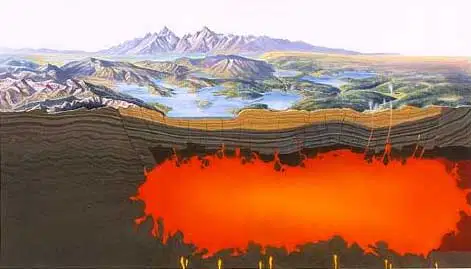
Magma is the molten rock from the mantle?
The geosphere is LIVING
True
False
What items are found in the geosphere?
Ice
Air
Sand
Hippo
The geosphere is LIVING
True
False
What Sphere includes all living things?
Biosphere
Lithosphere
Atmosphere
Hemisphere


Minus the air in this picture, this image best describes which connection?
Atmosphere-Biosphere
Hydrosphere-Atmosphere
Hydrosphere-Geosphere
Geosphere-Biosphere
Water vapor is an example of what sphere?
Atmosphere
Cryosphere
Biosphere
Geosphere
Snow is an example of what sphere?
Atmosphere
Hydrosphere
Biosphere
Geosphere

Polar Bears hunt seals on ice is an interaction of what two spheres?
Biosphere-Hydrosphere
Biosphere-Atmosphere
Hydrosphere-Atmosphere
Hydrosphere-Geosphere
The hottest planet is?
Saturn
The Sun
Venus
Mercury

These planets are the?
Inner(Rocky) planets
Outer(Gas Giants) planets

What planets are these?
Inner(Rocky) Planets
Outer(Gas Giants) Planets
The coldest planet is?
Neptune
Earth
Mercury
Jupiter
Which planets have humans visited?
Mars
the moon
Venus
none

Planet Earth is the _____closest to the sun.
Fifth
First
Third
Sixth

The STREAK OF LIGHT produced by a falling chunk of rock from space is a _____ .
Meteorite
Shooting Star
Meteor
Asteroid
Select the following planets that have rings.
Neptune
Saturn
Jupiter
Mercury
Uranus
Which planet is the only planet that is able to support life?
Mars
Venus
Earth
Uranus


What is another name for 'fool's gold'?
Gold
Pyromania
Pyrite
Malachite


Are there minerals in soil?
Yes
No
Rocks filled with fish fossils and dinosaur tracks are MOST LIKELY
igneous
intrusive
metamorphic
sedimentary

What is a mineral?
A rock with a high concentration of minerals
A substance derived from living matter
A solid, inorganic, naturally occurring substance with a specific chemical composition and crystal structure
A solid substance made up of minerals

Resources that are not able to be reproduced as quickly as they are used are called _____.
renewable resources
replaceable resources
non renewable resources
non replaceable resources
Renewable resources ...
are not replaceable
are used more frequently than non renewables
are never going to run out
going to run out
What are fossil fuels?
coal, oil, uranium
oil, natural gas, uranium
coal, oil, natural gas
geothemals, coal, natural gas



To find the mass of an item, you need to know its density and volume. How can you calculate the mass given these two values?
M = D/V
M = V/D
M = D x V
Match the sphere to its definition.
Atmo
Air
Bio
Life
Geo
Rock
Hydro
Water

What is the energy source that drives the water cycle?
The moon
The heat from our home in the winter all around the world
The sun
The heat generated soley from the core of the earth

