
Font size
 Worksheets
MCAS - Federal Gov Review
Total questions: 50
Worksheet time: 38mins

The United States started as 13 (a) that belonged to (b) (c) (England).
Two of the major causes of the American Revolution was...
Pick 2 answer below
The creation of new British taxes in the colonies
French and Indian War
After the French and Indian War, Great Britain created new taxes in the 13 colonies to help pay for the war. Match each of the taxes to its name.
Tax on things printed on paper
Stamp Act
Tax on goods such as glass, lead, cloth and tea imported from Britain
Townshend Acts
A tax on sugar and molasses that was sold in the colonies.
Sugar Act

After the French and Indian War, many colonists opposed the creation of new taxes. Why didn't they want to pay the new British taxes?
Colonists believed that if they were going to continue paying taxes to England that they should have representation in the government there.
The colonists knew that they should not simply select the longest answer because the longest answer is not always the correct answer. However, best of luck to you if you want to just pick the answer with the most words in it.
In response to the new taxes created in the colonies following the French and Indian War, some colonists began to speak out and _________ against these taxes and a lack of representation in Great Britain.

What was the "Boston Massacre"?
The colonists believed that the only way to stop the British from creating new taxes that they had to pay was to select the longest answer option to the question.
The Boston Massacre was a political protest where colonists dumped tea into the Boston Harbor to protest the Tea Act.

What was the Boston Tea Party?
The colonists celebrated the end of the Revolutionary by drinking tea. If you select this answer, you are choosing incorrectly. Read more carefully.!
The Boston Tea Party was a confrontation on March 5, 1770, in which British soldiers killed five colonists in Boston, Massachusetts.
How did the British punish Boston after the Boston Tea Party?
Declaring war on the colony of Massachusetts

The Intolerable Acts was an attempt by the British to punish the people of Massachusetts after the Boston Tea Party. What did the Intolerable Acts do?
Choose all 3 options that are correct
Took away Massachusetts right to have its own colonial government
Closed down the port in Boston. No goods could go out or in by ship.
Required all colonists to be in their homes between the hours of 6pm and 5 am
Allowed British soldiers to sleep in the homes of people in Massachusetts
Created a new tax on all goods grown/built in Boston and sold in other colonies.

True or False: The Intolerable Acts was an attempt by British to punish and isolate Boston from the other colonies, but it actually helped to unite the 13 colonies against Great Britain.
After the creation of the Intolerable Acts, the 13 Colonies held the (a) Continental Congress. At this meeting representatives from (b) of the 13 Colonies met and decided to (c) (refuse to buy) all British goods in their colonies and wrote a letter to the King of England asking the colonies to be given (d) in the British government. (e) did not send any representatives.
What was the Second Continental Congress?
What did the Second Continental Congress do?
Select all that apply
Ran the government during the Revolutionary War.
Wrote and issued the Declaration of Independence
Wrote the Articles of Confederation
Chose George Washington to lead the military in the war against Great Britain

When the 13 colonies ratified (approved) the (a) of (b) on July 4th, 1776 what they were doing was declaring that the colonies had the right to (c) themselves.
On September 3, (a) the Revolutionary War ended with the signing of the (b) of Paris which recognized the 13 Colonies were no longer a part of Great Britain and were (c) to (d) themselves as they choose.
The Articles of Confederation created the first system of (a) in the United States. The Articles stated that “each state retains its sovereignty, freedom and independence”. So each state was really like an individual (b) that entered an alliance with the other 12 states to (c) each other out. The national government could ask for the states do things, but could not (d) them to do these things.

Which of these were weaknesses of the Articles of Confederation?
There was only 1 branch of the federal government, the Legislative Branch. There was no Executive Branch or Judicial Branch.
The Legislative Branch could make laws but had no power to enforce the laws
The federal government could not create taxes, only states could do this.
Any changes to the Articles of Confederation had to be agreed upon by all 13 colonies.
All of the above
In _____, representatives from the different states gathered at the Constitutional Convention in Philadelphia to try and resolve the problems with the Articles of Confederation at what is known as the Constitutional Convention.
1771
1776
1783
1787
The people who wrote the (a) were inspired by the democratic governments in ancient (b) and Rome and also by writers and thinkers from the (c) who believed that all people were born with natural (d) .

One of the major disagreements at the Constitutional Convention was over the creation of the Legislative Branch of the government. There were two plans proposed what did each plan call for.
A single house were each state gets the same number of votes.
New Jersey Plan
A bicameral (two house) legislature. One house with equal representation for each state and house where representation is determined by the population of a state.
Virginia Plan
I go with plan #3
Plan #3

True or False: Although the plan for the Constitutional Convention was to only fix the problems with the Articles of Confederation, the representatives ultimately decided to create an entirely new government.

What is "federalism"?
a type of economic policy focused on trade.
a system where all power is held by local governments.
a political ideology promoting absolute monarchy.
a system of government that divides power between a central authority and regional entities.

There were two groups of people at the Constitutional Convention that opposed each other. What were the names of these two groups?
Republicans
Tories
Federalists
Democrats
Anti-Federalists

What did the Federalists and Anti-Federalists believe in?
Match each description to the correct group.
-Wanted to approve the Constitution
-Wanted to have a strong central government
-Believed the country needed 1 form of money, not 13
-Believed the national government needed the power to tax
Federalists
-Did not want to approve the Constitution
-Wanted states to keep their powers and freedoms.
-Were afraid of a strong central government
-Afraid the president would become like a king
Anti-Federalists
Because three is a magic number
Why is there a 3rd column?

In order to get the ______ to approve the constitution, the Federalists agreed to add the Bill of Rights to the Constitution.
Federalists
The government that the delegates (representatives) created at the Constitutional Convention had ___ branches of government.

Our three branches of government create a system of "checks and balances". What is the purpose of these "checks and balances"?

Our three branches of government also creates a system with a "separation of powers". What is the purpose of a system with a separation of powers?
Prevent any one person or group from having too much power

What are the 3 branches of government and what does each branch do?
Executes and carries out the laws through the different departments of the government
Executive
Creates the laws for the country
Legislative
Holds trials for people who are accused of breaking the laws and punishes those who are guilty.
Also responsible for deciding if laws are constitutional
Judicial

Match each branch of government to the people who work in it and the job that they do?
-Led by the president and includes the VP and cabinet members
-Responsible for the enforcement and execution of all US laws
Executive Branch
-Congress is a bicameral legislature which includes the Senate and the House of Representatives
-Responsible for creating laws and approving the budget for the entire US government
Legislative Branch
-Made up of the the federal courts
-In charge of holding trials and deciding punishments for people who break the law.
-Can declare laws unconstitutional.
Judicial Branch
Read each statement about the powers of the branches of government and place it with the branch of government that is missing.
The Executive Branch can "check" the power of the ____ branch by vetoing (rejecting) bills passed by Congress.
Legislative
Congress has the power to check the __ and __ branches by impeaching the president, the president's cabinet and Supreme Court Judges.
Executive and Judicial
The ___ Branch can "check" the power of the Executive Branch and Legislative Branch by declaring laws that they created and signed unconstitutional (illegal)
Judicial
The ___ Branch can "check" the power of the Legislative Branch because the president can veto laws Congress creates.
Executive
True or False: The Constitution says that any powers that are not given to the federal government go to the state governments, as long as the Constitution does not say that a state cannot have a power.

The president of the United States is not chosen by the person who receives the highest number of votes in the presidential election. Instead, the authors of the Constitution created a special system for picking the president called the Electoral College.
How does the Electoral College work?
The Electoral College is a system that allows Mr. Bowdridge to write absolute nonsense into this answer, like the fact that robots and aliens actually decide who the president of the United States is. And because this answer is simply the longest of the options some people will pick this.
The Electoral College gives each state a certain number of votes based on their population. All together, all 50 states get 538 votes in total.
The person who gets at least 270 votes becomes president.

What is the Bill of Rights?
The Bill of Rights is the first ten amendments to the United States Constitution.

Match each of the amendments in the Bill of Rights to what it does.
Freedom of religion, speech, press, assembly, and petition.
1st Amendment
Right to keep and bear arms in order to maintain a well regulated militia.
2nd Amendment
Citizens do not have to let soldiers stay in their homes
3rd Amendment
Freedom from unreasonable searches and seizures
4th Amendment
-Right to due process of law
-Right to freedom from self-incrimination,
-You cannot be tried for the same crime twice
5th Amendment
Match each of the amendments in the Bill of Rights to what it does.
Rights of accused persons, e.g., right to a speedy and public trial.
6th Amendment
Right of trial by jury in civil cases.
7th Amendment
Freedom from excessive bail, cruel and unusual punishments.
8th Amendment
The list of rights in the Constitution cannot be used to take away other rights that people have.
9th Amendment
Any power not given to the federal government belongs to the states
10th Amendment
There are ___ Amendments to the United States Constitution. This means that the Constitution has been changed ___ times since it was written in 1787.

The 13th, 14th and 15th Amendments are often referred to as the "Reconstruction Amendments" because they were all created after the Civil War.
What did each of these Amendments do?
Made slavery illegal in the United States
13th Amendment
Granted citizenship and equal civil and legal rights to anyone born in the United States or who became a citizen of the country
14th Amendment
You cannot prevent a person from voting because of race, color, or beliefs.
15th Amendment
Although women have the right to vote today, they did not when the country was first created. In fact, women had to organize, (a) and fight for the right to vote during the Women's (b) Movement. It was not until the year (c) when the (d) Amendment was created that they received the right to vote.
The capital of the United States is Washington D.C. This is where the White House, Congress and the Supreme Court are all located. However, it is also a city just like any other city in the U.S.
However, people who live in the Washington D.C. did not get to participate in presidential elections until the year _____ when the 23rd Amendment was ratified (approved)
1956
1948

During the 1950s and 1960s the United States went through a period known as the Civil Rights Movement. What was the purpose of the Civil Rights Movement?
The Civil Rights movement was a battle between robots and aliens over control of the United States. And because this answer is simply the longest of the options some people will pick this.

The 26th Amendment established a minimum age of 18 for participation in state and local elections. Why was this amendment created?

True or False: Our state government has the same three branches of government: Executive, Legislative and Judicial

What does each branch of the state government do?
Carries out and enforces the laws
-Leads the different departments of the state government.
-In charge of the state budget, the money the state can spend each year.
Executive
-Creates the laws for the state
-Approves or rejects the governors budget
Legislative
-Hold trials for people accused of crimes
-Set punishments for those found guilty
-Can overturn state laws that go against the state constitution
Judicial

Who works in each branch of our state government?
-The Governor
-The governor's cabinet
-All of the departments in the state like: Transportation, Education, Healthcare
Executive Branch
The State Congress which is made up of the Senate and the House of Representatives
Legislative Branch
-Superior Courts (Trial Courts)
-Appeals Courts (Courts that review cases that have already been decided)
-Massachusetts Supreme Court (Highest Appeals Court in Massachusetts)
The Judicial Branch
Another word for a city or town is a __________.
True or False: There are 2 types of local government in Massachusetts: Town Governments and City Governments.
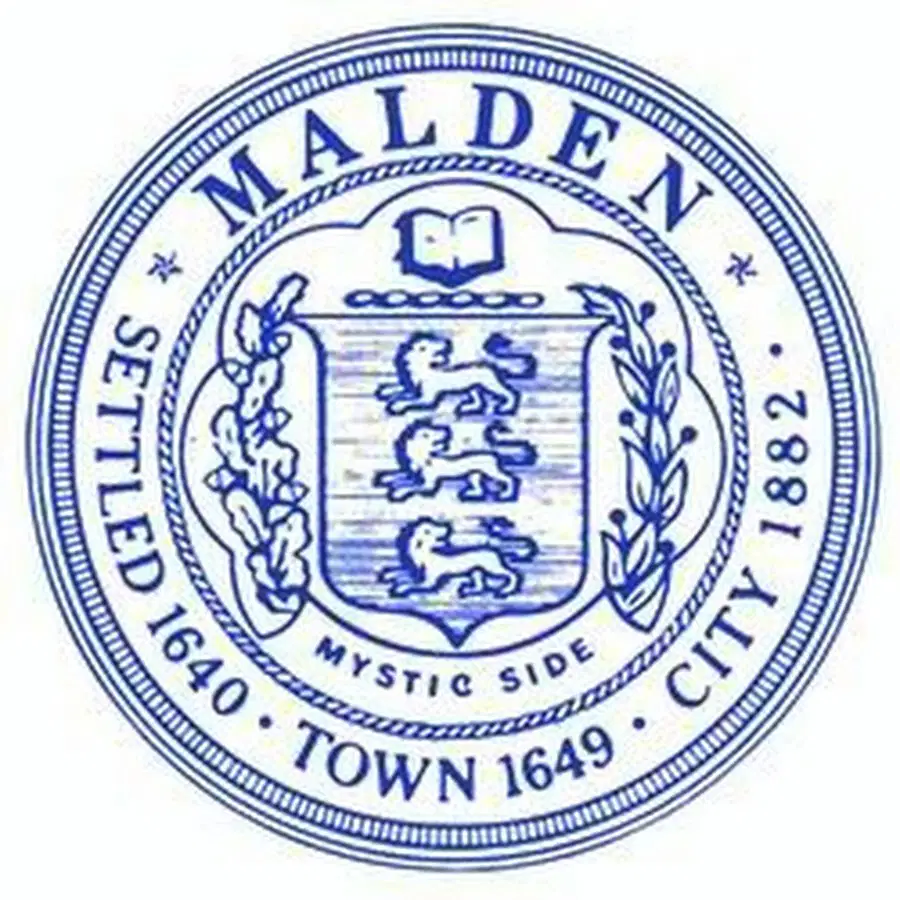
True or False: Malden is a town, not a city.

In Massachusetts, a municipality has to have more than _______ people to have a city government.
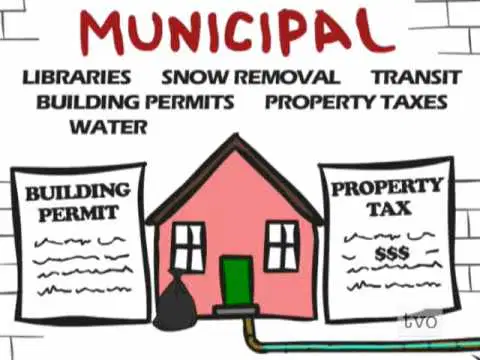
Match each part of the City Government to the job it does.
The legislative branch of the city government. They are in charge of making local laws and approving the city budget.
City Council
The head of the Executive Branch of the city government. This person leads all of the departments of the city government.
Mayor
This elected group of people is part of the Executive Branch. They make the decisions for the public schools in the city.
School Committee
These courts serve multiple communities at the same time and are in charge of holding trials for those accused of crimes.
District Courts

