
NEW
Font size
 Worksheets
ECG Basics
Total questions: 10
Worksheet time: 5mins
How many leads are used in a standard 12-lead ECG?
10
8
15
12
What is the normal heart rate for an adult at rest?
60-100bpm
40-60bpm
100-120bpm
120-140bpm
Which is/are the cause(s) of artifacts on an ECG tracing?
Improper lead placement
Patient movement
Loose electrodes
All of the above
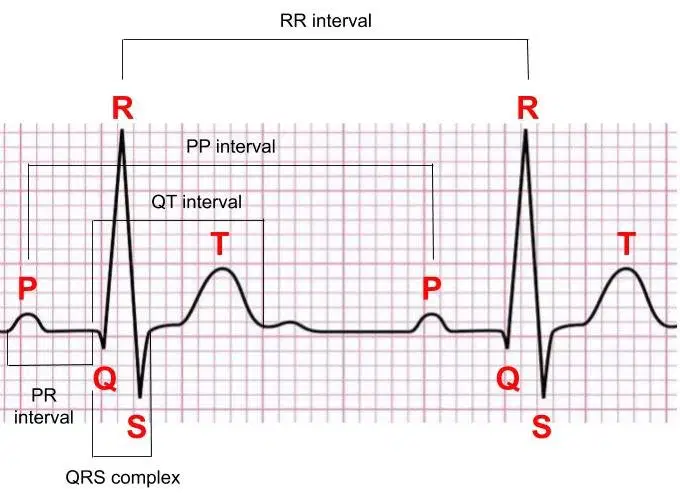
What does the P wave represent in an ECG waveform?
Atrial depolarization
Ventricular repolarization
Atrial repolarization
QRS complex
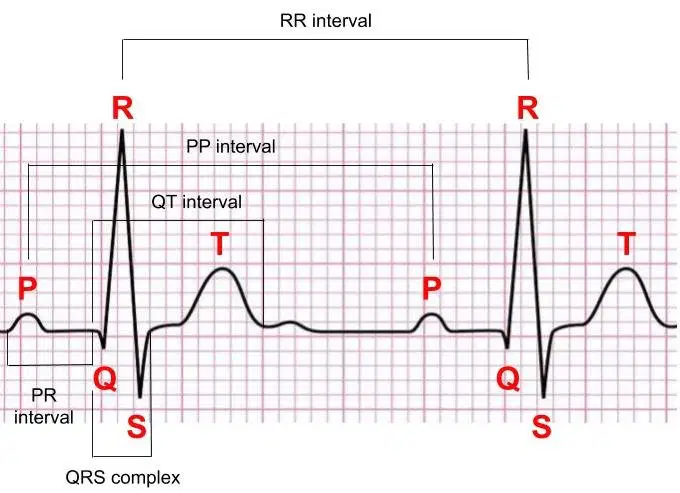
What does the QRS complex represent in an ECG waveform?
AV node conduction
Atrial repolarization
Ventricular depolarization
SA node activation
Where is the V1 lead placed during ECG recording?
Fourth intercostal space just to the right of the sternum
Fifth intercostal space just to the left of the sternum
Sixth intercostal space just to the left of the sternum
Second intercostal space just to the right of the sternum
Where is the V4 lead placed during ECG recording?
Fourth intercostal space just to the right of the sternum
Fifth intercostal space midclavicular line
Sixth intercostal space just to the left of the sternum
Second intercostal space just to the right of the sternum
Which of the following represents ventricular tachycardia on ECG?
Heart rate >100 bpm, regular rhythm, wide QRS complex
Heart rate >100 bpm, irregular rhythm, narrow QRS complex
Heart rate >100 bpm, regular rhythm, narrow QRS complex
Heart rate >100 bpm, irregular rhythm, wide QRS complex
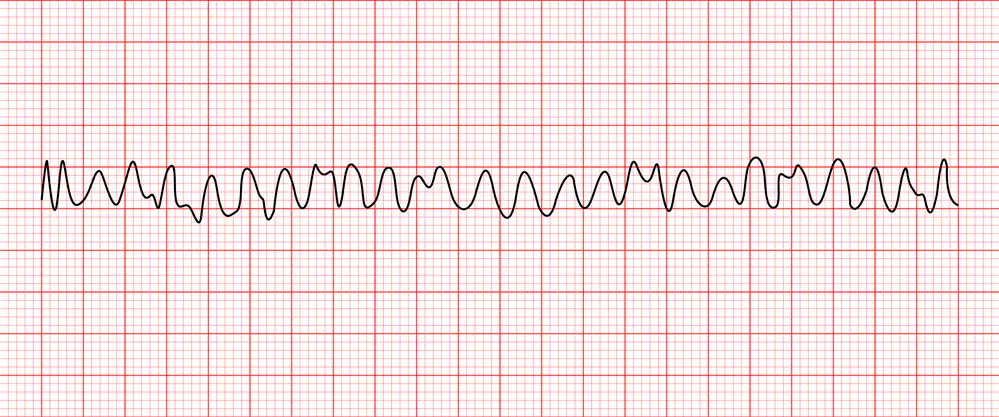
Identify the following waveform.
Atrial fibrillation
Ventricular tachycardia
Ventricular fibrillation
Asystole
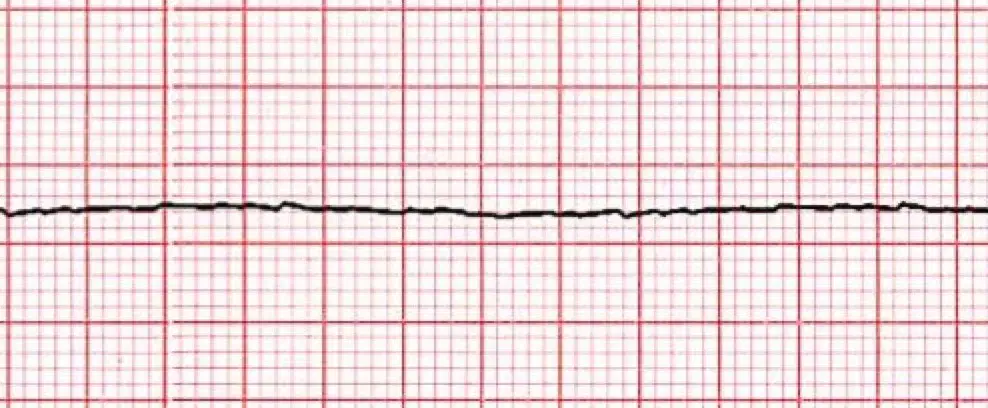
Identify the following waveform.
Atrial fibrillation
Ventricular tachycardia
Ventricular fibrillation
Asystole

