
 Worksheets
Ecology Final Exam REVIEW
Total questions: 85
Worksheet time: 43mins
Name
Class
Date
1.
Organism flexible enough to eat plants or animals
a)
Carnivore
b)
Herbivore
c)
Omnivore
d)
Parasite
e)
Decomposer
2.
Organism that consumes plant products exclusively
a)
Carnivore
b)
Herbivore
c)
Omnivore
d)
Parasite
e)
Decomposer
3.
Organism that must feed on a host
a)
Carnivore
b)
Herbivore
c)
Omnivore
d)
Parasite
e)
Decomposer
4.
Organism that feeds on deceased organic material
a)
Carnivore
b)
Herbivore
c)
Omnivore
d)
Parasite
e)
Decomposer
5.
Organism that consumes muscle, organs, and bone from animals
a)
Carnivore
b)
Herbivore
c)
Omnivore
d)
Parasite
e)
Decomposer
6.
Example: humans
a)
Carnivore
b)
Herbivore
c)
Omnivore
d)
Parasite
e)
Decomposer
7.
Example: cattle
a)
Carnivore
b)
Herbivore
c)
Omnivore
d)
Parasite
e)
Decomposer
8.
Example: leech
a)
Carnivore
b)
Herbivore
c)
Omnivore
d)
Parasite
e)
Decomposer
9.
Example: tiger
a)
Carnivore
b)
Herbivore
c)
Omnivore
d)
Parasite
e)
Decomposer
10.
Example: fungus or mushroom
a)
Carnivore
b)
Herbivore
c)
Omnivore
d)
Parasite
e)
Decomposer
11.
Earth taking 24 hours to spin
a)
Rotation
b)
Revolution
c)
Tilt
12.
Earth being 23 degrees on axis
a)
Rotation
b)
Revolution
c)
Tilt
13.
Earth taking 365¼ days to go around the sun
a)
Rotation
b)
Revolution
c)
Tilt
14.
Peat forms first underground, usually near mountains, then becomes hard black material
a)
Natural Gas
b)
Oil
c)
Coal
d)
Nuclear
15.
Fission of atoms
a)
Natural Gas
b)
Oil
c)
Coal
d)
Nuclear
16.
Petroleum
a)
Natural Gas
b)
Oil
c)
Coal
d)
Nuclear
17.
Uses the element Uranium
a)
Natural Gas
b)
Oil
c)
Coal
d)
Nuclear
18.
Odorless source used to burn in homes
a)
Natural Gas
b)
Oil
c)
Coal
d)
Nuclear
19.
Radioactive waste is made
a)
Natural Gas
b)
Oil
c)
Coal
d)
Nuclear
20.
Methane is an example
a)
Natural Gas
b)
Oil
c)
Coal
d)
Nuclear
21.
Liquid formed by dead plankton, usually in the ocean
a)
Natural Gas
b)
Oil
c)
Coal
d)
Nuclear
22.
Hilltops for a turbine with large arms/sails is a good location
a)
Wind
b)
Solar
c)
Biomass
d)
Hydro
e)
Geothermal
23.
Use of the high and low tides in the ocean
a)
Wind
b)
Solar
c)
Biomass
d)
Hydro
e)
Geothermal
24.
Use photovoltaic cells
a)
Wind
b)
Solar
c)
Biomass
d)
Hydro
e)
Geothermal
25.
A dam generates electricity but creates a lake beneath them
a)
Wind
b)
Solar
c)
Biomass
d)
Hydro
e)
Geothermal
26.
Large structures using air current
a)
Wind
b)
Solar
c)
Biomass
d)
Hydro
e)
Geothermal
27.
Use of heat from underground
a)
Wind
b)
Solar
c)
Biomass
d)
Hydro
e)
Geothermal
28.
Animal and plant waste
a)
Wind
b)
Solar
c)
Biomass
d)
Hydro
e)
Geothermal
29.
Light and heat from the sun
a)
Wind
b)
Solar
c)
Biomass
d)
Hydro
e)
Geothermal
30.
Use of moving water
a)
Wind
b)
Solar
c)
Biomass
d)
Hydro
e)
Geothermal
31.
Farming waste burned off
a)
Wind
b)
Solar
c)
Biomass
d)
Hydro
e)
Geothermal
32.
Hoover Dam is an example
a)
Wind
b)
Solar
c)
Biomass
d)
Hydro
e)
Geothermal
33.
Water: Gas to a liquid
a)
Evaporation
b)
Condensation
c)
Precipitation
34.
Water: Liquid to a gas
a)
Evaporation
b)
Condensation
c)
Precipitation
35.
Falling water out of the atmosphere
a)
Evaporation
b)
Condensation
c)
Precipitation
36.
When an organism consumes another organism, the animal receives 50% of the energy available to them.
a)
TRUE
b)
FALSE
37.
A food web is more complex than a food chain
a)
TRUE
b)
FALSE
38.
Water is neither created nor destroyed, it only changes form.
a)
TRUE
b)
FALSE
39.
All fossil fuels are easy to transport.
a)
TRUE
b)
FALSE
40.
The majority of our water is immediately usable for human consumption.
a)
TRUE
b)
FALSE
41.
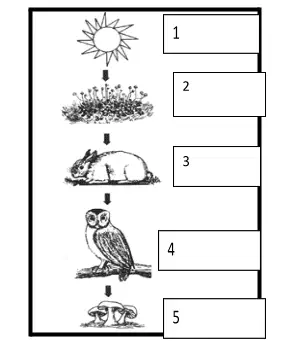
From the Food Chain above, what is #1
a)
Secondary Consumer
b)
Primary Consumer
c)
Producer
d)
Decomposer
e)
Energy Source
42.
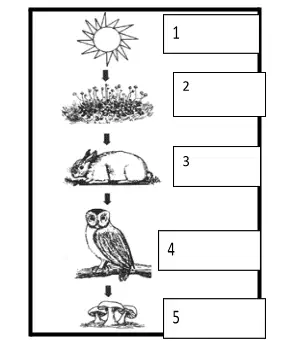
From the Food Chain above, what is #2
a)
Secondary Consumer
b)
Primary Consumer
c)
Producer
d)
Decomposer
e)
Energy Source
43.
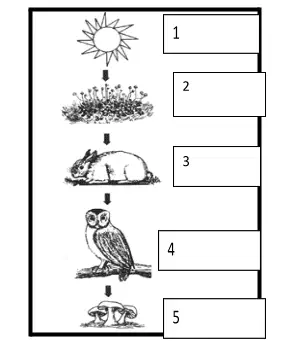
From the Food Chain above, what is #3
a)
Secondary Consumer
b)
Primary Consumer
c)
Producer
d)
Decomposer
e)
Energy Source
44.
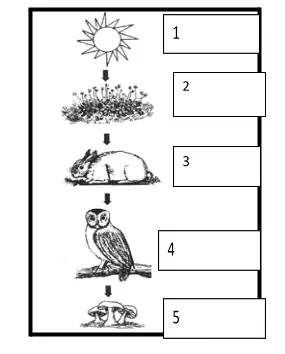
From the Food Chain above, what is #4
a)
Secondary Consumer
b)
Primary Consumer
c)
Producer
d)
Decomposer
e)
Energy Source
45.
From the Food Chain above, what is #5
a)
Secondary Consumer
b)
Primary Consumer
c)
Producer
d)
Decomposer
e)
Energy Source
46.
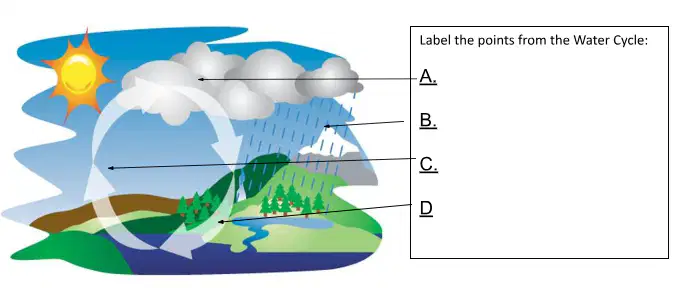
From the Water Cycle Picture above, what is A
a)
Evaporation
b)
Precipitation
c)
Runoff
d)
Condensation
47.
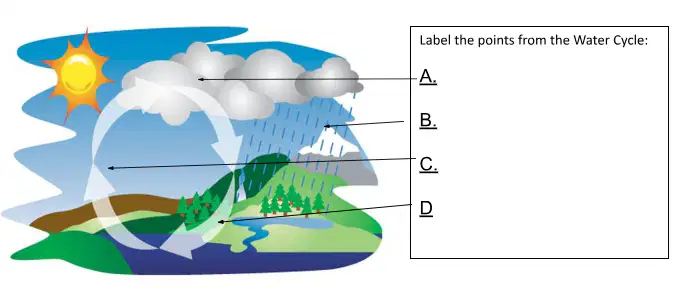
From the Water Cycle Picture above, what is B
a)
Evaporation
b)
Precipitation
c)
Runoff
d)
Condensation
48.
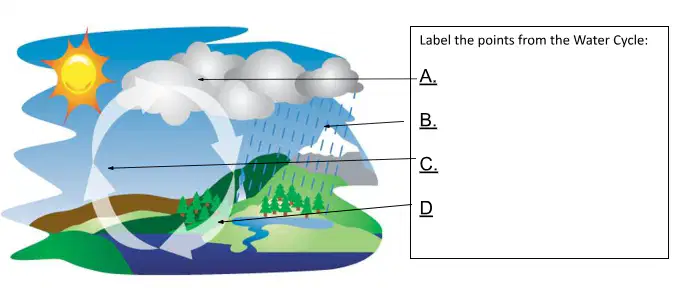
From the Water Cycle Picture above, what is C
a)
Evaporation
b)
Precipitation
c)
Runoff
d)
Condensation
49.
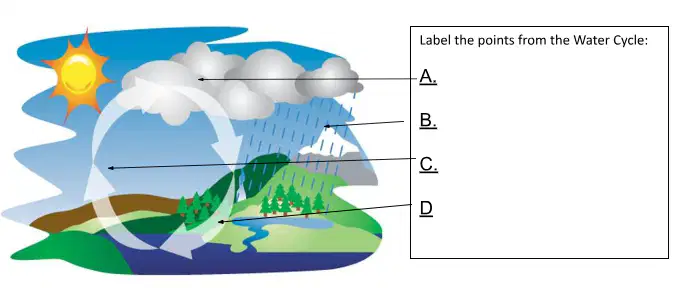
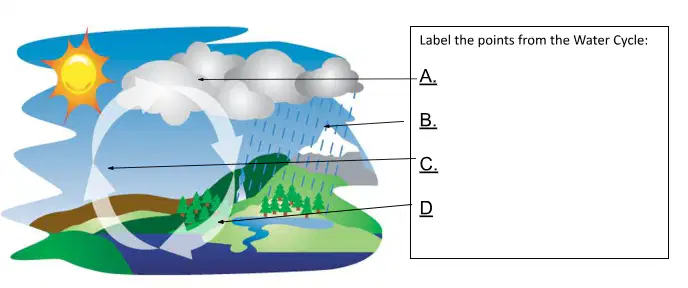
From the Water Cycle Picture above, what is D
a)
Evaporation
b)
Precipitation
c)
Runoff
d)
Condensation
50.
Place the following terms in order from smallest to largest:
Smallest
a)
Ecosystem
b)
Community
c)
Population
d)
Biosphere
51.
Place the following terms in order from smallest to largest
2nd
a)
Ecosystem
b)
Community
c)
Population
d)
Biosphere
52.
Place the following terms in order from smallest to largest:
3rd
a)
Ecosystem
b)
Community
c)
Population
d)
Biosphere
53.
Place the following terms in order from smallest to largest:
Largest
a)
Ecosystem
b)
Community
c)
Population
d)
Biosphere
54.
Large grazing animals live here
a)
Savanna/Grassland
b)
Tropical Rainforest
c)
Deciduous Forest
d)
Tundra
e)
Taiga/Coniferous Forest
55.
Place where there is permafrost
a)
Tundra
b)
Savanna/Grassland
c)
Tropical Rainforest
d)
Deciduous Forest
e)
Taiga/Coniferous Forest
56.
Most diverse place for organisms
a)
Tropical Rainforest
b)
Savanna/Grassland
c)
Deciduous Forest
d)
Tundra
e)
Taiga/Coniferous Forest
57.
Pine Cone bearing forests
a)
Taiga/Coniferous Forest
b)
Savanna/Grassland
c)
Tropical Rainforest
d)
Deciduous Forest
e)
Tundra
58.
Lakes
a)
Freshwater
b)
Savanna/Grassland
c)
Tropical Rainforest
d)
Deciduous Forest
e)
Tundra
59.
Land used for farming
a)
Savanna/Grassland
b)
Tropical Rainforest
c)
Deciduous Forest
d)
Tundra
e)
Taiga/Coniferous Forest
60.
Greatest amount of rainfall
a)
Tropical Rainforest
b)
Savanna/Grassland
c)
Deciduous Forest
d)
Tundra
e)
Taiga/Coniferous Forest
61.
Least amount of plant life
a)
Tundra
b)
Savanna/Grassland
c)
Tropical Rainforest
d)
Deciduous Forest
e)
Taiga/Coniferous Forest
62.
Trees lose their leaves in the winter
a)
Deciduous Forest
b)
Savanna/Grassland
c)
Tropical Rainforest
d)
Tundra
e)
Taiga/Coniferous Forest
63.
Has a tall canopy in the trees because sunlight basically every day
a)
Tropical Rainforest
b)
Savanna/Grassland
c)
Deciduous Forest
d)
Tundra
e)
Taiga/Coniferous Forest
64.
Source of drinking water
a)
Tropical Rainforest
b)
Freshwater
c)
Savanna/Grassland
d)
Deciduous Forest
e)
Tundra
65.
Animals hibernate
a)
Taiga/Coniferous Forest
b)
Savanna/Grassland
c)
Tropical Rainforest
d)
Deciduous Forest
e)
Tundra
66.
Hot dry summers, and cold, snowy winters
a)
Savanna/Grassland
b)
Deciduous Forest
c)
Tropical Rainforest
d)
Tundra
e)
Taiga/Coniferous Forest
67.
Least amount of rainfall
a)
Desert
b)
Savanna/Grassland
c)
Tropical Rainforest
d)
Deciduous Forest
e)
Tundra
68.
Periods of 24-hours of darkness in winter, 24-hours of sunlight in summer
a)
Tundra
b)
Savanna/Grassland
c)
Tropical Rainforest
d)
Deciduous Forest
e)
Taiga/Coniferous Forest
69.
Saltwater
a)
Marine / Ocean
b)
Savanna/Grassland
c)
Tropical Rainforest
d)
Deciduous Forest
e)
Tundra
70.
Extreme temperature range (High/Low) in the course of one day
a)
Desert
b)
Savanna/Grassland
c)
Tropical Rainforest
d)
Deciduous Forest
e)
Tundra
71.
Rivers and streams
a)
Freshwater
b)
Savanna/Grassland
c)
Tropical Rainforest
d)
Deciduous Forest
e)
Tundra
72.
Plants and animals need to conserve water to survive
a)
Desert
b)
Savanna/Grassland
c)
Tropical Rainforest
d)
Deciduous Forest
e)
Tundra
73.
Trees have needles instead of leaves
a)
Taiga/Coniferous Forest
b)
Desert
c)
Savanna/Grassland
d)
Tropical Rainforest
e)
Deciduous Forest
74.
Match the term to the type of Natural Disaster
Severe winds in the rural plains
a)
Earthquakes
b)
Volcano
c)
Tornado
d)
Forest Fire
e)
Hurricane
75.
Match the term to the type of Natural Disaster
Movement of plates causing shockwaves on Earth
a)
Earthquakes
b)
Volcano
c)
Tornado
d)
Forest Fire
e)
Hurricane
76.
Match the term to the type of Natural Disaster
Eruption of lava and magma
a)
Earthquakes
b)
Volcano
c)
Tornado
d)
Forest Fire
e)
Hurricane
77.
Match the term to the type of Natural Disaster
Burning of land to remove invasive species
a)
Earthquakes
b)
Volcano
c)
Tornado
d)
Forest Fire
e)
Hurricane
78.
Match the term to the type of Natural Disaster
Severe weather with swirling winds and rain on the coasts that cause massive destruction
a)
Earthquakes
b)
Volcano
c)
Tornado
d)
Forest Fire
e)
Hurricane
79.
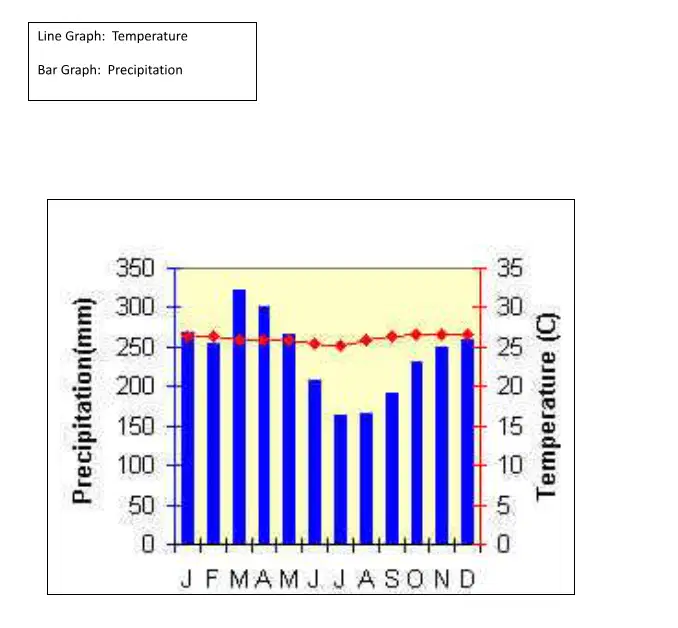
Using the Climatograph above
How would you describe the temperature in this city? (Note: 25C is about 77F)
a)
Consistent, High
b)
Variable, High
c)
Consistent, Low
d)
Variable, Low
80.
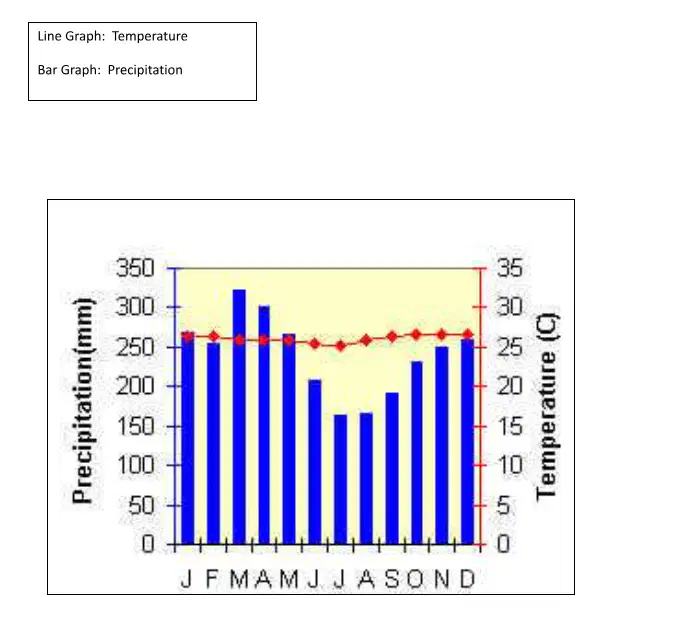
Using the Climatograph above
What is the approximate average rainfall of this biome?
a)
225-250 mm
b)
2800-2850 mm
c)
400-425 mm
d)
100-150 mm
81.
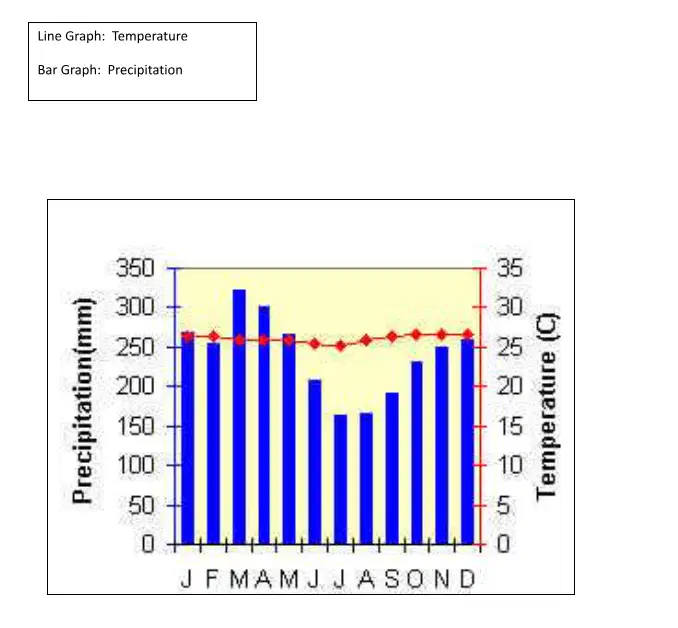
Using the Climatograph above
Which month had the greatest difference in temperature and precipitation?
a)
January
b)
March
c)
August
d)
December
82.
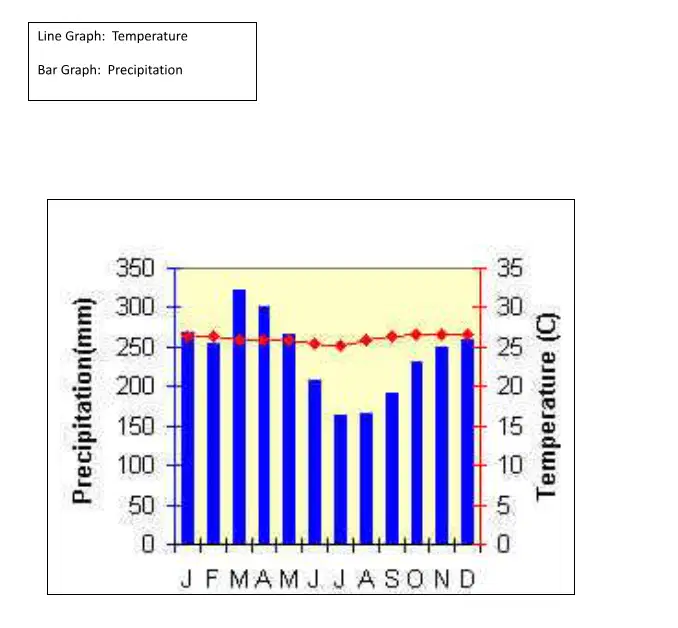
Using the Climatograph above
This biome would be located near:
a)
South Pole
b)
Prime Meridian
c)
North Pole
d)
Equator
83.
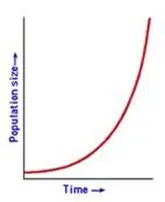
Match the type of population graph to the term
a)
Logistic Curve
b)
Exponential Curve
c)
Boom and bust Curve
84.
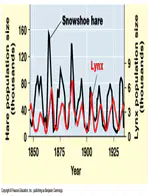
Match the type of population graph to the term
a)
Logistic Curve
b)
Exponential Curve
c)
Boom and bust Curve
85.
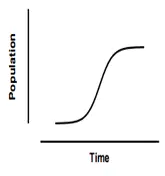
Match the type of population graph to the term
a)
Logistic Curve
b)
Exponential Curve
c)
Boom and bust Curve
100 %