
 Worksheets
Ch. 20.1.2 Mass Society and Democracy
Total questions: 20
Worksheet time: 10mins
This party based its theories on the work of Karl Marx.
socialist
moderate
capitalist
liberal
In the Second Industrial Revolution, what led the way to new industrial frontiers?
textiles, railroads, iron, and coal
a true world economy, internal-combustion engines, and new products
radios, telephones, light bulbs, and telegraphs
steel, chemicals, electricity, and petroleum
According to Karl Marx, the ____, or working class, was oppressed by the middle class.
proletariat
bourgeoisie
socialists
Communists
Although they made up only 5 percent of the population, which class controlled 30 to 40 percent of the wealth?
the middle class
the new working poor
the working class
the new elite
The internal-combustion engine gave rise to
conveyor belts and factory lights.
automobiles, airplanes, and improved ocean liners.
streetcars and subways powered by electricity.
a true American economy.
Which of the following were Marxists who rejected the revolutionary approach in favor of a more political approach?
socialist soviets
unionists
proletariats
revisionists
During the Second Industrial Revolution, how much of the European population belonged to the working class?
40 percent
62 percent
80 percent
98 percent
Emmeline Pankhurst and her daughters founded the
Women’s Social and Political Union.
Red Cross.
Young Women’s Christian Association.
Society for the Advancement of Women.
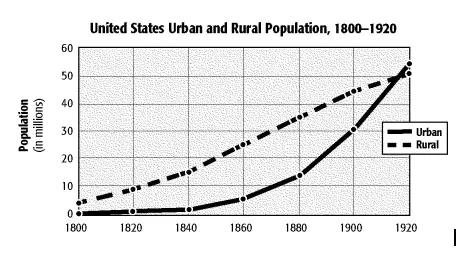
In what year was the U.S. rural population at about 25 million?
1900
1860
1840
1880
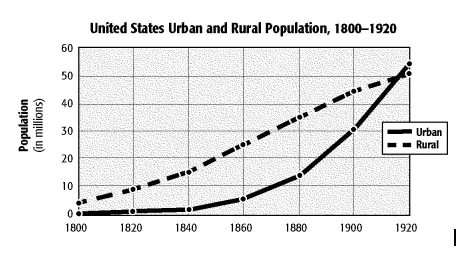
According to the chart, which of the following is TRUE?
Rural population was increasing at a rate greater than the urban population.
Between 1900 and 1920, the total population declined.
Between 1900 and 1920, urban population increased at a greater rate than rural population
Urban population grew more quickly before the Civil War.
According to Marx, the means of production were owned by
the ruling class oppressors.
the government.
the working class oppressed.
the proletariat.
One form of Marxist socialism was eventually called
Engelism
Euroism
Communism
Proletariatism
Organized work stoppages called by unions
dicatorship
revisionists
strike
proletariat
Absolute governmental power by an individual or a group.
dictatorship
revisionists
democracy
mass society
What business was J.P. Morgan in and how did he make his money?
Banking, bought out failing companies and makes the profitable again
Industrialization, create the largest structural steel plant in Pittsburgh
Oil Refining, created the Standard Oil Company, and create a monopoly of the oil industry
Utilities, invented electricity and set up the first power grid in Washington D.C.
Who did J.P. Morgan partner with and invest in, to bring electricity to New York?
Nikola Tesla
Thomas Edison
John D. Rockefeller
Henry Ford
Thomas Edison believed this type of electrical current was was the future of electricity.
DC ( Direct Current )
AC ( Alternating Current )
ACDC (Rock Current)
High Voltage
After Nikola Tesla left the Edison electric company, who decided to invest in Tesla's electrical current?
George Westinghouse
J.P. Morgan
Andrew Carnegie
Thomas Edison
Which of the following individuals is known for his theory of evolution by natural selection?
Isaac Newton
Charles Darwin
Albert Einstein
Galileo Galilei
Who is credited with the invention of the telephone?
Alexander Graham Bell
Thomas Edison
Guglielmo Marconi
James Watt

