
 Worksheets
Final Exam Review CP
Total questions: 77
Worksheet time: 2hrs 16mins
Elements d-block elements can have more than one possible oxidation number.
In a crystal lattice, how are the ions arranged?
Positive ions are surrounded by negative ions
Negative ions are surrounded by positive ions
Both of the above
None of the above
A single unit of a covalent compound is called a(n)
formula unit
atoms
molecule
A single unit of an element is called a (n).
atom
molecule
A single unit of an ionic compound is referred to as a(n) .
formula unit
atom
molecule
Elements in the same column of the periodic table share the same number of __.
protons
neutrons
valence electrons
atomic mass
What is the composition of one Calcium atom?
20 protons, 20 electrons
20 protons, 40 electrons
40 protons, 20 electrons
40 protons, 40 electrons
The half-life of a radioactive isotope is 60 seconds. How long does it take for a 8.0 gram sample to decay to 0.5 grams?
180 seconds
240 seconds
300 seconds
360 seconds
Which element is known for its ability to conduct electricity and is often used in electrical wiring?
helium
chlorine
copper
phosphorus
Which metal is the most reactive in the periodic table?
barium
rubidium
sodium
francium
Elements in the same groups or columncs have similar properties.
True
False
As you move down Group 1 in the periodic table, the elements exhibit a decrease in ionization energy primarily due to
an increase in atomic radius and a decrease in shielding effect
a decrease in atomic radius and an increase in shielding effect
an increase in atomic radius and an increase in shielding effect
a decrease in atomic radius and a decrease in shielding effect
Wood burning is an example of _____.
Iron is a metal.
Its structure consists of a giant lattice of positive ions in a ‘sea of electrons’.
Which statements about solid iron are correct?
Iron conducts electricity because the electrons are free to move
Iron conducts heat because the positive ions are free to move.
Iron has a high melting point due to the strong covalent bonds.
Iron is malleable because the layers of ions can slide over one another.
According to the Law of Conservation of Mass (Matter), Matter cannot be (a) or (b) , it can only be (c) . This means however many atoms of an element we have before a reaction must be (d) to the number after a reaction.
What type of shoes should you wear in a lab?
flip flops
purple pumps
closed toed shoes
none, go barefoot

a narrow-necked glass container, typically conical or spherical, used in a laboratory to hold reagents or samples
Beaker
graduated cylinder
Erlenmeyer Flask
Cations are ions with what kind of charge?
positive
negative
neutral
cations are formed when a neutral element ___________ valance electrons giving the atom an overall positive charge because there are more protons than electrons.
loses
gains
What is the ion formed from Sulfur?
S+2
S-2
S+6
S-6


A decay equation is shown. What type of radiation is being released?
Beta
alpha
gamma
neutron

Which type of radiation is represented by the X?
Alpha
Beta
Gamma
All three

Which type of radiation is represented by the X?
Gamma
Beta
Alpha
All three
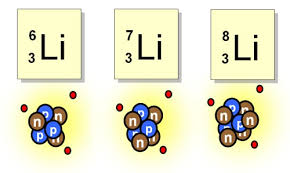
The difference between these lithium isotopes is -
the number of protons
the atomic number
the number of neutrons
the number of electrons
The electron configuration 1s2 2s22p6 3s23p6 represents which noble gas?
neon
argon
helium
krypton

What block is represented by the colour red?
p-block
d-block
s-block
f-block
Atomic size will increase as you do what in a group?
What is the trend in atomic radius as you move from left to right across a period in the periodic table?
Remain constant
Increase
Decrease
Fluctuate

Ra, Be, Ca, Rb, H
Electronegativity _______ across a period and ______ down a group.
increases, increases
increases, decreases
decreases, increases
decreases, decreases
N or C?
Which group is the most reactive metal group?
Group 13
Group 12
Group 5
Group 1
When an electron moves from a LOWER energy level to a HIGHER energy level:
Energy is absorbed as it moves to the excited state
Energy is released as it moves to the excited state
Energy is absorbed as it moves to the ground state
Energy is released as it moves to the ground state
Energy is released from an atom occurs when an electron ___________________ .
drops from a higher to a lower energy level
jumps from a lower to a higher energy level
moves within its atomic orbital
falls into the nucleus
What type of bond will conduct electricity in a dissolved state?
ionic
covalent
Which type of bond has a transfer of an electron from a metal to a non-metal atom? (a)
Name the following ionic compound: BeCl2
beryllium chlorine
beryllium II chloride
beryllium chloride
beryllium dichloride
What is the name of the compound Na2(SO4)?
Sodium sulfate
Sodium sulfide
Sodium sulfite
Sodium sulfuroxide
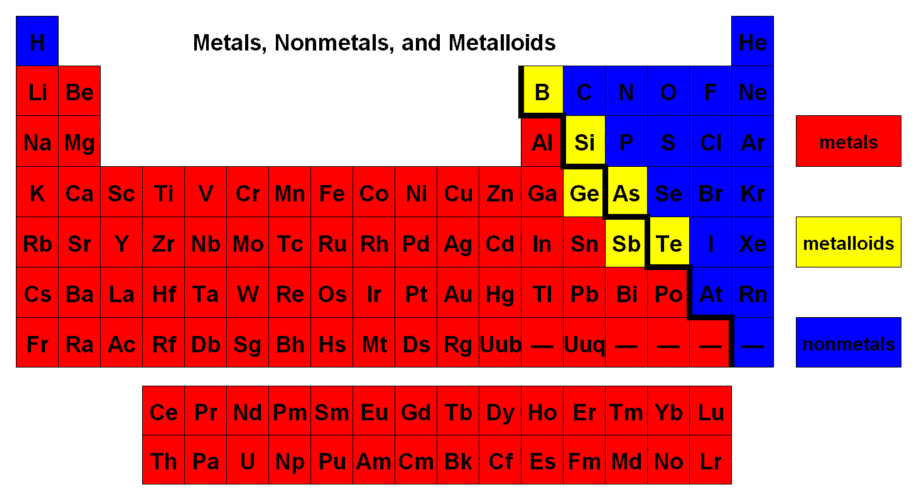
NaCl
covalent bonding
ionic bonding
hydrogen bonding
metallic bond
What type of bonding would be in this polyatomic ion: CN-?
Ionic bond
Covalent bond
Metallic bond
Hydrogen bond
What is the strongest IMF?
Hydrogen bonding
Dipole dipole forces
London Dispersion forces
Covalent bonding
What is the weakest IMF?
Hydrogen bonding
Dipole dipole forces
London Dispersion forces
Covalent bonding

Yes
No

Yes
No

What 3-D shape would this molecule have?
tetrahedral
trigonal planar
trigonal pyramid
bent

Identify the type of chemical reaction
Synthesis
Decomposition
Single replacement
Double replacement
Combustion

Identify the type of chemical reaction
Synthesis
Decomposition
Single replacement
Double replacement
Combustion

Identify the type of chemical reaction
Synthesis
Decomposition
Single replacement
Double replacement
Combustion

What will be the result of the following:
LiBr + Na ->
Li will replace Na
Na will replace Br
Na will replace Li
no reaction will occur

What will be the result of : Zn + AuCl2->
ZnCl2 +Au
ZnAu + Cl2
no reaction
ClAu + Zn
Which of the following will be soluble
MgS2
Zn(OH)2
AgBr
LiOH
Which of the following will be insoluble
(NH4)2O
KOH
Rb3PO4
Cu3(PO4)2
How many moles of oxygen are produced when 6.7 moles of KClO3 decompose completely?
What is the mass of .46 mols MgCl2?
4.4 g
440 g
.44 g
44 g
What is the molar mass of Al(NO3)3?
62.01 g/mol
88.99 g/mol
151.00 g/mol
213.01 g/mol
Convert 354 grams to kg
0.354 kg
3.54 kg
35400 kg
3540 kg
NH4F
What is the name of the compound Na2(SO4)?
Sodium sulfate
Sodium sulfide
Sodium sulfite
Sodium sulfuroxide
Malleability - the ability to be bent and forged
chemical property
intensive physical property
extensive physical property
Determine the volume, in liters, of 1.2 mole SO2 gas at STP.
13 L
26 L
6.5 L

A substance that doesn't conduct electricity when solid, but does conduct electricity when dissolved in water.
covalent compound
ionic compound
metallic compound

In metallic bonds, the electrons surrounding the positive ions are called:
electron cloud
electron sea
anions

C + O
Covalent
Ionic
Neither

Mg + F
Ionic
Covalent
Neither

