Worksheets
Weather Quiz
Total questions: 62
Worksheet time: 50mins
What is the density of a warm air mass?
Low density
High density
Medium density
No density
What is the thermal energy of a warm air mass?
Low Thermal Energy (TE)
High Thermal Energy (TE)
Medium Thermal Energy (TE)
No Thermal Energy (TE)
What is the density of a cold air mass?
Low density
High density
Medium density
No density
What is the thermal energy of a cold air mass?
Low Thermal Energy (TE)
High Thermal Energy (TE)
Medium Thermal Energy (TE)
No Thermal Energy (TE)
What is the pressure of a cold air mass?
High pressure (H)
Low air pressure (L)
Medium pressure (M)
No pressure (N)
What is conduction?
The transfer of energy through touching an object to another object
The transfer of energy through radiation
The transfer of energy through convection
The transfer of energy through evaporation
How is heat transferred in conduction?
Heat moves from the cooler object to the hotter object
Heat moves from the hotter object to the cooler object
Heat moves from the hotter object to another hotter object
Heat moves from the cooler object to another cooler object
Why did the "fat blobs" fall off the metal rod in the conduction lab?
The blobs of crisco (shortening) warmed up via conduction with the metal rod and started to melt when they gained thermal energy.
The blobs of crisco (shortening) cooled down via conduction with the metal rod and started to melt when they lost thermal energy.
The blobs of crisco (shortening) warmed up via radiation with the metal rod and started to melt when they gained thermal energy.
The blobs of crisco (shortening) cooled down via radiation with the metal rod and started to melt when they lost thermal energy.
What is convection?
When matter is heated, it becomes less dense, and will rise up and cool air or fluid will sink.
When matter is cooled, it becomes more dense, and will rise up and warm air or fluid will sink.
When matter is heated, it becomes more dense, and will rise up and cool air or fluid will sink.
When matter is cooled, it becomes less dense, and will rise up and warm air or fluid will sink.
How is heat transferred in convection?
The warmer fluid or air will move up and the cooler fluid will replace it.
The cooler fluid or air will move up and the warmer fluid will replace it.
The warmer fluid or air will move down and the cooler fluid will replace it.
The cooler fluid or air will move down and the warmer fluid will replace it.
Which of the following is an example of convection?
Water boiling
Ice melting
Metal rod heating
Electric heater
In the Convection box activity, what happened when the smoke was put over the cold side?
The smoke went down because air (and smoke) is more dense than warm air.
The smoke went up because air (and smoke) is more dense than warm air.
The smoke went down because air (and smoke) is less dense than warm air.
The smoke went up because air (and smoke) is less dense than warm air.
How does conduction occur in weather?
When air particles/molecules touch the warm surface of the ground and heat is transferred making the air warmer.
When air particles/molecules touch the cool surface of the ground and heat is transferred making the air cooler.
When air particles/molecules touch the warm surface of the ground and heat is transferred making the air cooler.
When air particles/molecules touch the cool surface of the ground and heat is transferred making the air warmer.
What happens to air after it is heated through conduction?
The warm less dense air particles rise up in the air as the cool more dense particles sink towards the ground.
The warm more dense air particles rise up in the air as the cool less dense particles sink towards the ground.
The warm less dense air particles sink towards the ground as the cool more dense particles rise up in the air.
The warm more dense air particles sink towards the ground as the cool less dense particles rise up in the air.
What is the movement/swirl of air particles called?
Conduction
Radiation
Convection
Evaporation
What are the major factors that cause wind?
Differences in temperature, density, and pressure of air
Differences in humidity and precipitation
Differences in altitude and latitude
Differences in vegetation and soil type
Wind moves from ______ pressure to ______ pressure.
Low, High
High, Low
Medium, High
Low, Medium
As the temperature in our atmosphere goes up, what happens to the speed of the molecules in the atmosphere?
Decreases
Stays the same
Increases
Disappears
As the temperature in our atmosphere goes up, what happens to the energy of the molecules in the atmosphere?
Decreases
Stays the same
Increases
Disappears
As the temperature in our atmosphere goes up, what happens to the pressure and density of air in the atmosphere?
Increases
Stays the same
Decreases
Disappears
What is the definition of "Weather"?
The daily state of the atmosphere, or air, in any given place
Average measurements of temperature, wind, humidity, snow, and rain in a place over the course of years
A large body of air collected in one location
The movement of air from high to low pressure
What is the definition of "Climate"?
The daily state of the atmosphere, or air, in any given place
Average measurements of temperature, wind, humidity, snow, and rain in a place over the course of years
A large body of air collected in one location
The movement of air from high to low pressure
What is the definition of "Air Mass"?
The daily state of the atmosphere, or air, in any given place
Average measurements of temperature, wind, humidity, snow, and rain in a place over the course of years
A large body of air collected in one location
The movement of air from high to low pressure
What is the definition of a front?
Warm air being forced up and over a cold air mass
The boundary between lesser and more dense air mass
An air mass with similar temperature and moisture content
Occurs at a frontal boundary where you have a cold air mass meeting a warm air mass
What is the term used for air masses that form over land?
Maritime
Tropical
Continental
Polar
What is the characteristic of air masses that form over water?
Dry
Humid
Cold
Warm
What is the term used for cold air masses?
Tropical
Maritime
Continental
Polar
What is the term used for warm air masses?
Tropical
Polar
Continental
Maritime
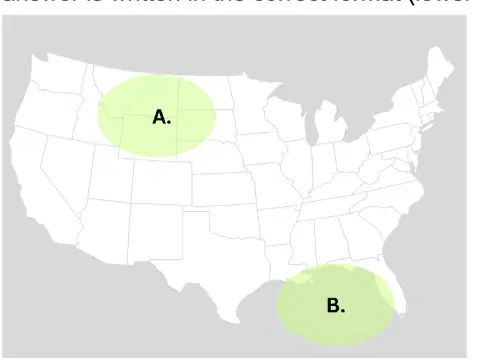
Identify the type of air mass at Location A on the map.
cP
mT
cT
mP
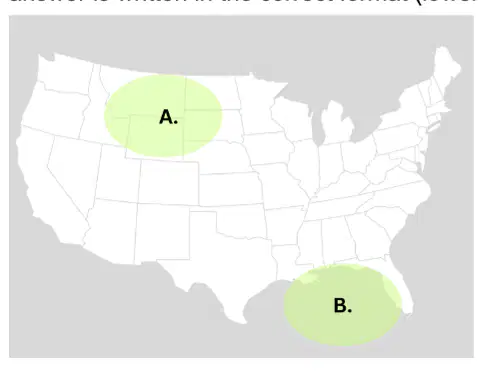
Identify the type of air mass at Location B on the map.
cP
mT
cT
mP
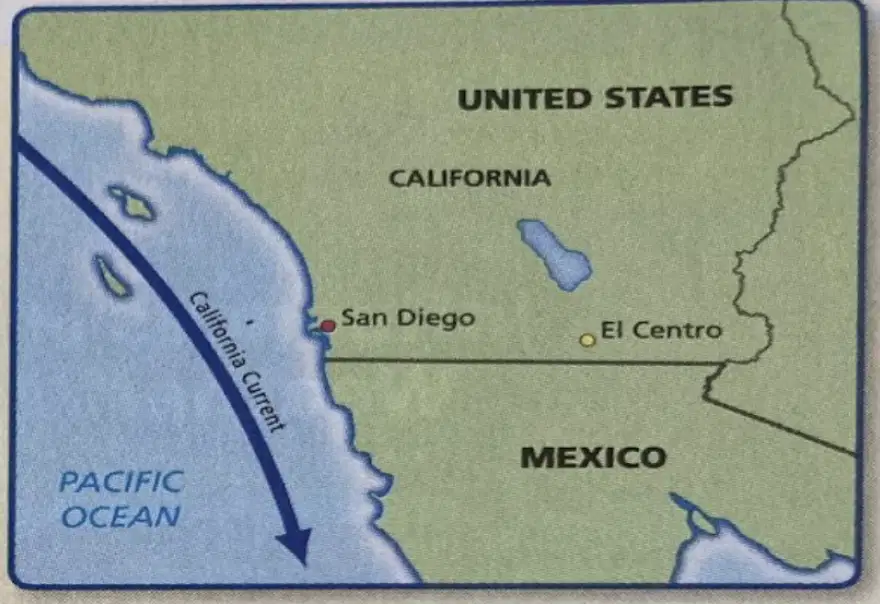
Why is San Diego cooler compared to El Centro?
Because it is further north
Because it is influenced by the cold ocean current
Because it is at a higher altitude
Because it is closer to the equator

Conduction is the transfer of energy by movement of flowing matter.
True
False
In which direction does heat move?
from warmer areas to cooler areas
from cooler areas to warmer areas
between areas of equal temperature
heat does not move

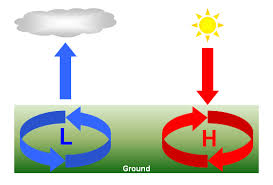
7. Which diagram shows High pressure?
diagram A
diagram B

6. Which diagram shows Low pressure?
diagram A
diagram B

Directions: Please look at the answers below and choose which represents the colored front symbol.
13. This front symbol is used for the type of front that forms when there is a sudden drop in temperature (gets colder), heavy rain, that can sometimes bring hail, thunder, and lightning.
cold front
warm front
stationary front
occluded front

Directions: Please look at the answers below and choose which represents the colored front symbol.
14. This front symbol is used for the type of front that forms when warm air masses push into cooler air masses. This front brings stormy weather as the warm air at the surface rises above the cool air mass.
cold front
warm front
stationary front
occluded front

Directions: Please look at the answers below and choose which represents the colored front symbol.
15. This front marks the boundary between two air masses and there are often differences in air temperature and wind on opposite sides of it. The weather is usually cloudy and rain or snow falls especially if it formed in an area of low atmospheric pressure.
cold front
warm front
stationary front
occluded front

Match the correct air mass with the name below.
** M= Maritime and C= Continental, so M. tropic= Maritime tropic
17. This air mass is dry and cold.
M. Tropic
C. Polar
M. Polar
C. Arctic
C. Tropic

Match the correct air mass with the name below.
** M= Maritime and C= Continental, so M. tropic= Maritime tropic
18. This air mass is moist and cold.
M. Tropic
C. Polar
M. Polar
C. Arctic
C. Tropic

Match the correct air mass with the name below.
** M= Maritime and C= Continental, so M. tropic= Maritime tropic
19. This air mass is dry and warm.
M. Tropic
C. Polar
M. Polar
C. Arctic
C. Tropic

Name the correct air mass with the name below.
** M= Maritime and C= Continental, so M. tropic= Maritime tropic
20. This air mass is moist and warm.
M. Tropic
C. Polar
M. Polar
C. Arctic
C. Tropic

Select the type of front that matches the diagram.
Warm Front
Cold Front
Stationary Front
Occluded Front

Select the
correct weather front name for this diagram?
Warm Front
Cold Front
Stationary Front
Occluded Front

Select the type of front that matches the diagram.
Warm Front
Cold Front
Stationary Front
Occluded Front
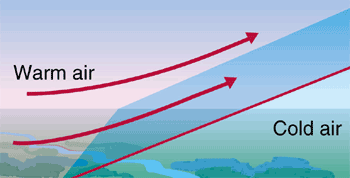
Why does warm air rise above cold air?
Warm air is less dense
Warm air is more dense
Cold air is stronger than warm air
Which of the following symbols represents a stationary front?


Which of the following symbols represents a warm front?
Which of the following symbols represents a cold front?
What is a front?
boundary where two different air masses meet
the top of two cloud masses
the location of extreme high pressure
conditions in the atmosphere which form a cyclone

What type of front is over Texas?
warm front
cold front
stationary front
occluded front
What type of weather will you see along a cold front?
Thunderstorms
Sunny skies
Gentle rain
No weather
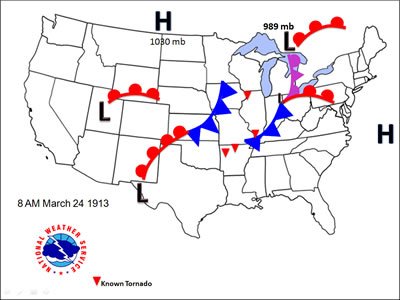
What type of front is over Ohio?
Warm front
Cold front
Occluded front
Stationary Front