
Font size
 Worksheets
Music Theory (M/J BAND 1) Exam Prep
Total questions: 51
Worksheet time: 27mins
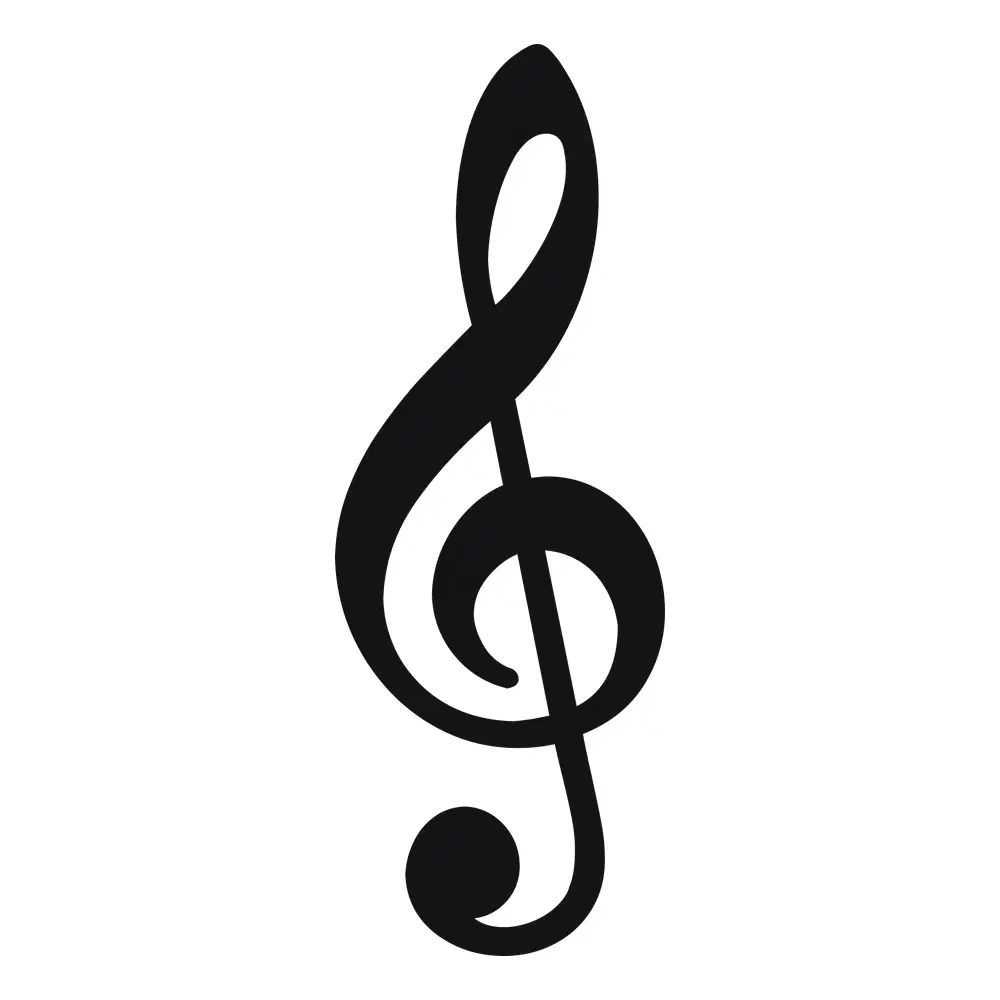
What is this clef called?
The G clef (treble clef)
The F clef (the bass clef)
The C clef
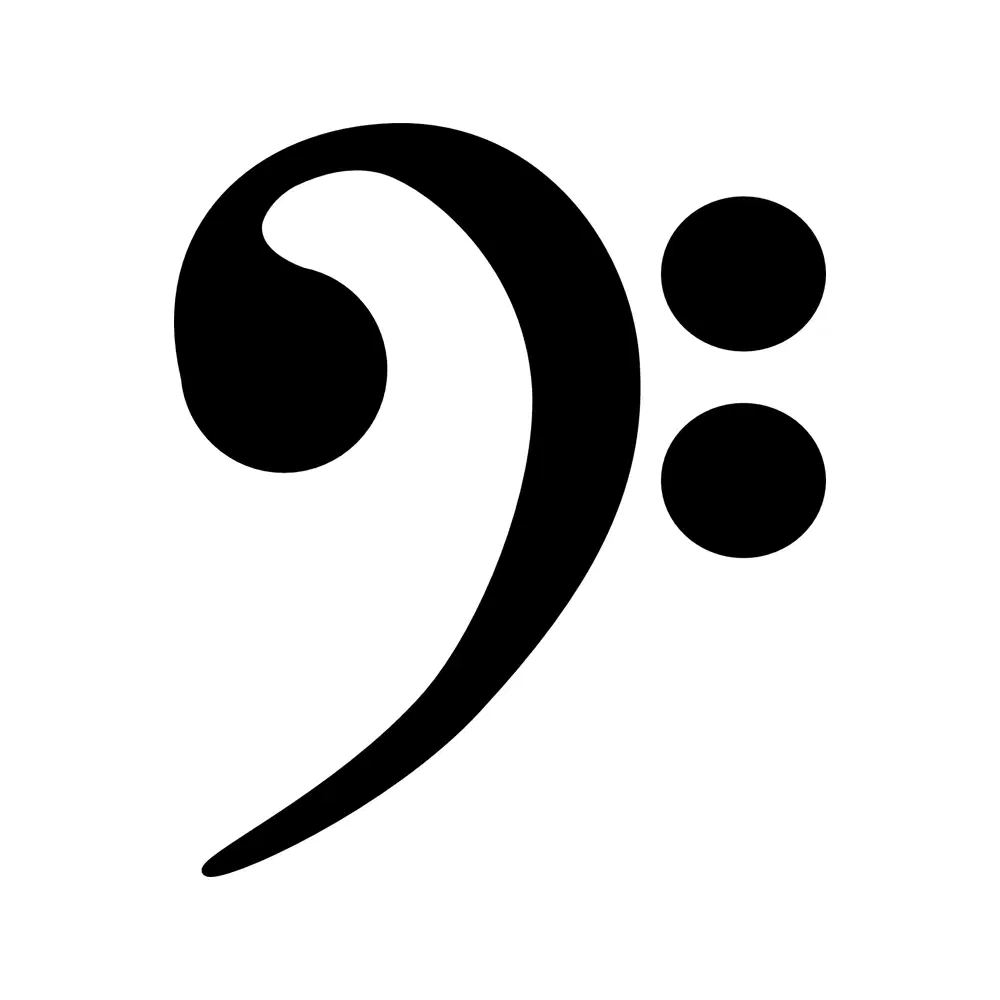
What is this clef called?
The G clef (treble clef)
The F clef (the bass clef)
The C clef
How does a plain staff look like in music?


How many measures are present in this score?
(a)
What is an accidental in music theory?
A type of musical instrument
A symbol that alters the pitch of a note
A mistake made during a performance
A type of musical scale
What are the three accidentals in music theory?
sharp (♯), flat (♭), natural (♯)
double flat (𝄫), staccato, crescendo (𝆒)
eighth rest (𝄾), quarter rest (𝄽), whole rest (𝄻)
piano (𝆏), mezzo-piano (𝆐𝆏), forte (𝆑)
How does a natural (♮) affect a previously sharped note?
It raises the pitch by another half step
It lowers the pitch by one half step
It returns the pitch to its original, unaltered state
It doubles the effect of the sharp
Which of the following is the representation of ledger lines in music?


Concert B♭ is an example of what in music theory?
How many letters are in the musical alphabet?
(a)
Which of the following accurately depicts the repeat sign in music?
𝄇
𝄐
𝄞
𝄴
What is a scale in music theory?
A scale is the sequence of notes arranged through pitch
Dennis is playing the trombone. He was loud and the flutes and clarinets were not able to be heard. What does Dennis need to fix?
Dennis needs to fix his blend.
Dennis needs to fix his balance.
There is nothing that Dennis needs to fix.
Which of the following correctly reorganize the tempo markings in order (slowest to fastest)?
Andante, Moderato, Allegro
Allegro, Moderato, Andante
Moderato, Allegro, Andante
Allegro, Andante, Moderato

How many beats are in every measure of a 2/4 time signature?
1 beat in every measure
2 beats in every measure
3 beats in every measure
4 beats in every measure
What is a time signature in music theory?
A time signature in music theory indicates the key of the song.
A time signature in music theory indicates the tempo of the song.
A time signature in music theory indicates the volume of the song, the pitches in the scale, and the tempo of the song.
What is a whole step?
2 half steps
4 half steps
next octave
pitches
What is a half step?
next adjacent (closest) key
2 half-steps
quarter whole step
pitches
What is tempo?
The number of instruments in a band that is playing.
The 12 notes in the scale.
What are first and second endings in music theory?
First and second endings refer to the volume levels in a musical composition.
First and second endings are used to determine the key signature of a piece of music. It is used to describe the different key signatures in different sections throughout the piece of music.
First and second endings are used to indicate the beginning and end of a song after numerous loops that occur in the piece of music.
First and second endings in music theory are used to show different sections of a piece of music. The first ending is played the first time through, and the second ending is played the second time.
Which of the following images show first/second endings in action?



What is the progression of keys in an arpeggio?
1, 3, 5, 8 (1), 5, 3, 1
8, 5, 3, 1 (8), 3, 5, 8
2, 4, 6, 8, 2 (8), 4, 6, 8, 2
Lily is playing the trumpet. She has the right pitch, the right note, and the right volume, but her sound quality is not desirable. What does Lily need to fix?
Lily needs to fix her balance.
Lily needs to fix her blend.
Lily needs to fix her articulation techniques.
Lily does not need to fix anything.
What is a fermata?
Fermata above a note means to hold it for a longer duration than how it is written.
Fermata below a note means to hold it for a shorter duration than how it is written.
Fermata above a note means to play it louder and more confident.
Answer the following correctly:
♩ (quarter note) + 𝅝 (whole note) = _ counts
What is the correct value for the above equation?
(a)
Answer the following correctly:
♩ (quarter note)+ 𝅗𝅥. (half note & dot) + 𝅗𝅥 (half note) = _ counts
What is the correct value for the above equation?
(a)
What are crescendos and decrescendos in music theory?
Crescendos are gradual decreases in volume or intensity, while decrescendos are gradual increases in volume or intensity.
Crescendos are sudden decreases in volume or intensity, and decrescendos are sudden increases in volume and intensity.
How do the crescendo and the decrescendo signs look like?
< >
-+
Which of these shows a time signature?


What are the four articulations (accents) in music theory?
piano, mezzo-piano, mezzo-forte, forte
sharp, flat, natural, tempo
whole step, half step, first ending, second ending
What is a pick-up notes in music theory?

How many measures are in this score?
25
8
5
4/4
Benjamin is playing the bass drum. He is playing fast. What tempo marking best describes his speed?
andante
moderato
allegro
Kirina is playing the euphonium. She is playing at a walking pace. What tempo marking best describes her speed?
andante
moderato
allegro
What does staccato mean?
light/separated sounds
smooth/connected sounds
weighted sounds
heavy sounds
What does legato mean?
light/separated sounds
smooth/connected sounds
weighted sounds
heavy sounds
What does accent mean?
light/separated sounds
smooth/connected sounds
weighted sounds
heavy sounds
What does marcato mean?
light/separated sounds
smooth/connected sounds
weighted sounds
heavy sounds
What are the common dynamic markings in music theory?
P (soft, piano), MP (medium soft, medium piano), MF (medium loud, medium forte), F (loud, forte)
andante (walking speed), moderato (medium speed), allegro (fast speed)
staccato (light/separated), legato (smooth/connected), accent (weighted), marcato (heavy)
flat, sharp, natural
Penelope is playing her baritone. She emphasizes her notes to make it sound heavy. What type of articulation is Penelope showcasing?
staccato
legato
accent
marcato
Joe is playing his flute. He plays his notes smoothly. What type of articulation is Joe showcasing?
staccato
legato
accent
marcato
Mika is playing her euphonium. She plays her notes lightly and separating the sounds. What type of articulation is Mika showcasing?
staccato
legato
accent
marcato
Donnah is playing her saxophone. She plays her notes heavily. What type of articulation is Donnah showcasing?
staccato
legato
accent
marcato
Li is playing his tenor saxophone. His notes are weighted. What type of articulation is Li showcasing?
staccato
legato
accent
marcato
The band director asks his band members to play softly. What dynamic marking best fits what the band director is expecting?
piano (p)
mezzo-forte (mf)
mezzo-piano (mp)
forte (f)
Yanelly and Belair are practicing their playing skills with their flutes. Belair suggests that they should play loud. What dynamic marking best fits this description?
piano (p)
mezzo-piano (mp)
mezzo-forte (mf)
forte (f)
When Yanelly and Belair were practicing, Yanelly had figured out the issue with their playing. She realized that Belair’s tone quality was not good. What can Belair improve on according to this description?
Belair can improve her blend.
Belair can improve her balance.
Belair can improve on her loudness.
Belair can improve on her articulation.
What are some examples of time signatures?
4/4, 3/4, 2/4, C (common time)
4:4, 3:4, 2:4, C:1 (C to one)
Concert Bb, A major, C# major
What do bar lines do in a piece of music?
Bar lines create measures and separation between notes.
Bar lines tell the player to stop playing.
Bar lines are just for decorative reasons to make it easier for the eyes.
What are slurs and ties in music?
Slurs connect two or more different notes. Ties connect two of the same notes.
Slurs connect two of the same notes. Ties connect two or more different notes.
Slurs increases the music piece suddenly. Ties increases the music piece gradually.
What is a ritardando in music theory?
Ritardando means to gradually get slower.
Ritardando means to gradually get faster.
Ritardando means to gradually get louder.
Ritardando means to gradually get softer.

