
 Worksheets
Lesson 1, Unit 2
Total questions: 11
Worksheet time: 16mins
What was the economic impact of the saltpeter industry on Chile during 20th century?
It made possible to a create synthetic one
It caused economic instability
It was the major source of money
It led to an increase in tourism
2-6.
Answer the questions below after watching the video
What factors contributed to the outbreak of the War of the Pacific?
The shortage of labor
Border issues and tensions
The foreign demand for saltpeter
The discovery of new deposits
Which territories came under Chilean control after the War of the Pacific?
Valparaíso & Santiago
La Paz & Cochabamba
Lima & Arequipa
Tarapacá & Antofagasta
Who were the main owners of the saltpeter mines after the war?
Local communities
Chilean government
Foreign investors
Peruvian entrepreneurs
What proportion of saltpeter production was allocated to cover operating costs?
One-third
Half
Two-thirds
One-fourth
What areas benefited from the fiscal resources generated by the saltpeter tax?
Agriculture and fishing
Tourism and culture
Defense and security
Education and infraestructure
In the 20th century, Chile experienced a significant migration of population from rural to urban areas, reshaping the country's demographic and socio-economic landscape. This movement was largely driven by the industrialization and modernization processes that took place during the century. As industrial sectors expanded in urban centers, particularly in mining, manufacturing, and services, job opportunities proliferated, attracting rural inhabitants seeking employment and better living conditions. Additionally, factors such as improvements in transportation infrastructure, access to education, and changes in social norms contributed to the allure of urban life, prompting many rural dwellers to relocate to cities in search of economic prosperity and social advancement.
What were significant drivers of rural-to-urban migration in 20th century Chile?
Decline in urban job opportunities
Expansion of rural agricultural sectors
Industrialization and modernization processes
Decrease in urban population density
Which sectors experienced expansion in urban centers, attracting rural migrants in 20th century Chile?
Agriculture
Mining
Fishing
Traditional crafts
Besides economic factors, what else contributed to rural-to-urban migration?
Lack of access to education
Poor urban infrastructure
Limited transportation options
Changes in social classes and desires
How did rural-to-urban migration impact urban centers?
It resulted in overcrowding and lack of urban infrastructure
It decreased competition for jobs in urban areas
It led to a decline in industrial sectors
It improved living standards in rural regions
Which of the following best describes democratization?
The process of establishing a dictatorship
The transition to a more democratic regime
The suppression of civil liberties
The concentration of power in the hands of a few individuals
What role did women play in early democratization movements?
They were excluded from political participation
They were appointed as rulers in authoritarian regimes
They were involved in advocating for democratic reforms
They were only allowed to participate in religious affairs
Which of the following best describes the impact of women's inclusion in politics?
It has no significant impact on policy outcomes
It leads to more inclusive and representative politic
It increases corruption in political institutions
It decreases political stability
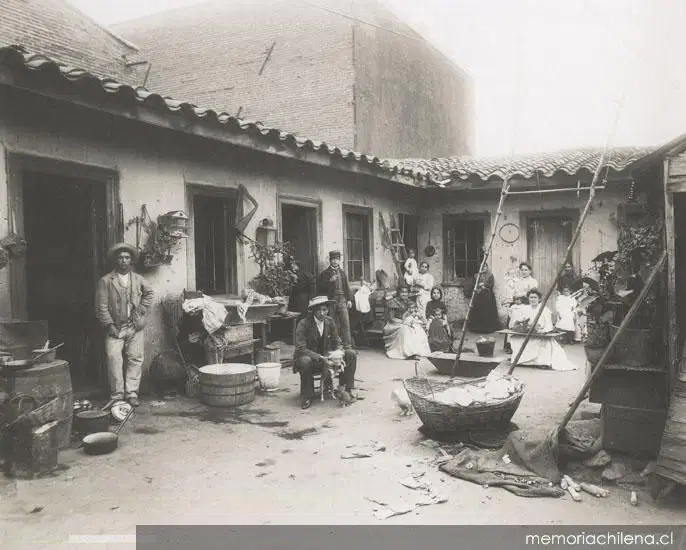
What is the name used to define the place in the image?
Pobreza
Población
Conventillo
Hogar
What were common living conditions in conventillos?
Spacious individual apartments
Overcrowded rooms with inadequate sanitation
Private homes with inhouse gardens
Government-provided luxury housing
Why did many people move into conventillos?
To enjoy luxurious living conditions
To live closer to their extended family in rural areas
For better educational opportunities
Due to migration and lack of affordable housing
What was a significant factor driving the expansion of education in Chile during the 20th century?
Decrease in population in rural areas
Industrialization and economic development
Decline in government funding for education
Reduction in urbanization
Which of the following reforms was introduced to improve access to education in Chile in the 20th century?
Elimination of public schools
Increase in pricing for all educational levels
Implementation of mandatory primary education
Restriction of education to urban areas only

