
 Worksheets
Walker Physics 2nd Sem Exam Study Guide
Total questions: 200
Worksheet time: 5hrs 1mins
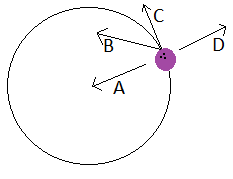
Which of the following depict the velocity of the ball?
A
B
C
D
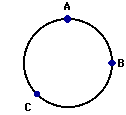
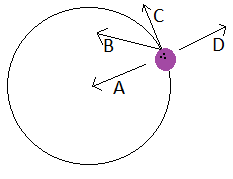

A 10kg car travels at a constant speed of 20.0 m/s around a horizontal circular track. Which diagram correctly represent the direction of the car's velocity (v) and the direction of the centripetal force (Fc) acting on the car at a particular moment?


What's the centripetal acceleration of a 0.2 kg yoyo spun in a circle with a radius of 0.7 meters at a velocity of 3 m/s?
8.23 m/s2
10.54 m/s2
12.86 m/s2
17.39 m/s2
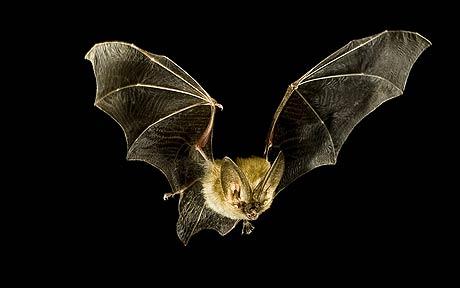
Bruno the bat has a mass of 0.58 kg and flies at a speed of 0.8 m/s in circle of radius 0.5 m. What is his acceleration?
0.25 m/s2
1.3 m/s2
1.6 m/s2
0.74 m/s2
A) 700 m/s
B) 26 m/s
C) 19 m/s
D) 13 m/s
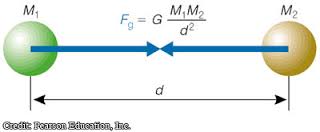
Calculate the force of gravity (F) between two objects whose masses are m1 = 100 kg and m2 = 1000 kg if they are separared by a distance of d = 500 m.
2.67 * 10-11 N
0.4 N
6.67 * 10-11 N
1.3 * 10-8 N
Find the distance between two objects whose masses are m1 = 4,500 kg, and m2 = 8,700 kg; if the gravitational force between them is F = 2.0 x 10⁻⁸ N.
130565.25 m
361.34 m
0.19575 m
0.783 m

If the mass of either m1 or m2 is increased then the force of gravitation between them will...
increase
decrease
stay the same

Which pair of masses will have the greatest gravitational force of attraction between them?
top pair because they have the greatest masses and are closer together
middle pair, because they are closer together
bottom pair because they have the greatest masses and are further apart
all have the same Fg

A car traveling at a constant 45 mph going around a curve is accelerating because
it is getting faster
it is getting slower
it is changing directions
it is not accelerating if it has a constant speed

The car is travelling at a constant speed. If the car hits a patch of ice, what direction will it skid? Notice it is traveling counterclockwise.
to the right >
to the left <
upwards ^
downwards v
According to Newton's 2nd Law, if we double the force on a mass, the acceleration on the mass will
also double (multiplied by 2)
quadruple (multiplied by 4)
become half (multiplied by 1/2)
be reduced by 1/4 (multiplied by 1/4)

What type of force acts like the centripetal force when the moon orbits the Earth?
FN
Ff
FT
Fg

What type of force acts like the centripetal force when a ball swings in a circle on a string?
FN
Ff
FT
Fg

A race car completes three laps of a circular track with a radius of 35 m in 9.0 seconds. Determine the speed of the car.
3.9 m/s
73.3 m/s
24.4 m/s
1.0 m/s
A yo-yo is whirled on a string, then the string breaks. What causes the yo-yo to move off in a straight line?
friction force
centripetal force
inertia
centripetal acceleration
In which of the following scenarios is work being done, according to the physics definition?
Solving an equation
lifting up a book
holding a barbell above your head
keeping a bike from falling as it rolls along a sidewalk
An object lifted 10m gains 200 J of potential energy. If the same object is lifted 20m, its potential energy gain is...
Half as much
The same
Twice as much
Four times as much
More than 4 times as much
It takes 60 J of work to push a large box 6 m across a floor. Assuming the push is in the same direction as the displacement, what is the magnitude of the force on the box?
6 N
10 N
60 N
360 N
None of these
If you do work on an object in one third of the usual time, your power output is...
One third of the usual power output
The same as the usual power output
Three times the usual power output
Impossible to predict
A 5 kg mass has 100 J of potential energy with respect to the ground. Approximately how high above the ground is the mass?
1 m
2 m
3 m
4 m
None of these
A bow is drawn so that it has 40 J of potential energy. When released, the arrow will theoretically have a kinetic energy that is
less than 40 J
More than 40 J
40 J
Impossible to predict
If you do 200 J of work in 10 seconds, your power output is...
2000 W
200 W
20 W
2 W
Mrs. McRoberts carries a 50 N cat 10 m across a room. Her arms exert an upward force on the cat equal to its weight. How much work is Mrs. McRoberts doing on the cat?
500 N
50 N
5 N
0 N
None of the above
When a car breaks to a stop, all its kinetic energy is converted to...
Stopping Energy
Potential Energy
Chemical Energy
Heat through friction
Nuclear Energy
A ball rolling down an incline plane has its maximum potential energy at...
The top
A quarter of the way down
Half way down
The bottom
Impossible to predict
A shopping cart has a mass of 40 kg is pushed 10 m with a force of 20 N. How much work is done on the cart?
200 J
400 J
800 J
8000 J
A block of ice sliding down an incline has its maximum kinetic energy at...
the top
the bottom
halfway down
impossible to predict
If you push an object a given distance, while applying four times the force, you do...
Twice as much work
Four times as much work
Half as much work
The same amount of work
A 10 kg ball has a height of 2 m, while a 5 kg ball has a height of 5 m. Which ball has more potential energy?
The 5 kg ball
The 10 kg ball
They both have the same potential energy
impossible to predict
Which quantity has the greatest influence on the amount of kinetic energy a large truck has while moving down the highway?
It's mass
It's weight
It's velocity
It's size
None of the above
How much power is required to raise a 30 kg crate a vertical distance of 6 m in a time of 4 seconds?
120 W
52.5 W
450 W
385 W
525 W
In which case is the net work positive?
work done by the tension of a string as a ball attached to it whirls in a horizontal circle
work done to raise and lower a set of 25-kg barbells to and from the floor 10 times.
work done to hole a set of 25-kg barbells at a constant height for 3 minutes
work done to kick a set of 25-kg barbells and cause them to roll across the floor.
Which situation requires the greatest average power?
lifting a 5-kg block to a height of 2 m in 2 s
pushing a block across a level surface with a net force of 10 N at a velocity of 3 m/s
changing the kinetic energy of a rolling wheel from 15 J to 55 J in 20 s
burning a 10-watt light bulb for 20 hrs

What is deformation?
gravitational potential energy
change in the spring's length
change in the force applied
A stiff spring stores _____ potential energy per meter of stretch.
more
less
What is the formula for KE?
KE = 21v2
KE = 21mv2
KE = 21m2v
Roller coasters slow down when going up because . . .
Someone stops it
Kinetic energy gets converted to Potential energy as you are gaining more height.
Kinetic energy increases because more height at the top.
Velocity is increasing thus roller coaster slows down
What happens when a ball is dropped?
PE decreases and KE decreases
PE increases and KE decreases
PE decreases and KE increases
PE increases and KE increases
Energy and work are measured in _________.
Newtons
Joules
m/s
Meters
The Law of Conservation of Energy states that ...
Energy can be created but not destroyed
Energy cannot be created or destroyed but can be transferred or transformed.
Energy cannot be created but can be destroyed.
Gravitational Potential energy depends on the _______ and _________ of an object.
Height and friction
Height and movement
Height and mass
Mass and friction
What is the formula for Potential energy?
PE = mg
PE = mh
PE = mgv
PE = mgh
The higher the velocity of an object, the ___________ the kinetic energy.
higher
lower
equal
__________ is the ability to cause change
Energy
Work
Force
Motion
What are the units of force?
kg
N
m/s
m/s2
F = ma


If the net force is equal to zero, the forces acting on the object are
balanced
unbalanced
If you push a skateboard with a force of 8 N and your mass is 80 kg, what is the force that the skateboard exerts on you?
75 N
8 N
7N
10 N
The force that responds to the first force in a force pair
Reaction Force
Action Force
The forces in a force pair are in ____ direction.
Opposite
Same
Newton’s 3rd Law of motion states that any action will have a(n) ________and ______reaction
Equal and similar
Equal and different
Equal and opposite
Greater and opposite
A book rests on a table. The force of gravity pulls down on the book with a force of 20N. What prevents the book from accelerating downward at 9.8m/s2?
The table and the book are pushing back with an acceleration of 9.8m/s2.
The table presses back up on the book with a force greater than 20N
The inertia of the book is equal to the inertia of gravity
The table presses back up on the book with an equal and opposite force of 20N

Describe the other force in the action-reaction force pair
The glove pushes the baseball to the right
The glove pushes the baseball backward
The glove pushes the baseball downward
a. None of the above

A nickname for Newton's 3rd Law of Motion might be...
Action/Reaction
F=m*a
The law of inertia

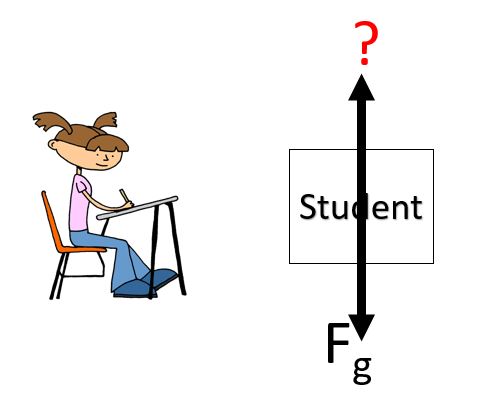

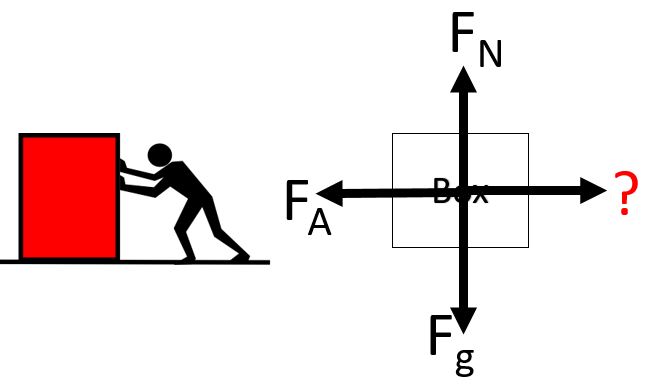
Whenever an object is moving, there is always this force opposing the motion:
inertia
momentum
friction
applied force
The force exerted by ropes and chains is called
tension
normal
elastic
mechanical

The car in the picture is moving at a constant velocity. What forces does the car experience?
Gravity
Gravity and Normal
Gravity, Normal, and Friction
Gravity, Normal, Friction, and Applied

How many forces are on a leopard laying stationary on a log?
1
2
3
4

The model shows forces acting on a box when it is sliding down the ramp.
What would most likely happen to the motion of the box if you poured oil on the ramp?
It will slow the box because the force of friction will be increased.
It will speed up the box because the force of friction will be increased.
It will slow the box because the force of friction will be reduced.
It will speed up the box because the force of friction will be reduced.
If an unbalanced force acts on an object at rest, the object will move in the direction of the force. Which of the following best models an object with unbalanced forces acting on it?


A group of students want to test the effect of balanced forces on the motion of objects with different masses. They conducted trails with 10-gram, 20-gram, and 30-gram blocks. They applied 100 Newtons of force to each side of the blocks as shown in each trial.
Which hypothesis will most likely be supported by the results of the investigation?
When a balanced force is applied the block with the greatest mass will move fastest.
When an unbalanced force is applied the block with the least mass will move fastest.
When a balanced force is applied the speed of an object will not change.
When an unbalanced force is applied the speed of an object will not change.

A student recorded the distance than an object moved at 5 second intervals. The graph below shows the motion of an object.
Which of the following best describes the data in the graph?
Time is the dependent variable which is graphed on the "Y" axis.
Time the is dependent variable which is graphed on the "X" axis.
Distance is the dependent variable which is graphed on the "Y" axis.
Distance is the dependent variable which is graphed on the "X" axis.

An engineer wanted to design a floor for a warehouse. Workers in the warehouse would need to push heavy boxes across the floor. The engineer tested four different materials by sliding a box across the surface and measuring the distance it took the box to stop.
Which of the following best explains which material would work best for the warehouse floor?
The tile because it had the least friction.
The wood because it would be easiest to push the boxes on.
The dirt because it has the least friction.
The asphalt because it has the most friction.
Galileo
Newton
Aristotle


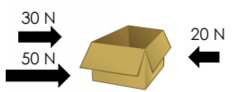

Friction is a force that acts ...
in the same direction as the motion
opposite to the direction of the motion
opposite to the applied forces
the same direction as the applied force


A student wished to design an investigation to determine the effect of changing the mass of an object when an unbalanced force is applied the object.
What should she use as the independent variable in her investigation?
Time
Force
Mass
Speed

Two children are sitting on a see-saw, as shown. Calculate the distance the 500-N child should sit from the fulcrum in the center (pivot) of the lever to balance the see-saw.
1.8 m
3m
5 m
1 m

If the torque required to loosen a nut on the wheel of a car has a magnitude of 60.0 N• m, what minimum perpendicular force must be exerted by a mechanic at the end of a 0.45 m wrench to loosen the nut?
.666 Nm
133.3 N
66.7 N
13.3 Nm
If the torque required to loosen a nut on the wheel of a car has a magnitude of 60.0 N• m, for a 0.45 m wrench to loosen the nut, how much torque would be needed if a pipe extended the length of the wrench to 0.90 m?
60 Nm
30 Nm
120 Nm
54 Nm

Why are you more stable when riding a bicycle at a faster speed?
You have more mass
The wheels have angular momentum
It's not easier to ride at a faster speed
The bike has more momentum

A skater start spinning on the tips of her skates at low angular velocity with arm outstretched.
What would happen when she brings her arms close to her body
She will spin slower
She will spin faster
She will spin at the same velocity

If a child is sitting on the outside edge of a merry-go-round and you push it to double the rotational velocity (ω) from 5 rpm to 10 rpm, what happens to the angular momentum (L)?
the angular momentum doubles
the angular momentum is reduced by half
the angular momentum quadruples
Why would it be harder to stop the merry-go-round at 10 rotations per minute that when it was going 5 rotations per minute?
the angular momentum is greater with a higher angular velocity and will require a larger torque to stop the motion.
it won't because the angular momentum is the same for both angular speeds.

What happens to her rotational inertia when a figure skater brings in her arms?
Increase her rotational inertia
Decrease her rotational inertia
has no affect
Why does an object experiencing uniform circular motion have an acceleration?
because it is changing speed
because it is changing direction
because it is moving in a straight line
because it has mass
In uniform circular motion, which two variables point toward the center of the circle?
the centripetal force and the acceleration
the velocity and the mass
the period and the mass
the time and the radius

The _______________________ supplies the centripetal force requirement for the car to move in a horizontal circle. Without it, the car would turn its wheels but would not move in a circle (as is the case on an icy surface).
friction force
centrifugal force
normal force
applied force
Which of the following statements is true?
As the Earth orbits the Sun, the Earth's acceleration vector is toward the Sun.
If the Moon suddenly broke free of its orbit around the Earth, it would crash into the Earth.
The International Space Station remains in Earth orbit because of its mass.
The Earth and Neptune take the same amount of time to make one orbit around the Sun.

For the FLYING PIG diagram, Does the pig accelerate in the vertical direction?
What does this tell you about the magnitude of the vertical component of T and mg? (If you don't know, ask Irene ;)

These are the formulas you will use on the test.
A Ferris wheel is turning at a constant rate. It completes two revolutions every two minutes. What is the angular velocity of the Ferris wheel, in rad/s?
(a)
If the Ferris wheel's radius is 15 meters, what is the tangential velocity of the riders?
(a)
If the Ferris wheel's radius is 30 meters, what is the tangential velocity of the riders?
(a)
At t = 5s, what is the Ferris wheel's angular velocity?
(a)
At t = 5s, what is the Ferris wheel's angular displacement?
(a)
Linear motion is often compared to rotational motion. Most of the variables in linear motion have "analogs" or comparable versions within rotational motion. Fill out the table below with your knowledge of rotational motion. Some of the table has already been filled out for you. You may need to research some of these.
Angular displacement → Position (Δx)
Angular velocity → Velocity (v)
Angular acceleration → Acceleration (a)
Moment of inertia → Mass (m)
Torque → Force (F)
α
angular acceleration
τ
torque
ω
angular velocity
θ
angular displacement
ι
moment of inertia
Which of the following is the rotational analog of linear momentum?
Angular momentum
Angular velocity
Angular displacement
Angular acceleration
If the moment of inertia of a rotating object doubles, how does this affect its angular velocity if the angular momentum remains constant?
The angular velocity remains the same
The angular velocity is halved
The angular velocity doubles
The angular velocity is quadrupled
When comparing the kinetic energy of linear motion (1/2 mv^2) to rotational motion, which of the following formulas represents the kinetic energy of an object in rotational motion?
1/2 Iω^2
1/2 mv^2
Iω
mv^2
There are 400 ___________ in one revolution of a circle.
Gradiens
Radians
Degrees
None of the Above
Match the following quantities with their units
a
s2m
τ
Nm
p
kg sm
K.E
J
I
kgm2
The "centrifugal force" describes what actual physics phenomena?
Mass
Weight
Rotational Motion
Inertia
What does the term "centripetal" mean?
Center-fleeing
Center-seeking
Rotation
Circular
What does the term "tangential" mean?
Moving Forward
Moving in a Circle
Moving in a straight line
Moving Around
In uniform circular motion, there is a
Constant Velocity
Constant Angular Velocity
Zero Acceleration
Net Tangential Acceleration
There are 2π ___________ in one revolution of a circle.
Gradiens
Radians
Degrees
None of the Above
There are 360 ___________ in one revolution of a circle.
Gradiens
Radians
Degrees
None of the Above
As an object rotates, the change in the angle is called _______ ____ and represented by ________
angular displacement AND s
angular displacement AND θ
rotational displacement AND θ
rotational displacement AND s
The angular velocity is represented by the Greek letter ____.
ω
θ
α
σ
The angular acceleration is represented by the Greek letter ____.
ω
θ
α
σ
To convert between linear velocity and angular velocity you used ___________.
r =vω
ω = vr
ω=r/v
v =rω
The relationship between angular acceleration and linear acceleration is _________
α = a/r
a = α/r
α =ar
a = αr
To convert between revolutions and radians you must _________.
Multiple the number of revolutions by 2π
Divide the number of revolutions by 2π
Divide 2π by the number of revolutions
None of the above
The frequency of an object is ________.
the number of complete revolutions made by an object in 1 s.
the time it takes for one revolution of an object.
Neither of the other answers
Both of the other answers
To calculate the frequency you _______.
divide the number of revolutions by the angular velocity.
divide the number of radians by the angular velocity.
divide the angular velocity by the number of radians.
divide the angular velocity by the number of revolutions.
Torque causes angular acceleration.
True
False
Which of the following is NOT a condition of static equilibrium?
The angular velocity of the object is constant.
The velocity of the object is changing.
The angular velocity of the object is zero.
The velocity of the object is zero.
Torque can be described as
how effectively a force causes a rotation
the ratio of mass to angular acceleration
the ratio of moment of inertial to angular acceleration
None of the other answers
The resistance to rotation is __
angular inertia.
torque
the center of mass
the moment of inertia.
Two children are sitting on a see-saw, as shown. Calculate the distance the 500-N child should sit from the fulcrum in the center (pivot) of the lever to balance the see-saw.
1.8 m
3m
5 m
1 m
If the torque required to loosen a nut on the wheel of a car has a magnitude of 60.0 N• m, what minimum perpendicular force must be exerted by a mechanic at the end of a 0.45 m wrench to loosen the nut?
.666 Nm
133.3 N
66.7 N
13.3 Nm
A skater start spinning on the tips of her skates at low angular velocity with arm outstretched.
What would happen when she brings her arms close to her body
She will spin slower
She will spin faster
She will spin at the same velocity
If a child is sitting on the outside edge of a merry-go-round and you push it to double the rotational velocity (ω) from 5 rpm to 10 rpm, what happens to the angular momentum (L)?
the angular momentum doubles
the angular momentum is reduced by half
the angular momentum quadruples
Why does an object experiencing uniform circular motion have an acceleration?
because it is changing speed
because it is changing direction
because it is moving in a straight line
because it has mass
In uniform circular motion, which two variables point toward the center of the circle?
the centripetal force and the acceleration
the velocity and the mass
the period and the mass
the time and the radius
Which of the following statements is true?
As the Earth orbits the Sun, the Earth's acceleration vector is toward the Sun.
If the Moon suddenly broke free of its orbit around the Earth, it would crash into the Earth.
The International Space Station remains in Earth orbit because of its mass.
The Earth and Neptune take the same amount of time to make one orbit around the Sun.
If the Ferris wheel's radius is 15 meters, what is the tangential velocity of the riders?
(a)
If the Ferris wheel's radius is 30 meters, what is the tangential velocity of the riders?
(a)
Linear motion is often compared to rotational motion. Most of the variables in linear motion have "analogs" or comparable versions within rotational motion. Fill out the table below with your knowledge of rotational motion. Some of the table has already been filled out for you. You may need to research some of these.
Angular displacement → Position (Δx)
Angular velocity → Velocity (v)
Angular acceleration → Acceleration (a)
Moment of inertia → Mass (m)
Torque → Force (F)
α
angular acceleration
τ
torque
ω
angular velocity
θ
angular displacement
ι
moment of inertia
If the moment of inertia of a rotating object doubles, how does this affect its angular velocity if the angular momentum remains constant?
The angular velocity remains the same
The angular velocity is halved
The angular velocity doubles
The angular velocity is quadrupled
When comparing the kinetic energy of linear motion (1/2 mv^2) to rotational motion, which of the following formulas represents the kinetic energy of an object in rotational motion?
1/2 Iω^2
1/2 mv^2
Iω
mv^2
There are 400 ___________ in one revolution of a circle.
Gradiens
Radians
Degrees
None of the Above
The "centrifugal force" describes what actual physics phenomena?
Mass
Weight
Rotational Motion
Inertia
What does the term "centripetal" mean?
Center-fleeing
Center-seeking
Rotation
Circular
What does the term "tangential" mean?
Moving Forward
Moving in a Circle
Moving in a straight line
Moving Around
In uniform circular motion, there is a
Constant Velocity
Constant Angular Velocity
Zero Acceleration
Net Tangential Acceleration
The frequency of an object is ________.
the number of complete revolutions made by an object in 1 s.
the time it takes for one revolution of an object.
Neither of the other answers
Both of the other answers
Which of the following is NOT a condition of static equilibrium?
The angular velocity of the object is constant.
The velocity of the object is changing.
The angular velocity of the object is zero.
The velocity of the object is zero.
The resistance to rotation is __
angular inertia.
torque
the center of mass
the moment of inertia.
What is the formula for calculating the momentum of a particle?
F=ma
K=21mv2
p=mv
ρ=Vm
A collision in which the kinetic energy is conserved is called...
normal force
elastic collision
inelastic collision
completely inelastic collision