
Font size
 Worksheets
Phonetics and Phonology Review
Total questions: 20
Worksheet time: 13mins
What is Phonetics about?
It deals with speech in its purely physical aspects.
It is a branch of linguistics describing the sounds.
It studies the sounds of English and classifies them.
It studies the phonemes of English and classifies them.
What are the main branches of phonetics?
Articulatory, acoustic and auditory
Articulatory, phonological and auditional
Auditory, phonetical and acoustical
What is the word that corresponds to the following definition? "a stretch of speech produced by a single speaker, with silence before and after"
(a)
What is a minimal pair?
A pair of words which differs only in two sound segments.
A pair of words which differs only in one sound segment.
A pair of words which differs in a vowel sound.
A pair of words which differs in a consonant.

Is the pair of words you see in the image a minimal pair?
Yes, it is
No, it isn't
Yes, it is, but only when spelled.
Yes, it is, but only when transcribed.
How many vocalic phonemes does the English language have?
(a)
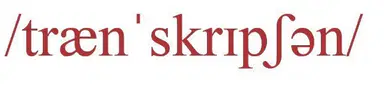
What is the kind of transcription that we use when transcribing in English in this class?
(a)

TRUE OR FALSE: Is the LARYNX a supraglottal cavity?
TRUE
FALSE
What's the name of the opening between the vocal cords?
(a)
What are the basic components of speech?
Phonation, voice and articulation
Initiation, formation and articulation
Initiation, phonation and articulation
The phonetic symbol [ʔ] symbolises
a voiced sound
a voiceless sound
a question in the transcription
a glottal stop
What are the three possible places of articulation when describing VOWELS?
spread, rounded and neutral
high, mid and low
Front, central and back
What is the name given to the phenomenon when vowels and diphthongs are considerably shortened when they are closed by a voiceless consonant?
(a)
The phonemic symbol /dʒ/ is present in words like …
Judge, age, giant.
These, those, breathe
Thin, thanks, path.
Match, cheese, chain
Alveolar sounds are produced with …
Both lips
The front of the tongue towards the hard palate
Any part of the tongue towards the ridge.
Any part of the tongue towards the teeth.
What are the parts of the English syllable?
peak and rhyme
peak and coda
neither peak nor coda
onset and rhyme
Which phonemes can be pre-initial in the syllable?
/s/
/t/ and /d/
all except for /h/
all except for /p/
How many different pronunciations are there for past tense regular verbs?
As many as sounds we have in English.
Three, depending on the previous consonant.
As many as verbs we have in English
Only one, because it varies with the verb
In connected speech...
every word has only one possible transcription
words are transcribed always in their citation form.
function words can have a strong or weak form
words are transcribed always differently.
In which of the following contexts should we transcribe the strong form of grammatical words?
Coordinated prepositions; auxiliary verbs with full meaning
When we do not want to stress something
Prepositions in the middle of a sentence.
when we are not quoting

