Wayground logo

Free Printable Worksheets

Font size

S
M
L
XL
Worksheets

Summer School Week 1 Review

Total questions: 25

Worksheet time: 45mins

Name
Class
Date
1.
Question Image

If the grass has 430,000 lbs of biomass, correctly match the rest of the food chain to form a biomass pyramid.

a)

Grasshoppers

1.

43,000 lbs

b)

Frogs

2.

4,300 lbs

c)

Phython

3.

430 lbs

d)

Eagles

4.

43 lbs

2.

In this energy pyramid, which organisms have the most energy available?

a)

Producers

b)

Carnivores

c)

Herbivores

d)

Top Predator

3.
The diagram represents a pyramid of energy in an ecosystem.  Which level would most likely contain members of the plant kingdom?
a)
A
b)
B
c)
C
d)
D
4.
If there is 1000 Kcal available in the producers in trophic level 1, how much energy is available in the herbivores in trophic level 2?
a)
10 Kcal
b)
1 Kcal
c)
100 Kcal
d)
1000 Kcal
5.
A pyramid shape is used to show the amount of available energy at each trophic level because... 
a)
energy decreases as you go up the food chain, just like the pyramid shape gets smaller as you go up. 
b)
energy increases up the food chain just like the pyramid shape gets smaller as you go up. 
c)
energy amounts are the same at each trophic level
6.

What will most likely happen to the hawks and rodents if the insects were removed?

a)

There will be more hawks and rodents

b)

The rodents will eat more hawks

c)

There will be fewer rodents and hawks

d)

The hawks will eat more rodents

7.

What would happen to the bird if the green fish died out?

a)

the bird population would grow

b)

the bird population would die out

c)

the smaller fish will die out

8.
Which of the following is the correct order of organization in living things from most basic (simple) to most complex?
a)

a.  Organism, cell, tissue, organ, organ system

b)

a.  Organ system, organ, tissue, cell, organism

c)

a.  Cell, tissue, organ, organ system, organism

d)

a.  Cell, organ, tissue, organ, organism, organ system

9.

Match the trophic level with the producer/consumer

a)

Trophic Level 1

1.

Energy producer

b)

Trophic Level 2

2.

Primary Consumer

c)

Trophic Level 3

3.

Secondary Consumer

d)

Trophic Level 4

4.

Tertiary Consumer

e)

Trophic Level 5

5.

Apex Predator

10.
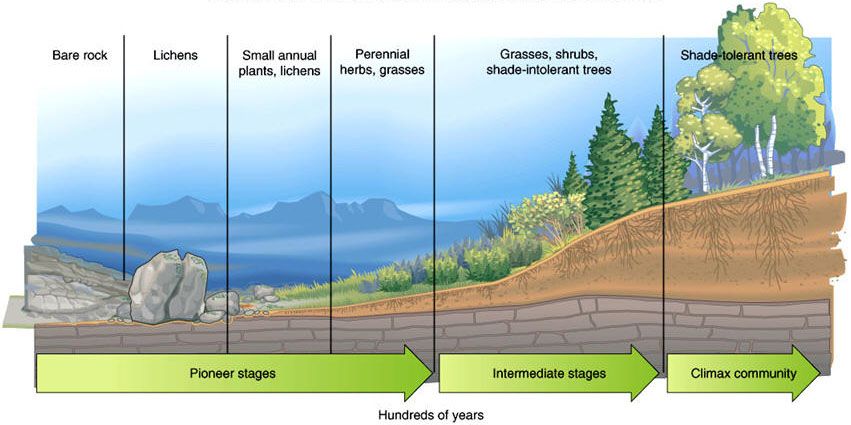
What type of succession is shown going from figure A to figure B?
a)
primary succession
b)
eutrophication
c)
secondary succession
d)
intermediate
11.
succession that occurs in an area with no soil
a)
ecological succession 
b)
primary succession 
c)
secondary succession
d)
pioneer speciles
12.
succession that occurs in an area where soil is already present
a)
ecological succession 
b)
primary succession 
c)
secondary succession
d)
pioneer speciles
13.
this type of succession occurs after a forest fire
a)
primary succession
b)
secondary succession
c)
both
14.

The picture shows what type of succession?

a)

primary

b)

secondary

c)

tertiary

d)

quadanary

15.

What is the correct order of levels of organization from the lowest to highest level?

a)

cell

b)

tissue

c)

organ

d)

organ system

e)

organism

1)
2)
3)
4)
5)
16.

Match the following types of relationships to their descriptions:

a)

Both organisms are harmed by fighting over a resource

1.

Competition

b)

One organism benefits at the expense of the other

2.

Parasitism

c)

One organism benefits while the other remains neutral

3.

Commensalism

d)

Both organisms benefit (help each other)

4.

Mutualism

17.

Macaws (a large, tropical bird) have strong beaks that can bit through thick shells. They are messy eaters, often opening nuts and droping them on the ground, leaving them behind. Other animals eat the dropped food. What type of relationship is this?

a)

commensalism

b)

parasitism

c)

mutualism

d)

competition

18.

Match the following types of relationships to their descriptions:

a)
1.

Competition

b)
2.

Parasitism

c)
3.

Commensalism

d)
4.

Mutualism

19.

Aztec ants live in Cecropia trees. The tree provides a home for the ants and the ants protect the tree from herbivores. What kind of relationship is this?

a)

parasitism

b)

mutualism

c)

competition

d)

commensalism

20.
Barnacles create home sites by attaching themselves to whales. This relationship neither harms nor benefits the whales. 
a)
parasitism
b)
commensalism
c)
mutualism
21.
Yucca flowers are pollinated by yucca moths. The moths lay their eggs in the flowers where the larvae hatch and eat some of the developing seeds. Both species benefit. 
a)
parasitism
b)
commensalism
c)
mutualism
22.
Mistletoe extracts water and nutrients from a spruce tree. The spruce tree is harmed. 
a)
parasitism
b)
commensalism
c)
mutualism
23.

Hermit Crabs live in shells made and then abandoned by snails.

a)

Commensalism

b)

Parasitism

c)

Competition

24.
1.  A bee and a flower work together to benefit each other. This is an example of _________________. The bee helps the flower by pollinating it and the flower helps the bee by providing it with nectar. 
a)
commensal relationship 
b)
parasitic relationship 
c)
mutual relationship 
25.
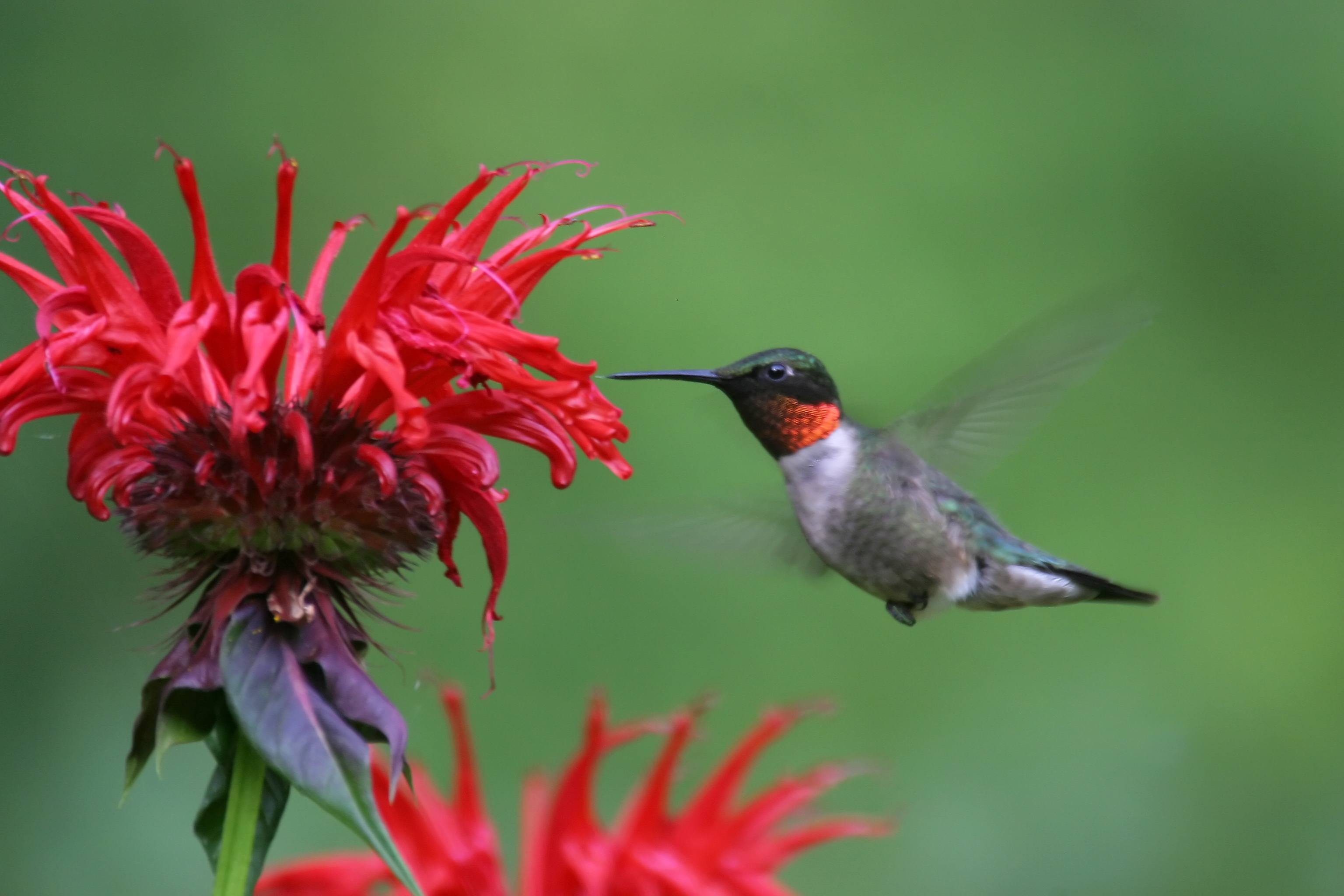
What type of symbiosis?  Hummingbirds feed on nectar from flowers.  The flowers are pollinated by hummingbirds as they move from flower to flower.
a)
commensalism
b)
mutualism
c)
parasitism
d)
predation