
Font size
 Worksheets
California Drivers Ed (Section 5-6)
Total questions: 32
Worksheet time: 19mins
Use your vehicle’s horn to let other drivers know you are there or warn others of a hazard. Use your horn to: (mark all that apply)
Avoid Collisions
Alert oncoming traffic on narrow mountain roads where you cannot see at least 200 feet ahead
When you want
It is illegal to drive using only parking lights. Use your headlights: (mark all that apply)
When it is too dark too see 200 feet
Beginning 30 minutes after sunset and until minutes before sunrise
In adverse weather (fog, rain or snow)
on mountain roads and tunnels (even during sunny days)
When conditions such as clouds, dust, smoke or fog prevents you from seeing
If you can see a collision or hazard ahead, warn drivers by: (mark all that apply)
Turn on emergency flashers
Yell at the drivers behind you that there is a hazard
Lightly tap break pedal 3 or 4 times
Use hand signal for slowing and stopping
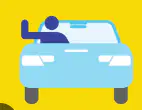
What hand signal is this for?
left turn
right turn
slow or stop
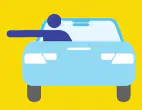
What hand signal is this for?
Right turn
Left turn
Slow or stop
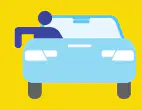
What hand signal is this for?
Left Turn
Right Turn
Slow or Stop
Single Solid Yellow Line means....
A pass up lane, meaning you can pass other vehicles
Marks the center of a road with two-way traffic. Which means you cannot pass the vehicle in front of you if there is only one lane on each side
Means a u-turn is permitted
You must stay to the right of a double solid Yellow line unless.... (mark all that apply)
In a high-occupancy vehicle (HOV) carpool lane that has a designated entrance on the left
Instructed by construction or other signs to drive on the other side of the road because your side is closed or blocked
Taking a right turn onto a one way street
Turning left across a single set of double yellow lines to enter or exit a driveway or private road or make a U-turn
Two sets of solid double yellow lines spaced two or more feet apart are considered a ____
barrier
obstruction
construction zone
a passing safe zone
A broken yellow line means
You may pass if the broken line is next to you. Only pass when it is safe
A construction zone. Pay attention to construction workers
The end of a road, look for signs indicating where to go
A double solid white line means...
A barrier between a regular lane and a HOV lane OR on a freeway or off ramps
a pass up lane
a lane marking lanes going in the same direction
What is a line with triangles pointing towards you called?
an end of lane marking
yield line
HOV lane ending
It is not necessary to slow down before lane change
True
False
A center left turn lane is located in the middle of a two-way street. It is marked on both sides by two painted lines. The inner line is broken and the outer line is solid. This type of lane is used for...
Making a center left turn
Making a U-turn
a regular traffic lane or passing lane
Making a right turn
To make a right turn, you must signal about
50 feet before the turn
10 feet before the turn
75 feet before the turn
100 feet before the turn
You may turn against a red light...
you may not, it is illegal
after a complete stop
once the light turns green
You can make a right turn against a red arrow
True
False
You may make a u-turn in a residential district if no vehicles are approaching you within
200 feet
100 feet
75 feet
150 feet
When merging make sure you... (mark all that apply)
can stop safely by leaving three seconds of space between you and the vehicle in front of you
slow down
Look at mirrors and check blind spots
Do not cross any solid lines
When exiting make sure you... (mark all that apply)
Signal 5 seconds before you exit
Signal 3 seconds before you exit
Cross over solid lines ONLY if you are exiting
Do not cross any solid lines when exiting
To merge, exit or enter traffic, you need a space that is: (mark all that apply)
On city streets: quarter of a block witch is about 75 feet
On city streets: half a block witch is about 150 feet
On a highway: A full block which is about 300 feet
On a highway: half a block witch is about 150 feet
To safely pass, the hill or curve should be at least...
1/4 mile ahead
200 feet ahead
1/3 mile ahead
1/8 mile ahead
When parking downhill you should...
point your front wheels toward the curb
point your front wheels away from the curb
When parking uphill you should...
point your front wheels toward the curb
point your front wheels away from the curb
A white colored curb is meant for
Stopping only long enough to pick up or drop off passengers
Park for a limited time. The time limit may be posted on signs or painted on the curb.
Load and unload passengers and freight. Do not stop longer than the time posted. If you drive a noncommercial vehicle, you are usually required to stay with your vehicle.
No stopping, standing, or parking. Buses may stop at a red zone marked for buses only.
A green colored curb is meant for
Stop only long enough to pick up or drop off passengers.
Park for a limited time. The time limit may be posted on signs or painted on the curb.
Load and unload passengers and freight. Do not stop longer than the time posted. If you drive a noncommercial vehicle, you are usually required to stay with your vehicle.
Parking for a disabled person or someone driving a disabled person with a special placard or special license plate.
A Yellow colored curb is meant for
Park for a limited time. The time limit may be posted on signs or painted on the curb.
Load and unload passengers and freight. Do not stop longer than the time posted. If you drive a noncommercial vehicle, you are usually required to stay with your vehicle.
No stopping, standing, or parking. Buses may stop at a red zone marked for buses only.
Parking for a disabled person or someone driving a disabled person with a special placard or special license plate.
Red Colored curbs are meant for
Stop only long enough to pick up or drop off passengers.
Park for a limited time. The time limit may be posted on signs or painted on the curb.
No stopping, standing, or parking. Buses may stop at a red zone marked for buses only.
Parking for a disabled person or someone driving a disabled person with a special placard or special license plate.
Blue Colored curbs mean
Parking for a disabled person or someone driving a disabled person with a special placard or special license plate.
No stopping, standing, or parking. Buses may stop at a red zone marked for buses only.
Load and unload passengers and freight. Do not stop longer than the time posted. If you drive a noncommercial vehicle, you are usually required to stay with your vehicle.
Stop only long enough to pick up or drop off passengers.
It is illegal to park: (mark all that apply)
Within three feet of a sidewalk ramp for disabled people
On a hill
In a tunnel or bridge unless permitted to do so by signs
Within 15 feet of a fire hydrant or fire station driveway
The driver of a stopped vehicle done so my law enforcement must produce an: (mark all that apply)
driver’s license
proof of insurance
proof of passing permit test
vehicle registration
True or False? California law prohibits state and local officers from asking drivers or passengers about their immigration status.
True
False

