
NEW
Font size
 Worksheets
Econ Final Practice Part 1
Total questions: 70
Worksheet time: 40mins
What is the term for not being able to have all you want due to limited resources?
Opportunity Cost
Market Economy
Microeconomics
Scarcity
Which of the following includes Land, Labor, Capital, and Entrepreneur?
Opportunity Cost
Factors of Production
Microeconomics
Market Economy
What is the economic system that has a great variety of products and choices?
Command Economy
Market Economy
Traditional Economy
Product Market
What is the market where factors of production are exchanged?
Product Market
Factor Market
Command Economy
Traditional Economy
What is the market where finished goods are sold?
Product Market
Factor Market
Command Economy
Traditional Economy
Which economy is where the government controls all productive resources?
Market Economy
Command Economy
Traditional Economy
Product Market
What is given up when a choice is made?
Opportunity Cost
Factors of Production
Microeconomics
Scarcity
Which economy distributes goods and services based on historical patterns?
Market Economy
Command Economy
Traditional Economy
Product Market
What is the study of the behavior of small business and individuals?
Opportunity Cost
Microeconomics
Macroeconomics
Scarcity
Who is known as the Father of Capitalism and the proponent of the "invisible hand theory"?
Karl Marx
Adam Smith
John Maynard Keynes
Milton Friedman
What is the study of how people satisfy their unlimited wants using limited resources?
Microeconomics
Macroeconomics
Economics
Scarcity
Which economist felt that the government needs to control the economy?
Adam Smith
John Maynard Keynes
Karl Marx
Milton Friedman
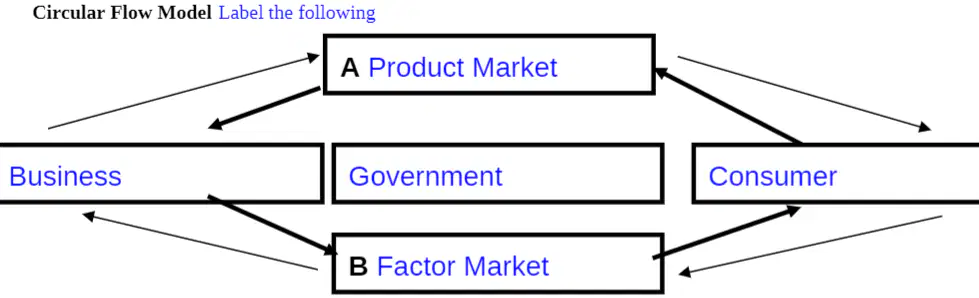
What type of economy is being shown in the Circular Flow Model?
Market Economy
Command Economy
Mixed Economy
Traditional Economy
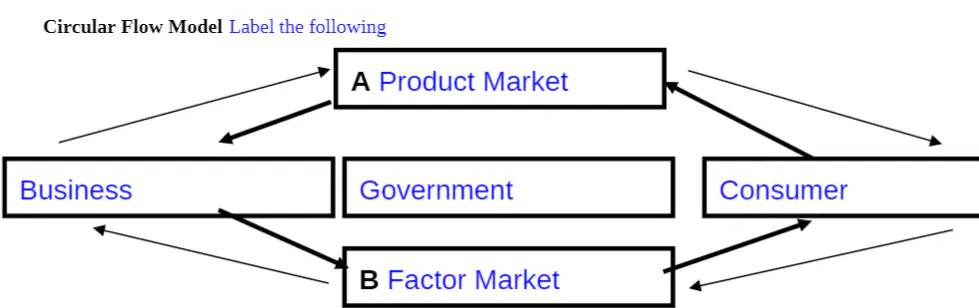
What moves clockwise in the Circular Flow Model?
Money
Goods and Services / Labor
Factors of Production
Opportunity Cost
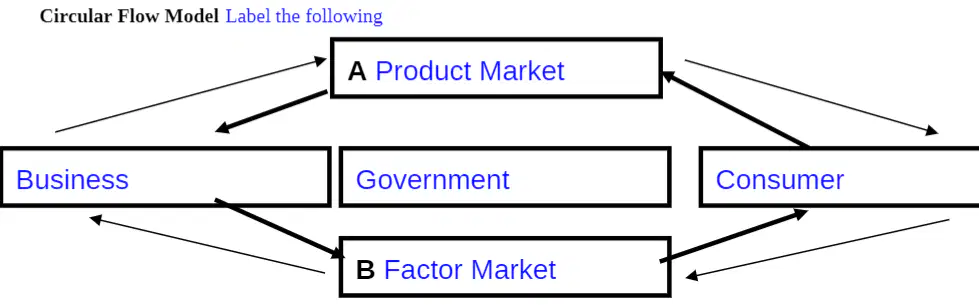
What moves counter-clockwise in the Circular Flow Model?
Money
Goods and Services / Labor
Factors of Production
Opportunity Cost
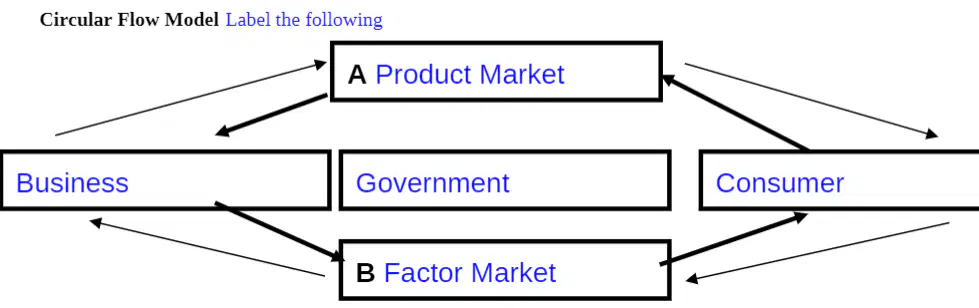
What occurs at Point A in the Circular Flow Model?
Goods and services are exchanged for money
Factors of production are exchanged for money
Government controls resources
Opportunity Cost is calculated

What occurs at Point B in the Circular Flow Model?
Goods and services are exchanged for money
Factors of production are exchanged for money
Government controls resources
Opportunity Cost is calculated
Who is an investor who anticipates a decline in the value of a stock?
Bull
Bear
Speculator
Short Seller
Which of the following represents corporate profits paid to stockholders on a per share basis?
Bond
Stock
Dividend
Partnership
What is the most common type of business ownership?
Partnership
Corporation
Sole Proprietorship
Stockholders
Which type of business is formed by two or more persons?
Corporation
Sole Proprietorship
Partnership
Stockholders
What is a certificate that represents ownership in a corporation?
Bond
Stock
Dividend
Partnership
Which type of stockholder does not have the ability to vote but is guaranteed a dividend payment?
Common Stock
Preferred Stock
Roth IRA
Unlimited Liability
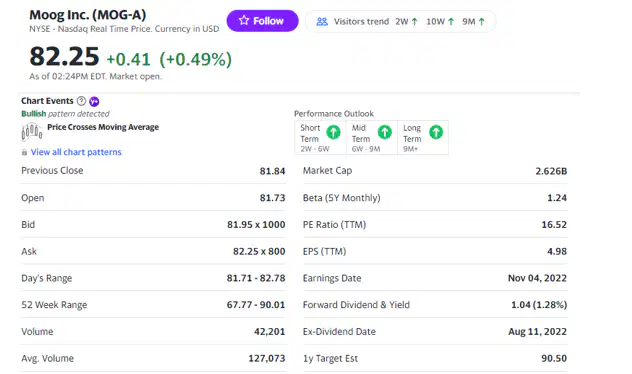
What is the ticker symbol for Moog Inc.?
MOG-A
MOG-B
MOG-C
MOG-D
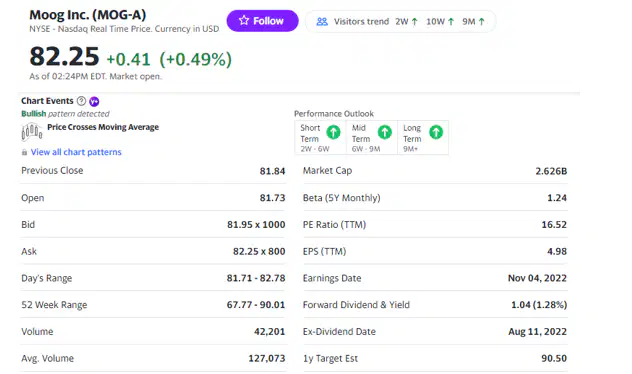
What is the current price of stock for Moog Inc.?
$81.84
$82.25
$90.01
$77.00
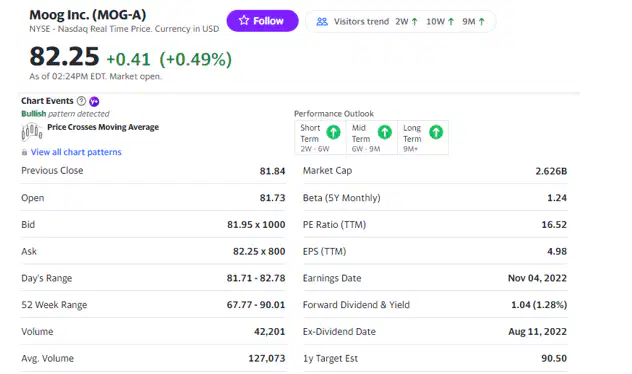
What is the 52-week high for Moog Inc.'s stock?
$81.84
$82.25
$90.01
$77.00
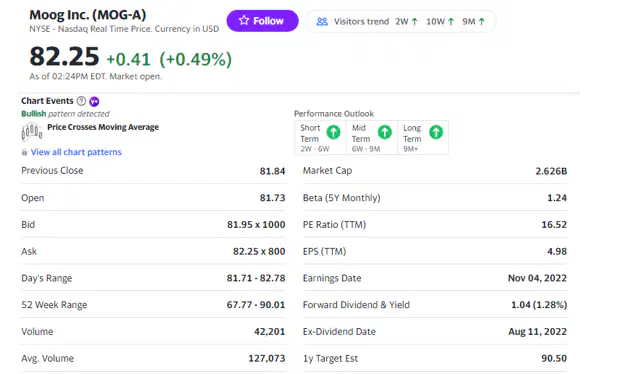
What is the average number of shares traded for Moog Inc.?
42,201
127,073
81,840
90,010
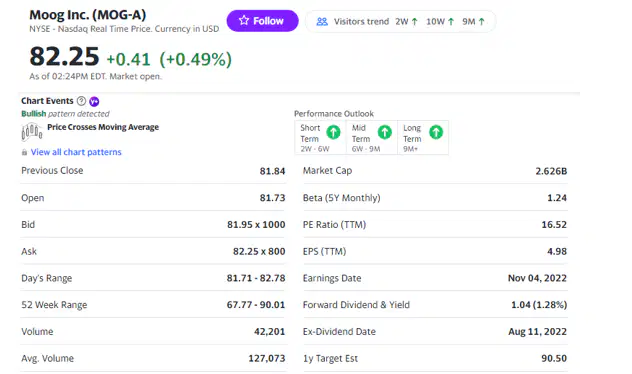
What is the PE Ratio for Moog Inc.?
16.52
12.34
18.90
14.67
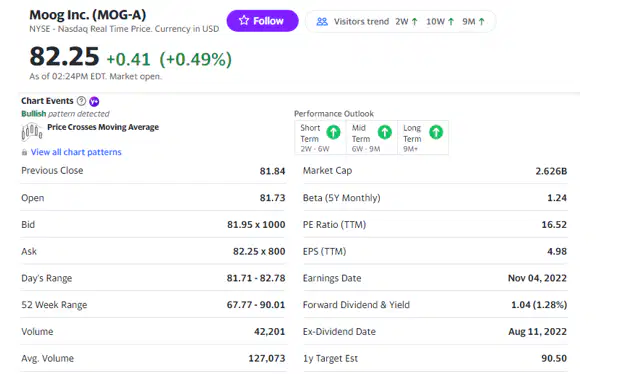
How much dividend does Moog Inc. pay?
$1.00
$1.04
$1.10
$1.20
Rank the following from the safest to the riskiest form of investments: 1. Corporate Bonds 2. Savings Bonds 3. Junk Bonds
1, 2, 3
2, 1, 3
3, 1, 2
2, 3, 1
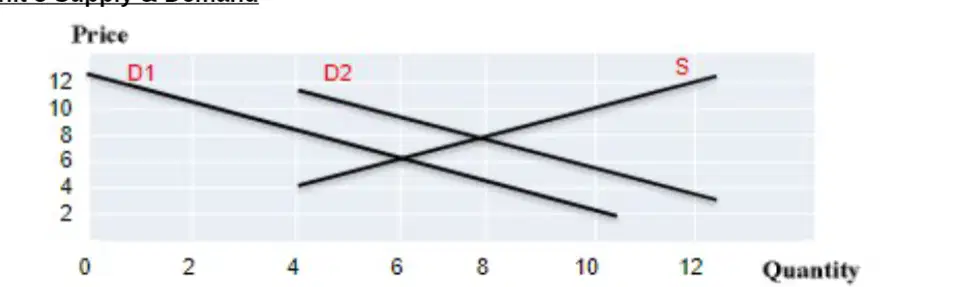
Where does Equilibrium occur BEFORE the shift?
Price of 8, Quantity of 8
Price of 6, Quantity of 6
Price of 10, Quantity of 10
Price of 4, Quantity of 4
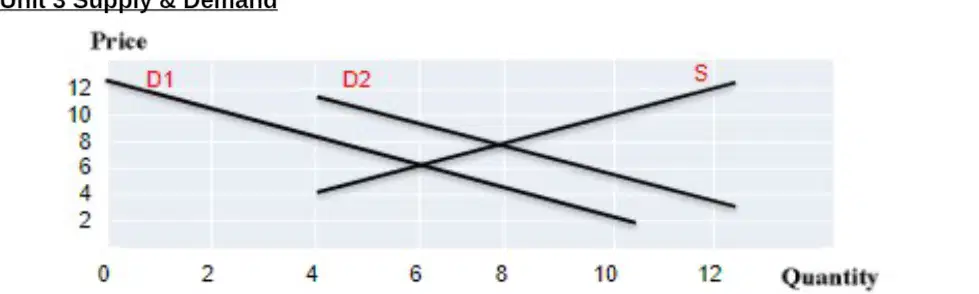
Where does Equilibrium occur AFTER the shift?
Price of 6, Quantity of 6
Price of 10, Quantity of 10
Price of 8, Quantity of 8
Price of 4, Quantity of 4
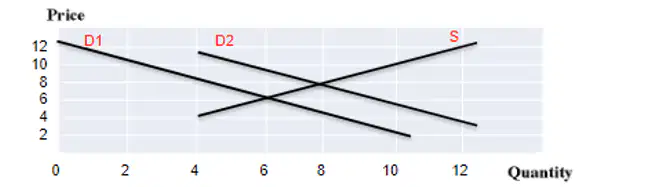
At $10, BEFORE the shift, is there a surplus or shortage?
Surplus (above equilibrium)
Shortage (below equilibrium)
No change
Equilibrium
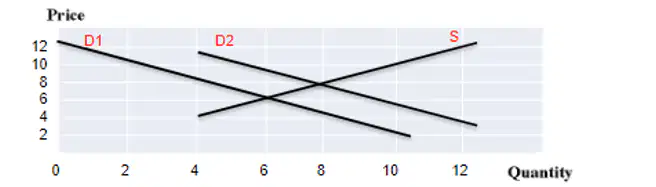
At $4, BEFORE the shift, is there a surplus or shortage?
Surplus (above equilibrium)
Shortage (below equilibrium)
No change
Equilibrium
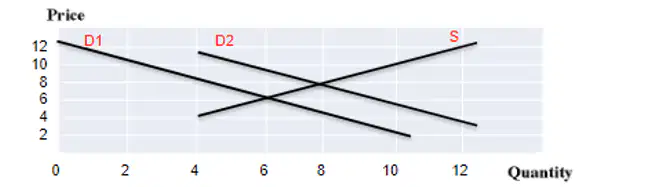
AFTER the shift, how many goods would be purchased at $10?
4
6
8
10
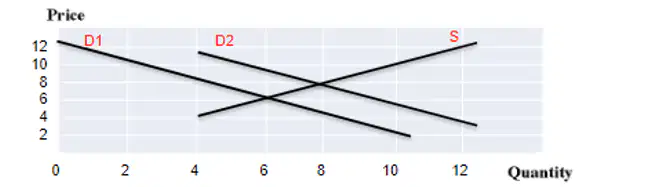
BEFORE the shift, how many goods would be supplied at $12?
6
8
10
12
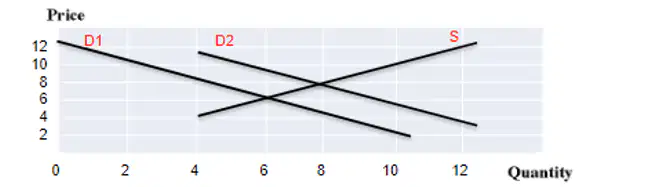
BEFORE the shift, at a price of $4 how much is the surplus or shortage?
2
4
6
8
Which of the following pairs is an example of Complementary Goods?
Shirts & Ties
Hamburgers & Cheese
Chicken Wings & Hot Sauce
Strawberries & Raspberries
Which of the following pairs is an example of Substitute Goods?
Cheerios & Milk
Smoothie & Slurpee
Disney & Universal
Doughnuts & Danish
Ford reduces production cost by using foreign-made material and foreign labor. What will this cause?
M Demand
SL Demand
SR Supply
SL Supply
Increased fuel costs make delivery from Federal Express more expensive. What will this cause?
M Demand
SL Demand
SR Supply
SL Supply
Which Business form does not feature unlimited liability in lawsuits?
Sole proprietorship
Partnership
Corporation
None of the choices
What will happen to cream if the price of coffee triples?
M Demand
SL Demand
SR Supply
SL Supply
A certificate that represents debt owed by a company is called a?
Commodity
Bond
Stock
Dividend
Which of the following describes the Law of Demand?
No matter what the price people buy the same amount
As price goes up, the amount purchased will decrease. (people buy less)
As price goes up, businesses will supply more
A slight change in price results in a large change in the amount purchased
Which of the following describes Equilibrium?
No matter what the price people buy the same amount
The intersection of the supply curve and the demand curve
As price goes up, businesses will supply more
A slight change in price results in a large change in the amount purchased
Which of the following describes Elastic?
No matter what the price people buy the same amount
As price goes up, the amount purchased will decrease. (people buy less)
A slight change in price results in a large change in the amount purchased
Rule about the satisfaction a consumer gets from purchasing one more unit of a product will lessen with each additional unit purchased.
Which of the following describes Inelastic?
No matter what the price people buy the same amount
As price goes up, the amount purchased will decrease. (people buy less)
A slight change in price results in a large change in the amount purchased
Rule about the satisfaction a consumer gets from purchasing one more unit of a product will lessen with each additional unit purchased.
Which of the following describes the Law of diminishing marginal Utility?
No matter what the price people buy the same amount
As price goes up, the amount purchased will decrease. (people buy less)
A slight change in price results in a large change in the amount purchased
Rule about the satisfaction a consumer gets from purchasing one more unit of a product will lessen with each additional unit purchased.
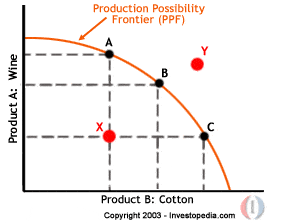
What does point Y represent on the PPF chart?
Efficiency
Unattainable / impossible
Inefficency
Nothing
What does point X represent on the PPF chart?
Efficiency
Unattainable / impossible
Inefficency
Nothing

Something essential for survival
Want
Need
Good
Service
Economics is the study of how people seek to satisfy their needs and wants by making choices
True
False
Finished goods


Point D in the PPF figure is a(n)
attainable production combination without full resource use.
tradeoff.
unattainable production combination.
production combination that can be attained once resources are fully employed.


a plan that allows people to save for retirement using 'after tax' dollars.
401K
IRA
Individual Retirement Account
Roth IRA

