wayground logo

Free Printable Worksheets

Font size

S
M
L
XL
Worksheets

Weather Assessment

Total questions: 36

Worksheet time: 46mins
Name
Class
Date
1.
The layer of mixture of gases surrounding Earth is called the..
a)
atmosphere
b)
hydrosphere
c)
lithtosphere
d)
hemisphere
2.
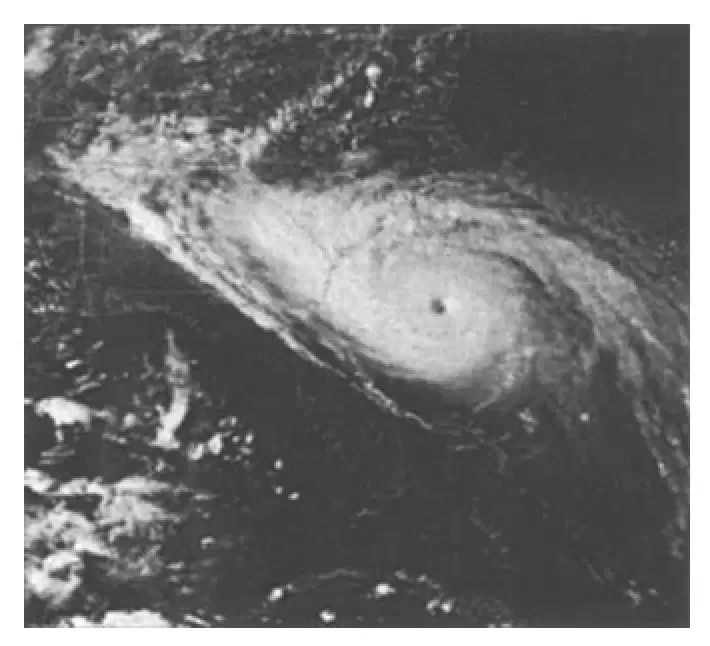
The photograph shows a satellite image of a hurricane. A satellite image of a hurricane helps weather forecasters to..
a)
warn residents if hazardous weather conditions
b)
explain the effects of global warming on ocean currens
c)
predict the times of high tide and low tide
d)
predict the total number of storms to occur in one year
3.
Which temperature and moisture conditions describe an air mass that originates over the Atlantic Ocean near the equator?
a)
warm and dry
b)
warm and humid
c)
cool and dry
d)
cool and humid
4.
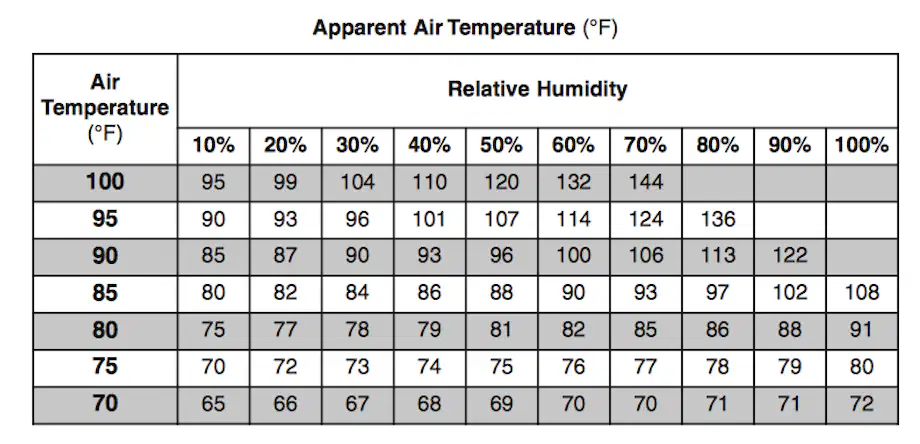
The data table shows the apparent air temperature in degrees Fahrenheit. Apparent air temperature is how hot the air feels at different air temperatures and different relative humidities. If the air temperature is 90 degrees Fahrenheit and the relative humidity is 70%, the apparent air temperature is..
a)
20 degrees Fahrenheit
b)
71 degrees Fahrenheit
c)
106 degrees Fahrenheit
d)
113 degrees Fahrenheit
5.
The movement of an air mass over Earth's surface causes..
a)
earthquake activity
b)
local weather changes
c)
global warming
d)
ecological succession
6.
Which weather event usually includes heavy precipitation, strong winds, and surface air temperature below 0°C?
a)
blizzard
b)
hurricane
c)
thunderstorm
d)
tornado
7.
Weather forecasts are more accurate today than in the past due to..
a)
global warming
b)
air-quality control
c)
plate tectonics
d)
use of images from space
8.
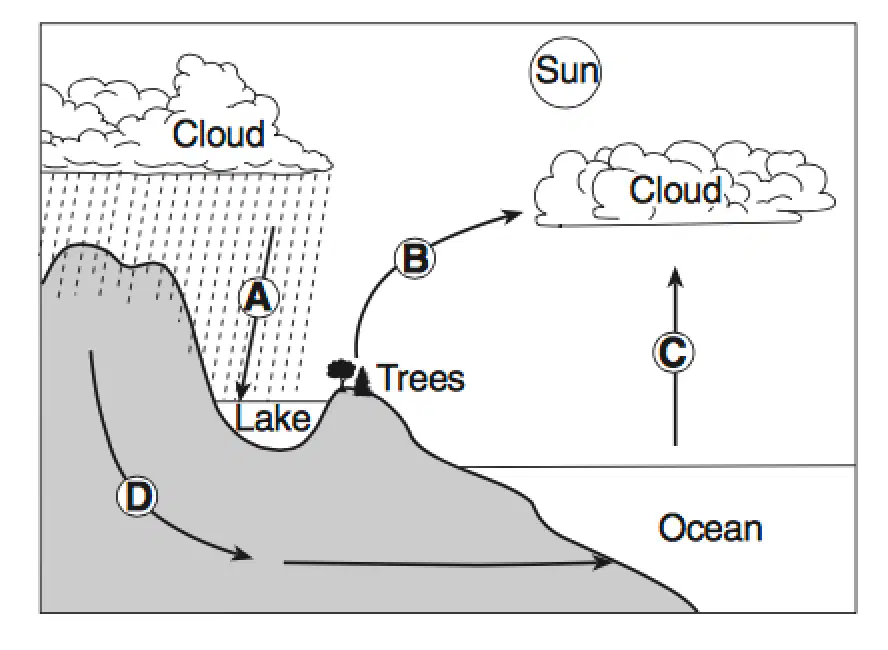
In the diagram, letters A, B, C, and D represent four different processes that occur during the water cycle. During which process is water released from land organisms into the atmosphere?
a)
A
b)
B
c)
C
d)
D
9.
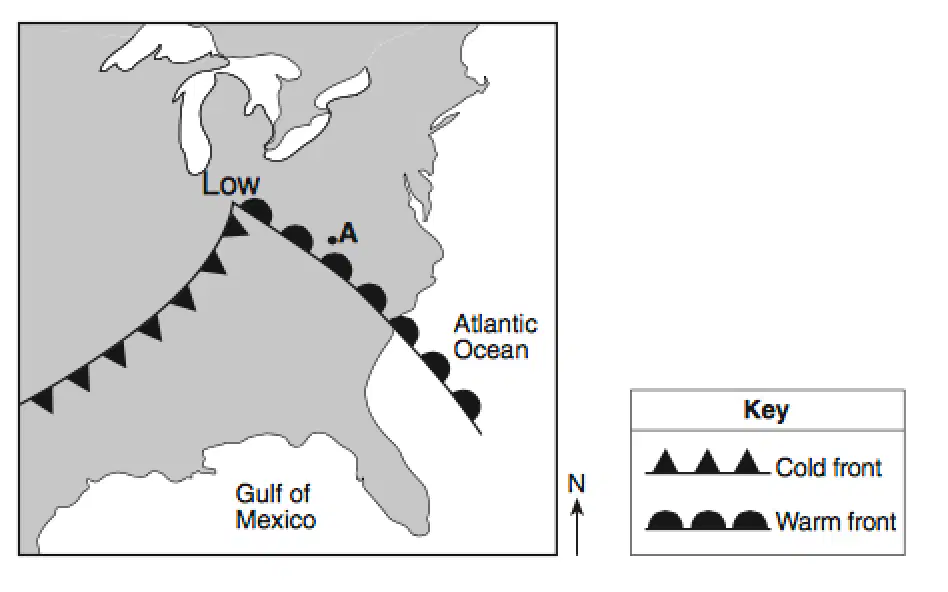
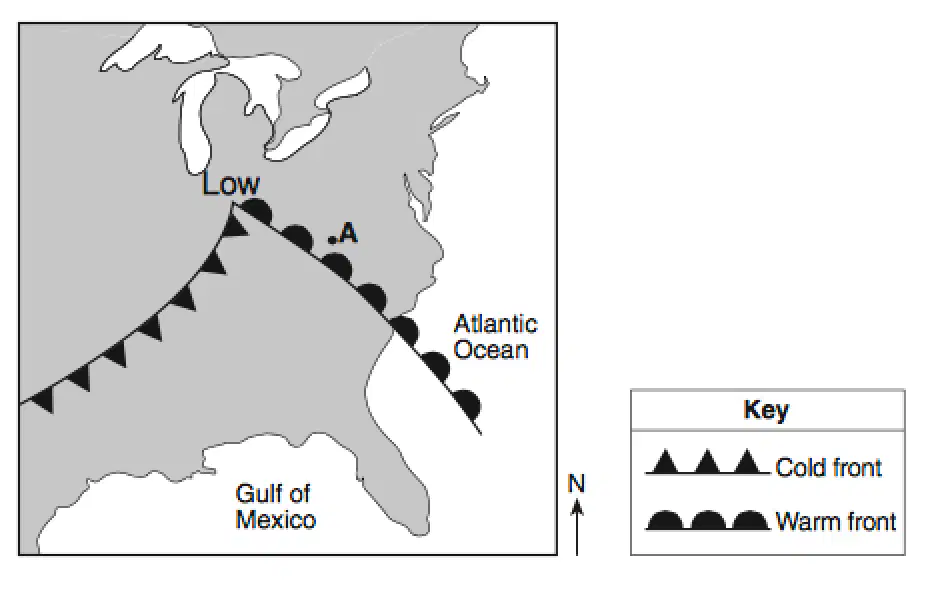
The word LOW on the map refers to
a)
air temperature
b)
air pressure
c)
relative humidity
d)
amount of cloud coverage
10.
Precipitation is most likely occurring at A because it is located..
a)
on a cold ocean surface
b)
on a warm land surface
c)
near the cold front
d)
near the warm front
11.
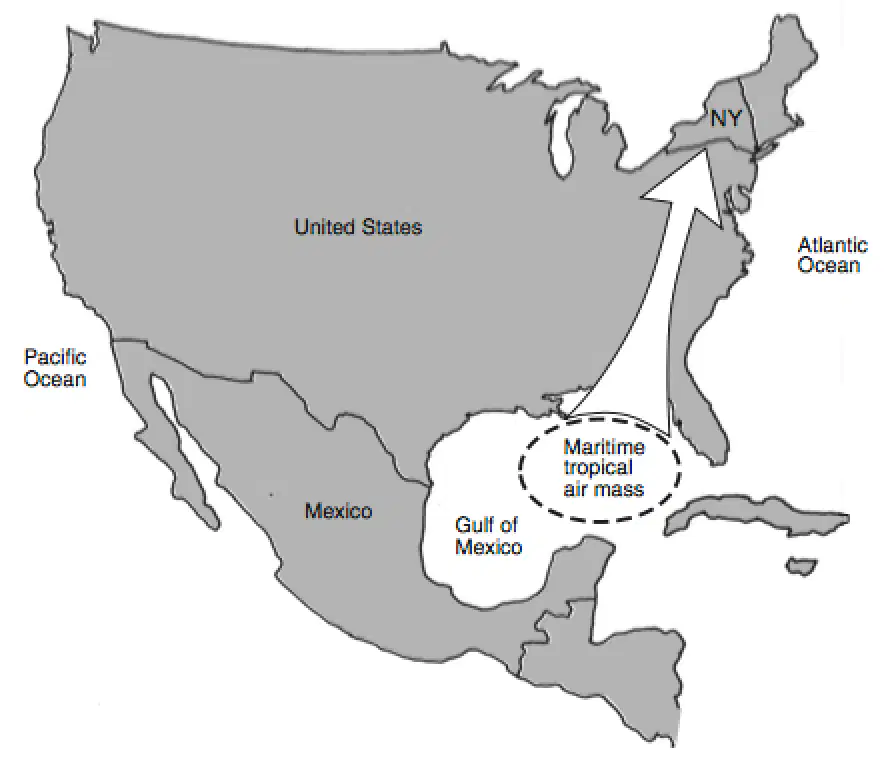
The map shows the origin of a maritime tropical air mass. The around shows the general track of this air mass. New York is labeled NY. Which temperature and moisture conditions are associated with this air mass?
a)
cold and dry
b)
warm and humid
c)
cold and humid
d)
warm and dry
12.
The map shows the origin of a maritime tropical air mass. The around shows the general track of this air mass. New York is labeled NY. Which factor has the greatest influence on the direction of the air-mass track?
a)
upper air current
b)
ocean currents
c)
sea breezes
d)
mountain barriers
13.
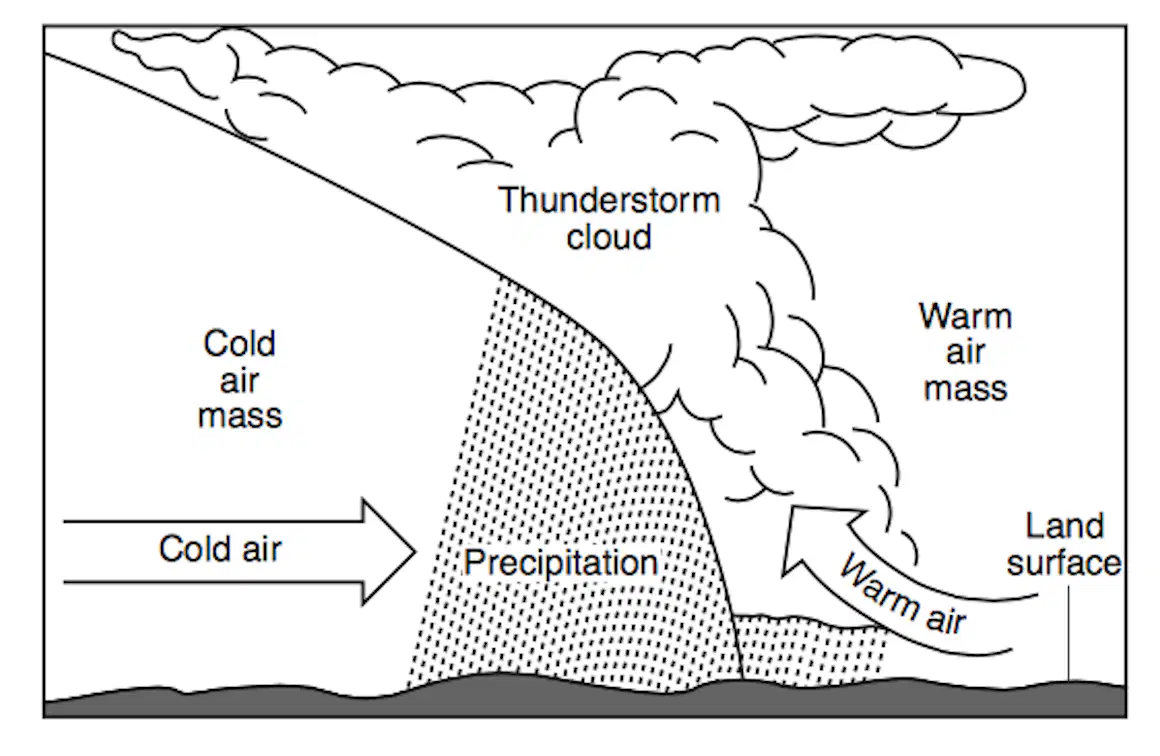
Identify the process in the water cycle that changes water vapor into liquid water droplets that formed the thunderstorm cloud.
4 lines
14.
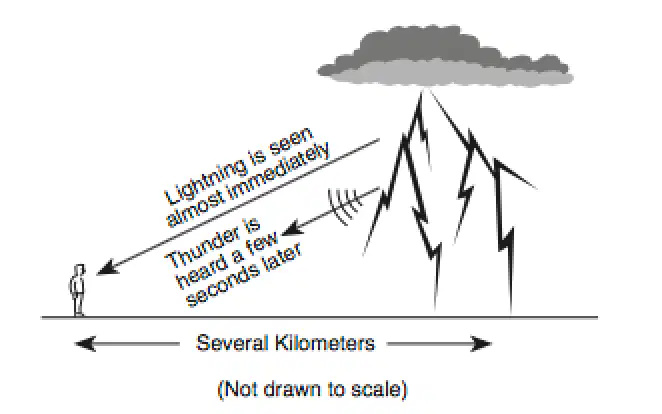
The diagram shows a person observing a thunder storm located several kilometers away. The person hears the thunder several seconds after seeing the lightning. Identify the form of energy, other than light and sound, that is often present during a thunderstorm
4 lines
15.
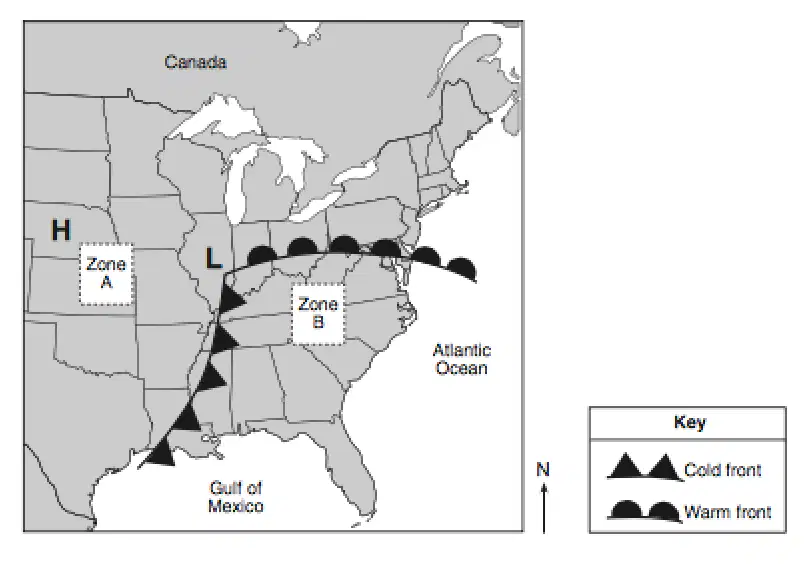
Explain why the air mass centered over zone A is colder and drier than the air mass centered over zone B.
4 lines
16.
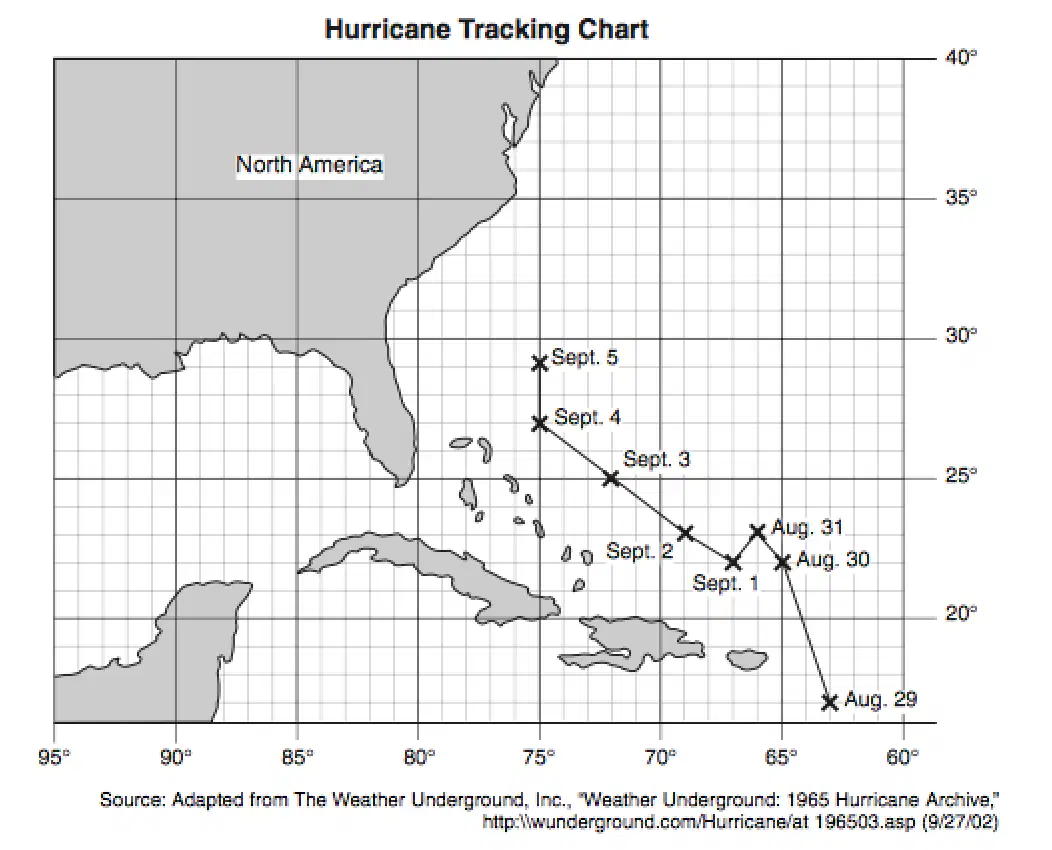
The United States Weather Bureau issued hurricane warnings before Hurricane Betsy moved over land areas. State TWO actions that the United States Weather Bureau most likely advised coastal residents to take to prepare for Hurricane Betsy.
4 lines
17.

Any form of water falling from the sky to the ground is

a)

evaporation

b)

condensation

c)

precipitation

d)

deposition

18.

What conditions create a strong storm? Select all that apply

a)

Low Humidity

b)

High Humidity

c)

Warm Temp at Ground, Cool at high altitudes

d)

Warm Temp at Ground, very cold at high altitudes

e)

Cool at the ground, very cold at high altitudes

19.

Where are the calmest winds of a hurricane?

a)

Eye wall

b)

Eye

c)

Upper elevations

d)

Storm surge

20.

Which is NOT an influence on climate?

a)

longitude

b)

latitude

c)

distance from large body of water

d)

global wind patterns in the atmosphere

21.

When a warm air and cold air masses meet and neither moves, this is a ____ front.

a)

occluded front

b)

warm

c)

cold

d)

stationary

22.

An air mass gets its temperature and humidity from

a)

changes in the atmosphere

b)

the latitude at which forms

c)

the land or water over which it formed

d)

the air masses that surround it

23.

What causes a change in weather?

a)

Air masses move and meet.

b)

Air gets more humid.

c)

Water evaporates.

d)

Clouds form.

24.

What is the boundary between different air masses called?

a)

Severe weather

b)

a front

c)

a source region

d)

condensation

25.

What kind of weather does a cold front usually bring?

a)

warm

b)

sunny

c)

stormy

d)

windy

26.

What conditions contribute to the formation of a tornado's vortex?

a)

  1. Warm air rises, creating an updraft that forms cumulonimbus clouds leading to thunderstorms.

b)

Clouds form when water vapor in the air condenses at high altitudes

c)

  1. When two air masses with different temperature and humidity levels meet, usually over land.

d)

  1. Evaporation occurs when water changes from a liquid to a gas at the Earth's surface

27.

As a meteorologist, you are observing a tropical storm forming over the ocean. What kind of data would you collect to forecast if the storm will reach the coast and assess the possible severity of the storm?

a)

Direction of the Wind

b)

Barometric Pressure

c)

Speed of the Storm

d)

Surrounding Temperature

28.

What does a 'Warm Front' represent on a weather map?

a)

High Pressure

b)

Cold Front

c)

Rising Temperature

d)

Mountains

29.

What does this symbol represent on a weather map?

a)

High Air Pressure

b)

High Temperatures

c)

Heavy Rain

d)

Hail

30.

Low Pressure is usually associated with which type of weather?

a)

Fair Weather

b)

Stormy Weather

c)

Hot Weather

d)

Clear Weather

31.

What type of weather front is characterized by a cold air mass replacing a warm air mass, often resulting in thunderstorms or heavy rain?

a)

Warm Front

b)

Cold Front

c)

Occluded Front

d)

Stationary Front

32.
A wet and cold air mass would be a...
a)
Maritime polar
b)
Continental polar
c)
Maritime tropical
d)
Continental tropical
33.
What types of air masses form over land?
a)
Maritime
b)
Continental
c)
Polar
d)
Tropical
34.
What types of air masses would be warmer?
a)
Maritime
b)
Continental
c)
Polar
d)
Tropical
35.
Describe a continental air mass.
a)
Dry
b)
Wet
c)
Cold
d)
Warm
36.

Which climate zone is characterized by high temperatures and significant precipitation throughout the year?

a)

Temperate

b)

Polar

c)

Tropical

d)

Arid