
 Worksheets
4G Science 1st 9wks Review
Total questions: 34
Worksheet time: 1hrs 8mins
When water is cooled below 0°C, it changes from a liquid to a _______.
TRUE or FALSE:
If two different types of berries are placed on a balance, the side with more mass will tip downward.

Observe the photo. This photo shows different school supplies on a desk. Which item on the desk is magnetic?
paper
colored pencil
paper clip
eraser
Which items have the physical property of being magnetic? Select the two that apply.
glass bead
iron nail
copper penny
steel button

Jake’s class measured the temperature of food from the cafeteria. Look at the graph. According to the graph, which foods would you classify as having a high temperature?
milk, muffin
soup, hamburger
hamburger, milk
soup, muffin

This is a photo of a sieve. A sieve is a tool with small holes. Which mixture would the sieve be
most useful for separating?
metal marbles and glass marbles
pebbles and water
salt and water
pens and pencils

The thermometer reading is _______ degrees Celsius.
70 degrees
60 degrees
82 degrees
78 degrees
Name the state of matter for each example:
Ice cube → _______
Steam → _______
Bubbles in water → _______
Ice cube → Gas
Steam → Solid
Bubbles in water → Gas
Ice cube → Solid
Steam → Gas
Bubbles in water → Gas
Ice cube → Solid
Steam → Gas
Bubbles in water → Liquid
Ice cube → Solid
Steam → Liquid
Bubbles in water → Gas
Objects that are (a) dense than water will sink.

Observe the illustration. This illustration shows a rubber ball, a foam block, oil, and a rock in a bowl of water.
In the illustration, which object is less dense than water?
foam block
rock
oil
rubber ball

Observe the animals. The mass of a cat, giraffe, badger, eagle, and elephant are shown. Which animal has the greatest mass?
cat
giraffe
badger
eagle
elephant
Observe the animals. The mass of a cat, giraffe, badger, eagle, and elephant are shown. Which animal has the least amount of mass?
cat
giraffe
badger
eagle
elephant

This photo shows a mixture. Which two materials is this mixture made of?
glass beads
sand
iron filings
salt
Which photo shows a mixture that is also a solution?


Both salt water and fruit salad are examples of mixtures. How are the two mixtures alike, and
how are they different?
Salt water and fruit salad are both mixtures, but salt water is a solution once the salt dissolves into the water.
Salt water and fruit salad not a mixture or solution.
TRUE or FALSE
A bowl of mixed fruits is a solution?
TRUE
FALSE
When a Koolaid packet is mixed into water, what occurs?
The sugar in the Koolaid packet dissolves.
The sugar in the Koolaid packet turns into a solid.
The sugar in the Koolaid packet floats.
The water evaporates.
The mixture is made from 80 grams of cereal and an unknown amount of milk. The mass of the
cereal and milk together is 170 grams. What is the mass of the milk?
60 grams
90 grams
The mass of a solution made by dissolving 45 grams of salt in 200 grams of water is _______ grams total.
275 grams
Will shaking a sealed jar of sweet cream change its weight?
Yes, shaking it will make all the matter inside the jar disappear.
Yes, shaking the jar will change the matter that is inside of it.
No, shaking the jar doesn't change the matter that is inside of it.
No, you cannot shake a jar.

What do all sound waves have in common? Select all correct answers.
All sound waves are formed by vibrations.
All sound waves travel only through air and not through other matter.
All sound waves carry energy from place to place.
All sound waves carry matter from place to place.

Observe the illustration.
This is a game of billiards. Describe the energy in this group of billiard balls. How will the energy transfer?
When the white ball collides with
the other balls, it will transfer some or all of its energy to them.

What makes the floaty bob up and down in the lake?
The floaty is too heavy for the water
Transfer of energy by waves in water
The floaty is leaking air
Fish swimming

Which type of energy is represented in the picture?
Energy of Motion
Energy of Sound
Energy of Water
No energy is present
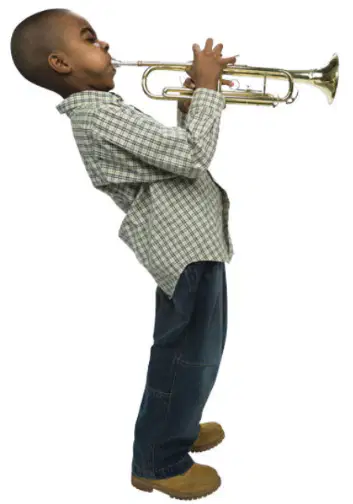
This photo shows a child playing the trumpet. How is energy changed or transferred when a trumpet is played?
The energy is transferred to the moon.
The trumpet absorbs energy from the surroundings.
The trumpet player uses energy to blow air into the trumpet. The air vibrates in the
trumpet. It forms sound waves that transfer the energy into the surrounding air in all
directions.
The player's energy is converted into light energy.

This is a metal pot with a wood handle. How are conductors and insulators used in this cooking pot?
The metal part of the pot is an insulator of heat. The wood handle is also an insulator.
The metal part of the pot is a conductor of heat. The wood handle is an insulator.
The metal part of the pot is a conductor of heat. The wood handle is a conductor.
There is no such thing as insulators and conductors.
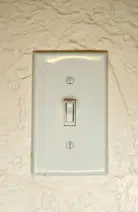
Observe the photo.
A plastic light switch is used to turn lights on and off. Is the plastic light switch a conductor or insulator?
Conductor
Insulator
Both
Neither
What causes the metal on the slide to feel hot?
metals are good conductors of heat
metals are not conductors of heat
metals do not get hot
metals stay cool at all times
Imagine you have two identical mugs filled with hot chocolate. You wrap one mug in bubble wrap and the other in a thick layer of Styrofoam. Which mug of hot chocolate will stay warmer for a longer time?
The mug with bubble wrap.
They both will stay warm for the same amount of time.
The mug with Styrofoam.
Nothing will happen either way.
Each drawing shows a circuit with loose ends of wire. When the loose ends are brought together
and the switch is closed, which circuit will have a closed path with a switch and light the light
bulb?


How is electrical energy useful in powering an electric oven?
Electrical energy is changed to thermal energy as it moves through the circuit.
How can you demonstrate that a switch is useful in a circuit?
Explain the history of switches in circuits.
Demonstrate how the switch can cook food in the circuit.
When open, none of the parts work. When closed electrical energy can flow through the circuit.
Show how the switch can change the color of the circuit.
At school, imagine you want to turn on a light in the classroom, but the switch has a broken wire inside. What would happen when you try to flip the switch?
The light would flicker a little.
The light would stay on all the time, even when you flip the switch.
The light would turn on and off normally.
The light would stay off because it has no way for electricity to continue to flow through it.
When you turn on a flashlight by closing the switch, what happens inside besides the light turning on?
Nothing else changes.
The batteries get bigger.
The metal parts inside get warmer.
It falls apart.

