Worksheets
Y8 PHYSICS REVISION
Total questions: 239
Worksheet time: 5hrs 33mins
What is force?
Push or pull
effort
push
pull

Which act of force is best to describe the action in the picture?
Make an object move
Make a moving object stop
Change the speed of a moving object
Change the shape of on object
What do you use to measure force?
Spring balance
Newton spring balance
Weighing scale
Thermometer

The following forces are involve in the activity (picture), except ______________.
Frictional force
Gravitational force
Strain force
Electromagnetic force
The following list are classified under contact force, except _______________.
Impact force
Strain force
Friction
Gravitational force
Tension is applied in __________ , ___________ , and __________ .
spring, rope, spring
ball, spring, rope
wood, metal, ball
spring, rope, cloth

Which of these surface will produce the greatest friction?
Rusty
Waxy
Mosaic
Sandy

__________ and ____________ will causes less friction to occur.
Water, oil
Wheel, thread
Cement, parachute
Oil, rain

The following statements are ways to increase friction, except ____________________.
tires thread
braking pads
engine oil

A car is traveling along a road at 112 km/h when a tree falls across the road at 100 m away. What would probably happen?
The car will stop before the fallen tree.
The car will hit the tree.
The car will stop.
The car will reverse.

The following method will help to minimize water resistance, except ___________ .
hull shape of the boat
hydrofoil
streamlined shape
wide rectangular boat

Magnet will attract these magnetic material, except ____________.
steel
graphite
nickel
cobalt
What is the gravitational field strength (N/kg) of the Earth?
10
15
1
3.3
What is the weight of 6.2 kg on Earth?
62 N
0.62 N
6.2 N
2.99 N
What is the weight of 10 kg rice on Mercury?
38 N
3.8 N
0.38 N
100 N

A spring is 5 cm long when it is unstretched but it becomes 7 cm when a mass is hung to it. What is the extension of the spring?
2 cm
5 cm
14 cm
3 cm

One bar of the metal is weighed 50 g and causes extension of 2 cm to the spring. What will be the extension of 5 bar of metal?
10 cm
5 cm
8cm
7cm

A runner races in the 100 meter dash. It takes her 10 seconds to finish. What is her average speed?
10 m/s
1000 m/s
100 seconds
10 seconds


How would you calculate the average speed of a student that is able to run 20 meters in 8 seconds?
20 ÷ 8
20 × 8
8 ÷ 20
8 - 20

How would you calculate the average speed of a ball if it rolls a distance of 5 meters in a time of 10 seconds?
5 ÷ 10
5 × 10
10 ÷ 5
10 + 5

30 seconds is equal to
1 minute
0.5 minute
3 minutes
2 minutes

Distance =
Time ÷ Speed
Speed ÷ Time
Speed x Time
Time + Speed
30 minutes is equal to
1 hour
0.5 hour
3 hours
2 hours
A runner races in the 100 meter dash. It takes her 10 seconds to finish. What is her average speed?
10 m/s
1000 m/s
100 seconds
10 seconds

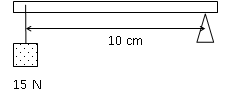
A moment is...
a force measured in Newtons
a turning force measured in newton metres
a distance measured in metres
a time intervals measured in clicks


The SI unit of moment of force is –
m
N
kgf
Nm
Moment can be calculated using the equation:
M = F × d
M = F / d
M = F2 × d
M = F / d2
How do we find distance?
speed ÷ time
speed x time
time + speed
time - speed
How do we find time?
distance x speed
speed - distance
distance ÷ speed
speed + distance
How do we find speed?
time x distance
time - distance
distance + time
distance ÷ time
A train travels at 52 km/h. How far does it travel in
15 min?
780 m
780 km
13 m
13 km

When was the object sitting still?
between 5 and 6 seconds
between 2 and 5 seconds
between 1 and 2 seconds
between 0 and 1 second
Match the graph to the description:
"The car is slowing down."
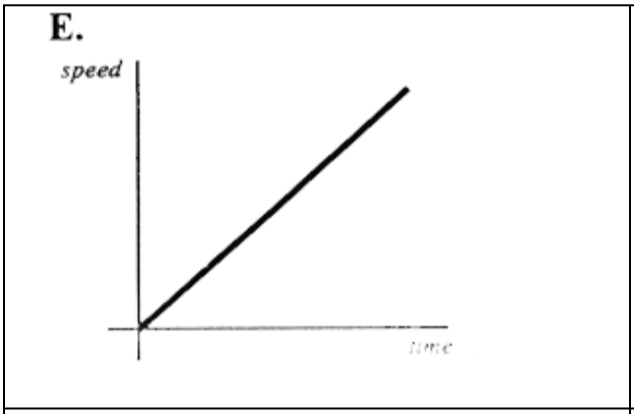
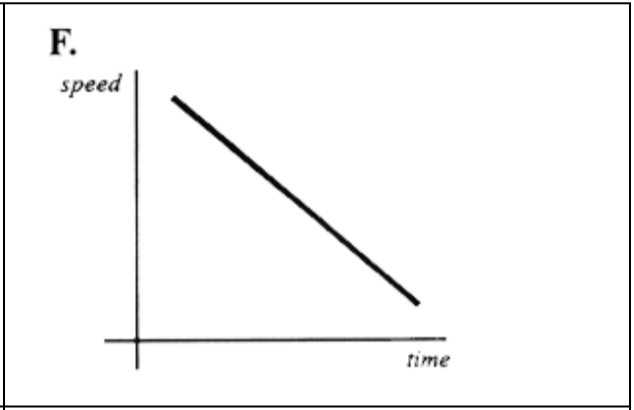
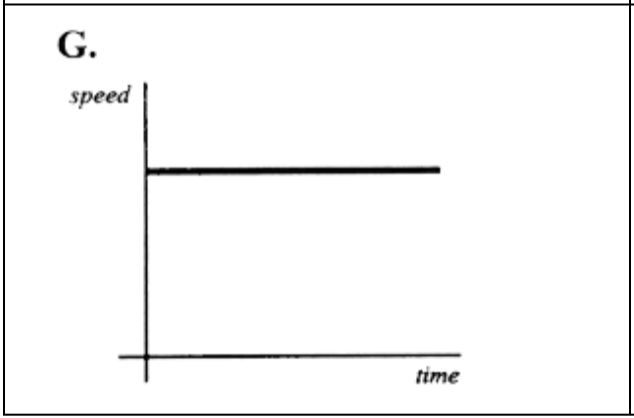
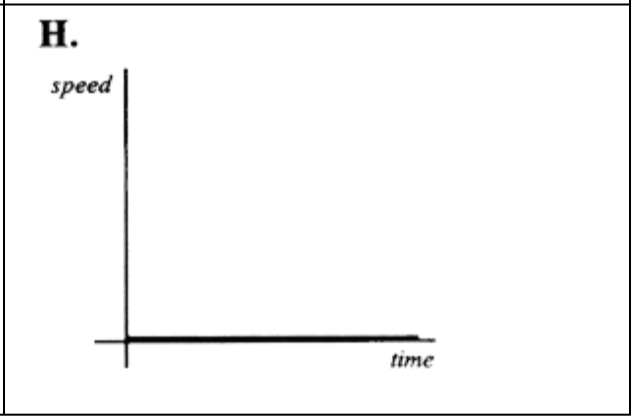
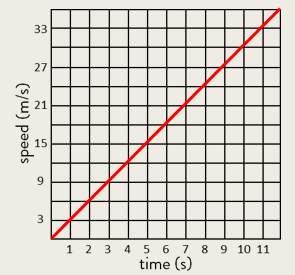
Accelerating gradually
Stopping
Slowing down constantly
Speeding up constantly

What line has the greatest speed?
Line A
Line B
Both
Neither
A force that changes an object’s motion, direction, or speed
Balanced forces
Force
Unbalanced forces
All of the above

Calculate the missing force so that the beams are in equilibrium.
(a)
Pressure is force per unit area. What is the SI unit for pressure?
N
Nm
Pa
kPa
Choose two correct applications that exert high pressure.
Tractors have big and wide wheels
Press a thumbtack into a plank
Studs on the sole of football boots
Shoulder pad for a school bag
Choose two factors that affect air pressure
mass
volume
area
temperature
Magdeburg Hemisphere, straw, syphon, and vacuum cleaner are some of the applications of .........
buoyant force
liquid pressure
air pressure
density
Atmospheric pressure depends on .......
mass
density
altitude
magnitude
When a diver dives deeper into the ocean, he will experience ...................... liquid pressure
greater
less
no

Amira puts two books on a table as shown in the diagram. The books are the same size and mass. Which book exerts greater pressure on the table?
A
B
Will air pressure be higher on top of a mountain or on the beach?
beach
mountain
It's always the same
What pressure will be exerted by a 10 N box that has equal sides of 1 meter?
1 Pa
2 Pa
5 Pa
10 Pa
20 Pa
The higher the temperature, the .................................. the movement of air particles.
slower
faster
neither
same


An object will sink in a fluid if
gravity is stronger than buoyant force
buoyant force is stronger than gravity
a fluid can be a gas or a liquid
if the object is solid
An object weighing 30 N displaces a volume of water with a weight 20 N. What will the object do?
It will sink
It will float
It will fly
None of these answers
Buoyancy is the ability to
Sink
Float
Negative buoyancy (object's weight is stronger) means an object will
sink
float
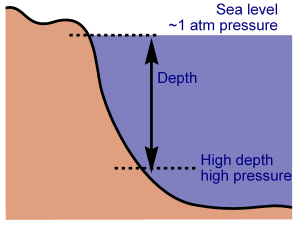
When you increase your depth under water, the water pressure on your body
increases
decreases
stays the same

Diagram shows the design of a dam. Why does the thickness of the dam increase with its depth?
The design of this structure is stronger.
Water pressure increases with depth.
The cost of construction is lower.
Water pressure acts uniformly in all directions.
What is pressure?
The amount of force exerted on a surface
The surface area of an object
The weight of an object
An object will float on water if it is
less dense than water.
more dense than water.
the same density as water.


Which physical quantity will increase when the diver dives deeper?


How do you Calculate Pressure
Force(N)/Area(m2)
Force(kg)/Area(mi2)
Area(m2)/Force(N)


Images in a plane mirror are
real
larger
same size
smaller

What is the value of the unknown angle (theta) in the following diagram?
A. 30 degrees
B. 45 degrees
C. 90 degrees
D. 60 degrees


Which is the reflected ray?
A
B
C
D

Which is the reflected ray?
A
B
C
D

What is the object helps the customers at a show store to choose their favourite shoes?
periscope
hand held mirror
plane mirror
dental mirror

What is the object helps navy personnel in a submarine to see an object at the surface at the sea?
periscope
hand held mirror
plane mirror
dental mirror
When light hits a barrier that is solid/opaque what is usually created?
a hot object
a shadow
nothing
When does the light is refracted?
When light travels in a straight line
When light is bounced
When light travels in two different mediums
When light cannot pass through an opaque object

Diagram shows the condition of a spoon in a glass of water.
What can be observed about the spoon?
The spoon looks bent.
The water is clearer.
The water level rises.
Light is refracted.

What is the conclusion from your observation in this picture?
Light travels in a straight line
Light can be refracted
Light can be reflected
Light can pass through a transparent material

Which of the following shows the principle of light refraction? Tick the correct answers.
A
B
D
E
F


Light passes into a glass block. Which is the angle of refraction?
A
B
C
D

What direction does the ray bend when entering a more optically dense material, where the wave travels more slowly?
Towards the normal.
Away from the normal.
No change.
Answer is not listed above.

A ray of light in air is incident at an angle on one side of a rectangular glass block, as shown. Which ray diagram correctly describes the complete path of the ray of light?
(Determine if light bends towards or away from normal at each boundary)


The breaking up of white light into its component .
Based on the statement given, name the process that takes place in the white light.
Dispersion
Reflection
Refraction
Scattering
Why is the component of colour in a rainbow can be seen when light passes through a glass prism?
phenomena of scattering of light
phenomena of dispersion of light
phenomena of reflection of light
phenomena of diffraction of light
How many components of white light?
5
6
7
8
This is the example of dispersion of light
sky looks bright orange in the evening
shadow
Pool seems shallower
rainbow
These are all colours of spectrum except
indigo
blue
purple
green

Why is red light is at the top whileviolet at the bottom of the spectrum?
Violet light has the medium speed so it is refracted the least.
Violet light has the highest speed so it is refracted the least
Red light has the slowest speed so it is refracted the least
Red light has the highest speed so it is refracted the least.
Rainbow is formed due to
Natural dispersion
Sunlight passing through raindrops
Refraction of light
All of the above
A transparent object that bends light into rainbow colors.
prism
mirror
convex lens
concave lens
The dispersion of light is the separation of white light into the spectrum of light, namely red, orange, yellow, green,blue,indigo and violet.
True
False
Violet light is refracted the most by a glass prism as the light travels the ................ through the glass prism.
slowest
fastest
Red light is refracted the least by a glass prism because red light travels the ............ through the glass prism
slowest
fastest
The substance in the sky which is involved in the formation of rainbow
Air particle
Dust
Raindrop
soot
Which of the following is NOT a source of light?
eyes
lit candle
sun
firefly
Light is able to pass through __________________ materials
transparent
shiny
dull
opaque
Light is unable to pass through ________________ objects
opaque
coloured
blunt
dark
What colours is white light made from?
Orange, Green, Pink, Magenta, Peach, Rose, Lemon
Red, Orange Yellow, Green, Black, Indigo, Violet
Red, Orange, Yellow, Green, Blue, Indigo, Violet
Red, Orange, Yellow, Grey, Blue, Indigo, Violet
Which of the following is NOT a primary color of light?
Red
Blue
Yellow
Green
The process of mixing primary coloured lights to produce secondary coloured lights.
This process related to
Dispersion of light
Addition of light
Subtraction of light
Refraction of light
The light which has the same colour as the colour of the opaque objects will reflected directly into our eyes, while the light of other colours will be absorbed by objects. This phenomenon is known as
Dispersion of light
Addition of light
Subtraction of light
Refraction of light
Which of the following is NOT a secondary colours
Cyan
White
Yellow
Magenta

Diagram shows light colour addition. What colour is P?
Magenta
Yellow
Cyan
White
Which pair of colours do NOT combine to make the correct secondary colours?
Red + Blue = Magenta
Red + Green = Yellow
Blue + Green = Cyan
Red + Yellow = Green
Diagram shows light colour addition. What colour is formed at X?
White
Black
Only allow the light of the same colour to pass through, light of other colours are absorbed.
Primary colour filters
Secondary colour filters

Which color will pass through the filter?
Red only
Blue and Violet
Green
All colors

How does light behave when hitting this shirt?
Yellow is absorbed; all other colors are reflected.
Yellow is reflected; all other colors are absorbed.
All colors are absorbed, but yellow is refracted.
Yellow is scattered and all other colors are absorbed.
White light is shined through a magenta filter. Which of the following will be BLOCKED by the filter?
Red
Blue
Green
Magenta

How will this object appear when looking at it through a blue filter?
Blue
Green
Black
Orange
Diagram shows light colour addition. What colour is Q?
Magenta
Yellow
Cyan
White
Diagram shows light colour addition. What colour is R?
Magenta
Yellow
Cyan
White
Objects with primary colours (red, blue or green) will only reflect the light which has the same colours as them.
True
False
Objects with secondary colours (yellow, magenta or cyan) reflect the light of the same colour and also the light of primary colours which form the secondary colour.
True
False
Black objects appear black because they ........ all colours in white light.
reflect
absorb
White objects appear white in white light because the white objects ........... all colours in white light.
reflect
absorb
Below are the examples of the addition and subtraction of light in daily life except
A colour television
Coloured lights in a stadium
Twinkling stars
Coloured lights in the fountain in front of KLCC
Which planet is the biggest?
Jupiter
Mars
Venus
Uranus
an enormous explosion that occurs when a massive star dies
black hole
nuclear fusion
supernova
solar wind
a hot, dense, slowly cooling sphere of carbon that remains when a red giant star dies
red giant
supergiant
black hole
white dwarf
an immense cloud of dust & gas where stars are born
black hole
nebula
prominence
supernova
Our solar system is in which galaxy?
The Clouds of Magellan
Andromeda
The Milky Way
Betelguese
What is the name of Earth's star?
Antares
Betelguese
Polaris
the Sun
What do you call a scientist who studies objects in space?
meteorologist
astronomer
astronaut
Most distances in space and to stars outside of our solar system are measured using.....
light-years
astronomical units
feet
meters
How bright a star looks to observers on Earth is its....
true brightness
apparent brightness

One similarity between asteroids, comets and meteoroids is that they all:
are made of rock
come from the Asteroid Belt
come from the Oort Cloud
orbit the sun

I am located between Mars and Jupiter.
Comet belt
Asteroid belt
Meteor belt
Stars

The asteroid belt is located between which 2 planets?
Mercury and Venus
Jupiter and Saturn
Uranus and Neptune
Mars and Jupiter

A comet forms a tail when
It is deep in outer space and begins to melt
It gets close to the sun and begins to melt
Asteroids "hang out" in our solar system in a place called:
The Kupier Belt
The Planetary Rings
The Oort Cloud
The Asteroid Belt
Where is the asteroid belt?
Closer to the Sun than Mercury.
Between the orbits of Mars and Jupiter.
Between the orbits of Venus and Earth.
Between the orbits of Uranus and Neptune.
What causes meteors to burn up in our atmosphere?
Heat from the Sun
They are already so hot that our atmosphere can't handle it
Heat from Earth's atmosphere
Friction from the Earth's atmosphere
Asteroids are made up of..
iron oxygen and silicon
clay and silicate
stone and other metals
Ceres is...
the largest asteroid in the Kuiper Belt.
an asteroid in the Oort cloud.
the largest asteroid in the asteroid belt.
a comet in the Oort cloud.
A large round pit caused by the impact of a meteoroid.
Pothole
Pothole
Crater
Plateau
The force of gravity on an asteroids is ____ than the force of gravity on Venus.
smaller
bigger
How long is the Asteroid Itokawa?
530m
540m
560m
520m
A rocky object that revolves around the sun, but is too small to be considered a planet.
Meteor
Asteroid
Comet
Constellation
Can asteroid become planets?
No
Yes
Tick the statements that is not true about asteroids.
Asteroids are made from rock.
Fewer than 500 000 asteroids have been discovered.
Asteroids orbit the Sun.
Asteroids can have irregular shapes.
What are asteroids made of?
rocks
clouds
metals
dust
One similarity between asteroids & planets is that they all:
are made of rock
come from the Asteroid Belt
orbit the sun
I am located between Mars and Jupiter.
Comet belt
Meteor belt
Asteroid belt
Stars
Asteroids sometimes hit the earth because of these (choose two)
Earth's gravitational force
Closeness of asteroid to the earth's atmosphere
Chemical reactions in space
Weather conditions
When objects strike the surface of a planet or moon, they leave a deep impression on the surface called a:
Pothole
Canyon
Crater
Plateau
What causes meteors to burn up in our atmosphere?
Heat from the Sun
They are already so hot that our atmosphere can't handle it
Heat from Earth's atmosphere
Friction from the Earth's atmosphere
Which space object is larger?
Asteroid
Meteor
Planet
Planets and asteroids are non-luminous.
True
False


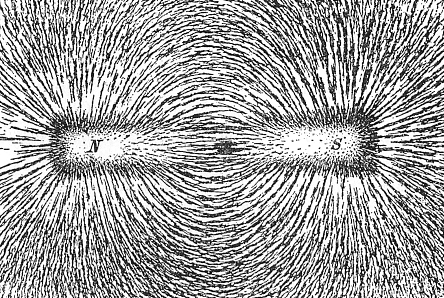
The Earth has a magnetic field.
True
False


What device takes in mechanical energy and produces electricity?
motor
generator
electromagnet
battery
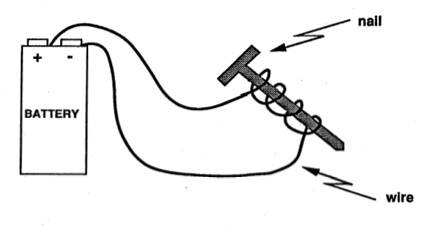
In order to magnetize an object for electromagnetism, it needs to have iron or steel (ex. a rod or nail).
True
False
Electromagnets do NOT have a north and south pole.
True
False
Electromagnets can be turned on and off.
True
False
Electromagnets need a power source.
True
False
Electricity is needed for electromagnets.
True
False
What are the components of the electromagnets?
battery, wire and bulb
battery , copper wire and paper clips
battery, copper wire and iron nail
battery, wire and aluminum
Electric currents produce _____________
electron clouds
magnetic fields
sound waves
How can the strength of an electromagnet be increased? (mark all that apply)
increase the current flowing through the coil
increase the number of coils
add an amplifier to it
put iron core inside the coil