
 Worksheets
inorg chem
Total questions: 42
Worksheet time: 39mins
formed by transfer of electrons, between a metal and a nonmetal
(a)
formed by sharing of electrons, between two or more nonmetals or a metalloid and a non-metal
(a)
electrons are shared unequally; between non metals with different electronegativities
(a)
electrons are shared equally; between similar non-metals or those with very small difference in electronegativity
(a)
Is the force that holds atoms of a metal together
(a)
A + B → C + D
(a)
A + B → C + D
(a)
A + B → ⬇️C + D
(a)
A + B → C +⬆️ D
(a)
A(s) + B(l) → C(g) + D(aq)
(a)
A + B 🔺 C + D
(a)
a type of reaction in which two or more substances produce a single product
(a)
a type of reaction in which one reactant produced two or more products
(a)
a type of reaction in which an element react with a compound to produce a new product and a free element; governed by the activity series
(a)
reaction of two compounds to produce two new products
(a)
W(PO3)2 + MnBr2 → WBr6+ Mn3(PO3)2
Double replacement
Combination
Decomposition
Single replacement
No reaction
Cr2O3 + H2O → Cr(OH)3
Double replacement
Combination/synthesis
Decomposition
Single replacement
No reaction
(NH4)3AsO3 → (NH4)2O + As2O3
Duble replacement
Combination/synthesis
Decomposition
Single replacement
No reaction
NH4OH + H3PO4 → (NH4 )3PO4 + H2O
Double replacement
Combination/synthesis
Decomposition
Sngle replacement
No reaction
Cu + ZnSO4 → CuSO4 + Zn
Duble replacement
Combination/synthesis
Decomposition
Sngle replacement
No reaction
Cd + Ag3AsO3 → Cd3 (AsO3 )2 + Ag
Duble replacement
Synthesis
Single replacement
Decomposition
No reaction
mixing of atomic orbitals
(a)
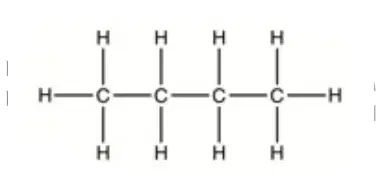
Ayan
(a)
element or group of elements within molecules that are responsible for the characteristic chemical reactions of those moecules
(a)
straight chain / cyclic hydrocarbon which could be further broken down into saturated and unsaturated
(a)
singly bonded aliphatic compounds
(a)
contains double or triple bonds
(a)
cyclic hydrocarbon; hydrocarbons in which end carbons meet to produce a ringed compounds
(a)
cyclic hydrocarbon that contains conjugated double bonds; very stable ie benzene
(a)
refers to the total amount of solute present in a solution; can be expressed as
(a)
the basic unit of
Matter
(a)
Center of the atom Where the proton and neutron resides
(a)
Negatively charged particle of the atom (e-)
(a)
Results when an element lose or gain electron
(a)
is a positively charged atom, lost of electron
(a)
is a negatively charged atom, gain electron
(a)
Groups 1-2 termed
(a)
Groups 3-12 are termed
(a)
Groups 3-11 are termed
(a)
Groups 13-18 termed
(a)
The first row of the f-block elements are called
(a)
The second row of the f -block elements are called
(a)

