
Font size
 Worksheets
SCIENCE FINAL 7TH GRADE 2026
Total questions: 60
Worksheet time: 1hrs 19mins
What is energy?
The ability to do work
Movement and motion
Heat and motion


If a car travels 400 m in 20 seconds, how fast is it going?
20 m/s
2 m/s
32 m/s

Match these parts of a light wave
Amplitude
height of the wave
wavelength
distance from wave to wave; gives light its color
crest
top
trough
bottom
frequency
how often waves occur
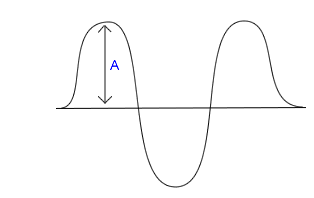
Sound waves travel as _________ waves.
transverse
electromagnetic
longitudinal
surface

A teacher rubbed a match against a piece of sandpaper. The match started to burn. Which statement best describes the energy changes that occurred?
The chemical energy stored in the match changed to thermal energy and light energy
The thermal energy stored in the match changed to light energy and chemical energy
The light energy and thermal energy stored in the match changed to mechanical energy
The light energy and thermal energy stored in the match changed to chemical energy

If 20g of sugar is stirred into a beaker containing 100g of water. What would the mass of the dissolved solution be after the sugar is dissolved fully?
20g
100g
80g
120g

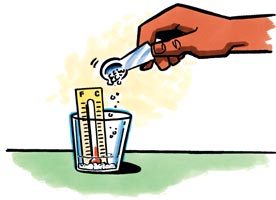
Thermal energy is associated with
kinetic and potential energy of particles
position or shape
chemical reactions
chemical bonds

The diagram above represents a thermometer. Which of the following best explains how the thermometer works?
Liquid changes to a gas when heated.
Gas changes to a liquid when heated.
Liquids expand when heated and contract when cooled.
Liquids contract when heated and expand when cooled.
Heat always moves
in convection currents
by radiation
from hot to cold
from cold to hot

Base your answer to the question on the diagram above, which shows insulated styrofoam cups of water connected by an aluminum bar. The thermometers show the temperatures of the cups A and B at the beginning of a heat flow experiment. Over the next 15 minutes, which changes would most likely occur?
The temperature in cup A will decrease and the temperature in cup B will increase.
The temperature in cup A will decrease and the temperature in cup B will decrease.
The temperature in cup A will increase and the temperature in cup B will increase
The temperature in cup A. will increase and the temperature in cup B will decrease.

The diagram above shows a Bunsen burner heating a beaker of water on a beaker stand. The arrows represent the transfer of heat energy in the water. Which process is primarily responsible for the transfer of heat in the beaker as indicated by the arrows in the diagram?
conduction
radiation
convection
condensation
A material that allows heat to pass through it well, unlike wool, is called a
insulator
conductor
metal
thermal expander

The average kinetic energy of the atomes or molecules within a substance.
thermal energy
kinetic energy
temperature
gas
As particles are exposed to warmer temperatures they __________
speed up
slow down
stay the same
vibrate at fixed positions
What is the effect of cooling on the size of an object?
The size of the object remains the same.
The size of the object becomes larger.
The size of the object decreases.
The size of the object increases.
What happens to the size of a material when it undergoes thermal expansion?
The size of the material decreases due to an increase in temperature
The size of the material increases due to an increase in temperature
The size of the material remains the same despite the increase in temperature
The size of the material decreases due to a decrease in temperature
A person would jump higher on the Moon than on the Earth because . . .

Which of the following is required for planets to stay in orbit around the Sun?
Gravity
Inertia
Friction
Gravity AND Inertia
Objects with greater _________ also have greater inertia.
speed
mass
force
friction

What law is best described
1st
2nd
3rd
law of motion

What law is best described
A magician pulls a tablecloth out from under dishes and glasses on a table without disturbing them.
Newton's 1st Law
Newton's 2nd Law
Newton's 3rd Law

How is this an example of Newton’s Third law?
Only the ball is using the head
They are both exerting an equal force on each other
Only the head is pushing the ball
Unbalanced forces acting on an object will
change the motion of that object
not change the motion of that object
do nothing
make the object stop

What is the net force in this scenario?
5 Newtons Right
10 Newtons Right
15 Newtons Left
20 Newtons Left
How does friction affect motion?
It can slow an object down
It can speed an object up.
It can make the object accelerate.
It can work with the force.
Forces with a net force of 0.
Acceleration
Balanced
Unbalaced
Friction
Electricity happens with the flow of
electrons
water
sand
The location on the magnet that has the strongest magnetic field is the ___________.
magnetic fields
magnetic poles
magnetic domains
center of the magnet
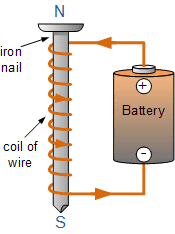
Electromagnet
Generator
Electron Magnet
Magneto's Helmet
Which is needed to determine the amount of gravitational force between two objects?
distance and mass
weight and time
area and weight

At location B, what season is the Northern Hemisphere experiencing?
Summer
Fall
Winter
Spring
At location D, what season is the Northern Hemisphere experiencing?
Summer
Fall
Winter
Spring

What are the reasons for the season?
Earth's tilt & rotation
Earth's tilt & revolution
Earth's rotation & rovolution
Earth's tilt & resolution


Which of the following orders the rock layers accurately from oldest to youngest?
1, 2, 3, 4, 5
5, 4, 3, 2, 1
2, 3, 4, 5, 1
1, 2, 3, 5, 4
What is the process by which rock is broken into fragments called sediments?
Deposition
Erosion
Weathering
Igneous Rock

What are the 3 major types of rocks?
Igneous, Sedimentary, Metamorphic
Metamorphic, Igneous, Cementation
Magma, Lava, Crystals
Air, Water, Earth, Fire
_______ are mountain chains on the ocean floor.
Sea-floor ridges
Mid-ocean ridges
Tectonic plates
Photosynthesis

___________ is the process by which
new oceanic lithosphere (sea floor) forms as magma rises to Earth’s surface and solidifies at a mid-ocean ridge.
Continental drift
Sea-floor spreading
Plate tectonics
Mid-ocean range
___________ is the hypothesis that states that the continents once formed a single landmass, broke up, and drifted to their present locations.
Continental drift
Sea-floor spreading
Plate tectonics
Mid-ocean range
Most geologists think that the movement of Earth's plates is caused by __________________.
conduction
earthquakes
convection currents in the mantle
Earth's magnetic field
What is the Boundary called when two tectonic plates are moving away from each other?
Convergent Boundary
Divergent Boundary
Transform Boundary
Repulsive Boundary

What type of plate boundary is represented in the picture?
Transform
Divergent
Convergent
Lithosphere
A mid-ocean RIDGE is located at the boundary of two tectonic plates. Which diagram correctly models the relative plate motion on each side of a mid ocean ridge?



