
Font size
 Worksheets
SST - Year 7 Exam
Total questions: 75
Worksheet time: 2hrs 53mins

Temperature
The amount of thermal energy in the atmosphere
Atmospheric pressure
The weight of the air over a point on the Earth's surface
Precipitation
Fall of water towards the Earth in the form of rain, hail or snow
Humidity
Amount of water vapour in the atmosphere
Wind
Air in motion in the atmosphere

The main climatic zones in the world are...
Hot zone, warm zone, cold zone
Ice zone, temperate zone, hot zone
Temperate zone, hot zone, cold zone
Danger zone, cold zone, hot zone, temperate zone

Places that are away from the equator like the north pole are ....
cold
hot

Put in order the steps in cloud formation.
Sun heats the Earth's surface
Warm air rises and cools
Humidity of the air increases
Water vapor condenses
Millions of water droplets collect to form a cloud
Match the following latitude ranges with their BEST air pressure and climate descriptions:
30°N
Low Pressure
Warm, Dry Climate
66°N
High Pressure
Dry, Cool Climate
0°
Lowest Pressure
Hot & Humid Climate
90°N
Highest Pressure
Dry & Cold climate
Match the following
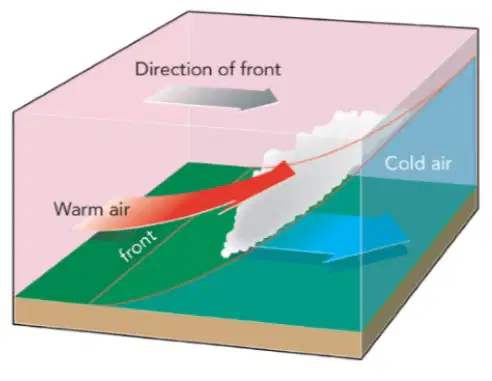
warm front
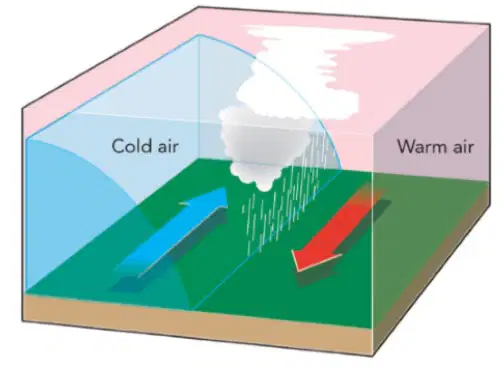
stationary front
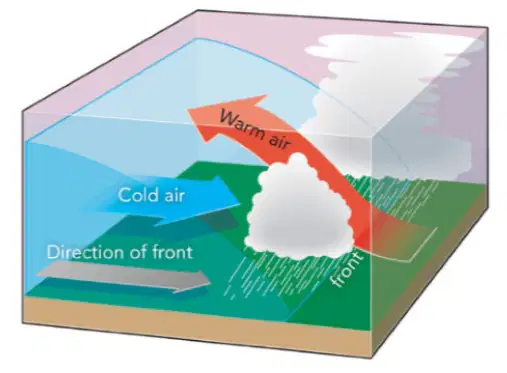
cold front

occluded front
Severe weather develops from ____ pressure systems.
high
low
both
neither
Which of the following is the central teaching of Islam?
Allah will grant life in paradise to all who obey him
Allah is the only God and Muhammad is his prophet
On the final day, Allah will judge all people
Muslims must wash before praying to be pure before Allah
-Faith (there is no God but Allah)
-Prayer (5 times a day toward Mecca)
-Charity (give alms to the poor)
-Fasting (1 month during Ramadan)
-Pilgrimage (once in their life go to Mecca)
What is being described?
Eightfold Path
Five Pillars of Islam
Four Nobel Truths
Ten Commandments
What is the holy text of Islam that is written in Arabic?
Qur'an (Koran)
Bible
Torah
Vedas
What is the holy month of Islam called?
Qur'an
Ramadan
Hajj
Zakat
There were several reasons the Roman Empire grew weak and fell apart. Which answer is NOT one of them?
Empire was very large
It had great emperors
not enough good soldiers
too many people were slaves
What is NOT a cause of the Fall of Rome?
Weak leadership
Economic crises
The abundance of food.
Social unrest and insecurity
Invasions

This Roman Emperor made Christianity the official religion of Rome.
Nero
Constantine
Julius Caesar
Trajan

In 476 C.E., Rome fell at the hands of this Germanic tribe.
Goths
Gauls
Mongols
Carthage

At its peak, the Roman Empire surrounded and had full control of what major body of water?
Atlantic Ocean
Indus River
Black Sea
Mediterranean Sea

Rome was founded on the banks of what river?
Tiber River
Ionian River
Gaul River
Nile River
The Byzantine Empire is the name we call
The Eastern Roman Empire after the West fell
The Western Roman Empire after the East fell
Constantinople
The Hagia Sophia
The Roman Empire had 4 major issues they were Political, Social, Economic, and ?
Social
Military
Education
Poverty
What did the invasions of the Germanic tribes ultimately cause to happen?
The Germanic tribes unite (bring together) the entire Roman Empire into one large German empire.
The Roman Empire reunites into one large empire and they fight together to defeat the invading Germanic tribes.
The western Roman Empire (capital Rome) falls while the eastern Empire remains & becomes the Byzantine Empire.
The eastern Roman Empire (capital Constantinople) falls while the western Empire remains & becomes the Byzantine Empire.
Which of the following groups invaded Western Europe after Charlemagne's death?
Persians
Greeks
Romans
Vikings
What was the system known as that developed from the exchange of land for loyalty and military aid?
Capitalism
Socialism
Feudalism
Communism
Who became the 'Holy Roman Emperor'?
Charlemagne
Pepin the Short
Clovis I
Charles Martel
Feudalism
economic and political system of medieval Europe; people exchanged loyalty and labor for protection
Fief
land granted by a lord to a vassal in exchange for loyalty and service
Serf
a peasant who could not leave the lord's land on which he or she was born and worked
The Middle Ages lasted from...
500 CE- 1500 CE
500 BC- 1500 BC
1000 BC- 1200 CE
1000 CE- 1500 CE
A.) The feudal system dominates Western Europe;
B.) Augustus Caesar establishes the Roman Empire;
C.) The Black Plague wipes out almost half the European population
NAME the religion that held great power in Medieval Europe.
Catholicism
Islam
Buddhism
Judaism
What event do most historians use to mark the beginning of the Middle Ages in Europe?
The Fall of Constantinople
Charlemagne's Rule
The Fall of the Western Roman Empire
The Birth of Jesus of Nazareth

Germanic people who settled the area known today as France
Franks
Anglo-Saxons
Romans
Norsemen
Magyars
Chinese emperors used the (a) to justify their rule.
They claimed that the (b) gave them the mandate, and thus the gods gave them power to (c) . The gods could also take away the mandate from (d) rulers. The gods could send (e) as a sign that the dynasty lost its mandate.
The Dynastic Cycle starts with a (a) that brings peace and provides infrastructure. However, as time goes on, the dynasty becomes (b) and the people are very unhappy. When this happens the people assume that (c) are a sign from the gods that the dynasty has lost the mandate. The people will then rebel against what is now an (d) and replace it with a new dyansty. Then the entire (e) starts over again.

Trade Along the Silk Road
The Silk Road was a network of trade routes that connected the East and West, allowing for the exchange of goods, ideas, and culture. The routes of the Silk Road spanned over 4,000 miles, crossing through various terrains and climates, from deserts to mountains.
Merchants played a crucial role in the trade along the Silk Road. They facilitated the exchange of goods such as silk, spices, precious metals, and more. Merchants often formed caravans for protection and traveled long distances, facing various challenges along the way.
Goods traded along the Silk Road were diverse and valuable. In addition to silk, other goods such as tea, porcelain, paper, and gunpowder were also traded. This exchange of goods not only enriched the economies of the regions involved but also contributed to the spread of knowledge and technology.
What role did merchants play in facilitating trade along the Silk Road?
Providing protection for caravans
Building roads and bridges
Farming along the trade routes
Establishing diplomatic relations
What did the Silk Road connect?
North and South
East and West
Europe and Africa
Asia and Australia
What were some of the impacts of the goods traded along the Silk Road?
Enriching economies
Contributing to the spread of knowledge and technology
Diversifying cultures
Promoting political stability
Who was Qin Shi Huang?
The first emperor of China
the first emperor to build an army in China
the first person to build a fort in the mountaints
the last major leader in China
What is the significance of 秦始皇/Qin Shi Huang?
As the first emperor, he united China.
A universal system of weights and measure was created under his reign.
A single standardized writing script was created under his reign.
A defense barrier, which later known as the Great Wall, was connected
How did the Han emperors gradually change the way China was ruled?
They returned most power to local nobles.
They put more emphasis on family connections.
They moved from Legalism to Confucian ideals.
They punished people who tried to spread Daoist beliefs.
Compared with the Qin dynasty, the Han dynasty...
was much smaller.
lasted much longer.
had much worse rules
had far fewer inventions.
What Famous Trade Route Was Established During The Han Dynasty?
The Silk Road
The Middle Passage
The Matthew Road
The Indian Spice Route
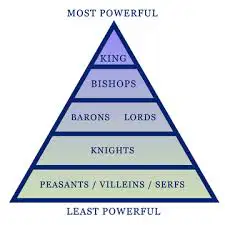
What is the system in which the kings own all the land and distribute large pieces to their loyal supporters called lords in exchange for the lords sending soldiers to fight enemies who threatened their king?
Confucianism
Mandate of Heaven
Feudalism
Bureaucracy
Which dynasty created the civil service exam?
Han dynasty
Sui dynasty
Tang dynasty
Song dynasty
The exam system benefited China because it
ensured officials were trained and talented.
emphasized moral behavior.
helped unify Chinese culture with its values.
all of these are correct.

The Christian religion spread within the Byzantine empire because of what two reasons?
It was made the official religion of Rome by Constantine
The Goths forced Christianity on Rome
Christianity had a message of hope
The Turks took over Constantinople
The Great Schism split the Christian Church into what two groups?
Roman Catholic Church
Baptists
Eastern Orthodox Church
Lutheran
Who conquered the Byzantine Empire?
Ottoman Turks
Islamic Turks
Romans
Huns
Why was Constantinople an important trade location? (Choose 2.)
It was located along the Silk Road.
It was home of the Hippodrome.
It was protected by large walls.
It had a natural harbor.

What made Constantinople's location strategically important?
It was located between the Black Sea and the Mediterranean Sea.
It was located near Carthage.
It was located near Rome.
It was located between the Eastern and Western Roman Empires.
What does SPQR stand for?
Senate and People of Rome
Six Penguins Quickly Read
Rome!!!!!!!!
??
The Fall of Rome: Reasons and Repercussions
The fall of the Western Roman Empire wasn't a single dramatic event, but a gradual decline. Historians point to several contributing factors:
Invasions: Germanic tribes, facing pressure from the Huns in the east, pushed against Roman borders. The Roman army, weakened by internal struggles and economic strain, couldn't effectively hold them back.
Economic Woes: Overextended borders, political instability, and a decline in trade all hurt the Roman economy. Maintaining a vast empire became too expensive.
Political Instability: A series of weak emperors, civil wars, and corruption weakened the central government's ability to manage the empire's challenges.
Social Discontent: High taxes, inflation, and a growing gap between rich and poor led to social unrest and a decline in civic participation.
These factors all intertwined, causing a domino effect. The weakened state couldn't defend its borders, leading to further invasions and economic disruption.
What economic issues contributed to the expensive maintenance of the Roman Empire?
Decline in agriculture
Overextended borders
Rise in trade
Increase in population
What were some of the factors that led to social unrest in Rome?
High taxes
Inflation
Growing wealth gap
Decline in trade
What were some of the factors that contributed to the gradual decline of the Western Roman Empire?
Economic troubles
Invasion by barbarian tribes
Political instability
Technological advancements
What factors contributed to the weakening of the central government in Rome?
Economic instability
Strong emperors
External invasions
Political instability with weak emperors and corruption
What were some of the factors that contributed to the fall of Rome?
Invasions by Germanic tribes
Weakened Roman army
Economic strain
Political corruption
The Fall of Rome: Reasons and Repercussions
Here's how this fall impacted Europe:
Power Vacuum: Without a strong central authority, Europe splintered into smaller kingdoms ruled by Germanic chieftains. This period, known as the Early Middle Ages, was marked by instability and frequent warfare.
Rise of Feudalism: In the absence of a central government, a new social and political system called feudalism emerged. Powerful local lords offered protection to peasants in exchange for loyalty and military service.
Spread of Christianity: The Christian Church, already established in the Roman Empire, became a unifying force during this time of fragmentation. The Church preserved Roman culture and law, and the papacy in Rome grew in influence.
Loss of Knowledge: With the decline of centralized power and infrastructure, much of the Roman world's knowledge and technology were lost. This period saw a decline in literacy and a shift towards a more rural and isolated way of life.
The fall of Rome marked the end of an era and the beginning of a long period of transformation. The fragmented Europe that emerged eventually laid the groundwork for the rise of nation-states and the development of modern Europe
How did the Christian Church contribute to the preservation of Roman culture and law during the fragmentation of Europe?
By promoting new cultural practices
By rejecting Roman culture and law
By isolating itself from the rest of society
By becoming a unifying force and growing in influence
What social and political system emerged in the absence of a central government?
Capitalism
Socialism
Feudalism
Communism
What was one of the consequences of the decline of centralized power and infrastructure in the Roman world?
Increase in literacy rates
Shift towards urbanization
Loss of knowledge and technology (Dark Ages)
Expansion of the Roman Empire
What was the result of Europe splintering into smaller kingdoms ruled by Germanic chieftains after the fall of Rome?
A. Stability and peace
B. Instability and frequent warfare
C. Economic prosperity
D. Cultural renaissance
What event marked the end of an era and laid the groundwork for the rise of nation-states in Europe?
The fall of Rome
The rise of the Byzantine Empire
The conquest of Gaul by Julius Caesar
The collapse of the Han Dynasty
Why did European powers need to find a faster and safer route to Asia?
The Three G's are Gold, God, and Glory. How are they related to the Age of Exploration?
Which explorer was the first to realized he was exploring the "New World"?
Which explorer claim valuable land for fur trade for France but failed to find the Northwest Passage?
What was Christopher Columbus most known for?
First to circumnavigate the globe
Starting the European exploration of America
Exploring the South Pacific
Discovering the Hudson River
How did Ferdinand Magellan prove the Earth was round?
He hired Christopher Columbus to sail around the Earth
He calculated the vectors on the horizon
He sailed around it
Using the arc of the horizon and star charts he calculated the circumference of the Earth
What is Marco Polo most known for?
Exploring the South Pacific
Traveling to China and the Far East
First European to sail from Europe to India by going around Africa
Led the first expedition to circumnavigate the globe
What lands did Captain James Cook map and explore during his first expedition?
China and Vietnam
Australia and New Zealand
Hawaiian Islands
Philippine Islands
Who was the first European to find a sea route to Asia?
Christopher Columbus
Vasco da Gama
Ferdinand Magellan
Marco Polo
What invention helped European explorers on their journeys? Choose all that apply
Astrolabe
What are some challenges that European explorers faced on their journeys?
Lack of modern navigation tools and limited maps
Language barrier with Native Americans
not enough supplies and disease
Advancements in technology like the (a) contributed to the Age of Exploration.
Which barbarian tribe did Clovis belong to?
Franks
Burgundians
Allemani
Saxons
The Franks settled in the region known as
Burgundy
Gaul
Germany
Italy
The enemy tribes in Gaul united briefly to defeat the
Saxons
Huns
Goths
Allemani
Who defeated the Muslim armies that were invading from Spain and stopped the spread of Islam into Europe?
Pepin the Short
Charlemagne
Clovis
Charles Martel
Who expanded the Frankish Kingdom to include all of Europe and was given the title of "Roman Emperor" by the Catholic Church?
Pepin the Short
Charlemagne
Clovis
Charles Martel

