
 Worksheets
S2 Final exam_G7 bio review quiz
Total questions: 121
Worksheet time: 2hrs 36mins
Which of the following is responsible for protecting the body against harmful microorganisms?
Lungs
Liver
Kidneys
Immune system
Which part of the plant is responsible for absorbing water and minerals from the soil?
Roots
Leaves
Stem
Flowers
Which of the following is responsible for carrying messages between different parts of the body?
Hormones
Enzymes
Neurons
Antibodies
Which of the following is responsible for carrying urine from the kidneys to the bladder?
Urethra
Bladder
Ureter
Prostate
Which of the following is responsible for carrying impulses from the brain to the rest of the body?
Nerves
Muscles
Bones
Lungs
What is the name of the process by which organisms break down food to release energy?
Photosynthesis
Respiration
Digestion
Fermentation
What is the name of the process by which plants and animals produce offspring?
Fertilization
Reproduction
Respiration
Digestion
Which of the following is the outermost layer of the skin that acts as a barrier to protect the body from external damage?
Epidermis
Dermis
Hypodermis
Subcutaneous layer
Which of the following is the smallest unit of a living organism that can carry out all the functions of life?
Tissue
Organ
Cell
System
Which of the following is the powerhouse of the cell that produces energy for the organism?
Ribosome
Mitochondria
Nucleus
Cell membrane
What is the name of the process by which cells divide and reproduce to create new identical cells?
Mitosis
Meiosis
Replication
Transcription

What is a group of cells that are alike and work together?
a cell team
a tissue
a cell family

Organs that work together are part of a(n) ________________________.
cells
tissue
organ system

The dark structure in the middle of each cell is a
nucleus
lysosome
mitochondria

Muscle tissue is made of ...
muscle cells
skin tissue
stem cells

This muscle tissue is only found in the heart.
Skeletal
Smooth
Cardiac

These are the muscles attached to your bones.
Skeletal
Smooth
Rough

These are the muscles found in your organs (like your stomach).
Skeletal
Smooth
Rough
Select the answer with three (3) kinds of body systems.
Bone, Stomach, Muscular
Heart, Respiratory, Nerve Cell
Skeletal, Muscular, Nervous
Brain, Stomach, Heart
Choose the most accurate organizational level for:
DOG
cell
tissue
organ
organ system
organism
Choose the most accurate organizational level for:
RESPIRATORY
cell
tissue
organ
organ system
organism
Choose the most accurate organizational level for:
HEART
cell
tissue
organ
organ system
organism
Choose the most accurate organizational level for:
LIVER
cell
tissue
organ
organ system
organism
Choose the most accurate organizational level for:
DIGESTIVE SYSTEM
cell
tissue
organ
organ system
organism
Choose the most accurate organizational level for:
KIDNEY
cell
tissue
organ
organ system
organism
Choose the most accurate organizational level for:
BONE
cell
tissue
organ
organ system
organism
Choose the most accurate organizational level for:
CIRCULATORY
cell
tissue
organ
organ system
organism
Choose the most accurate organizational level for:
ENDOCRINE
cell
tissue
organ
organ system
organism
Choose the most accurate organizational level for:
SKELETAL
cell
tissue
organ
organ system
organism

A cell
An organ
An organelle
An individual organism


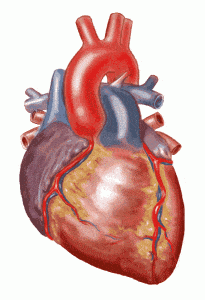

Which part of the bacteria helps it to move?
Flagella
Ribosomes
Nucleiod
Cell wall
What do you call the part of amoeba that helps it move?
Flagella
Cilia
Buds
Pseudopods
Which among the uni- cellular organisms can perform photosynthesis
Bacteria
Fungi
Euglena
Amoeba
Euglena is described as plant because...
It can bear fruit.
It can perform photosynthesis.
It is shaped like a leaf.
It has roots.
Euglena make their food in the...
Flagellum
Chloroplast
Cell Membrane
Eye spot
How do amoebas eat?
They make their own food.
They use their pseudopods to engulf food.
They use their eyespot to detect sunlight.
They eat their own waste.
The kingdom of classification for single-celled organisms is _____
Plants
Animals
Protists
_________ is the control center of the cell?
pseudopods
nucleus
ribosomes
vacuole
Which single-celled organism uses cilia to move?
amoeba
paramecium
volvox
euglena
Which single-celled organism uses pseudopods to move?
amoeba
paramecium
volvox
euglena
Which single celled organism can be both animal and plant like?
amoeba
paramecium
volvox
euglena
Cells that have a nucleus are called ________?
eukaryotic
prokaryotoc
single celled
A euglena has an eyespot to sense______
food
light
organisms
oxygen

What kind of protist is this?
Amoeba
paramecium
euglena
volvox

What kind of protist is this?
amoeba
euglena
paramecium
volvox
What color are organisms that conduct photosynthesis?
Green
red
clear
brown

This unicellular organism uses pseudopods to capture and absorb its food!
Amoeba
Paramecium
Euglena
Volvox
If an organism is unicellular but has a nucleus, then it belong to this kingdom.
plant
animal
protist
bacteria
Which is NOT the cell theory proposed in 19th century?
All living organisms are composed of one or more cells.
A cell is the basic structural and functional unit of living organisms.
All cells arise from pre-existing cells.
All cells grow at different rates.
What is the total magnification when the eyepiece magnification is 10x and the objective magnification is 40x?
200x
160x
100x
400x
What is the function of the nucleus in a cell?
Energy production
Cell division
control center of the cell
Waste elimination
What is the main function of cell division in organisms?
Increase cell size
Repair damaged cells
Maintain cell shape
Produce energy
What is the process by which cells change in shape and function called?
Cellular mitosis
Cellular respiration
Cell division
Cell differentiation
What are stem cells capable of doing?
Fighting infections
Repairing damaged cells
store water
Producing energy
What is an organ system?
A group of organs working together
A group of tissues working together
The basic unit of living things
An entire living organism
What is the function of the cytoplasm in a cell?
Storage of nutrients
Cell division
Genetic material protection
Energy production
What is the main function of the cell wall?
provide structural strength and support
Cellular communication
Nutrient absorption
Waste elimination
Which statement about all living organisms is true?
They have limbs.
They produce their own food.
They breathe air.
They have at least one cell.

The scientific name for water bear is Hypsibius dujardini. What is its species?

The largest classification category.
Kindgom
Phylum
Order
Species
Subdivision of a kingdom
Genus
Phylum
Order
Species
Which of the following is the correct order from broadest to smallest?
Kingdom, Class, Order, Family, Genus, Species, Phylum
Species, Genus, Family, Order, Class, Phylum, Kingdom
Kingdom, Phylum, Order, Class, Family, Genus, Species
Kingdom, Phylum, Class, Order, Family, Genus, Species
A FAMILY of organisms would be grouped into a LARGER taxonomic level of a
phylum
class
genus
order

What is the genus name here:
Canis lupus
Canis
lupus
Tool scientists use to classify organisms
classification chart
secret decoder
organism key
dichotomous key
The greater the ___________________, the smaller the field you are actually viewing.
detail
objective
magnification
body
The function of the digestive system is to...
support and protection
deliver oxygen to the cells and remove waste
move the body
break down food
What is the function of the respiratory system?
bring in oxygen and remove carbon dioxide
break down food
helps all parts of the body to communicate with other parts
maintain fluid levels in the body
How do the respiratory and circulatory systems work together?
They move and support the body.
They circulate blood and oxygen throughout the body.
They digest food and circulate nutrients throughout the body.
They maintain fluid levels within the body.
How does the digestive system and circulatory system work together?
One breaks down food and the other delivers these nutrients throughout the body.
They move and support the body.
They bring in oxygen and circulate it throughout the body.
They maintain fluid levels in body.
What are the parts of the digestive system?
heart, veins, arteries, and capillaries
mouth, esophagus, stomach and intestines
soft and compact bone
nasal cavity, trachea, lungs and diaphragm

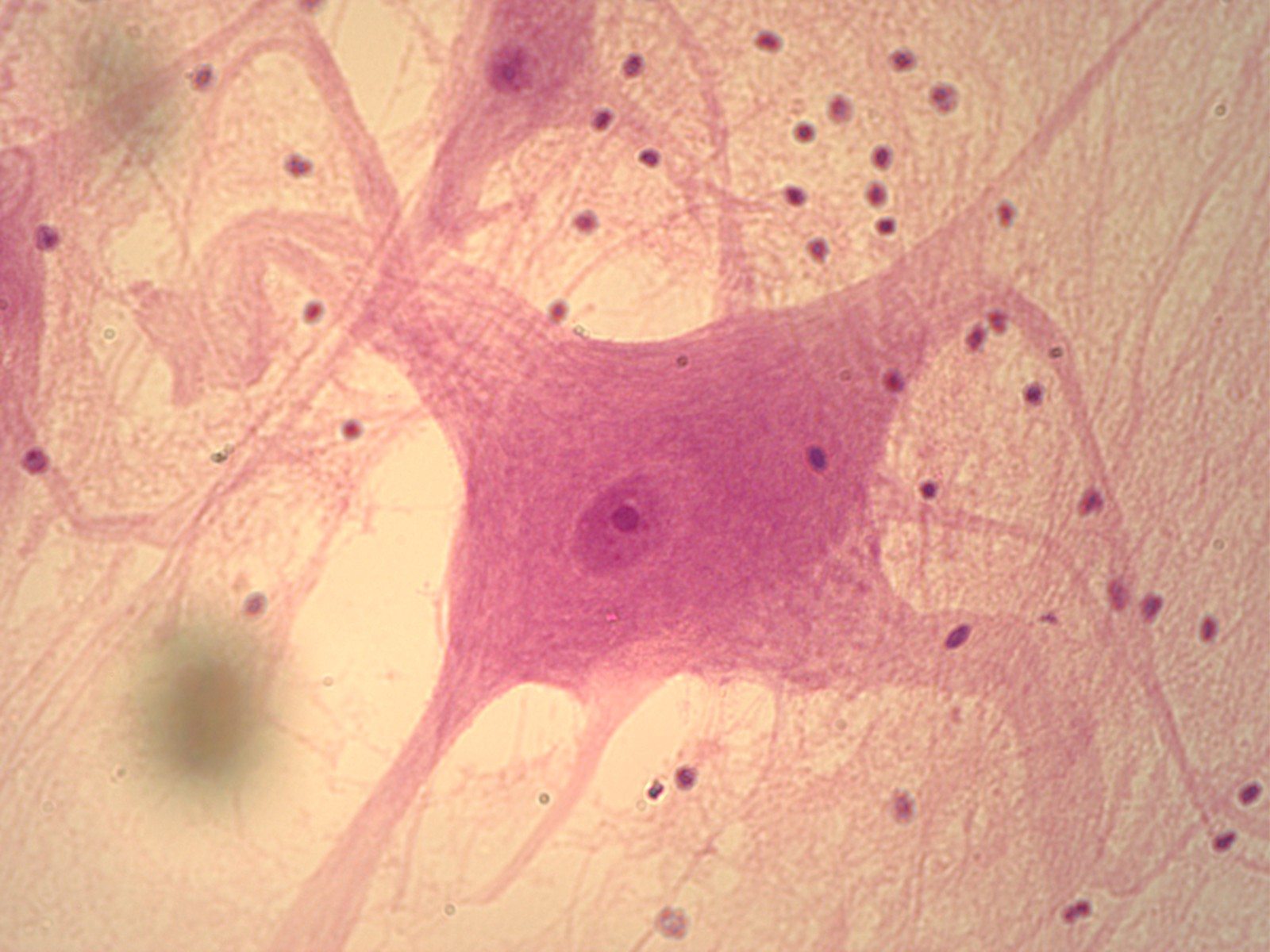


What kind of tissue is pictured here?
Stratified cuboidal epithelial
Smooth muscle
Cartilage
Loose connective tissue

Identify the tissue
Epithelial Tissue
Muscular Tissue
Connective Tissue
Nervous Tissue

Identify the tissue
Epithelial tissue
Nervous tissue
Connective tissue
Muscular tissue

What type of tissue is this?
smooth muscle tissue
skeletal muscle tissue
nervous tissue
blood
Identify the tissue
Epithelial Tissue
Muscular Tissue
Connective Tissue
Nervous Tissue
This tissue covers body surfaces, covers and lines internal organs, and composes glands.
Epithelial
Connective
Muscle
Nervous
Which part of the bacteria helps it to move?
Flagella
Ribosomes
Nucleiod
Cell wall
What do you call the part of amoeba that helps it move?
Flagella
Cilia
Buds
Pseudopods
Which among the uni- cellular organisms can perform photosynthesis
Bacteria
Fungi
Euglena
Amoeba
Which part of Euglena helps it to detect sunlight for photosynthesis?
flagellum
eyespot
stigma
nucleolus
Euglena is described as plant because...
It can bear fruit.
It can perform photosynthesis.
It is shaped like a leaf.
It has roots.
Euglena make their food in the...
Flagellum
Chloroplast
Cell Membrane
Eye spot
Which among the uni-cellular organisms produces spores to move around.
Fungi
Euglena
Bacteria
Amoeba
How do amoebas eat?
They make their own food.
They use their pseudopods to engulf food.
They use their eyespot to detect sunlight.
They eat their own waste.
What are the functions of the roots? (Select two answers)
Absorbing Water and Minerals
Attracting Insects
Anchoring the Plant
Performing Photosynthesis
Making Nectar
What does the Xylem transport?
Water and Minerals
Glucose
Blood
Chlorophyll
What does the Phloem transport?
Water and Minerals
Glucose
Blood
Chlorophyll
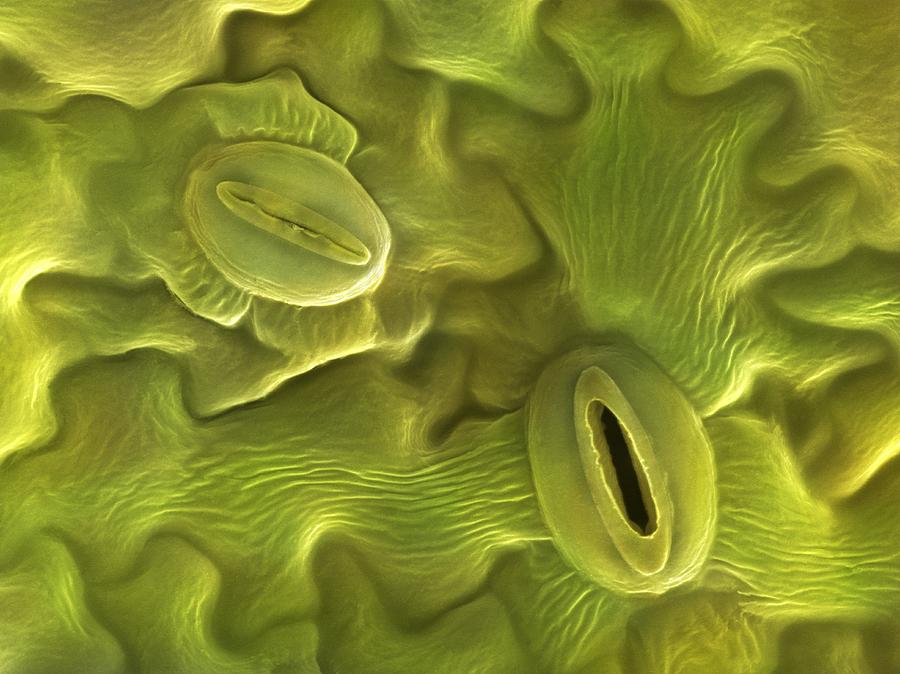
Phloem tubes transport substances..
From the roots to the stem and leaves
From the leaves to the rest of the plant
If the number of chromosomes in the somatic cells of an organism is 46 before cell division, then the number of chromosomes after cell division and cell growth would be__.
23, 23
46, 46
23, 46
46, 23

