
 Worksheets
PO 7.1
Total questions: 47
Worksheet time: 24mins
At what conditions oxidation of ethylbenzene proceeds by air to form 10-13% hydroperoxide in propylene oxide production technology?
at a temperature of 140°C and a pressure of 0.25 MPa
at a temperature of 150°C and a pressure of 0.35 MPa
at a temperature of 160°C and a pressure of 0.35 MPa
at a temperature of 150°C and a pressure of 0.45 MPa
at a temperature of 140°C and a pressure of 0.35 MPa
At what temperature range the oxidation of the isopropylbenzene is carried out in the liquid phase in the presence of the initiator - hydroperoxide isopropylbenzene (HPIPB)?
at a temperature of 110-130°C
at a temperature of 115-135°C
at a temperature of 120-130°C
at a temperature of 120-135°C
at a temperature of 110-140°C
For what purpose layer of chromium-nickel steel Cr18Ni9Т is used in reactors of hydroformylation?
to cool the reaction
to resist to CO, H2 and hydrocarbonyl cobalt
to heat the reaction
to protect from O2
no correct answer
For what purpose the tert-butyl hydroperoxide and di-tert-butylperoxide are used?
as initiators of radical polymerization and vulcanization of polyolefin rubbers
to obtain the maximum yield of oxygen-containing products
to prevent the formation of explosive mixtures
as inhibitor of carbon monoxide formation
no correct answer
How ethylene is purified from the acetylene in ethylene oxide production?
by selective hydrogenation or by copper oxide with precipitation of copper acetylides
it is saponified in saponifiers
it is hydrolysed with water by decomposition reaction
it is washed with alkali, water, passed through an adsorber with activated carbon
no correct answer
How ethylene is purified from the sulfur compounds in ethylene oxide production?
it is washed with alkali, water, passed through an adsorber with activated carbon
by selective hydrogenation or by copper oxide with precipitation of copper acetylides
it is saponified in saponifiers
it is hydrolysed with water by decomposition reaction
no correct answer
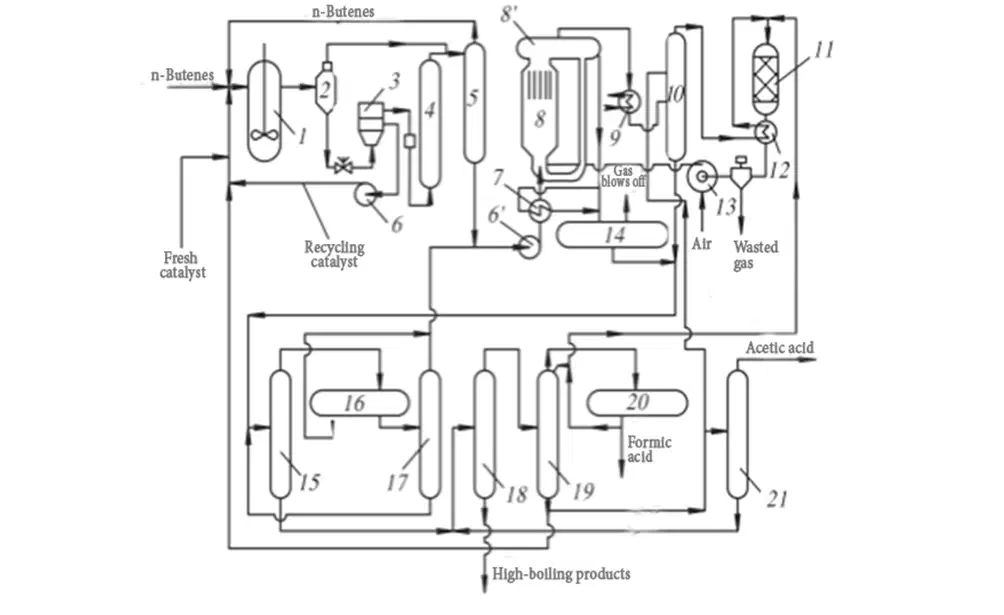
How the heat of oxidative cracking reactor is supplied in following scheme?
By air which is pumped by the compressor 13 through the nozzles to the lower part of the reactor
By gas from the gas separator 14
By recycling compounds from separator 8’
By non-reacted compounds from the settler 17
By recycling catalyst
In reactors with internal heat removal, how are the reaction components introduced into the reaction zone?
Only cold feedstock is introduced from below
Only reaction products are introduced from below
All reaction components are introduced from below
Half of the components are introduced from above and half from below
The location of component introduction depends on the specific reaction
It is obtained by polymerizing ethylene at high temperatures (up to 300°C) and pressures up to 250 MPa in the presence of radical initiators
high-pressure polyethylene
low-pressure polyethylene
medium-pressure polyethylene
low-pressure polypropylene
no correct answer
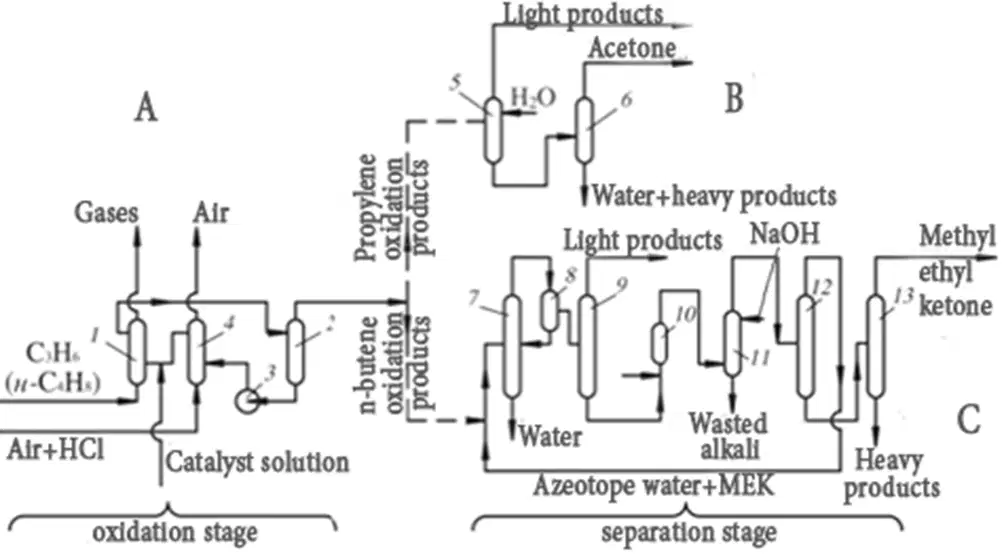
Name the equipment 10 in following scheme:
contact apparatus of selective hydrogenation
low-boiling products distillation column
primary rectification column
acetone extraction column
MEK extraction column
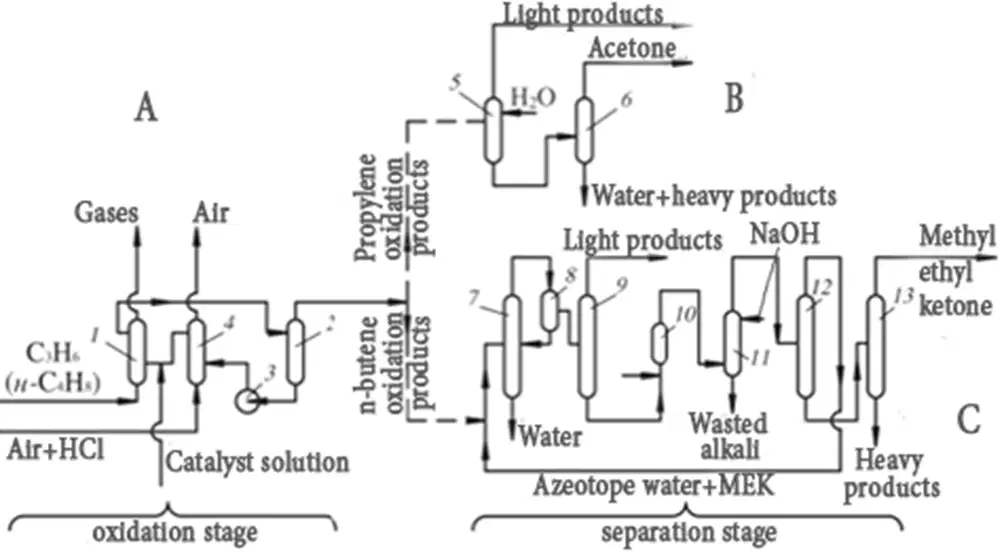
Name the equipment 2 in following scheme:
stripping column
regenerator
alkali scrubber
reactor
dehydration column
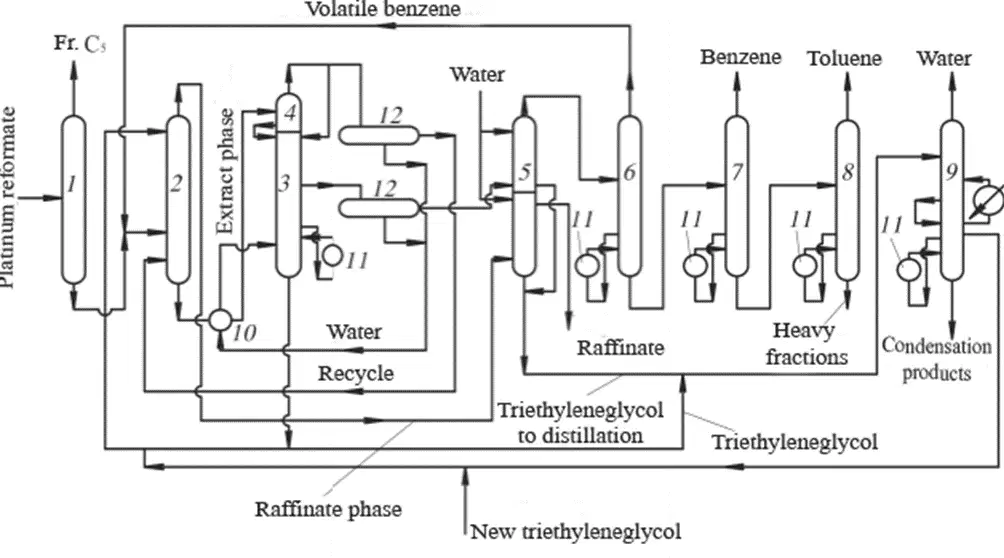
Name the equipment 5 in following scheme
Washing column of extract and raffinate
Extractive rectification column
Single-entry evaporation section
Transmitting column of volatile benzene
TEG purification column
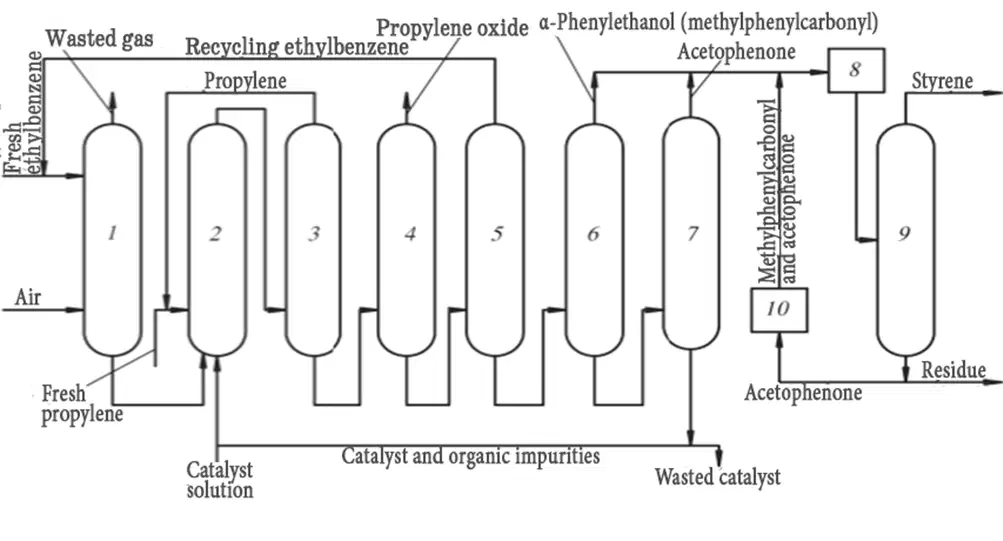
Name the equipment 5 in following scheme:
rectification column
hydrogenation block
dehydrator
oxidation reactor
epoxidation reactor
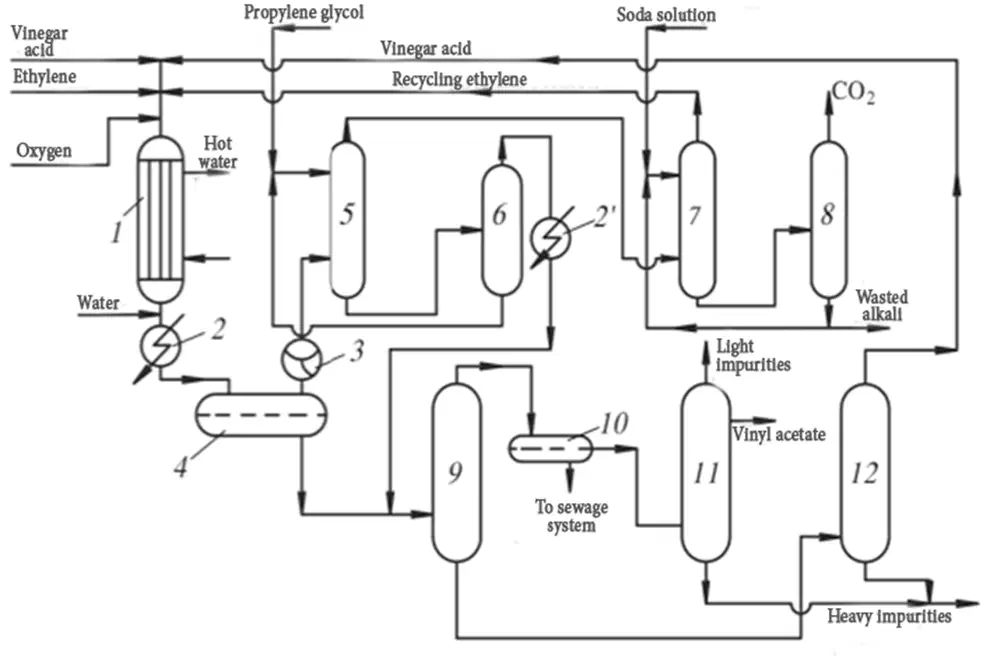
Name the equipment 6 in following scheme
Desorber
Absorber
Settler
Compressor
Separator
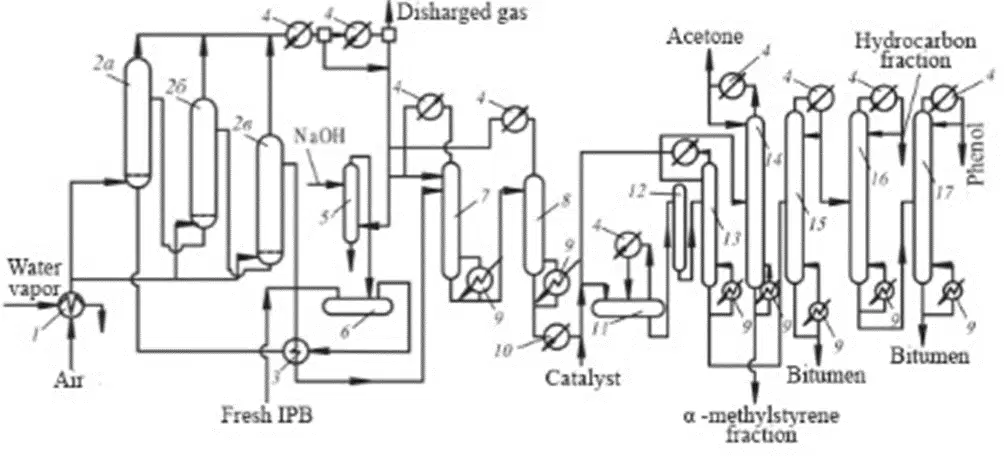
Name the equipment 7 in following scheme
concentration column
fortification column
alkali washing column
decomposition reactor
vessel of oxidation charge
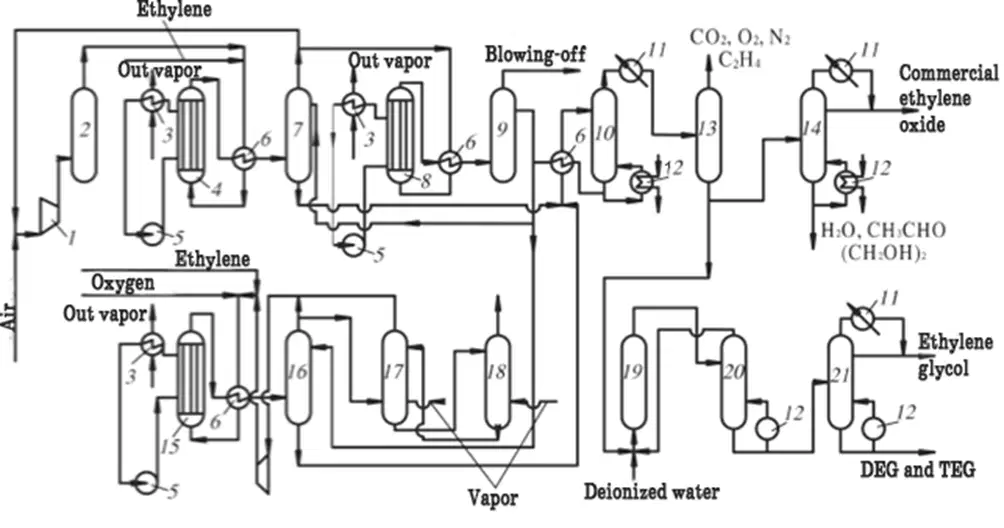
Name the equipment 7 in following scheme:
main contact absorber
main contact reactor
rectification column
condenser
boiler
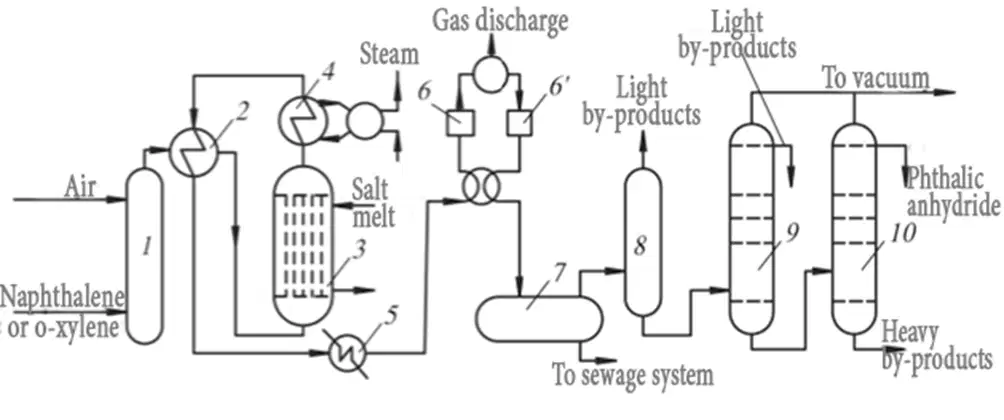
Name the equipment 8 in following scheme
phthalic anhydride preliminary purification column
rectification column for light by-products isolation
rectification column for commercial phthalic anhydride isolation
alternating switched condensers
receiving tank
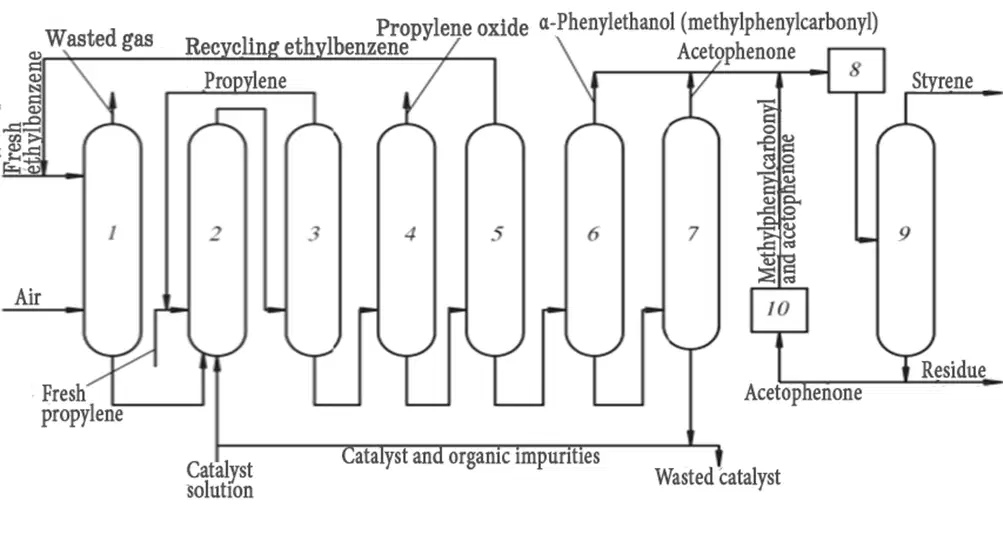
Name the equipment 8 in following scheme:
dehydrator
oxidation reactor
epoxidation reactor
rectification column
hydrogenation block
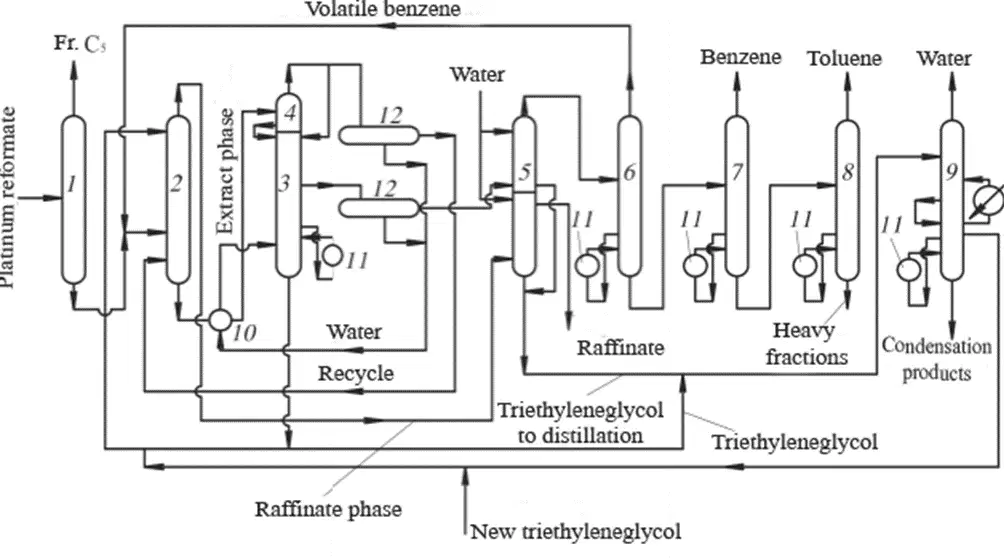
Name the equipment 9 in following scheme
TEG purification column
Washing column of extract and raffinate
Extractive rectification column
Single-entry evaporation section
Transmitting column of volatile benzene
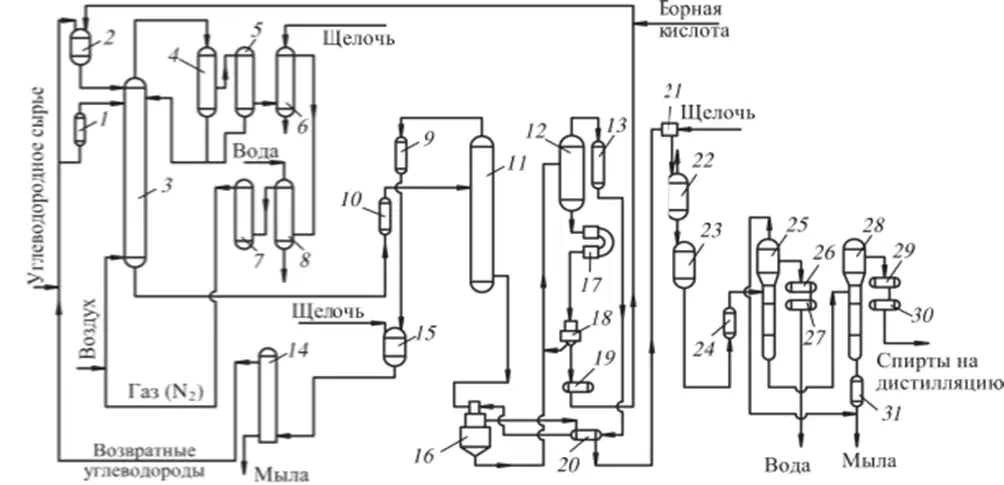
Name the stage where borate ester is formed in following technological scheme:
oxidation of liquid paraffins in the presence of H3BO3
hydrolysis of borate esters
saponification and distillation of secondary alcohols
regeneration of boric acid
no correct answer
Process of separation of components with close boiling points using the third component, which dissolves one of the components well
Extractive rectification
Azeotropic rectification
Selective extraction
Primary dehydration
Alkali absorption
Process of separation of components with similar temperature indicators, and by using the third component, which consists of components characterized by an azeotropic mixture with different boiling point
Azeotropic rectification
Extractive rectification
Selective extraction
Primary dehydration
Alkali absorption
The processes of obtaining acetone and MEK are conducted at …
a temperature of 90-120°C and a pressure of 0.9-2 MPa
a temperature of 95-125°C and a pressure of 0.8-2 MPa
a temperature of 92-122°C and a pressure of 0.9-1.5 MPa
a temperature of 93-123°C and a pressure of 0.9-2.5 MPa
a temperature of 94-124°C and a pressure of 0.8-2.5 MPa
This process is based on the selective dissolution of components of the mixture (aromatic) in a solvent with limited solubility or absence of it
Selective extraction
Extractive rectification
Azeotropic rectification
Primary dehydration
Alkali absorption
What by-products are formed in propylene oxide production?
acetophenone and methylphenylcarbonyl
ethyl benzene and styrene
ethylbenzene hydroperoxide
propylene oxide and methylethylcarbonyl
methyl hydroperoxide
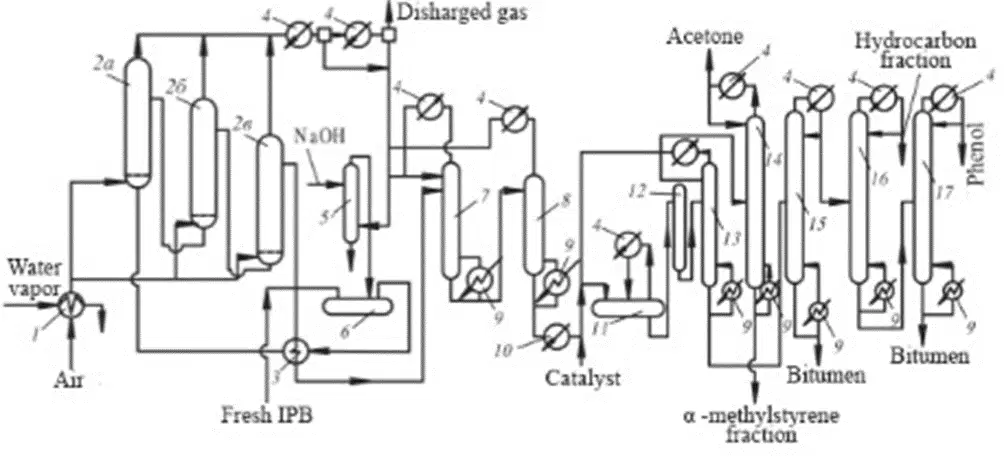
What catalyst is used in decomposition reactor in the following scheme?
50% solution of sulfuric acid in acetone
50% solution of boric acid in acetone
60% solution of sulfuric acid in acetone
60% solution of boric acid in acetone
50% solution of sulfuric acid in butanone
What catalyst is used in the process of oxidation of ethylene to ethylene oxide?
silver
cobalt
palladium
arsenium
molybdenium
What compounds inhibit the hydroformylation reaction by binding Co to sulfates?
Sulfur
Carbon monoxide
Carbon dioxide
Water
Ammonia
What is a disadvantage of reactors with internal heat removal?
They are complex to design and manufacture
They increase yield of by-products
They cannot be used for exothermic reactions
They are not suitable for large-scale production
They produce lower quality products
What is cobaltization in hydroformilation?
obtaining carbonyls of cobalt from metallic cobalt or from its salts
the reaction of an olefin with CO and H2 in the presence of cobalt carbonyls
decomposition of cobalt carbonyls and its isolation from hydroformylation products
hydrogenation of aldehydes into the corresponding alcohols
the isolation of aldehydes and alcohols
What is false from the following states?
The hydroformylation reaction is endothermic
The hydroformylation reaction releases the energy
The reaction rate is proportional to the olefin concentration
The reaction rate depends on the structure of the olefin
The reaction rate is proportional to the catalyst and the temperature
What is mostly used as the oxidizing agent in oxidation process?
oxygen and air
nitrogen and air
hydrogen and air
sulfur and air
chlorine and air
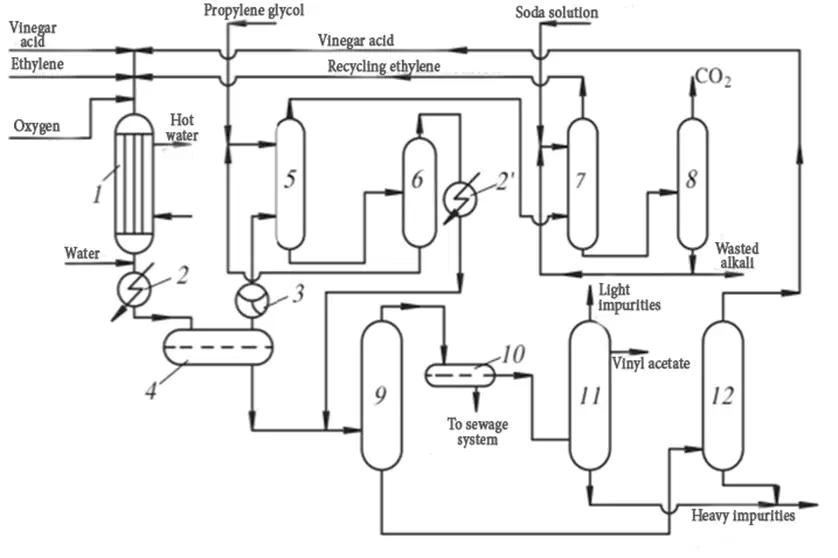
What is the cooling temperature of the reaction products in the refrigerator 2 in following scheme?
0°C
1°C
2°C
3°C
4°C
What is the optimal range of temperature for ethylene oxide production process?
200-300°C
100-200°C
300-400°C
250-350°C
150-250°C
What is the primary advantage of reactors with external heat exchangers for hydroformylation?
They increase the yield of by-products
They are expensive to operate
No correct answer
They reduce by-product formation
They are not more suitable for large-scale production

What kind of impurities form a salt with HCo(CO)4, which is inactive in the hydroformylation reaction in the reaction
Ammonia
Sulfur
Carbon monoxide
Carbon dioxide
Water
What method from below is not used for production of gigher fatty alcohols?
direct oxidation of saturated hydrocarbons C1-C2 with molecular oxygen
hydrogenation of whale oil
hydrogenation of SFA and their methyl and butyl ethers
separation from the second unsaponifiable production of SFA
preparation of alcohols C6-C20 with an even number of carbon atoms by oligomerization of ethylene in the presence of triethylaluminum and subsequent oxidation
What methods are used to produce a lot of low-molecular acids?
liquid-phase oxidation of n-butane and n-paraffins C5-C8
liquid-phase oxidation of acetaldehyde
liquid-phase carbonylation of methanol
all answers are correct
gas-phase oxidation of ethanol and enzymatic processes
What methods from the list below is not related to propylene oxide production?
electrochemical method
hydrofluorine method
the epoxidation method of propylene over acids or H2O2
oxidation of propylene with molecular oxygen
oxidation of propylene with hydrocarbon peroxides
What ordinary material is used for reactors are made in hydroformylation?
carbon steel
nickel steel
chromium steel
zinc alloy
copper alloy
What particularly often used catalyst in gas-phase oxidation which produces anhydrides?
vanadium-potassium sulfate-silica gel catalyst
cobalt-nickel silicate catalyst
cobalt carbonyl catalyst
palladium chloride catalyst
silver-aluminium oxide catalyst
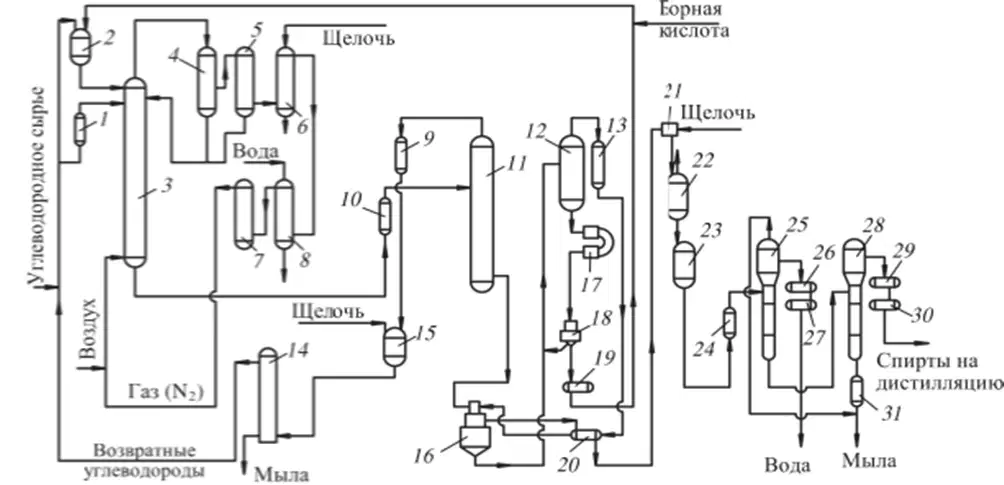
What process is carried out in the equipment 16?
hydrolysis of borate esters
oxidation of liquid paraffins in the presence of H3BO3
saponification and distillation of secondary alcohols
regeneration of boric acid
no correct answer
What temperature is required to complete the reaction: CH3OH + 0.5O2 → HCHO + H2O?
600°C
500°C
400°C
700°C
800°C
What type of coolant is typically used in reactors with external heat exchangers for hydroformylation?
Air
Mineral oil
Demineralized water
Reaction product
Solvent
What type of oxidation process is the gas-phase oxidation of anhydride production?
destructive oxidation
non-destructive oxidation
oxidative condensation
rectification
single evaporation
What type of oxidation process is the liquid-phase oxidation of hydroperoxide production?
oxidative condensation
non-destructive oxidation
destructive oxidation
rectification
single evaporation
When was the reaction of hydroformylation (oxosynthesis) discovered?
1938
1945
1952
1960
1970

