
 Worksheets
A. Building Science
Total questions: 180
Worksheet time: 2hrs 30mins
Which of the following must building scientists, engineers, builders, and architects understand to offer solutions?
Light, Sound, and Electricity
Heat, Air, and Moisture
Pressure, Volume, and Temperature
Gravity, Magnetism, and Friction
What is the primary focus of building science according to the text?
Understanding the aesthetics of buildings
Understanding the mechanics and physics of heat, air, and moisture
Understanding the financial aspects of construction
Understanding the legal regulations of building
Why is it important for building professionals to understand heat, air, and moisture?
To improve the visual appeal of buildings
To ensure the safety and comfort of building occupants
To reduce the cost of construction materials
To comply with government regulations
Which of the following is NOT one of the five systems that building science deals with?
Outdoor environment
Indoor environment
Building enclosure
Electrical systems
Building science primarily deals with the interaction of how many systems?
3
4
5
6
Which of the following is included in the five systems that building science deals with?
Transportation systems
Mechanical systems
Communication systems
Financial systems
How did the art of building design evolve over thousands of years?
Through a process of "trial and error"
Through immediate innovation
Through a single breakthrough
Through copying ancient designs
What has led to the rapid evolution of new building materials and architectural designs?
Thorough understanding of material interactions
Lack of new materials
Rapid technological advancements
Application without thorough understanding
Why has there been a need to predict the performance of various materials and designs?
To reduce costs
To ensure aesthetic appeal
To accurately predict performance in different climates
To follow traditional methods
What field arose from the need to predict the performance of building materials and designs?
Civil Engineering
Building Science
Architecture
Environmental Science
How can Building Science be defined?
The study of the inter-relationship of the systems, components, and materials that make up our buildings and how they interact.
The study of the design and aesthetics of buildings.
The study of the history of architecture.
The study of the economic impact of construction.
What are the ideal comfortable conditions for all occupants all the time?
air temperature of 22 C
RH during heating season of 30%
a comfortable radiant field
lack of unpleasant drafts
adequate supply of fresh air
Which of the following statements is true about thermal radiation?
Only bodies at absolute zero radiate thermal radiation.
Only bodies warmer than zero Kelvin radiate thermal radiation.
All bodies radiate thermal radiation regardless of temperature.
Thermal radiation is not present in the environment.
What does radiant energy cover?
A narrow range of wavelengths.
Only visible light wavelengths.
A wide range of wavelengths.
Only ultraviolet wavelengths.
What are the two factors that the wavelength and rate of radiation depend on?
The color of the surface and the temperature of the surface.
The nature of the material forming the surface and the temperature of the surface.
The size of the surface and the temperature of the surface.
The shape of the surface and the temperature of the surface.
What is a material called if it radiates at the maximum value for every wavelength at a given temperature?
White Body
Grey Body
Black Body
Transparent Body
What happens to the energy emitted by a black body as the temperature increases?
The energy decreases
The energy remains the same
The energy increases
The energy fluctuates
What is the relationship between wavelength and energy for a black body?
Longer wavelength -> higher energy
Shorter wavelength -> higher energy
Wavelength does not affect energy
Wavelength and energy are inversely proportional
What does the Stefan-Boltzmann equation calculate?
The total energy emission rate by radiation per unit surface area over all wavelengths from a black body at a temperature T in Kelvin
The total energy absorption rate by radiation per unit surface area over all wavelengths from a black body at a temperature T in Kelvin
The total energy emission rate by conduction per unit surface area over all wavelengths from a black body at a temperature T in Kelvin
The total energy absorption rate by conduction per unit surface area over all wavelengths from a black body at a temperature T in Kelvin
What is the value of the Stefan-Boltzmann constant (σ)?
5.670 x 10^-6 (W/m²·K⁴)
5.670 x 10^-8 (W/m²·K⁴)
5.670 x 10^-10 (W/m²·K⁴)
5.670 x 10^-12 (W/m²·K⁴)
In the Stefan-Boltzmann equation, what does T represent?
Time (seconds)
Temperature (Kelvin)
Thermal conductivity
Total energy
The Stefan-Boltzmann equation applies only to the energy emitted by which type of bodies?
White Bodies
Grey Bodies
Black Bodies
Transparent Bodies
What is the formula for the Stefan-Boltzmann equation?
W_b = σ T^2
W_b = σ T^3
W_b = σ T^4
W_b = σ T^5
Which of the following statements is true about an ideal "Black Body"?
It can emit radiation at a fraction of the maximum black body rate.
It can emit radiation at the maximum rate at each wavelength for a given temperature.
It cannot emit radiation.
It emits radiation only at a single wavelength.
What does the term "emittance" or "emissivity" (ε) of a material indicate?
The ability of a material to absorb radiation.
The fraction of the maximum black body rate at which a material can emit radiation.
The temperature of the material.
The wavelength of the emitted radiation.
What is the Stefan-Boltzmann equation for a material with emittance or emissivity (ε)?
W = εσT²
W = εσT³
W = εσT⁴
W = εσT
What is the range of values for emittance or emissivity (ε)?
0 <= ε <= 2
0 <= ε <= 1
0 <= ε <= 0.5
0 <= ε <= 10
Which surface has the highest absorptivity for solar radiation?
Small hole in an enclosure
Black, nonmetallic surfaces
Red brick and tile, stone and concrete, rusted iron and dark paints
Highly polished tin, aluminum, nickel, chrome
What is the fraction of blackbody radiation at 10 to 38°C for bright aluminum paint?
0.97-0.99
0.90-0.98
0.40-0.60
0.02-0.05
Which surface has the lowest absorptivity for solar radiation?
Polished brass, copper
Dull brass, copper, aluminum, polished iron
Yellow and buff building materials
White or light cream surfaces
What is the absorptivity for solar radiation for white or light cream surfaces?
0.97-0.99
0.85-0.98
0.30-0.50
0.10-0.40
Which surface has a fraction of blackbody radiation at 540°C between 0.75-0.90?
Black, nonmetallic surfaces
Red brick and tile, stone and concrete, rusted iron and dark paints
Yellow and buff building materials
Glass
What is the average emissivity (ε) value used for "rusted iron" in the given example?
0.75
0.90
0.825
0.80
What is the surface temperature of the rusted iron wood stove in the example?
540°C
273°C
813°C
600°C
What is the formula used to calculate the radiant energy emitted by the surface of the rusted iron wood stove?
W = ε σ T^4
W = ε σ T^2
W = ε σ T^3
W = ε σ T
What is the value of the Stefan-Boltzmann constant (σ) used in the calculation?
5.67x10^-8
5.67x10^-7
5.67x10^-6
5.67x10^-9
What is the final calculated radiant energy emitted by the surface of the rusted iron wood stove?
20,436 W/m²
18,000 W/m²
22,000 W/m²
19,500 W/m²
What is the average emissivity (ε) value used for "rusted iron" in the given example?
0.85
0.90
0.95
0.80
What is the formula used to calculate the radiant energy emitted by the surface of the rusted iron wood stove?
W = ε σ T^2
W = ε σ T^3
W = ε σ T^4
W = ε σ T
What is the surface temperature of the rusted iron wood stove in the example?
10°C
38°C
100°C
540°C
What is the calculated radiant energy emitted by the surface of the rusted iron wood stove?
987.8 W/m²
900.0 W/m²
1000.0 W/m²
950.0 W/m²
What is the surface temperature of the polished iron wood stove mentioned in the example?
540°C
500°C
600°C
580°C
What is the average emissivity (ε) value used for polished iron in the example?
0.30
0.40
0.50
0.60
What is the formula used to calculate the radiant energy emitted by the surface of the polished iron wood stove?
W = ε σ T^2
W = ε σ T^3
W = ε σ T^4
W = ε σ T^5
What is the value of the Stefan-Boltzmann constant (σ) used in the example?
5.67 x 10^-7
5.67 x 10^-8
5.67 x 10^-9
5.67 x 10^-10
What is the calculated radiant energy emitted by the surface of the polished iron wood stove in the example?
8,908 W/m²
9,008 W/m²
9,908 W/m²
10,908 W/m²
What is the surface temperature of the rusted iron wood stove mentioned in the example?
50°C
100°C
150°C
200°C
What is the total surface area of the rusted iron wood stove in the example?
1.5m²
2.0m²
2.5m²
3.0m²
What is the average emissivity (ε) value used for rusted iron in the example?
0.85
0.90
0.95
1.00
What is the formula used to calculate the radiant energy emitted by the surface of the rusted iron wood stove?
W = ε σ T²
W = ε σ T³
W = ε σ T⁴
W = ε σ T⁵
What is the value of the Stefan-Boltzmann constant (σ) used in the example?
5.67 x 10⁻⁶
5.67 x 10⁻⁷
5.67 x 10⁻⁸
5.67 x 10⁻⁹
What is the total radiant energy emitted by the surface of the rusted iron wood stove in the example?
987.8 W
1234.5 W
2469.5 W
3456.7 W
What happens to the radiation emitted by one body when it strikes a black body?
It is partially absorbed
It is completely absorbed
It is reflected
It is transmitted
For non-black body materials, which of the following can happen to the radiation?
It can be reflected, absorbed, or transmitted
It can only be absorbed
It can only be reflected
It can only be transmitted
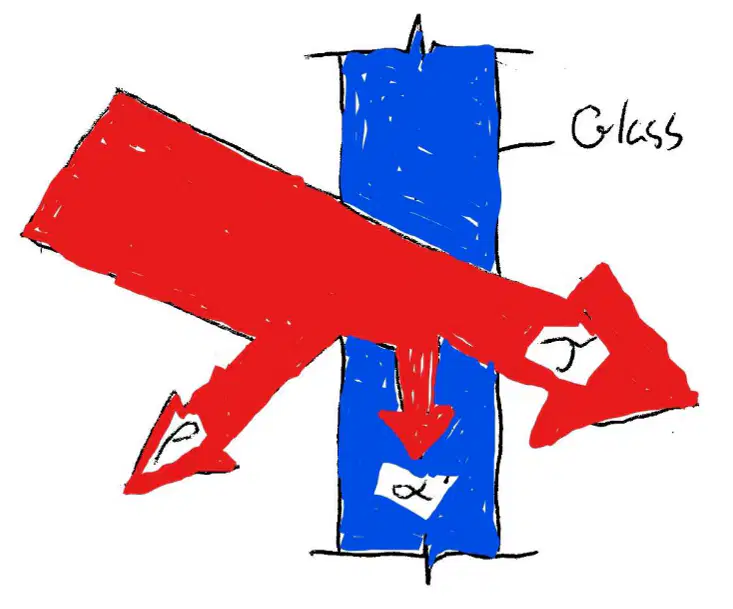
What is the equation representing the fractions of total radiation striking a body?
α + τ + ρ = 1
α + τ + ρ = 0
α + τ + ρ = 2
α + τ + ρ = -1
The actual value of ρ, τ, and α depends on which of the following factors?
The temperature of the material
The wavelength of the radiation and the nature of the material
The color of the material
The density of the material
What percentage of solar radiation do red brick, tile, stone, concrete, rusted iron, and dark paint absorb?
30% to 50%
50% to 65%
65% to 80%
85% to 95%
What is the range of radiation absorption for white surfaces?
10% to 20%
20% to 30%
30% to 50%
50% to 70%
According to Krichoff’s Law, at a given temperature, which two properties of a material are the same?
Reflectance and transmittance
Emittance and absorptance
Conductance and resistance
Reflectance and absorptance
What is the primary objective of minimizing the mass of an aircraft?
To increase the speed of the aircraft
To eliminate the need for air-conditioning equipment
To reduce fuel consumption
To improve passenger comfort
Why is the top of the aircraft painted white?
To improve the aesthetic appearance
To minimize absorption of solar heat
To increase the aircraft's speed
To reduce the weight of the aircraft
What is the effect of solar radiation on the underside of the aircraft, which is made of highly polished aluminum?
It absorbs most of the solar radiation
It reflects most of the solar radiation
It increases the aircraft's weight
It decreases the aircraft's speed
Which surface has the highest absorptivity for solar radiation?
Small hole in an enclosure
Black, nonmetallic surfaces
Red brick and tile, stone and concrete, rusted iron and dark paints
Highly polished tin, aluminum, nickel, chrome
What is the fraction of blackbody radiation at 10 to 38°C for polished brass, copper?
0.02-0.05
0.20-0.30
0.85-0.95
0.90-0.98
Which surface has a fraction of blackbody radiation at 540°C between 0.75-0.90?
White or light cream surfaces
Red brick and tile, stone and concrete, rusted iron and dark paints
Bright aluminum paint
Dull brass, copper, aluminum, polished iron
What is the absorptivity for solar radiation for white or light cream surfaces?
0.30-0.50
0.50-0.70
0.65-0.80
0.85-0.98
Which surface has a fraction of blackbody radiation at 10 to 38°C of 0.40-0.60?
Glass
Bright aluminum paint
Yellow and buff building materials
Highly polished tin, aluminum, nickel, chrome
How much radiant energy is emitted by a yellow brick wall with an area of 10m² at 50ºC?
5,554 W
4,998.9 W
6,000 W
5,000 W
How much of the radiant energy given off by the yellow brick wall is absorbed by a parallel 10m² red brick wall close to it?
5,554 W
4,998.9 W
6,000 W
5,000 W
What is heat?
A) A type of matter
B) A form of energy
C) A chemical reaction
D) A state of matter
In which states of matter is kinetic energy present?
A) Solid only
B) Liquid only
C) Gas only
D) Solid, liquid, and gas
What happens to the atoms and molecules of a matter when its temperature increases?
A) They move slower
B) They move faster
C) They stop moving
D) They change state
What is the formula for kinetic energy?
A) E_k = m v
B) E_k = 1/2 m v
C) E_k = 1/2 m v^2
D) E_k = m v^2
Which types of motion are possible for gases?
Translation, vibration, rotation
Vibration, rotation
Vibration
Translation, rotation
How many collisions per second occur between gas molecules?
6 Million
6 Billion
6 Trillion
6 Thousand
Which types of motion are possible for liquids?
Translation, vibration, rotation
Vibration, rotation
Vibration
Translation, rotation
Which type of motion is possible for solids?
Translation
Vibration
Rotation
Translation, rotation
From which temperature to which temperature does the transfer of energy occur?
From lower temperature (slower moving) atoms and molecules to higher temperature (faster moving) atoms and molecules
From higher temperature (faster moving) atoms and molecules to lower temperature (slower moving) atoms and molecules
From equal temperature atoms and molecules to equal temperature atoms and molecules
From lower temperature (faster moving) atoms and molecules to higher temperature (slower moving) atoms and molecules
What does the 1st law of Thermodynamics state?
Energy can not be created or destroyed
Energy can be created and destroyed
Energy can only be created
Energy can only be destroyed
According to the 2nd law of Thermodynamics, all systems in the universe tend towards a state of:
Maximum Entropy and Minimum Enthalpy
Minimum Entropy and Maximum Enthalpy
Maximum Entropy and Maximum Enthalpy
Minimum Entropy and Minimum Enthalpy
Which of the following correctly ranks the states of matter in terms of density or molecular packing?
Gases > Liquids > Solids
Solids > Liquids > Gases
Liquids > Solids > Gases
Gases > Solids > Liquids
In terms of heat transfer efficiency, which of the following is the correct ranking?
Gases > Liquids > Solids
Solids > Liquids > Gases
Liquids > Solids > Gases
Gases > Solids > Liquids
Why are gases considered poor conductors of heat?
Because the molecules are closely packed.
Because the molecules are placed so far apart.
Because the molecules are in a fixed position.
Because the molecules are highly energetic.

Which material has the highest thermal conductivity (k) in the given image?
Wood handles
Stainless steel body
Thick copper bottom
Plastic handles
What is the coefficient of thermal conductivity (k) defined as?
The heat flow rate in Watts through a 1m cube of material with a 1 K temperature difference across two opposite faces
The heat flow rate in Joules through a 1m cube of material with a 1 K temperature difference across two opposite faces
The heat flow rate in Watts through a 1m cube of material with a 1 °C temperature difference across two opposite faces
The heat flow rate in Joules through a 1m cube of material with a 1 °C temperature difference across two opposite faces
What is the unit of the coefficient of thermal conductivity (k)?
Watts/meter · Kelvin
Joules/meter · Kelvin
Watts/meter · Celsius
Joules/meter · Celsius
What is the temperature difference (ΔT) used in the definition of the coefficient of thermal conductivity?
1 K
1 °C
2 K
2 °C
What is the correct way to denote temperature in Kelvin?
K
ºK
C
ºC
What is the freezing point of water in Celsius?
0ºC
100ºC
-273ºC
273ºC
What is the boiling point of water in Celsius?
100ºC
0ºC
273ºC
373ºC
In scientific terms, how is the temperature difference between things indicated?
Kelvin
Celsius
Fahrenheit
Rankine
What is the SI unit for heat energy or work?
Watt (W)
Newton (N)
Joule (J)
Meter (m)
How much work is done by exerting a force of 1 Newton (N) through a distance of 1 meter (m)?
1 Joule
1 Watt
1 Newton
1 Meter
What is the rate at which heat transfer occurs (or work is done) measured in?
Joules (J)
Newtons (N)
Meters (m)
Watts (W)
What is the relationship between Watts and Joules per second?
1 Watt = 1 Joule / minute
1 Watt = 1 Joule / second
1 Watt = 1 Newton / second
1 Watt = 1 Meter / second
What does the variable 'q' represent in Fourier's Law for one-dimensional heat flow at steady-state conditions?
Area perpendicular to heat flow path
Coefficient of thermal conductivity
Rate of heat flow
Flow path length
In Fourier's Law, what is the unit of the coefficient of thermal conductivity 'k'?
Watts
Meters
Kelvin
Watts per meter-Kelvin
In the equation q = A (k/l) (t1 - t2), what does 'A' stand for?
Rate of heat flow
Area perpendicular to heat flow path
Coefficient of thermal conductivity
Temperature difference across the flow path
What does the term t1 - t2 represent in Fourier's Law?
Flow path length
Coefficient of thermal conductivity
Temperature difference across the flow path
Area perpendicular to heat flow path
In Fourier's Law, what is the unit of the rate of heat flow 'q'?
Watts
Meters
Kelvin
Square meters
What is the formula for the coefficient of thermal conductivity (k) in terms of q, l, A, t1, and t2?
k = (q*l) / (A*(t1 - t2))
k = (A*(t1 - t2)) / (q*l)
k = (q*A) / (l*(t1 - t2))
k = (l*(t1 - t2)) / (q*A)
What does the variable 'k' represent in the context of thermal conductivity?
Thermal resistance
Coefficient of thermal conductance
Coefficient of thermal conductivity for uniform materials per 1m thickness
Heat transfer rate
What is the formula for the coefficient of thermal conductance (c) in terms of k and l?
c = k*l
c = k/l
c = l/k
c = 1/(k*l)
What is the relationship between thermal resistance (R) and thermal conductance (c)?
R = c
R = 1/c
R = c^2
R = 1/(c^2)
What is the formula for thermal resistance (R) in terms of l and k?
R = l*k
R = k/l
R = l/k
R = 1/(l*k)
What is the formula for heat transfer rate (q) in terms of A, R, t1, and t2?
q = (A*R)*(t1 - t2)
q = (A/R)*(t1 - t2)
q = (R/A)*(t1 - t2)
q = (A*(t1 - t2))/R
What is the formula used to calculate the rate of heat flow (q) through a material?
(A/R)(t₁ - t₂)
(A/k)(t₁ - t₂)
(A/R)(t₂ - t₁)
(A/k)(t₂ - t₁)
What is the formula used to calculate the rate of heat flow (q) through a material?
(A/R)(t1 - t2)
(A/k)(t1 - t2)
(A/R)(t2 - t1)
(A/k)(t2 - t1)
What is the first step in dealing with assemblies of several materials, such as in walls?
Set up a Heat Loss Chart
Enter the known values into a table
Draw a vertical cross-section of the assembly
Calculate the RSI value
What should be set up with one row for each material/layer in the assembly?
Temperature Profile
Heat Loss Chart
RSI Table
R-total Calculation
How is the R-total calculated?
R-total = R1 * R2 * ... * Rn
R-total = R1 + R2 + ... + Rn
R-total = R1 / R2 / ... / Rn
R-total = R1 - R2 - ... - Rn
What is heat described as in the provided text?
A form of matter
A type of light
Energy
A type of sound
According to the text, in which direction does heat always flow?
From a lower temperature to a higher temperature
From a higher temperature to a lower temperature
From a solid to a liquid
From a liquid to a gas
In which direction does heat flow until a balance is achieved?
In multiple directions
In one direction
In a circular motion
In a random pattern
What happens to heat flow when both matter, substance, or space reach the same temperature?
Heat flow increases
Heat flow decreases
Heat flow stops
Heat flow reverses
In winter, where does heat move constantly from and to?
From the cold outdoors to inside the building
From inside the building to the cold outdoors
From the roof to the basement
From the windows to the walls
What must be equal to maintain a constant indoor temperature?
The rate of heat loss and the rate of heat added
The rate of heat loss and the rate of heat removed
The rate of heat added and the rate of heat removed
The rate of heat added and the rate of heat transferred
What does a building provide an ongoing demonstration of?
The principles of heat transfer
The principles of light reflection
The principles of sound absorption
The principles of electrical conductivity
What is the main difference in annual heat loss between a conventional house and an energy-efficient house?
An energy-efficient house has higher internal heat gains.
A conventional house has lower internal heat gains.
An energy-efficient house requires less heat supplied by the heating system.
A conventional house requires less heat supplied by the heating system.
Which method of heat transfer involves the transfer of heat through a solid, still air, or still liquid?
Convection
Radiation
Conduction
Latent Heat
Which method of heat transfer occurs by moving fluid, such as gas or liquid?
Conduction
Convection
Radiation
Latent Heat
Which method of heat transfer involves electromagnetic radiation?
Conduction
Convection
Radiation
Latent Heat
Which method of heat transfer occurs by means of phase change, such as gas to liquid (condensation)?
Conduction
Convection
Radiation
Latent Heat
What is conduction?
A) Heat transfer through solids, still liquids, or still gases due to a temperature difference.
B) Heat transfer through moving liquids or gases due to a temperature difference.
C) Heat transfer through radiation.
D) Heat transfer through convection.
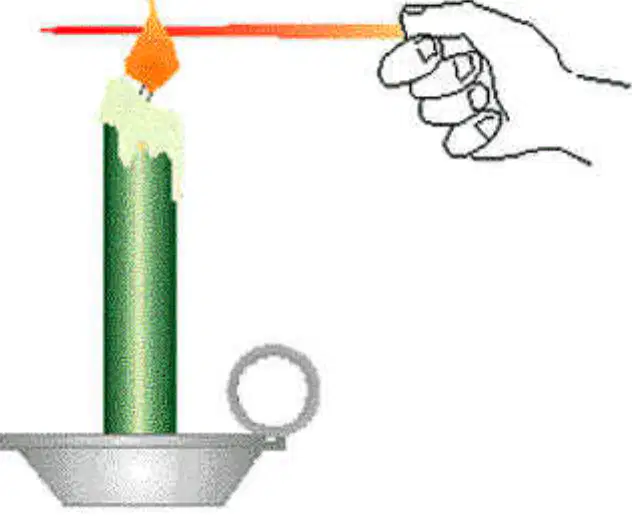
What type of heat transfer is illustrated in the diagram?
Conduction
Convection
Radiation
Evaporation
Which material has the highest RSI value?
Fibreglass Batt
Wood
Concrete
None of the above
What does "R" refer to in the context of thermal resistance?
The thermal resistance of a material in the metric system
The thermal resistance of a material in the imperial system
The thermal conductivity of a material in the metric system
The thermal conductivity of a material in the imperial system
What is the metric equivalent of "R" in units of thermal resistance?
R-value
RSI
K/W
m² K/W
In which unit system do Canadians always calculate thermal resistance?
Imperial system
Metric system
Both imperial and metric systems
Neither imperial nor metric systems
What is the conversion factor from R to RSI?
4.678
5.678
6.678
7.678
What is convection?
The process by which heat is carried by a moving liquid or gas.
The process by which heat is transferred through direct contact.
The process by which heat is transferred through electromagnetic waves.
The process by which heat is transferred through a solid material.
What happens to the hotter and less dense fluid during convection?
It sinks.
It rises.
It remains stationary.
It evaporates.
What happens to the cooler and heavier fluid during convection?
It rises.
It sinks.
It remains stationary.
It evaporates.
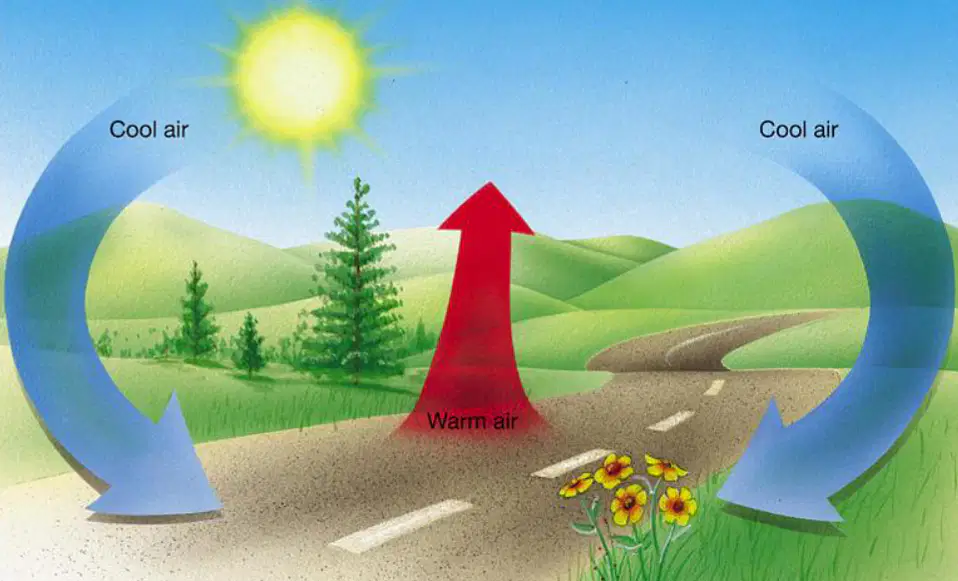
What is the process depicted in the image?
Conduction
Radiation
Convection
Evaporation
What does the rising heated air in a chimney establish?
A downward current
A strong upward current or draft
A circular motion
A vacuum
How do convection currents occur in empty uninsulated wall cavities?
Through radiation from the exterior wall
By conduction through the plaster or drywall
By direct contact with the exterior wall
Through the use of insulation materials
What happens to the air inside the cavity next to the wall when it is heated?
It travels down to the bottom
It remains stationary
It travels up to the top
It escapes through the wall
What causes the air inside the cavity to lose its heat?
Conduction to the exterior wall
Radiation from the exterior wall
Convection currents within the cavity
Insulation materials
What is the next step after the air inside the cavity loses its heat?
It escapes through the wall
It sinks to start again
It remains at the top
It travels to the interior wall
What is latent heat?
Heat transfer that does not produce phase changes
Heat transfer that produces phase changes
Heat transfer that only occurs in solids
Heat transfer that only occurs in gases
Which of the following is an example of latent heat?
Heating a metal rod
Melting ice to water
Cooling a room with an air conditioner
Heating water without boiling
Which of the following is an example of a phase change involving latent heat?
Heating a metal rod
Boiling water to steam
Cooling a room with an air conditioner
Heating water without boiling
What is the formula for the rate of heat flow (q) in one-dimensional heat flow at steady-state conditions?
q = A k/l (t1 - t2)
q = A l/k (t1 - t2)
q = A k l (t1 - t2)
q = A k/l (t2 - t1)
What is the unit of the coefficient of thermal conductivity (k)?
Watts
(m²·K)/W
w/m·K
Kelvin
What does the term (t1 - t2) represent in the formula for rate of heat flow?
Flow path length
Temperature difference across the flow path
Coefficient of thermal conductivity
Area perpendicular to heat flow path
What is the formula for thermal resistance (R)?
R = 1/c = l/k
R = c = l/k
R = 1/c = k/l
R = c = k/l
What is the formula used to calculate the heat flow per square meter of Wall A?
A/R (t1 - t2)
A*R (t1 - t2)
A/R (t2 - t1)
A*R (t2 - t1)
What is the formula for the instantaneous heat flow rate according to Fourier's Law?
q = A/R (t1 - t2)
Q = q x time
Q = A/R (t1 - t2) x time
$ = Q x (electricity cost in $/kilo-Watt hour)
In what units is the total heat flow over time most commonly measured?
Joules
kilo-Watt hours
Calories
BTUs
What is the formula to calculate the heating cost ($)?
q = A/R (t1 - t2)
Q = q x time
Q = A/R (t1 - t2) x time
$ = Q x (electricity cost in $/kilo-Watt hour)
What is the formula for calculating total heat loss over time?
Q = q x time
Q = A/R (t1 - t2) x Time
Q = A x R (t1 - t2) x Time
Q = A/R (t1 + t2) x Time
What is the formula for Annual Heat Loss?
Q = (A/R) (Degree Days)
Q = (R/A) (Degree Days)
Q = (A*R) (Degree Days)
Q = (A/R) (Days)
How do you convert Watt-Days to KWh?
(W·Days) x (24h/day) / 1000
(W·Days) x (1000) / 24h/day
(W·Days) / (24h/day) x 1000
(W·Days) x (24h/day) x 1000
Which method is used to calculate R-total for an assembly of several materials?
The graphical method
The tabular method
The numerical method
The analytical method
What law is used to calculate one-dimensional steady-state heat flow through one material?
Newton's Law
Fourier's Law
Ohm's Law
Hooke's Law
What should you be able to calculate using Fourier’s Law and the tabular method?
Heat flow through a single material
Heat flow through an assembly of many materials
Heat flow through a liquid
Heat flow through a gas
What are the four principal control layers needed for a wall assembly to function as an environmental separator?
Rain control layer, air control layer, vapor control layer, thermal control layer
Water control layer, air control layer, sound control layer, thermal control layer
Rain control layer, air control layer, sound control layer, thermal control layer
Water control layer, air control layer, vapor control layer, sound control layer
Where is the best place to locate the control layers in a structure?
Inside the structure
Outside the structure
Between the layers of the structure
Under the foundation of the structure
What is the main function of the cladding in the perfect wall concept?
To act as a thermal insulator
To act as an ultraviolet screen
To provide structural support
To control air flow
Why did rocks lose their appeal as a building material?
They were too expensive
They were too heavy and fell down a lot
They were not aesthetically pleasing
They were difficult to source
What is the purpose of the air control layer in a wall assembly?
To keep air out of the structure
To keep air in the structure
To control the temperature inside the structure
To prevent water from entering the structure
What is the "perfect roof" sometimes referred to as?
Inverted roof
Slanted roof
Flat roof
Curved roof
What is the function of the stone layer in the perfect slab?
Acts as a capillary break and a ground water control layer
Provides thermal insulation
Serves as a decorative element
Acts as a sound barrier
According to the text, why are the most critical control layers on roofs placed at the very top?
To protect from water, heat, and ultraviolet radiation
To enhance the aesthetic appeal
To reduce construction costs
To improve structural stability
What is the main reason for the classic roof-wall intersection problem?
The control layer for rain on the wall is connected to the control layer for air on the roof
The control layer for rain on the roof is connected to the control layer for rain on the wall
The control layer for air on the wall is connected to the control layer for rain on the roof
The control layer for air on the roof is connected to the control layer for air on the wall
What does the text suggest about the physics of walls, roofs, and slabs?
They are conceptually the same
They are completely different
They have no relation to each other
They are only similar in appearance
What is the "500-year wall" referred to in the text?
A wall that can last for 500 years and represents 500 years of evolution.
A wall that can last for 100 years and represents 100 years of evolution.
A wall that can last for 50 years and represents 50 years of evolution.
A wall that can last for 10 years and represents 10 years of evolution.
What type of wall is used for special buildings like museums and libraries?
Residential wall
Commercial wall
Institutional wall
Structural wall
What is the main advice given regarding the level of thermal insulation for the institutional wall?
Use the minimum amount of thermal insulation.
Double the amount of thermal insulation you think is right.
Use no thermal insulation.
Use the same amount of thermal insulation as for residential walls.
What type of wall is referred to as the "meat and potatoes" wall for commercial buildings?
Institutional wall
Residential wall
Structural wall
Commercial wall
What is the characteristic of the commercial wall mentioned in the text?
It has a non-conductive structure.
It has a conductive structure with metal studs.
It has no insulation.
It is made of wood.
What is the insulation strategy for the residential wall to work almost everywhere?
Insulate only the inside of the structural frame.
Insulate only the outside of the structural frame.
Split the thermal resistance of the insulation on the exterior and within the structural frame.
Use no insulation.
Which wall is described as the best wall that we know how to construct and works everywhere in all climate zones?
The Institutional Wall
The Clever Wall
The Commercial Wall
The Residential Wall
Which wall is noted for being affordable and working everywhere in all climate zones?
The Institutional Wall
The Clever Wall
The Commercial Wall
The Residential Wall
Which wall combines four principal control layers into one material?
The Institutional Wall
The Clever Wall
The Commercial Wall
The Residential Wall
Which wall is described as the best residential wall we know how to construct, but is not cheap and works almost everywhere except in extreme cold climates?
The Institutional Wall
The Clever Wall
The Commercial Wall
The Residential Wall
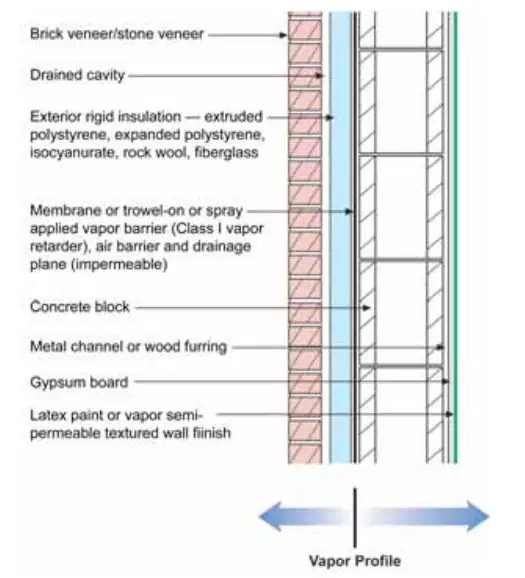
What type of wall is this?
The Institutional Wall
The Clever Wall
The Commercial Wall
The Residential Wall
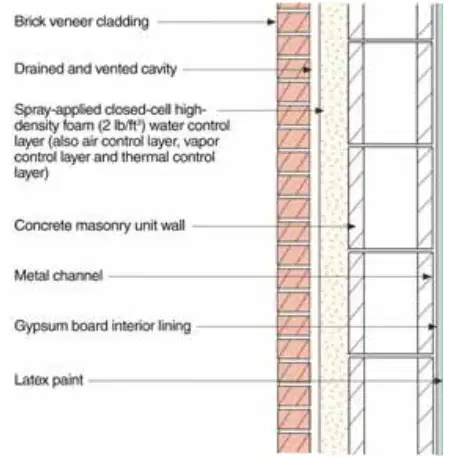
What type of wall is this?
The Institutional Wall
The Clever Wall
The Commercial Wall
The Residential Wall
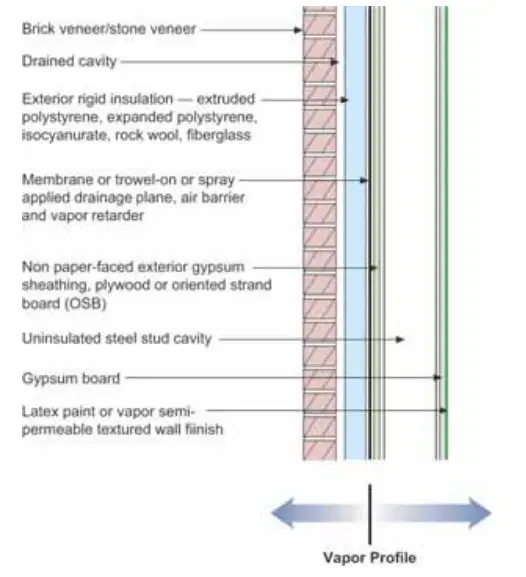
What type of wall is this?
The Institutional Wall
The Clever Wall
The Commercial Wall
The Residential Wall
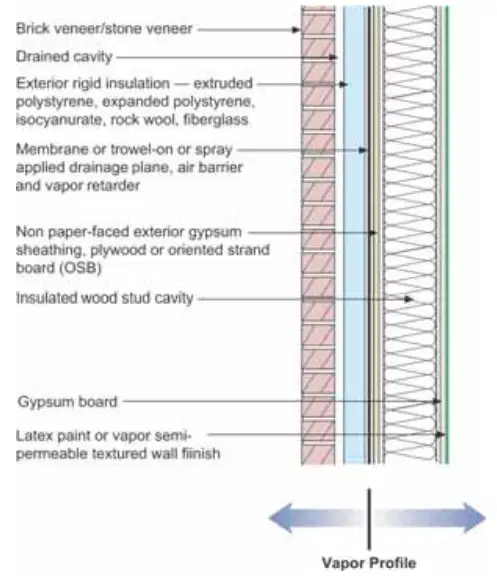
What type of wall is this?
The Institutional Wall
The Clever Wall
The Commercial Wall
The Residential Wall

