
 Worksheets
Sociolinguistics - Lesson 1
Total questions: 15
Worksheet time: 8mins
Sociolinguistics investigates the _____ between language and society, attempting to explain why people speak differently in different social contexts, identify the social functions of language and the ways it is used to convey social meaning.
People indicate aspects of their social identity through the way they talk. Their speech provides clues to others about who they are, where they come from and perhaps what kind of social _____ they have had.
The term '_____' in sociolinguistics refers to variation in speech features according to a range of possible aspects of the social context, including features of the setting and addressee(s).
style
register
accent
genre
A regionally or socially definable human group, all of whose members share at least a single code/variety and a set of norms and rules for its appropriate use. This refers to the term '____' in sociolinguistics.
Speech community
Speech act
Speech variation
Speech identity
Linguistic variation may occur at different levels of linguistic analysis: sounds, word-structure (or _____), and grammar (or syntax), and vocabulary.
Etymology
Philology
Phonology
In sociolinguistics, _____ typically refers to the language variety with distinctive regional or social features of vocabulary and/or grammar, as well as differences in pronunciation.
Dialect
Idiolect
Intellect
Reflect
Verbal/linguistic _____ refer to, in every community, a range of varieties from which people select according to the context in which they are communicating.
repertoires
idiolects
Some social factors relate to the users of language – the participants; others relate to its uses – the social setting and _____ of the interaction.
function
This scale emphasises that how well we know someone is a relevant factor in linguistic choice.
social distance scale
status scale
formality scale
functional scale
This scale points to the relevance of relative status in some linguistic choices.
social distance scale
status scale
formality scale
functional scale
This scale is useful in assessing the influence of the social setting or type of interaction on language choice.
social distance scale
status scale
formality scale
functional scale
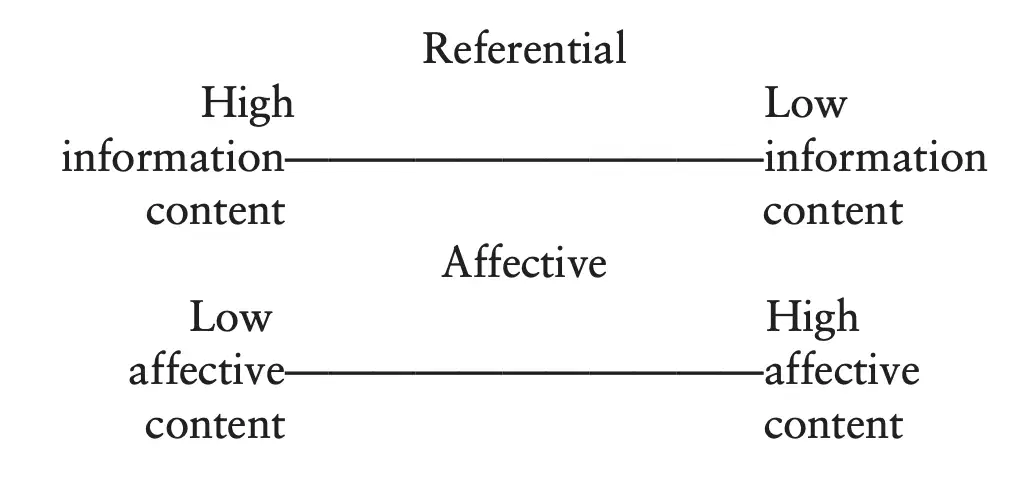
This scale is useful in assessing the influence of the purposes of interactions on language choice.
social distance scale
status scale
formality scale
functional scale
In general, the _____ referentially oriented an interaction is, the less it tends to express the feelings of the speaker.
more
less
most
least
Talks between neighbours over the fence at the weekend about the weather are more likely to be mainly _____ in function
affective
referential
Sociolinguists aim to describe sociolinguistic _____ and, if possible, explain why it happens.
similarity
distraction

