
 Worksheets
6035 Sanitation - Part 3
Total questions: 65
Worksheet time: 33mins
Which of the following is NOT a style of wash basin mentioned in the document?
Wall hung wash basins
Pedestal wash basins
Countertop wash basins
Floor mounted wash basins
How many styles of wash basins are mentioned in the document?
Two
Three
Four
Five
Which style of wash basin is designed to be mounted on the wall?
Pedestal wash basins
Wall hung wash basins
Countertop wash basins
Vessel wash basins
Which style of wash basin typically sits on top of a counter?
Wall hung wash basins
Pedestal wash basins
Countertop wash basins
Vessel wash basins
Which style of wash basin is supported by a column or pedestal?
Wall hung wash basins
Pedestal wash basins
Countertop wash basins
Vessel wash basins
What type of support can a wall hung basin use?
Only supporting brackets
Only being bolted directly to the wall
Supporting brackets or being bolted directly to the wall
Only support legs
What additional support may be required if the basin is heavy?
Extra bolts
Support legs
Additional brackets
Reinforced wall
At what height are all basins installed from the floor?
600mm
700mm
800mm
900mm
What must be maintained between the spill over level of the appliance and the outlet of the tap?
AUK1 air gap
AUK2 air gap
AUK3 air gap
AUK4 air gap
What must be maintained when installing wall hung basins?
The AUK2 air gap
The water pressure
The pipe insulation
The wall paint
What is the purpose of small rubber locators in some brackets for wall hung basins?
To allow slight movement between the appliance and bracket
To increase the water flow
To reduce noise
To prevent water leakage
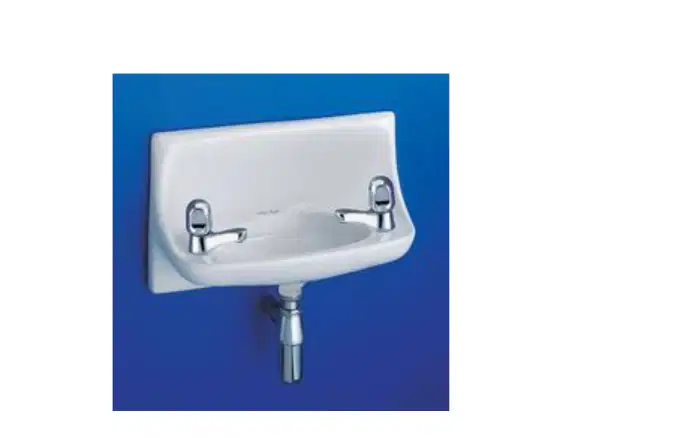
What type of basin is recommended for a smaller property or small toilet where space may be restricted?
Pedestal basin
Wall hung basin
Corner basin
Console basin
Where is a wall hung basin typically installed?
On the floor
In the center of the room
Partly recessed into the wall
On a countertop
What is the main difference between a pedestal basin and a wall-hung basin?
A. A pedestal basin is supported by brackets.
B. A pedestal basin is supported by a pedestal.
C. A wall-hung basin allows the pipework to be discreetly hidden.
D. A wall-hung basin is supported by a pedestal.
What is one advantage of a pedestal basin mentioned in the text?
A. It is easier to install than a wall-hung basin.
B. It allows the pipework to be discreetly hidden.
C. It is more durable than a wall-hung basin.
D. It is cheaper than a wall-hung basin.
Which of the following is NOT mentioned as a type of wash basin in the text?
A. Pedestal basin
B. Wall-hung basin
C. Semi pedestal basin
D. Countertop basin
Which of the following is NOT one of the three main designs of countertop basins?
Countertop
Semi countertop
Under countertop
Wall-mounted
What is the primary function of the unit that supports the countertop basin?
To provide additional storage space
To hide the pipework
To enhance the aesthetic appeal
To increase the height of the basin
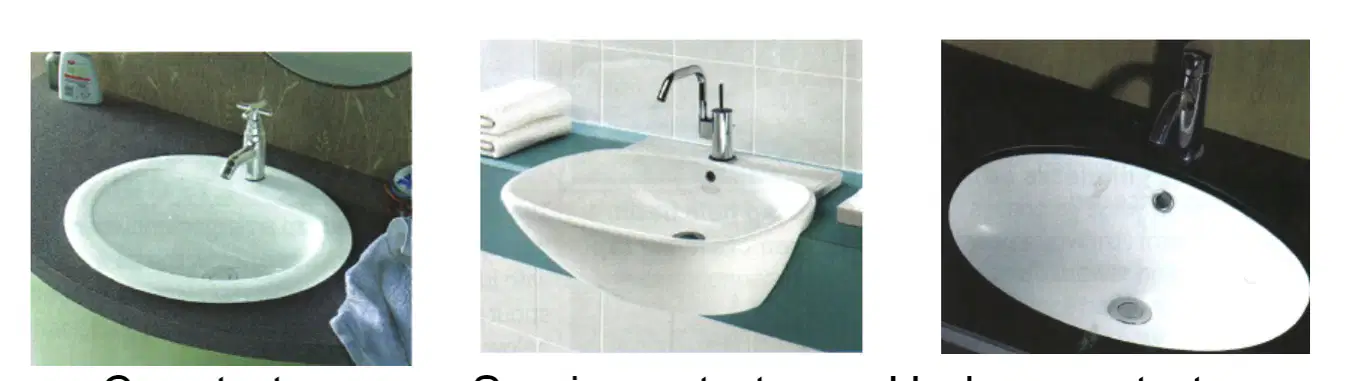
Which type of countertop basin is shown in the middle image?
Countertop
Semi countertop
Under countertop
Wall-mounted
What is another name for the countertop basin?
Semi counter top
Under counter top
Inset basin
Over counter top
Where does a semi counter top basin sit?
Fully recessed into the work surface
Partly recessed into the work surface and unit
Mounted under the work surface
On top of the work surface
What type of material is commonly used for under counter top basins?
Plastic
Wood
Granite or marble
Metal
What is a characteristic feature of a vessel basin?
It is mounted below the work surface.
It is supported on top of the work surface or cabinet.
The pipework is visible.
It is integrated into the countertop.
Where is the pipework of a vessel basin typically hidden?
Within the wall.
Under the floor.
Within the cabinet.
Behind the mirror.
How many types of wash basins are mentioned in the summary?
Two types
Three types
Four types
Five types
What is the required feed size from the hot and cold supply for wash basins?
10mm
15mm
20mm
25mm
What type of waste is sometimes used in wash basins?
Fixed waste
Pop-up waste
Removable waste
Overflow waste
What is the minimum size of the waste for wash basins?
20mm
25mm
32mm
40mm
How are wash basins connected to the soil stack?
Directly
Via a trap and discharge branch
Through a pump
Using a filter
What type of connections do the taps of wash basins have?
1/4" BSP connections
1/2" BSP connections
3/4" BSP connections
1" BSP connections
Which type of wash basin is designed for a monobloc mixer tap?
One-hole basin
Two-hole basin
Three-hole basin
No-hole basin
What type of wash basin has individual hot and cold pillar taps with ½ BSP connections?
One-hole basin
Two-hole basin
Three-hole basin
No-hole basin
In which type of wash basin is the tap body located below the basin and the water mixes on exit?
One-hole basin
Two-hole basin
Three-hole basin
No-hole basin
Which type of wash basin features wall-mounted bib taps with concealed pipework?
One-hole basin
Two-hole basin
Three-hole basin
No-hole basin
What is the first step in the installation of a basin according to the provided material?
Read the manufacturer's instructions
Measure and mark position carefully
Check appliance for defects or damage
Secure in place
Which of the following steps comes after measuring and marking the position carefully during basin installation?
Secure in place
Dress appliance properly
Remove protective cover and clean
Level appliance into position
What should be done after leveling the appliance into position during basin installation?
Measure and mark position carefully
Read the manufacturer's instructions
Secure in place
Check appliance for defects or damage
What is the final step in the basin installation process according to the provided material?
Dress appliance properly
Remove protective cover and clean
Level appliance into position
Check appliance for defects or damage
What should be removed to allow for the fitting of the taps and waste?
All protective wrapping
Only enough protective wrapping
No protective wrapping
Half of the protective wrapping
What size of slotted waste is required for the items mentioned?
1 inch
1½ inch
1¼ inch
2 inch
What should be removed from the fitting during the installation process?
Waste grate
Protective wrapping
Backnut
Sealing kit
What can be used to make a seal on the underside of the waste grate?
Non-setting compound
Setting compound
Glue
Tape
What is an alternative option to using non-setting compound or silicon for sealing?
2 part sealing kit
3 part sealing kit
4 part sealing kit
5 part sealing kit
What should be ensured when putting the waste in the waste hole in the appliance?
The waste hole is completely sealed
The overflow slots line up with the built-in overflow
The waste hole is filled with water
The waste hole is covered with a lid
What should be applied on the underside of the appliance where the waste exits?
A ring of non-setting compound or silicon
A layer of adhesive tape
A coat of paint
A rubber gasket
What size plastic washer should be placed over the compound/silicon?
1 inch
1¼ inch
1½ inch
2 inches
What should be used to tighten the plastic washer in place?
A screwdriver
A wrench
The back nut provided
A hammer
What should be placed on the base of the taps?
A small amount of non-setting compound/silicon or a self-adhesive washer
A rubber gasket
A metal washer
A plastic cover
What tool might be required to tighten the backnut when positioning taps in holes?
Hammer
Screwdriver
Tap spanner
Pliers
When lining up taps, which side should the cold tap be on?
Left
Right
Center
Either side
What should be removed from around taps and waste fitting?
Water
Non-setting compound/silicon
Dirt
Paint
What should be fitted as required after positioning and lining up the taps?
Handle
Plug and chain
Valve
Hose
What is a sink commonly used for?
Cooking food
Washing in a kitchen or utility room
Storing utensils
Drying clothes
At what height are most common sinks installed?
800mm
850mm
900mm
950mm
What do the Water Regulations require between the spillover level of the appliance and the outlet of the tap?
AUK1 air gap
AUK2 air gap
AUK3 air gap
AUK4 air gap
Which of the following is NOT a type of kitchen sink design mentioned in the text?
Single bowl and drainer
Double bowl and double drainer
Triple bowl with single drainer
Bowl-and-a-half with double drainer
What is included in the packaging of kitchen sinks to assist with installation?
A manual
A template
A set of tools
A warranty card
Which material used for kitchen sinks is noted for being easily chipped?
Stainless steel
Granite
Polycarbonate
Vitreous china
Which material used for kitchen sinks requires electrical earth bonding?
Stainless steel
Granite
Polycarbonate
Vitreous china
What material are Belfast sinks made of?
Stainless steel
Fire clay
Porcelain
Granite
Where are Belfast sinks typically installed?
Modern apartments
Office buildings
Period houses
Industrial kitchens
What type of overflow do Belfast sinks have?
Circular overflow
Integral weir type overflow
No overflow
Side overflow
How are taps mounted for Belfast sinks?
Through holes in the sink
Mounted above the appliance or from the work surface
Attached to the side of the sink
Integrated into the sink
What is a key difference between London sinks and Belfast sinks?
London sinks have an overflow.
London sinks can have a plug.
London sinks do not have an overflow.
London sinks are smaller than Belfast sinks.
Why can't London sinks have a plug?
Because they are too small.
Because they do not have an overflow.
Because they are made of different material.
Because they are too deep.

