
Font size
 Worksheets
LIAO (Group-2)
Total questions: 100
Worksheet time: 1hrs 10mins
What do astronauts use to travel to space?
Submarine
Rocket
Helicopter
Motorcycle
What happens to a balloon when it is filled with air and then let go?
It stays still
It flies around
It sinks to the ground
It makes a noise but doesn't move
What is inside a balloon that makes it fly when released?
Water
Gas under pressure
Sand
Food
When a rocket expels gas, what direction does the rocket move?
Down
Up
Sideways
In which direction does the rocket push the gas?
Up
Down
Sideways
Around in circle

Identify the following picture.
Rocket
Space Station
Space Shuttle
What is the first thing the space shuttle detaches after taking off?
Fuel tank
Rocket Booster
Orbiter
Wheel
What is the name of the space vehicle that carried the Apollo 11 astronauts?
Saturn V
Space Shuttle
Rocket Booster
Space Plane
What does PSLV stand for?
Planetary Space Launch Vehicle
Polar Satellite Launch Vehicle
Private Space Launch Vehicle
Public Satellite Launch Vehicle
What is the mission name of the first space shuttle flight?
Columbia STS 1
Columbia STS-2
Apollo 11
Gemini 4
What moves around the Sun in the solar system?
Cars
Planets, moon and space objects
Birds
Cloud
How many moons does Mercury have?
One
Zero
Three
Five
What color is Mercury?
Blue
Red
Grey
Yellow
What is Venus full of?
Oceans
Deserts
Volcanoes
Forest
What is the name of Earth's moon?
Luna
Triton
IO
Titan
Which planet in our solar system has life?
Mercury
Mars
Saturn
Earth
Which planet is smaller than Earth?
Mars
Venus
Jupiter
Saturn
How many moons does Mars have?
None
One
Two
Three
What is the name of the tallest volcano on Mars?
Mount Everest
Olympus Mons
Mauna Kea
Vesuvius
How many moons does Jupiter have?
95
27
63
10
What color is Jupiter mostly?
Blue
Golden-Brown
Red
Green
What is Saturn famous for having around it?
Oceans
Mountains
Rings made of rocks and ice
Volcanoes
How many rings does Uranus have?
5
9
13
18
How many planets are there in our Solar System?
10
7
8
5
This is the hottest planet. Which is it?


How long is one Earth rotation?
2 hours
12 hours
24 hours
32 hours
Which object has its own light?


Who was the first man to walk on the moon
Najil yousef
Home keeper
Neil Armstrong
The Milky Way is the only galaxy in the universe.
True
False
Elliptical, spiral, and irregular are all types of (a) .
A shadow is made when (a) is blocked by an opaque object.
Choose the transparent objects


ALL light passes through it.
opaque
translucent
transparent
Shadow is always formed on the (a) side of that of light
Select the natural source of light

Sun

Bulb

Torch
An object in space that circles around the bigger object is called a
satellite
star
galaxy
How does a satellite look like?


Name a natural satellite.
moon
saturn
sun

How are satellites launched in the sky


Our Earth is also a Satellite. Ture or False?
TURE
FALSE

Satellites use petrol for Power Sources, True or False?
TRUE
FALSE

If there are no satellites, then we cannot use GPS, True or False?
TRUE
FALSE
If you look to the sky you (a) to see a satellite.
Which part of a satellite is important for receiving and sending data?
Power source
Camera
Sensor
Antenna
Which space company launched Hubble telescope
ISRO
ROSCOSMOS
NASA
JAXA
Will Hubble return to Earth?
Yes
No
[ Tanvi's question 2.]
Who was the first to use the telescope to study the stars and planets.
Hans Lippershey
Galileo Galilei
Guttenberg
Nicolaus Coppernicus
What does the Earth's atmosphere do to light from space?
Makes it clearer
Blurs and blocks it
Makes it louder
Turns it into rainbows
Which space telescope was launched by India?
Hubble Space Telescope
Chandra X-ray Observatory
Spitzer Space Telescope
Astrosat
Which space telescope is the oldest, launched in 1990?
Hubble Space Telescope
Chandra X-ray Observatory
Spitzer Space Telescope
Astrosat
Which space agency launched the James Webb Space Telescope?
ESA
NASA
ISRO
JAXA
The Hubble Space Telescope will take about (a) hours to revolve around our planet.
What were the first known magnets called?
Rubies
Lodestones
Diamonds
Pearls
Which ancient civilizations discovered lodestones?
Egypt
Mexico
Canada
China
William Gilbert concluded that Earth is a giant magnet.
True
False
What is true about every magnet?
It only has a north pole
It only has a south pole
It has both a north and a south pole
It has no poles at all
What do magnets have at their ends?
Tips
Edges
Poles
Centers
What happens when bar magnet is broken?
It stops attracting metal.
Both pieces lose their poles.
Only one piece has a north pole.
Nothing changes; they stay the same.
Which of these materials is non-magnetic?
Iron
Wood
Nickel
Steel
What can you use to make sure something is non-magnetic?
A metal detector
A magnet
A ruler
A flashlight
Which of these materials is magnetic?
Plastic
Wood
Iron
Glass
Which material would a magnet stick to?
Aluminum
Copper
Nickel
Rubber
When was the first module of the ISS launched?
1998
1995
2000
2003
Which of the following countries is not a primary partner of the ISS?
United States
Russia
China
Japan
How many crew members can the ISS typically support at one time?
3
6
9
12
Why must astronauts be careful when handling liquids in space?
Liquids evaporate quickly
Liquids floats
Liquids turn into gas
Liquids stick to surfaces tightly
What keeps us ground?
Magnetism
Gravity
Inertia
Friction
What kind of toothbrush do astronauts use in space?
Regular toothbrush
Special space toothbrush
What happens to the used toothpaste in space?
It is spit into a vacuum system
It floats away
It is swallowed
It evaporates
What do astronauts do with dirty clothes in space?
Send them back to Earth
Discard them
Reuse them
In space, astronauts float because there is no (a) .
Astronauts sleep in sleeping (a) in space.
What is the full form of ISS?
The International Spacecraft
The International Space Station

How many moons does earth have?
1 moon
3 moons
5 moons
Which is the closest star to the earth?
Sun
UY Scuti
Betelguse
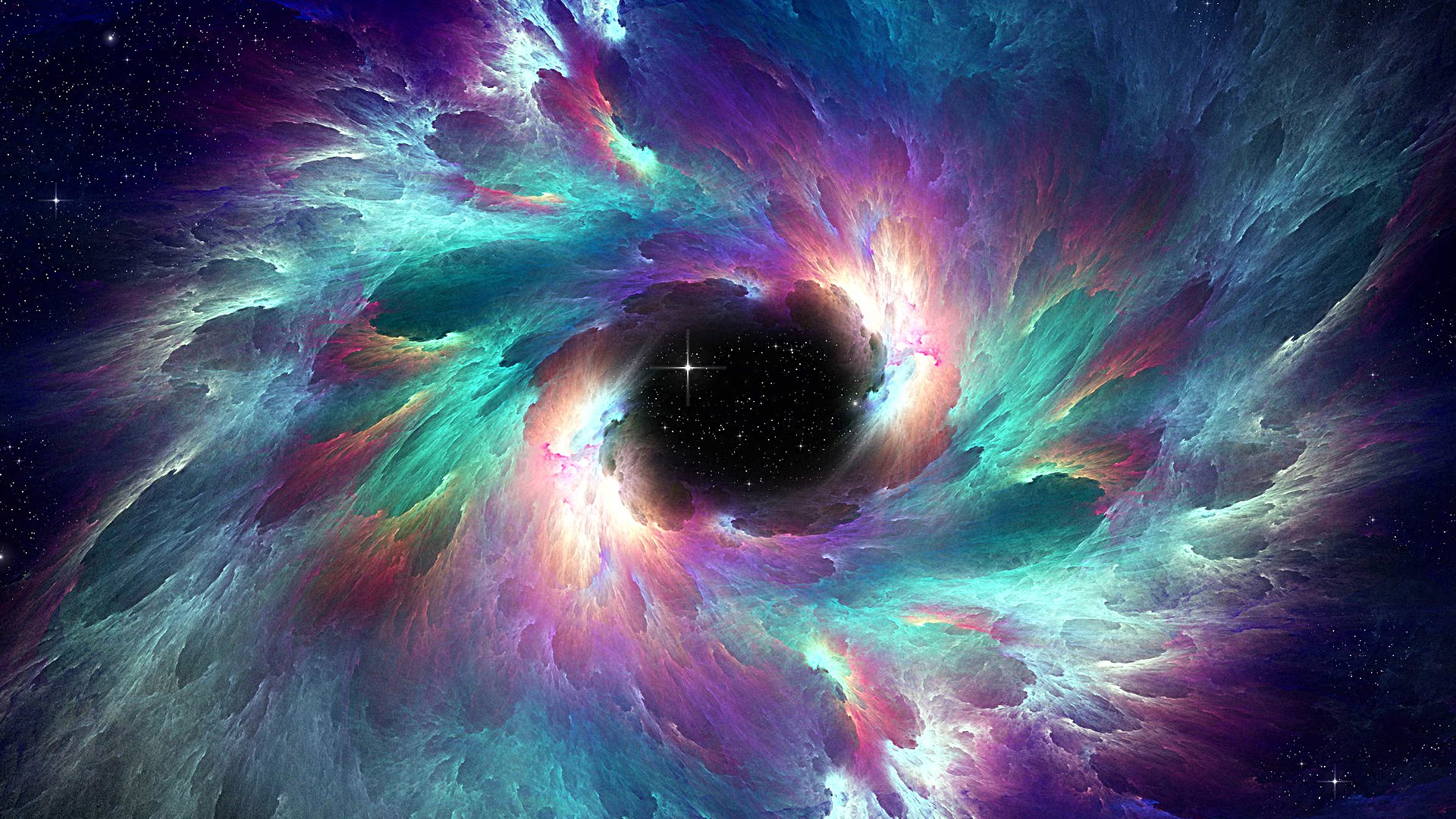
In which galaxy do we live in?

How long does it take for Earth to make a full rotation?
365 days
60 seconds
24 hours
365 seconds
How long does it take for Earth to make a full rotation?
365 days
60 seconds
24 hours
365 seconds
Where is the asteroid belt found?
Between Mercury and Venus
Between Earth and Mars
Between Mars and Saturn
Between Mars and Jupiter
What do astronomers call comets?
Snowy snowballs
Clean snowballs
Dirty snowballs
Cold snowballs
Which image best shows a meteor shower?


One of the most famous short-period comets is called?
Hallie's Comet
Halley's Comet
Hale Comet
Hale-Bopp Comet
When rocks are floating in space, we also call them?
Meteors
Meteorites
Meteoroids
Once a meteoroid hits Earth's atmosphere and burns up it is called?
Dust
Fire
Meteor
Meteorite
What are bigger asteroids sometimes called?
Shooting stars
Moon rocks
Planetoids
Meteor showers
What shape are most planets?
Spherical
Irregular
Cubic
Pyramid-shaped
Smaller fragments of asteroids or even comets are called (a) .
Meteoroids are always large pieces of asteroids.
True
False
What do we call the streak of light caused by a vaporizing meteoroid in the sky?
Shooting star
Comet
Planet
Moon
Comets are (a) in shape.
Comets can range in size from 750 meters to 40 kilometers.
True
False
All the galaxies together is the (a) .
Shadow comes in different ______ and ______.
(a)
Butter (tracing) paper is (a) which will let some light pass through it.

