
 Worksheets
6035 Drainage Outcome 4 part 4
Total questions: 49
Worksheet time: 25mins
What should you inspect before starting work on rainwater systems to ensure the gutter does not look wavy?
The underfelt of the roof
The facia boards
The paint on the facia boards
The gutter itself
Why is it important to inspect the underfelt of the roof before installing a rainwater system?
To ensure the roof is clean
To prevent the facia board from rotting
To make sure the gutter is straight
To check for proper paint application
What should be done to the facia board if necessary before installation?
Replace it
Paint it
Clean it
Remove it
Which of the following tools is required for the installation of rainwater systems?
Paintbrush
Power drill
Wrench
Pliers
Which type of screwdriver is listed as a required tool for installing rainwater systems?
Flathead screwdriver
Pozidrive screwdriver
Phillips screwdriver
Torx screwdriver
What tool is used for cutting during the installation of rainwater systems?
Claw hammer
Bradawl
Hacksaw
File
Which tool is used to create pilot holes in the installation of rainwater systems?
Bradawl
String line
File
Claw hammer
What is the first step in the installation of a rainwater system?
Establish the high position of the gutter
Measure the overall length
Establish the position of the outlet
Tie the string line on the first facia bracket
What should be done after establishing the high position of the gutter?
Measure the overall length
Fix the first facia bracket at this point
Tie the string line on the first facia bracket
Put the string line and weight through the outlet
What is the first measurement used for in the installation process?
Establishing the position of the outlet
Establishing the high position of the gutter
Working out the 1:600 fall
Tying the string line on the first facia bracket
Where should the string line be tied during the installation process?
On the facia board
On the first facia bracket
Over the drain
Through the outlet
What is the purpose of putting the string line and weight through the outlet?
To measure the overall length
To establish the high position of the gutter
So the weight hangs over the centre of the drain
To fix the first facia bracket
What is the first step in leveling up the running outlet during the installation of a rainwater system?
Place the string level on the string and level up the running outlet. Mark with a pencil.
Move the running outlet down the calculated measurement A distance.
Screw the running outlet in position.
Secure the string line around the running outlet.
Why does the string need to be tight when securing it around the running outlet?
To ensure the string does not fall.
To show the fall and the position of all the facia brackets.
To prevent the running outlet from moving.
To make the installation process easier.
What is the maximum distance apart that fascia brackets need to be secured?
0.5m
1.0m
1.5m
2.0m
In a windy location, what is the maximum distance apart that fascia brackets need to be secured?
0.5m
0.8m
1.0m
1.2m
What is the ratio used to work out the fall in rainwater systems installation?
1:600
1:100
1:60
1:1000
Which part of the rainwater system is the lowest point of the run?
Running outlet
Facia bracket
Clip joint
Gutter
What should be used to cut the gutter if needed?
Fine tooth (24tpi) hacksaw
Coarse tooth (12tpi) hacksaw
Electric saw
Scissors
Why should stainless steel screws be used in rainwater systems installation?
They will not corrode
They are cheaper
They are easier to install
They are more flexible
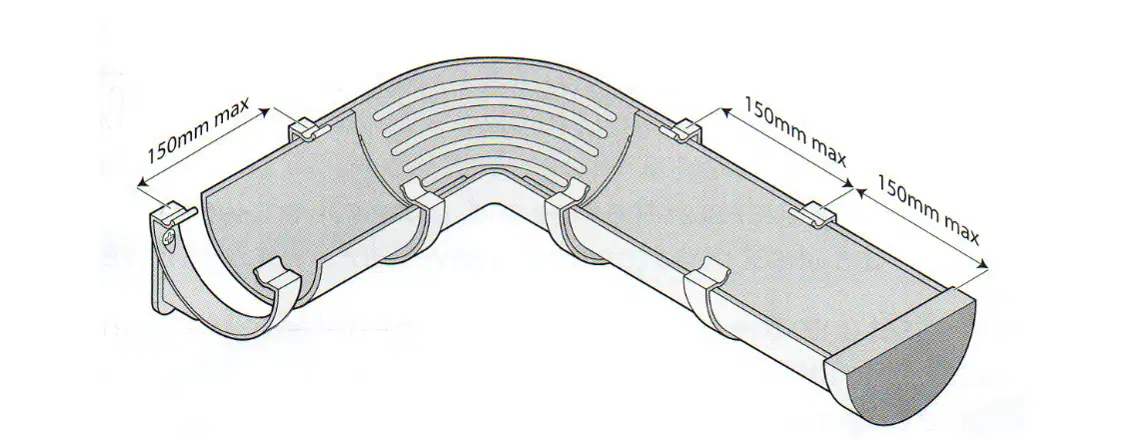
When installing gutter angle fittings, stop ends, and unions, within what distance should facia brackets be fitted on either side of these fittings to provide additional support?
100mm
150mm
200mm
250mm
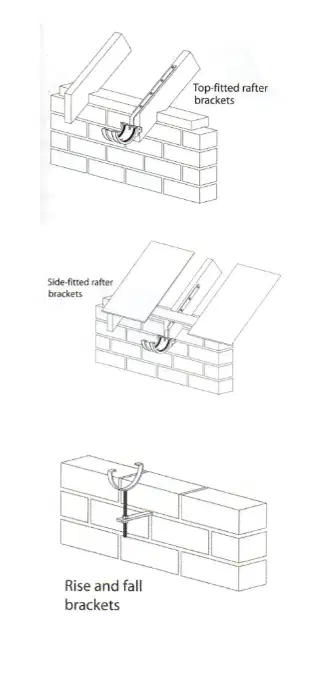
What type of bracket is used to hold the gutter in position when the building does not have facia boards?
Top fitted rafter brackets
Side fitted rafter brackets
Rise and fall brackets (drive in bracket)
All of the above
What is the third step in the installation of a downpipe according to the provided learning material?
Cut pipe to length and de-burr
Measure vertical distance to shoe or drain connector
Install in position
Check the manufacturer's clipping distances
What is the general vertical clipping distance for a 68mm pipe size?
1.2m
2.5m
2.0m
1.5m
What is the general horizontal clipping distance for a 68mm pipe size?
2.0m
1.5m
1.0m
1.2m
What should you do to test the rainwater system after installation?
Leave it for a week and check for leaks.
Use a bucket of water or hosepipe at the far end of each gutter run and inspect the flow of water.
Wait for the next rainfall to see if it works.
Fill the gutters with sand to check for blockages.
What is the purpose of testing the rainwater system after installation?
To ensure it is watertight and performs well.
To see if it can handle heavy rainfall.
To check the color of the water.
To measure the water temperature.
What should you check for when inspecting the flow of water in the rainwater system?
The speed of the water flow.
The temperature of the water.
The presence of leaks and pooling in the gutter.
The color of the water.
What should always be done before starting a job at heights?
Ignore the risks
Risk assess the job
Work alone
Start immediately
What is a potential risk when working at heights for new installations?
No risk involved
Fixed scaffolding in place
Working from a tower scaffold or ladder with stand off
Working on the ground
What should be done to warn people that work is taking place at a high level during the installation of rainwater systems?
Secure the area and put signs up
Only secure the area
Only put signs up
Do nothing
What is an important step to protect the customer's property during the installation of rainwater systems?
Identifying any existing damage to the customer
Ignoring any existing damage
Removing all existing damage
Painting the property
What should be used to avoid damaging the building fabric during the installation of rainwater systems?
A. A ladder
B. A stand-off
C. A board
D. A barrier
What should be done to prevent the ladder from sinking into the customer's lawn?
A. Use a stand-off
B. Place barriers around
C. Avoid using a ladder
D. Board the lawn
What should you ask the customer to do if there are nearby vehicles during the installation?
A. Move the vehicles
B. Board the vehicles
C. Place barriers around the vehicles
D. Use a stand-off
What should be done if working in a public place to prevent people from being injured?
A. Use a stand-off
B. Board the area
C. Place barriers around
D. Move vehicles
What is the correct angle to set a ladder when working at heights?
60° or 3 up: 1 out
75° or 4 up: 1 out
80° or 5 up: 1 out
70° or 3.5 up: 1 out
What should you watch out for when using a ladder?
Loose soil
Overhead cables
Strong winds
Bright sunlight
What should you do with the top of the ladder to ensure safety?
Paint it
Lash it
Shorten it
Remove it
How far should the top of the ladder extend past the top of the working platform?
0.5 metres
1.07 metres
1.5 metres
2 metres
Why is maintenance essential for rainwater systems?
To keep the system working effectively
To increase water pressure
To reduce water consumption
To change the water source
How often should rainwater systems be checked in domestic properties?
Monthly
Annually
Biannually
Weekly
What should be visually checked during the maintenance of rainwater systems?
The overall condition and any specific problems
The color of the water
The temperature of the water
The pH level of the water
What is the recommended remedy for leaks in a rainwater system?
Replace section or fitting
Remove bolt, clean joint, replace seal, re-bolt joint
Carry out rectification according to type of system and material
Remove items and flush out, maybe fit a gutter guard
How should a leak in a cast iron joint be fixed?
Replace section or fitting
Remove bolt, clean joint, replace seal, re-bolt joint
Carry out rectification according to type of system and material
Remove items and flush out, maybe fit a gutter guard
What is the remedy for a damaged gutter?
Replace section or fitting
Remove bolt, clean joint, replace seal, re-bolt joint
Carry out rectification according to type of system and material
Remove items and flush out, maybe fit a gutter guard
What should be done to fix blockages in a rainwater system?
Replace section or fitting
Remove bolt, clean joint, replace seal, re-bolt joint
Carry out rectification according to type of system and material
Remove items and flush out, maybe fit a gutter guard
What is the maximum distance for facia brackets to prevent a sagging gutter?
0.5m
1.0m
1.5m
2.0m
What is a possible remedy for an overflowing gutter when raining?
Replace section or fitting
Remove bolt, clean joint, replace seal, re-bolt joint
Inadequate guttering, additional downpipes or deep flow guttering
Remove items and flush out, maybe fit a gutter guard