
 Worksheets
Mid year review
Total questions: 1
Worksheet time: 15mins
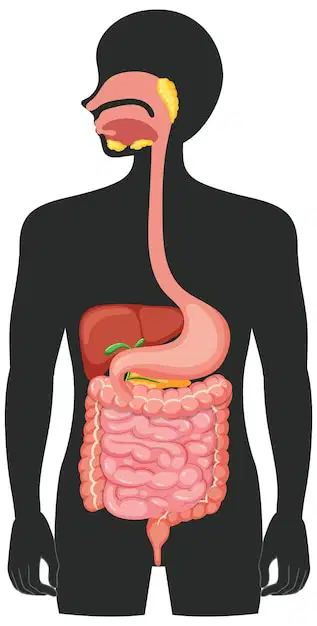
What is the beginning of the digestive tract where food is broken down and moistened for easy ingestion?
Mouth
Stomach
Esophagus
Small Intestines
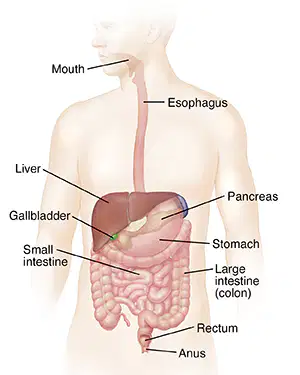
Which part of the digestive system carries food from the throat to the stomach through muscular contraction called peristalsis?
Esophagus
Stomach
Small Intestines
Large Intestines
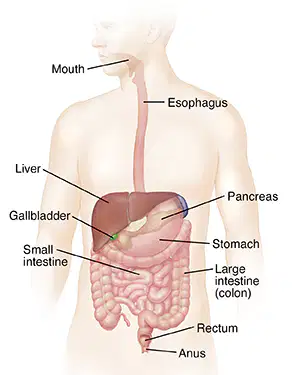
Where does the reabsorption of water and waste processing occur in the digestive system?
Large Intestines
Small Intestines
Stomach
Esophagus
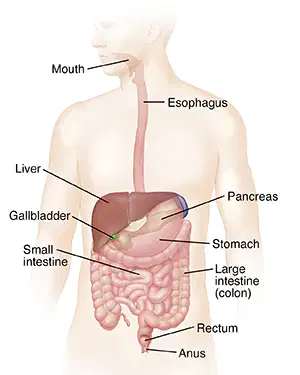
Which organ produces bile to help digest fat and is connected to the small intestines by a duct?
Liver
Pancreas
Salivary glands
Stomach
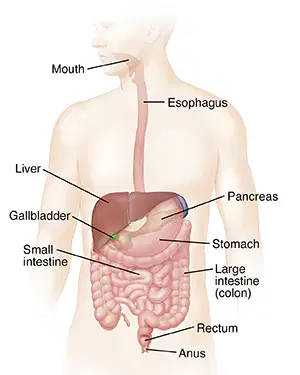
What is the role of the pancreas in the digestive system?
Produces digestive enzymes and controls glucose levels
Produces bile to help digest fat
Produces saliva to soften and moisten food
Carries food from the throat to the stomach
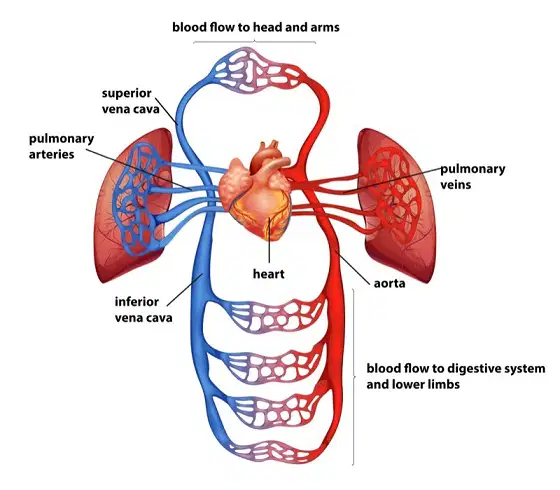
What is the function of the heart in the circulatory system?
To carry oxygen to the cells
To pump blood to the body and lungs
To collect carbon dioxide
To exchange gases with tissue cells
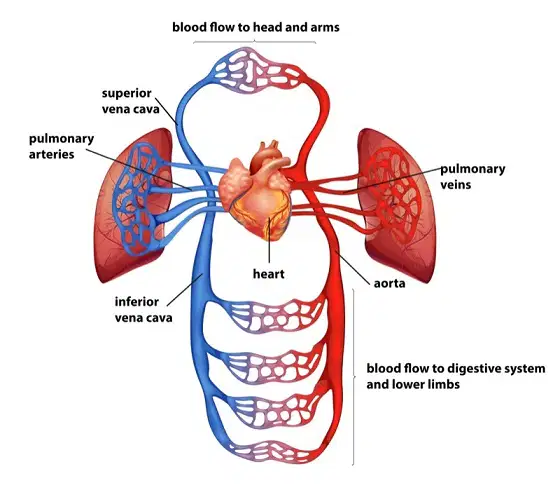
Which type of blood vessel carries blood from the heart to the body and lungs?
Veins
Capillaries
Arteries
Lymphatic vessels

Which group in the Food Pyramid should be eaten in tiny quantities?
Milk, Yogurt & Cheese Group
Meat, Poultry, Fish, Dry Beans, Eggs & Nuts Group
Fats, Oils & Sweets
Fruits Group
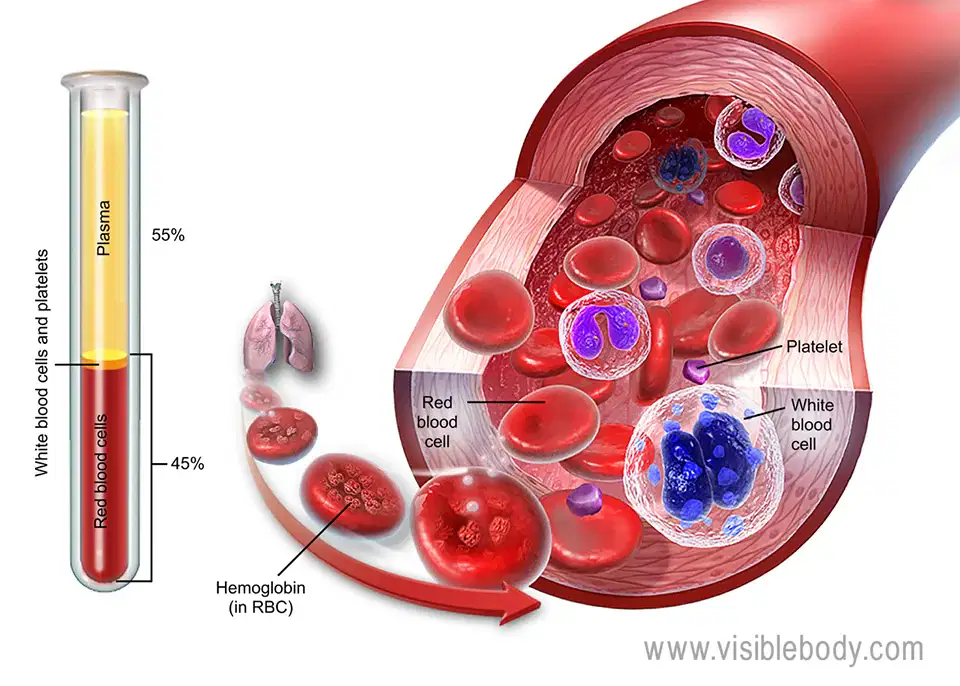
What is the main function of red blood cells?
Protect our body from pathogens.
Carry oxygen from the lungs to the cells, and carbon dioxide from the cells to the lungs.
Prevent and stop bleeding.
Carry proteins, nutrients, and hormones to the body.
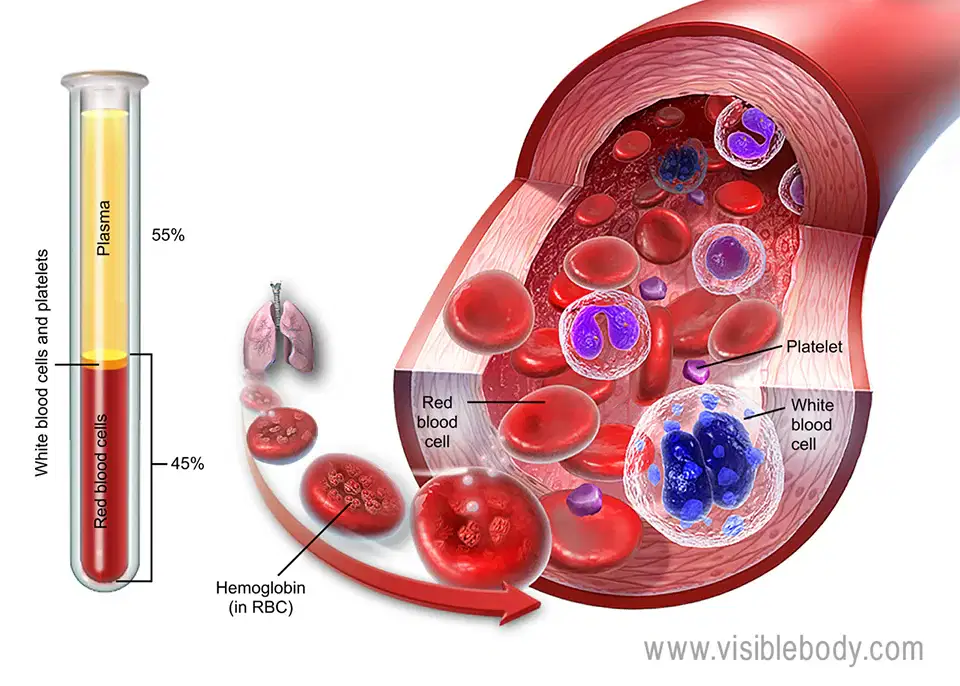
Which component of blood is responsible for protecting our body from pathogens?
Red blood cells
Platelets
White blood cells
Plasma
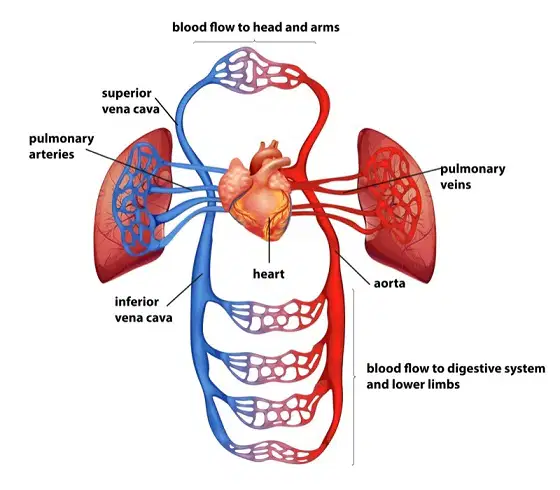
What do veins do in the circulatory system?
Carry oxygenated blood from the heart to the body.
Collect deoxygenated blood from the body and carry it to the right side of the heart.
Pump deoxygenated blood from the heart into the lungs.
Carry oxygenated blood to the left side of the heart.
What is the function of the nostrils in the respiratory system?
Filter the air, warm and humidify it.
Connect the trachea to the lungs.
Carry both food and air.
Known as the voice box.
Which part of the respiratory system is also known as the voice box?
Pharynx
Trachea
Larynx
Bronchus
What is the primary function of the alveoli in the respiratory system?
To filter the air we breathe
To exchange gases between the lungs and the bloodstream
To produce mucus
To support the trachea
Which muscle is largely responsible for the process of inhaling and exhaling?
Heart
Diaphragm
Stomach
Liver
Through which parts of the body does air enter the respiratory system?
Ears
Eyes
Nose or mouth
Skin
What are the two main gases involved in the gas exchange process in the alveoli?
Oxygen and nitrogen
Carbon dioxide and nitrogen
Oxygen and carbon dioxide
Hydrogen and helium
What is the center of our Solar System?
Earth
Moon
Sun
Mars
How many planets are there in our Solar System?
7
8
9
10
Which of the following planets is classified as a Gas Giant?
Earth
Mars
Jupiter
Neptune
Which planets are considered Ice Giants?
Mercury and Venus
Earth and Mars
Jupiter and Saturn
Uranus and Neptune
What is the amount of matter that makes up an object and stays the same no matter where the object is?
Weight
Gravity
Mass
Density
What is the measure of the gravitational pull on an object that varies depending on where the object is?
Weight
Gravity
Mass
Density
What is the invisible pulling force that works across space and attracts matter?
Orbit
Mass
Gravity
Density
What is a regular, repeating path that one object in space takes around another one?
Gravity
Orbit
Mass
Density
What is a physical property that measures how closely packed together a substance's particles are?
Mass
Weight
Gravity
Density

