
NEW
Font size
 Worksheets
MEGA REVIEW YEAR 5 SOLAR SYSTEM
Total questions: 50
Worksheet time: 31mins
What is the correct order of the planets in the Solar System, starting closest to the Sun?
Mars, Mercury, Earth, Venus, Jupiter, Saturn, Uranus, Neptune,
Mercury, Venus, Earth, Mars, Jupiter, Saturn, Uranus, Neptune
Mercury, Mars, Venus, Earth, Jupiter, Saturn, Uranus, Neptune,
Mercury, Venus, Earth, Mars, Jupiter, Neptune, Uranus, Saturn
What do Mercury, Venus, Earth, and Mars all have in common?
They are all very cold planets.
They are considered terrestrial planets, that is rocky or have metals with hard surface.
They are about the same size.
They are considered gas giants
Which planet is the largest planet in the solar system and is the fifth planet?
the sun
Uranus
Jupiter
Earth
Which of the following is ordered from largest to smallest?
Universe -> Galaxy -> Solar System -> Planet
Planet -> Galaxy -> Solar System -> Universe
Planet -> Solar System -> Galaxy -> Universe D.) Universe
Universe -> Solar System -> Galaxy -> Planet
Which planet is home to the tallest mountain , has the largest dust storms in the solar system and is also known as the 'Red Planet' because of the presence of iron oxide in it's rock.
Earth
Venus
Jupiter
Mars
What is the object that all planets in our solar system orbit?
The moon
The sun
The Milky Way
Mercury
A cloud of gas and dust is called a....
Solar System
Nebula
Galaxy
Red Giant


How do scientists tell if a star is warm or cool?
by its size
by its age
by its color
by its shape
What is a star made of?
many kinds of gases
many kinds of solids
both gases and solids
gases, solids, and liquids
Which of the following components form a galaxy?
A-Stars
B-Planets
C-Gas
D-Dust
B, C and D
A,C and D
A, B and C
All the above
Which type of galaxy is known for its irregular shape?
Elliptical
Spiral
Irregular
Lenticular
Which of these people was the first to set foot on the Moon?
Neil Armstrong
Jim Lovell
Luke Skywalker
Orville Wright
How long does it take the Moon to make a revolution around the Earth?
12 hours
27 Earth days
One year
Three months
What do many astronomers think caused the formation of the Moon?
An asteroid
A comet
The sun
A volcanic eruption
What causes the moon to shine?
The sun
Its red-hot surface
Pixie dust
Electricity
The moon is not visible in the night sky during which phase?
Waning crescent
Waxing gibbous
Full moon
New moon

Our sun is a _______________ star.
red
white
blue
yellow
How many dwarf planets are there?
1
5
10
Too many to count
What year was Pluto reclassified as a dwarf planet?
1978
2006
2018
It hasn't happened yet, but it will soon
How many hours does it take Haumea to complete one rotation around the Sun?
1 hour
4 hours
7 hours
10 hours
Which dwarf planet is the largest?
Haumea
Pluto
Ceres
Eris
Can dwarf planets have moons and rings?
No
Yes
Dwarf planets are ____________ than other planets.
brighter
closer
larger
smaller
Dwarf Planet that used to be a planet
Ceres
Eris
Pluto
Make-Make
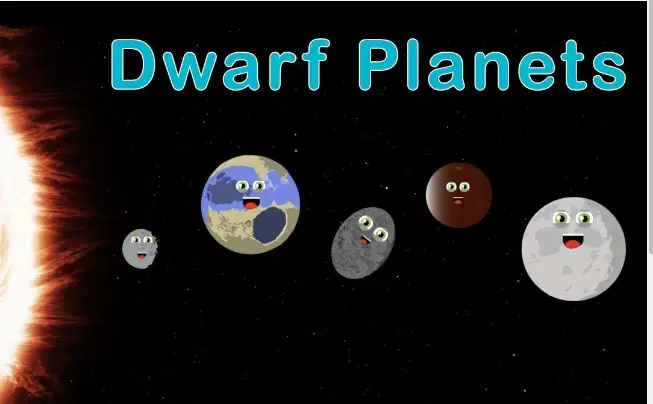
Which dwarf planet is the smallest and closest to the sun?
Ceres
Pluto
Haume
Makemake
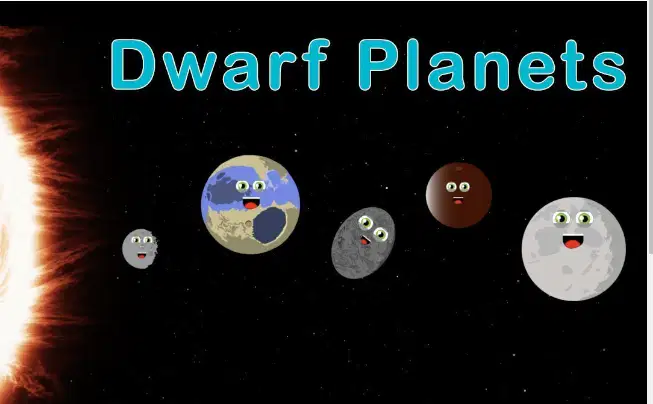
Which dwarf planet is the furthest from the sun and is -390 degrees farenheit?
Pluto
Haume
Makemake
Eris
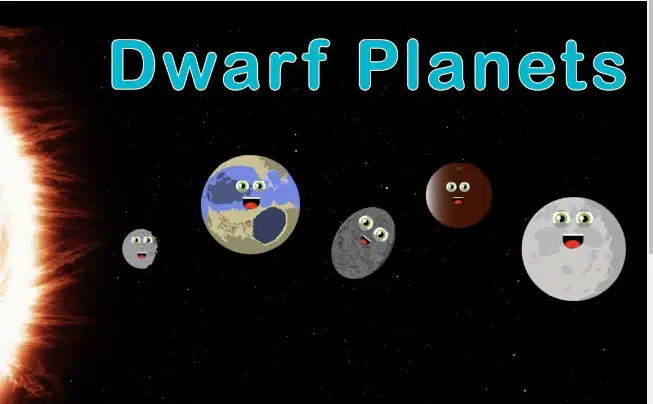
Which dwarf planet has no atmosphere, is a perfect sphere and it is red in color?
Eris
Makemake
Haume
Pluto
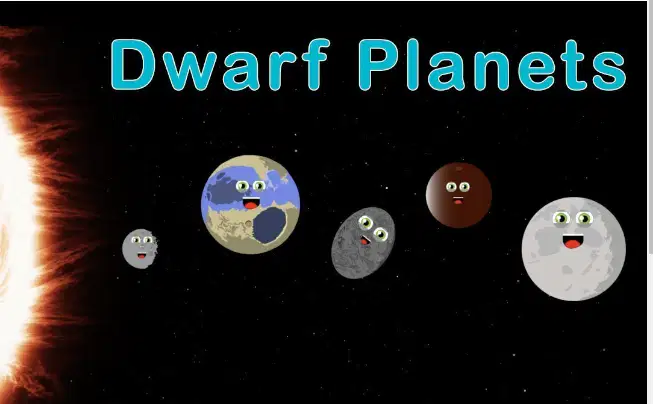
Which dwarf planet is located in the Asteroid Belt?
Ceres
Pluto
Eris
Haume
What position planet is Venus in the solar system?
2
4
5
7
What is Mars’s nickname?
the Red planet
the Big Red
the Red car
the Earth
What is the composition of Jupiter?
Tin Foil
Rock
Gasses
Cardboard
Saturn is the only planet with rings?
True
False
Is Uranus smaller, same size, or larger than Earth?
Smaller
Same Size
Larger
What is Neptune's atmosphere made out of?
Air
Everything on this except air
Helium
Methane
Hydrogen

