
 Worksheets
ALS Pre-Test
Total questions: 10
Worksheet time: 5mins
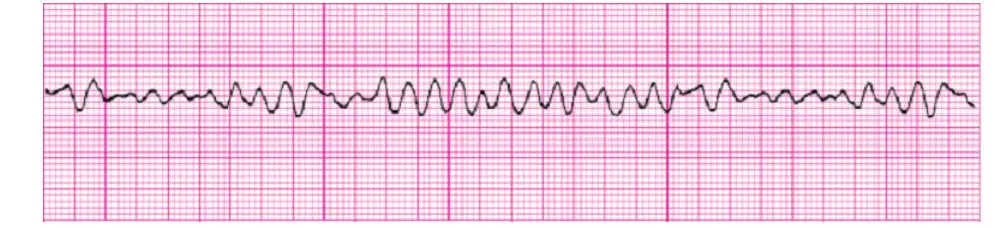
You receive a critical alarm on your Voalte phone. You go in to assess your patient and see the following rhythm on the monitor. Identify this rhythm.
Asystole
SVT
V Fib
V Tach
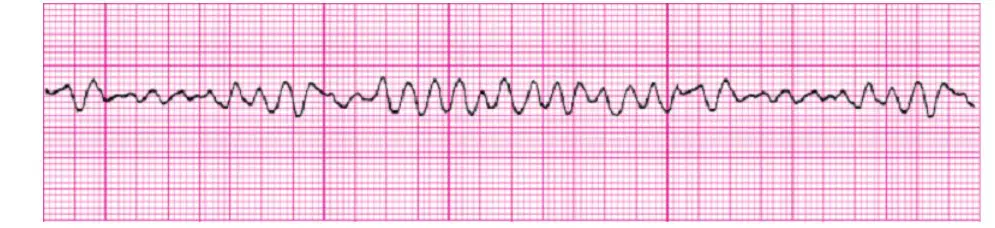
CPR was initiated, a shock was delivered, CPR continued, and then another shock was delivered. Immediately following the second shock, one epinephrine was administered. At the next pulse check, the patient remains in the rhythm shown. What medication should you administer next?
Adenosine 12mg rapid IV push, using a stopcock and 10-cc syringe.
Atropine 1mg IV push
Amiodarone 300mg IV bolus.
Lidocaine IV 1-1.5mg/kg
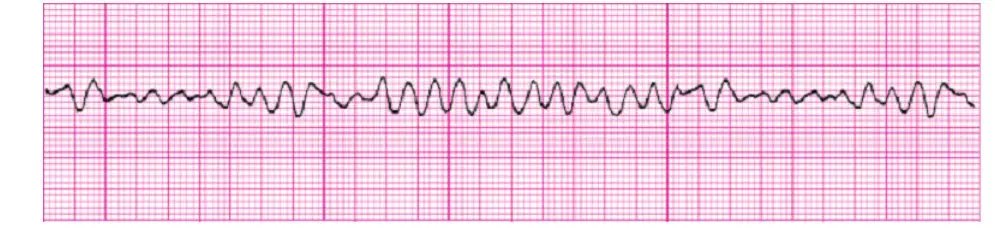
During a cardiac arrest, the patient is connected to a Zoll defibrillator, and the rhythm shown is as follows. What is the correct sequence of steps to deliver a shock?
Turn on the Zoll, select the 'Pacer' mode, set the rate, and press 'Start Pacing.'
Turn on the Zoll, select the 'Monitor' mode, check the patient's pulse, and start CPR.
Turn on the Zoll, select the 'Defib' mode, charge the defibrillator, ensure everyone is clear, and press 'Shock.'
Turn on the Zoll, select the 'Defib' mode, charge the defibrillator, ensure everyone is clear, and press 'Shock.'
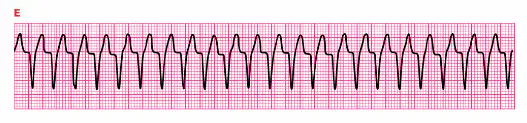
You receive a critical alarm on your Voalte phone. You assess your patient and see the following rhythm on the monitor. Identify this rhythm. You assess your patient for a pulse, and they have none. You push the code blue button and begin CPR. When the Zoll Defibrillator arrives and team members assist, what are your next steps? Choose the answer with the next steps in the correct order.
Place pads on the patient, Turn on the Zoll defibrillator to “Defib” mode, continue chest compressions for 2 minutes, Give Epinephrine and check for a pulse following 2 minutes, Continue Chest Compression if no pulse felt.
Place pads on the patient, Turn on the Zoll defibrillator to “Defib” mode, charge the defibrillator, continue chest compressions until the shock is ready, Code team lead will advise to clear the patient, administer a shock, Continue chest compressions
Place the Pads on the patient, turn on the Zoll defibrillator to “Defib” mode, charge the defibrillator, code team lead will advise to clear the patient, administer a shock, continue chest compressions
Place pads on the patient, turn on the Zoll defibrillator to “Monitor” mode, continue chest compressions for 2 minutes, give Epinephrine and check for a pulse following 2 minutes.
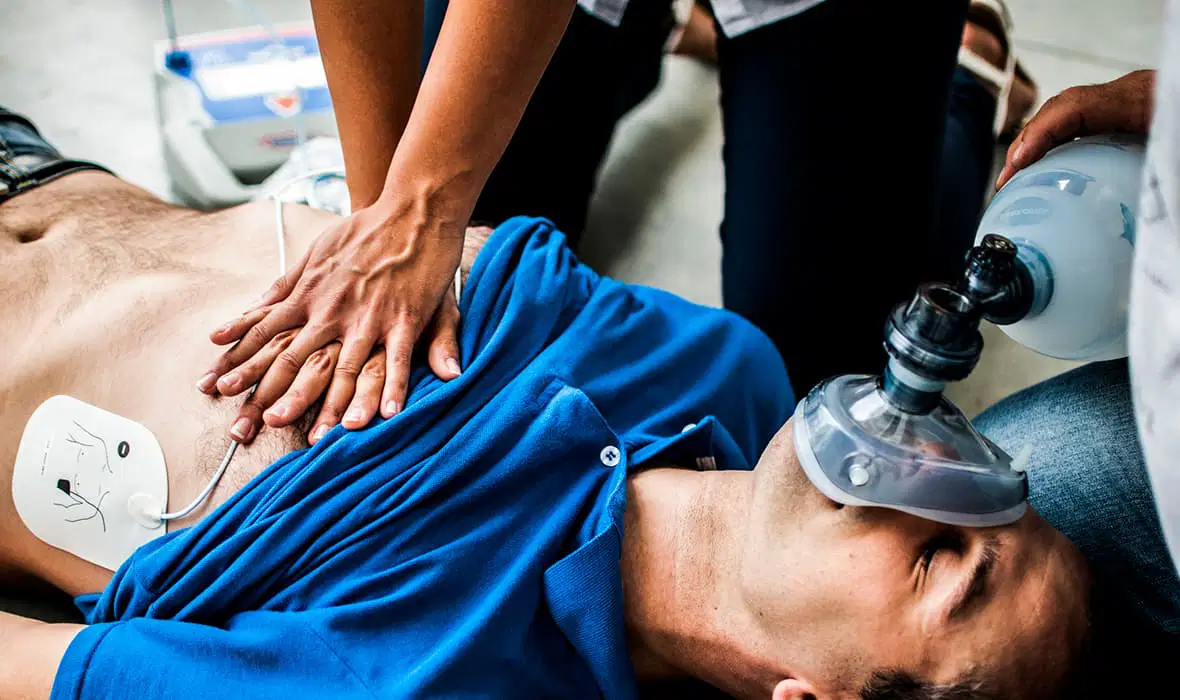
There is no advanced airway in place. What is the correct compression to ventilation ratio?
15 Compressions followed by 2 breaths
30 Compressions followed by 2 breaths
Continuous CPR with breaths ever 6 seconds
Continuous CPR with breaths every 10 seconds

You are the primary nurse for this patient. You are aware that an effective resuscitation team dynamic centers around closed-loop communication. The three steps in closed-loop communication are
The sender transmits, the receiver accepts the message and acknowledges, the sender verifies that the message has been received and interpreted correctly.
The sender transmits, the receiver accepts the message and closed loop communication is established.
The sender transmits, the receivers accepts the message, the sender observes for appropriate intervention
The sender transmits, the receiver receives, and completes tasks without feedback.

Your patient is conscious, complains of chest pain, and is diaphoretic. Vital Signs are BP 62/48 (52), HR 190, RR 26, Sp02 94. Your patient's rhythm is as shown. You have placed defibrillation pads on the patient. What is your next action?
Turn on the Zoll, turn the knob to defib, push the sync button, set the energy level to 50-100, push the charge button, and push and hold the shock button.
. Turn on the Zoll, turn the knob to pace, push the sync button, set the energy level to 100-150, push the charge button, and push and hold the shock button.
Turn on the Zoll, turn knob to monitor, push sync button, set energy level to 100, push the charge button, push and hold the shock button.
Turn on the Zoll, turn knob to defib, push sync button, set energy level to 50-100, push the charge button, state all clear, push and hold the shock button
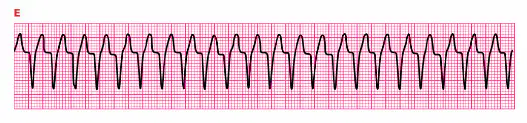
You receive a critical alarm on your Voalte phone. You go in to assess your patient and see the following rhythm on the monitor: Your patient has a pulse; their heart rate is 220 BPM. The patient’s blood pressure is 62/48 (52), RR 26, SpO2 is 94%, and they are diaphoretic and report chest pain. You find their V-Tach regular and monomorphic. What is your next step?
Administer Adenosine 6mg Rapid IV push using a stopcock and a 10-cc flush
Administer Amiodarone 300mg IV bolus
Administer Adenosine 12mg Rapid IV push using a stopcock and a 10-cc flush
Administer Atropine 1mg IV push
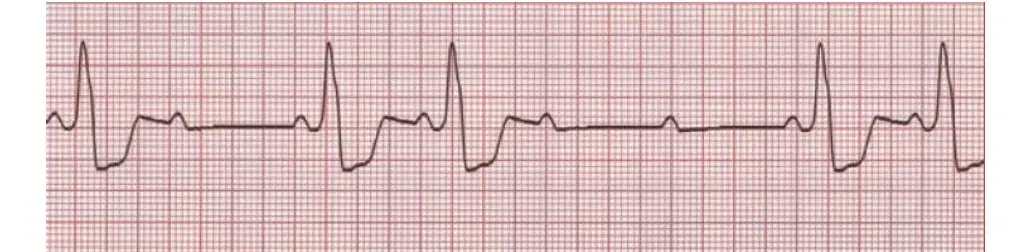
. Identify the following rhythm:___________When determining the care for a patient with bradycardia, the primary decision point in the algorithm is the determination of _______________. After it is determined that the patient is______________ your first step is to administer_____________ while awaiting to transcutaneous pace. Select the choice that best fills in the blanks.
Second Degree Type 2; Heart rate; pain medication
Second Degree Type 1; heart rate; asymptomatic; adenosine 6mg IV rapid push with a 10-cc syringe.
Second Degree Type 2; perfusion; symptomatic; Atropine 1mg every 3 to 5 minutes with a max dose of 3mg.
Third Degree; perfusion; symptomatic; Atropine 1mg every 3 to 5 minutes with a max dose of 3mg.
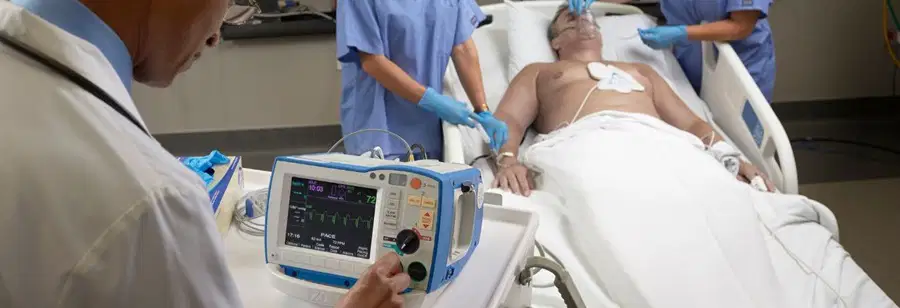
Your patient does not respond to Atropine after 2 more doses of Atropine, for a total of 3 mg. Your patient’s heart rate remains in the 30s, and their blood pressure is 62/48 (52). You recognize your patient will now need transcutaneous pacing. What are your next steps after attaching the defibrillator pads to your patient?
Turn on the Zoll, turn knob to pace, adjust the rate until you see capture, then adjust mA’s, ensure you feel a pulse on the patient.
Turn on the Zoll, turn the knob to pace, adjust the mA’s until you see capture, then up another 10% to ensure, adjust the rate as ordered, check for a pulse on the patient, and push the 4:1 button to see the underlying rhythm.
Turn on the Zoll, turn knob to pace, adjust the mA’s until you see capture, adjust rate as ordered, check for a pulse on the patient.
Turn on the Zoll, turn knob to pace, push sync button, watch for capture, monitor the patient.

