
 Worksheets
ME Ref 2-01
Total questions: 300
Worksheet time: 3hrs 2mins
Name
Class
Date
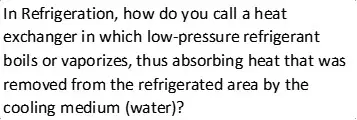
1.
>
a)
Evaporator
b)
Chiller
c)
Cooler
d)
Flooded Evaporator
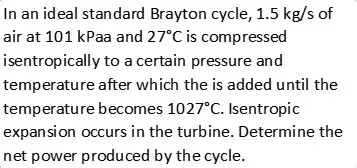
2.
>
a)
629.56 kW
b)
592.65 kW
c)
529.76 kW
d)
579.26 kW
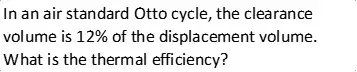
3.
>
a)
57%
b)
59%
c)
58%
d)
60%
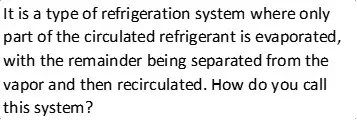
4.
>
a)
Absorption refrigeration system
b)
Vacuum refrigeration system
c)
Vapor-compression refrigeration system
d)
Flooded refrigeration system
5.
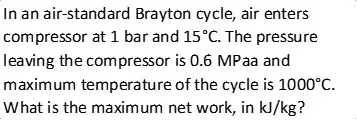
>
a)
319.52
b)
392.51
c)
315.29
d)
352.19
6.
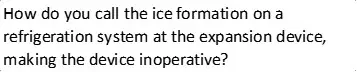
>
a)
Ice formation
b)
Freeze-up
c)
Freezing
d)
Pump-down
7.
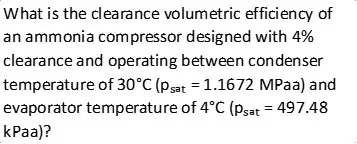
>
a)
93.61%
b)
93.68%
c)
96.31%
d)
96.83%
8.
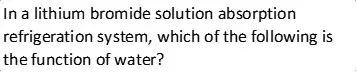
>
a)
Refrigerant
b)
Absorbent
c)
Coolant
d)
Analyzer
9.
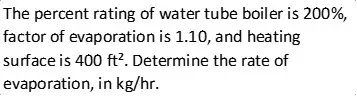
>
a)
1831
b)
1381
c)
1138
d)
1813
10.
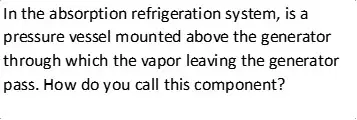
>
a)
Absorber
b)
Analyzer
c)
Rectifier
d)
Reflux
11.
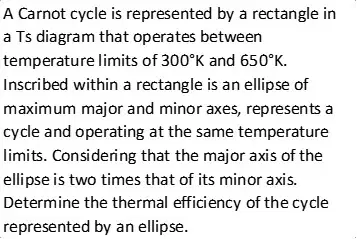
>
a)
44.88%
b)
48.48%
c)
43.66%
d)
46.36%
12.
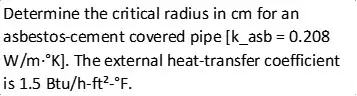
>
a)
2.44 cm
b)
2.55 cm
c)
2.66 cm
d)
2.22 cm
13.
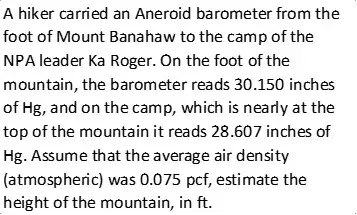
>
a)
1455.54
b)
1545.54
c)
1554.54
d)
1455.55
14.
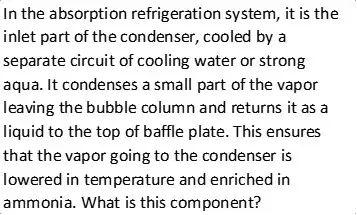
>
a)
Reflux
b)
Analyzer
c)
Rectifier
d)
Absorber
15.
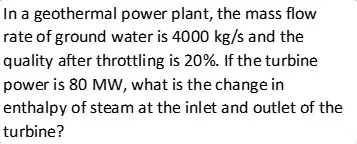
>
a)
120 kJ/kg
b)
100 kJ/kg
c)
200 kJ/kg
d)
150 kJ/kg
16.
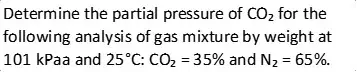
>
a)
25.75 kPaa
b)
27.55 kPaa
c)
52.75 kPaa
d)
52.57 kPaa
17.
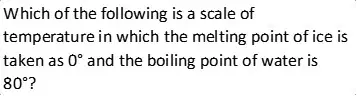
>
a)
Reaumur Scale
b)
Carrene Scale
c)
Genetron Scale
d)
Frigorie Scale
18.
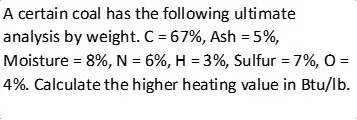
>
a)
15 179
b)
11 579
c)
17 519
d)
19 517
19.
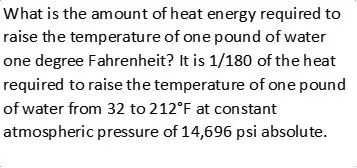
>
a)
Specific heat
b)
British thermal unit
c)
Calorie
d)
Sensible heat
20.

>
a)
42 975 kJ/kg
b)
42 597 kJ/kg
c)
42 795 kJ/kg
d)
42 579 kJ/kg
21.
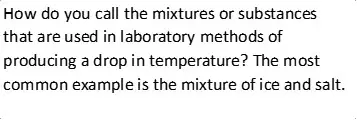
>
a)
Calorific mixture
b)
Water-ammonia mixture
c)
Frigorific mixture
d)
Hygroscopic mixture
22.
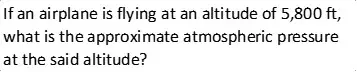
>
a)
11.85 psi
b)
14.7 psi
c)
13.24 psi
d)
14.32 psi
23.
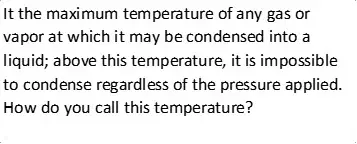
>
a)
Saturation temperature
b)
Superheated temperature
c)
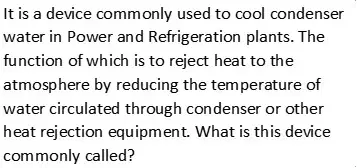
Critical temperature
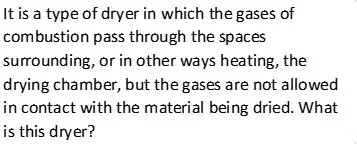
d)
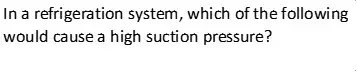
Dew point temperature
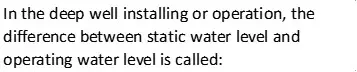
24.
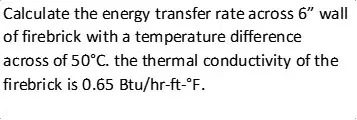
>
a)
369 W/m²
b)
369 Btu/hr-Ft²
c)
639 W/m²
d)
639 Btu/hr-Ft²
25.
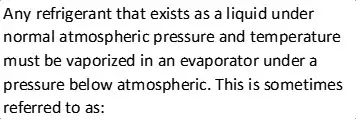
>
a)
Halogenated refrigerant
b)
Freon refrigerant
c)
Vacuum refrigerant
d)
Halocarbon refrigerant
26.

>
a)
0.868
b)
0.688
c)
0.886
d)
0.986
27.
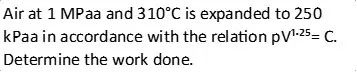
>
a)
+ 162.11 kJ/kg
b)
– 162.11 kJ/kg
c)
+ 126.11 kJ/kg
d)
– 126.11 kJ/kg
28.
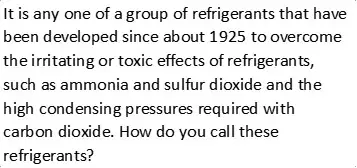
>
a)
Halogenated refrigerants
b)
Freon refrigerants
c)
Vacuum refrigerants
d)
Halocarbon refrigerants
29.
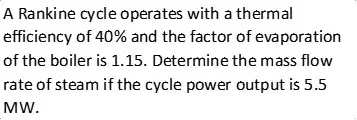
>
a)
5.3 kg/s
b)
4.3 kg/s
c)
3.5 kg/s
d)
6.3 kg/s
30.
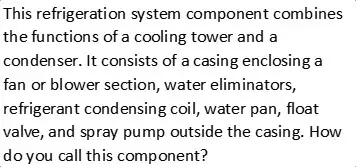
>
a)
Water-cooled condenser
b)
Evaporative condenser
c)
Atmospheric condenser
d)
Chiller
31.
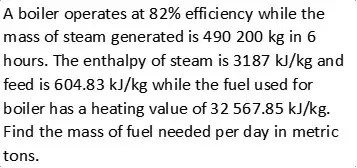
>
a)
179.6
b)
189.6
c)
198.6
d)
169.8
32.
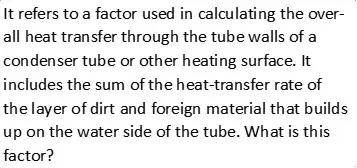
>
a)
Cooling factor
b)
Contact factor
c)
By-pass factor
d)
Fouling factor
33.
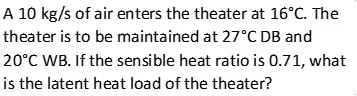
>
a)
45.21 kW
b)
54.21 kW
c)
110.682 kW
d)
42.51 kW
34.
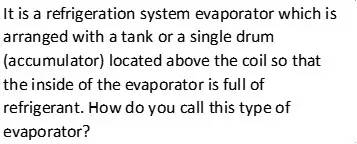
>
a)
Flooded evaporator
b)
Dry evaporator
c)
Cooing coil evaporator
d)
Headered coil evaporator
35.
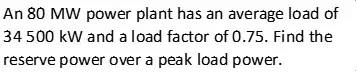
>
a)
14 000 kW
b)
34 000 kW
c)
24 000 kW
d)
4 000 kW
36.
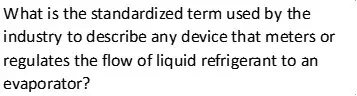
>
a)
Refrigerant control
b)
Expansion valve
c)
Throttling valve
d)
Capillary tube
37.
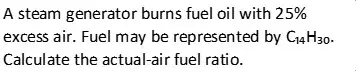
>
a)
17.63
b)
18.63
c)
16.63
d)
15.63
38.

>
a)
The value set on the scale of the control system in order to obtain the required condition
b)
The quantity or condition of the controlled medium
c)
The flow or pressure of the steam (or fluid) being manipulated
d)
The valve of the controlled condition actually maintained under steady state conditions
39.
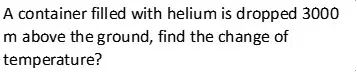
>
a)
12.43°C
b)
9.43°C
c)
15.43°C
d)
8.43°C
40.
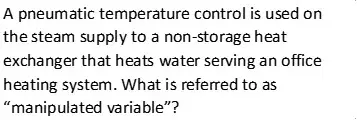
>
a)
The water being heated
b)
The air signal from the controller to the valve actuator
c)
The steam supply
d)
The temperature of the air being heated
41.
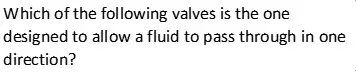
>
a)
Globe valve
b)
Gate valve
c)
Float valve
d)
Check valve
42.
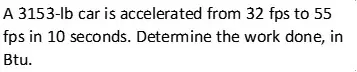
>
a)
125.92
b)
192.52
c)
152.92
d)
129.52
43.

>
a)
A thermal valve
b)
A magnetic stop valve
c)
A bellows valve
d)
A bi-metallic valve
44.

>
a)
A temperature-operated switch
b)
A pressure-operated switch
c)
A superheat-operated switch
d)
A back pressure-operated switch
45.
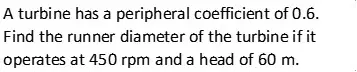
>
a)
0.874 m
b)
0.784 m
c)
0.478 m
d)
0.748 m
46.

>
a)
Help preheat the air for the furnace
b)
Help preheat the feed water
c)
Protect economizer from excessive heat
d)
Prevent excessive furnace heat losses
47.
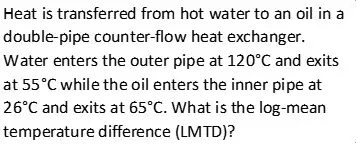
>
a)
42.60°C
b)
40.62°C
c)
46.20°C
d)
42.06°C
48.

>
a)
Thermodynamic
b)
Mechanical
c)
Thermostatic
d)
They do not belong to any specific type of trap family
49.
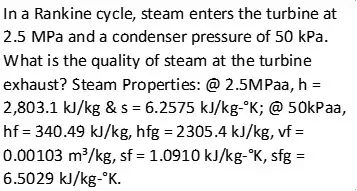
>
a)
79.45%
b)
97.45%
c)
59.75%
d)
95.55%
50.
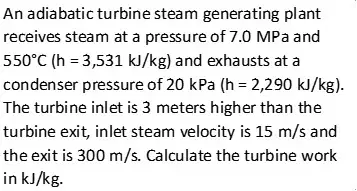
>
a)
1296.14
b)
1196.24
c)
1619.42
d)
1294.16
51.
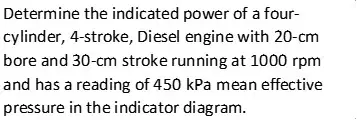
>
a)
159.83 Hp
b)
189.53 Hp
c)
158.93 Hp
d)
198.53 Hp
52.

>
a)
They pass condensate at steam temperature
b)
They operate by holding back condensate until it has cooled
c)
They cannot be fitted outside
d)
They can only be fitted on low pressure steam systems
53.
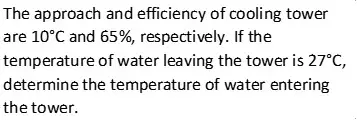
>
a)
54.57°C
b)
55.47°C
c)
45.57°C
d)
54.75°C
54.

>
a)
Price
b)
Air venting, plant performance, flow capacity and reliability
c)
Connections
d)
The trap must be the same size as the condensate drain line
55.
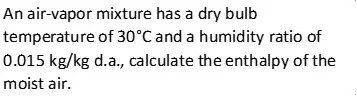
>
a)
68.527 kJ/kg d.a.
b)
86.527 kJ/kg d.a.
c)
65.827 kJ/kg d.a.
d)
67.528 kJ/kg d.a.
56.
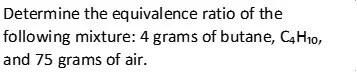
>
a)
0.72
b)
0.92
c)
0.62
d)
0.82
57.

>
a)
Traps should not be fitted under any circumstances
b)
Only if there is no lift after the trap
c)
If the pressure on the trap is always higher than backpressure
d)
Pumps should always be fitted to remove condensate
58.
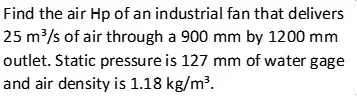
>
a)
52.3 Hp
b)
35.2 Hp
c)
42.3 Hp
d)
34.2 Hp
59.
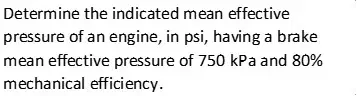
>
a)
138
b)
137
c)
136
d)
135
60.
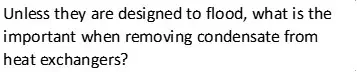
>
a)
Condensate is allowed to sub-cool before reaching the trap
b)
Condensate is removed at steam temperature
c)
Condensate should back-up into the steam pipe
d)
That the trap is fitted level with or above the heater outlet
61.
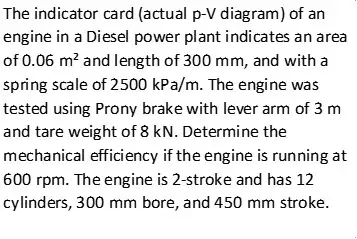
>
a)
78.01%
b)
79.01%
c)
82.01%
d)
76.01%
62.

>
a)
From condensate passing from high to low pressure systems
b)
From saturated steam
c)
From superheated steam
d)
From steam mixed with high temperature air
63.
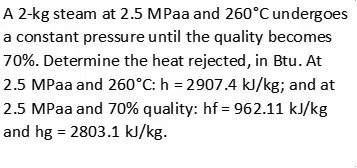
>
a)
1244.7 Btu
b)
1424.7 Btu
c)
1442.7 Btu
d)
1274.4 Btu
64.

>
a)
Steam traps should not pass air under any circumstances
b)
Only when the trap has passed all the condensate
c)
Air should be removed as soon as it reaches the trap
d)
Only on high pressure steam system
65.
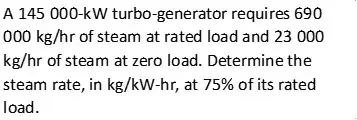
>
a)
4.81 kg/kW-hr
b)
3.81 kg/kW-hr
c)
5.81 kg/kW-hr
d)
2.81 kg/kW-hr
66.
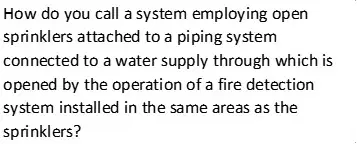
>
a)
Mechanical sprinkler
b)
Automatic system
c)
Wet pipe system
d)
Deluge system
67.

>
a)
What degree of accuracy is required?
b)
Is the control for heating or cooling?
c)
Is a two or three port valve required?
d)
In the event of power failure, must the valve fail-open or fail-closed?
68.
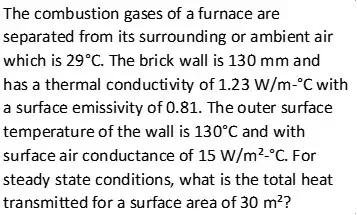
>
a)
70.33 kW
b)
73.30 kW
c)
33.07 kW
d)
37.30 kW
69.

>
a)
50 to 55%
b)
55 to 60%
c)
60 to 65%
d)
45 to 50%
70.
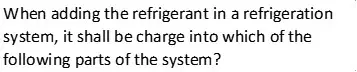
>
a)
High pressure side
b)
Low pressure side
c)
Low and high pressure side
d)
Compressor discharge line
71.
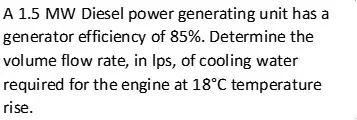
>
a)
21 lps
b)
19 lps
c)
22 lps
d)
23 lps
72.

>
a)
To reduce the energy required to raise steam
b)
To reduce the content of total dissolved solids in the water supplied to the boiler
c)
To reduce the gas content of the water
d)
To reduce the content of suspended solids in the water
73.

>
a)
A separator
b)
A strainer
c)
A steam trap
d)
A tee piece
74.

>
a)
Suspended water droplets
b)
An air/water mixture
c)
Strainers fitted on their sides
d)
Slugs of water in the steam
75.
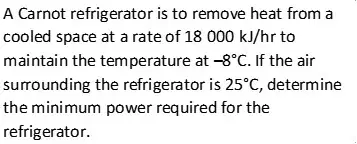
>
a)
0.723 kW
b)
0.523 kW
c)
0.623 kW
d)
0.423 kW
76.

>
a)
Through joints, on shut down of the steam system
b)
With make-up water to the boiler feed tank
c)
With condensate entering the boiler feed tank
d)
all of the above
77.
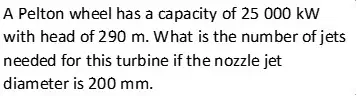
>
a)
3
b)
4
c)
2
d)
1
78.

>
a)
To prevent the build-up of water in the strainer body
b)
To trap more dirt
c)
To reduce the frequency of cleaning
d)
To provide maximum screening area for the steam
79.

>
a)
191 mm
b)
171 mm
c)
181 mm
d)
161 mm
80.

>
a)
The true connected heat load may be different from the rated figure.
b)
The rating does not take account of the temperature of the secondary medium
c)
The rating is based on a steam pressure of 1.0 bar
d)
The rating does not allow for condensate forming in the heat exchanger
81.
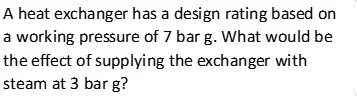
>
a)
The heat output would be greater because the enthalpy of evaporation at 3 bar g is higher than at 7 bar g.
b)
The heat output would be greater because steam at 3 bar g has a greater volume than steam at 7 bar g.
c)
Less weight of steam would be required because steam at 3 bar g has a higher enthalpy of evaporation than 7 bar g.
d)
The output would be reduced because the difference in temperature between the steam and product is reduced.
82.
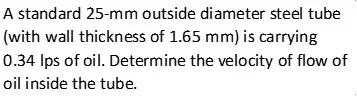
>
a)
191 fpm
b)
181 fpm
c)
171 fpm
d)
161 fpm
83.
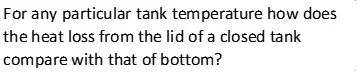
>
a)
They are approximately double those from the bottom
b)
Losses from the top are approximately double those from the bottom
c)
Losses from the bottom are approximately double those from the top
d)
Losses from the top are approximately 4 times those from the bottom
84.

>
a)
83.95%
b)
89.35%
c)
85.93%
d)
85.39%
85.

>
a)
It agitates the solution
b)
Some of the enthalpy of water is used
c)
Steam traps are not required
d)
It dilutes the tank content
86.
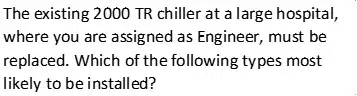
>
a)
Screw chiller
b)
Scroll Chiller
c)
Reciprocating chiller
d)
Centrifugal chiller
87.
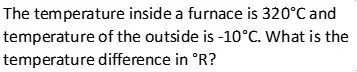
>
a)
495
b)
945
c)
594
d)
596
88.
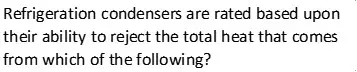
>
a)
Compressor work and net refrigeration effect
b)
Superheating
c)
Subcooling
d)
Compressor work
89.
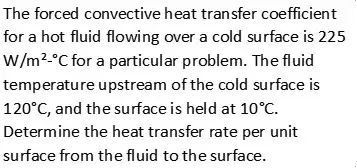
>
a)
24 570 W/m²
b)
52.470 W/m²
c)
24 700 W/m²
d)
24 750 W/m²
90.
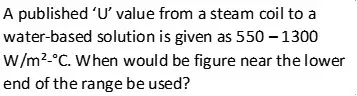
>
a)
When the steam is known to be of good quality
b)
For short coils
c)
For small diameter coils
d)
When scaling or fouling of the coil takes place
91.

>
a)
The tank contains a corrosive solution
b)
When agitation of the tank solution is required
c)
When steam locking the trap draining a base coil could occur
d)
When good heat distribution is required
92.
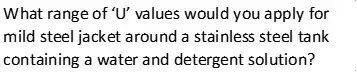
>
a)
285 – 480
b)
450 – 1140
c)
850 – 1700
d)
285 – 850
93.
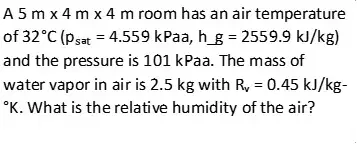
>
a)
94.08%
b)
74.08%
c)
84.08%
d)
64.08%
94.
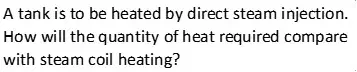
>
a)
It depends on the temperature of the water being heated
b)
More heat will be required
c)
The same amount of heat will be required
d)
Less heat will be required
95.
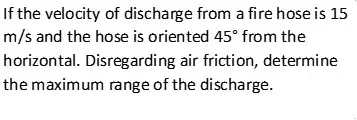
>
a)
14 m
b)
33 m
c)
24 m
d)
23 m
96.
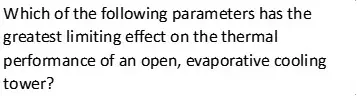
>
a)
Wet-Bulb temperature
b)
Dry-Bulb temperature
c)
Range
d)
Approach
97.
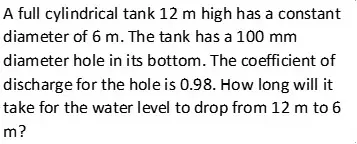
>
a)
16 minutes
b)
20 minutes
c)
24 minutes
d)
28 minutes
98.
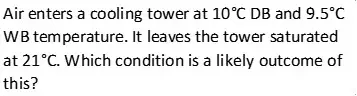
>
a)
Sublimation
b)
Condensation
c)
Adsorption
d)
Fog
99.
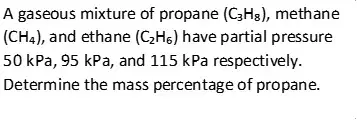
>
a)
30.68%
b)
28.68%
c)
21.68%
d)
32.68%
100.
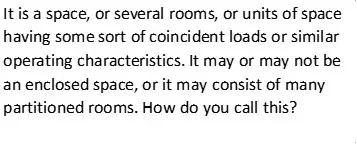
>
a)
Zone
b)
Room
c)
Space
d)
Plenum
101.

>
a)
0.02068
b)
0.0199
c)
0.2013
d)
0.0299
102.
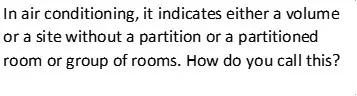
>
a)
Zone
b)
Room
c)
Space
d)
Plenum
103.
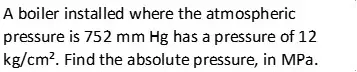
>
a)
1277.05 kPaa
b)
1727.05 kPaa
c)
1772.05 kPaa
d)
1572.07 kPaa
104.
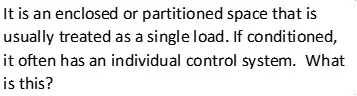
>
a)
Zone
b)
Room
c)
Space
d)
Plenum
105.
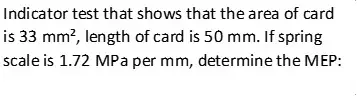
>
a)
1.781 MPa
b)
33 MPa
c)
1.135 MPa
d)
50 MPa
106.
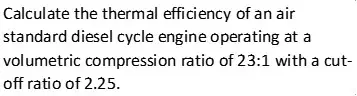
>
a)
62.6%
b)
60.6%
c)
65.6%
d)
67.6%
107.
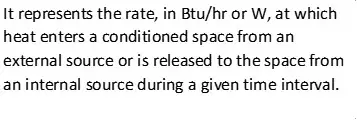
>
a)
Space heat gain
b)
Space cooling load
c)
Space heating load
d)
Space heat extraction rate
108.
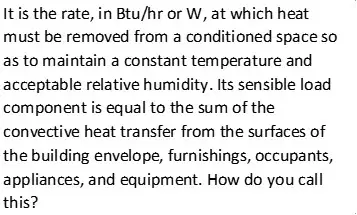
>
a)
Space heat gain
b)
Space cooling load
c)
Space heating load
d)
Space heat extraction rate
109.
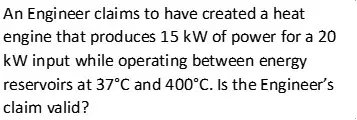
>
a)
Valid
b)
Not valid
c)
Probably
d)
May be valid
110.
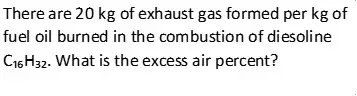
>
a)
30.1%
b)
29.16%
c)
21.5%
d)
30.6%
111.
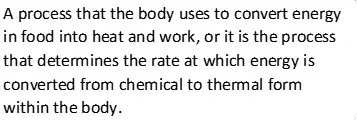
>
a)
Metabolism
b)
Eating
c)
Body food processing
d)
Blood circulation
112.
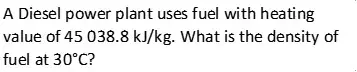
>
a)
0.7882 kg/li
b)
0.8782 kg/li
c)
0.9887 kg/li
d)
0.8878 kg/li
113.
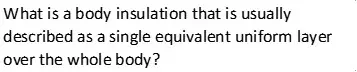
>
a)
Skin
b)
Blood
c)
Clothing
d)
Water
114.

>
a)
Btu unit
b)
Clo units
c)
Calorie unit
d)
Frigorie Unit
115.

>
a)
1 clo=0.880 (°F∙ft²∙hr)/Btu
b)
1 clo=100 (°F∙m²)/kW
c)
1 clo=0.275 (°F∙m²)/W
d)
1 clo=190 (°F∙m²)/kW
116.
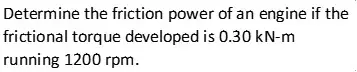
>
a)
47.7 kW
b)
37.7 kW
c)
43.3 kw
d)
33.3 kW
117.
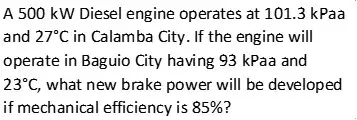
>
a)
455.96 kW
b)
549.10 kW
c)
954.1 kW
d)
495.1 kW
118.
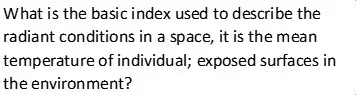
>
a)
Index temperature
b)
Mean radiant temperature
c)
Space temperature
d)
Dry bulb temperature
119.
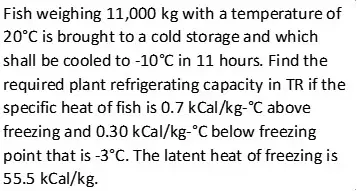
>
a)
25.26
b)
14.38
c)
15.26
d)
24.38
120.

>
a)
Installation NPSH ≥ pump NPSH
b)
Installation NPSH ≤ pump NPSH
c)
Installation NPSH < pump NPSH
d)
Installation NPSH should be negative
121.
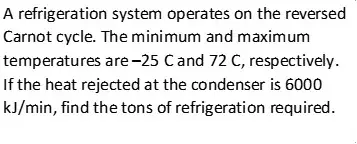
>
a)
20.44 TR
b)
24.40 TR
c)
42.20 TR
d)
44.20 TR
122.

>
a)
An increase in entropy
b)
An increase in enthalpy
c)
A decrease in entropy
d)
A decrease in enthalpy
123.
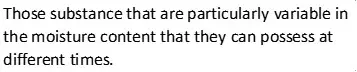
>
a)
Wet materials
b)
Hygroscopic materials
c)
Gross materials
d)
Bone-dry-weight material
124.

>
a)
A boiler feed tank is no longer required
b)
Less over all energy will be required to produce the steam
c)
It can be fitted at ground level
d)
It removes more oxygen
125.
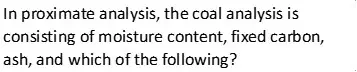
>
a)
Sulfur
b)
Hydrogen
c)
Nitrogen
d)
Volatile matter
126.
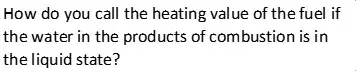
>
a)
Higher heating value
b)
Lower heating value
c)
Proximate heating value
d)
Gravimetric heating value
127.
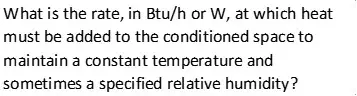
>
a)
Space heat gain
b)
Space cooling load
c)
Space heating load
d)
Space heat extraction rate
128.
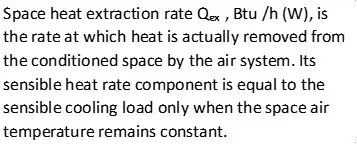
>
a)
Space heat gain
b)
Space cooling load
c)
Space heating load
d)
Space heat extraction rate
129.
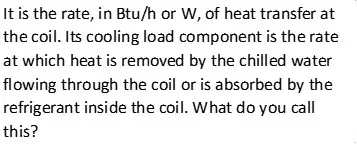
>
a)
Coil load
b)
Heating coil load
c)
Refrigerating load
d)
Cooling load
130.
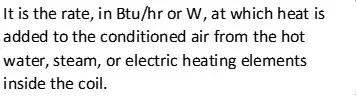
>
a)
Coil load
b)
Heating coil load
c)
Refrigerating load
d)
Cooling load
131.
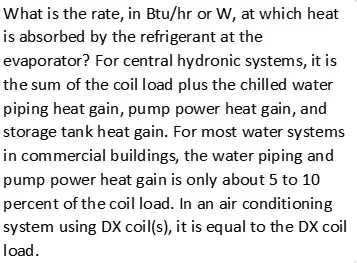
>
a)
Coil load
b)
Heating coil load
c)
Refrigerating load
d)
Cooling load
132.
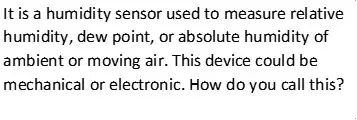
>
a)
Hydrometer
b)
Hygrometer
c)
Psychrometer
d)
Barometer
133.
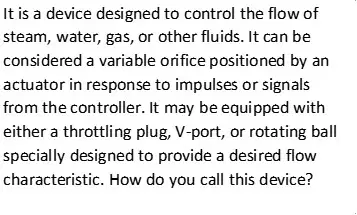
>
a)
Automatic Valve
b)
Automatic flow meter
c)
Thermostat
d)
Pyrometer
134.

>
a)
Shut-off the fuel and air supply
b)
Surface-blow the boiler
c)
Close the steam outlet valve from the boiler
d)
Increase the speed of the feed water
135.
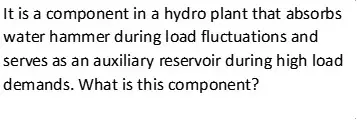
>
a)
Spillway
b)
Dam
c)
Surge tank
d)
penstock
136.
>
a)
Coking or coking coal
b)
Free burning coal
c)
Peat coal
d)
Lignite coal
137.

>
a)
Fire point
b)
Flash point
c)
Ignition temperature
d)
Creep temperature
138.
>
a)
Fire point
b)
Flash point
c)
Ignition temperature
d)
Creep temperature
139.
>
a)
Bloom
b)
Reflection
c)
Deflection
d)
Residue
140.
>
a)
Ash
b)
Color
c)
Carbon residue
d)
Coke
141.
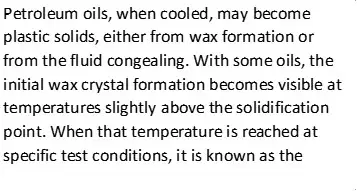
>
a)
Cloud point
b)
Pour point
c)
Creep point
d)
Flash point
142.
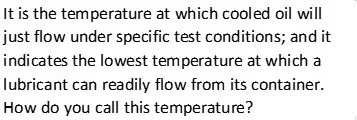
>
a)
Cloud point
b)
Pour point
c)
Creep point
d)
Flash point
143.
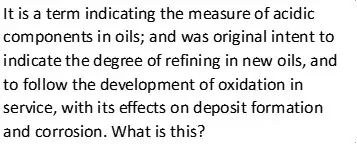
>
a)
Neutralization number
b)
Total base number
c)
Total acid number
d)
Neutralization number and total acid number
144.

>
a)
Neutralization number
b)
Total base number
c)
Total acid number
d)
Neutralization number and total acid number
145.
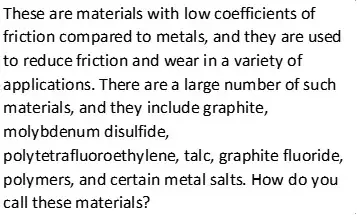
>
a)
Greases
b)
Liquid lubricants
c)
Solid lubricants
d)
Powder lubricants
146.
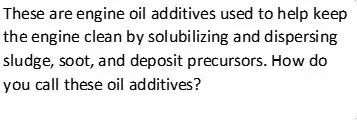
>
a)
Detergents
b)
Dispersants
c)
Oxidation inhibitors
d)
Corrosion inhibitors
147.
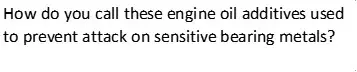
>
a)
Detergents
b)
Dispersants
c)
Oxidation inhibitors
d)
Corrosion inhibitors
148.
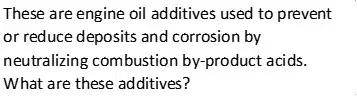
>
a)
Detergents
b)
Dispersants
c)
Oxidation inhibitors
d)
Corrosion inhibitors
149.

>
a)
Adhesion
b)
Cohesion
c)
Advection
d)
Convection
150.
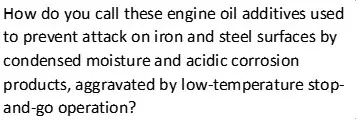
>
a)
Detergents
b)
Dispersants
c)
Oxidation inhibitors
d)
Rust inhibitors
151.
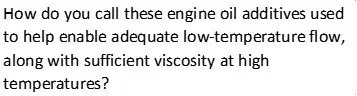
>
a)
Viscosity-index improvers
b)
Pour point dispersants
c)
Oxidation inhibitors
d)
Rust inhibitors
152.
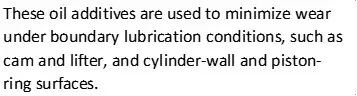
>
a)
Anti-wear additives
b)
Pour point dispersants
c)
Oxidation inhibitors
d)
Rust inhibitors
153.

>
a)
Anti-wear additives
b)
Defoamants
c)
Oxidation inhibitors
d)
Rust inhibitors
154.
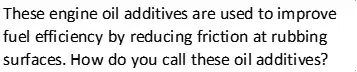
>
a)
Anti-wear additives
b)
Friction modifiers
c)
Oxidation inhibitors
d)
Rust inhibitors
155.

>
a)
Crater
b)
Hot water source
c)
Fumarole
d)
Volcano opening
156.

>
a)
336 m/s
b)
363 m/s
c)
633 m/s
d)
346 m/s
157.

>
a)
Sound velocity
b)
Acoustic velocity
c)
Subsonic velocity
d)
Critical velocity
158.
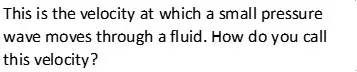
>
a)
Sonic velocity
b)
Subsonic velocity
c)
Supersonic velocity
d)
Hypersonic velocity
159.

>
a)
2.998 x 10⁸ m/s
b)
2.998 x 10⁹
c)
2.998 x 10¹° m/s
d)
2.998 x 10⁷ m/s
160.

>
a)
Entropy is always increasing
b)
Entropy is decreasing
c)
Entropy will zero at the end of time
d)
Entropy is stagnating
161.

>
a)
C₂H₅
b)
C₁₀H₁₆
c)
C₄H₁₀
d)
C₃H₆
162.

>
a)
75% latent heat and 25% sensible heat
b)
75% sensible heat and 25% latent heat
c)
25% latent and sensible heat and 75% latent heat
d)
75% sensible and latent heat and 25% sensible heat
163.
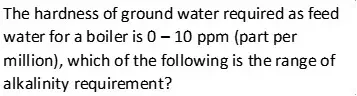
>
a)
pH 9 to pH 10
b)
pH 6 to pH 10
c)
pH 10 to pH 11
d)
pH 8 to pH 10
164.
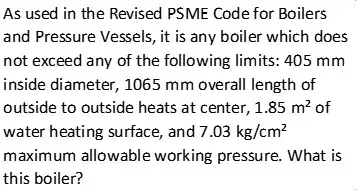
>
a)
Power boiler
b)
Portable boiler
c)
Miniature boiler
d)
Locomotive boiler
165.
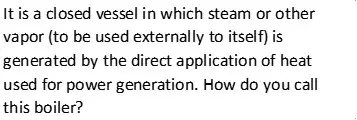
>
a)
Power boiler
b)
Portable boiler
c)
Oil-fired boiler
d)
Miniature boiler
166.
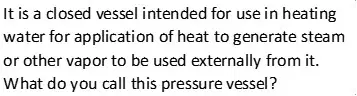
>
a)
Boiler or steam generator
b)
Fired pressure vessel
c)
Unfired pressure vessel
d)
Pressurized tank
167.
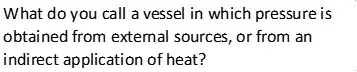
>
a)
Boiler or steam generator
b)
Fired pressure vessel
c)
Unfired pressure vessel
d)
Pressurized tank
168.
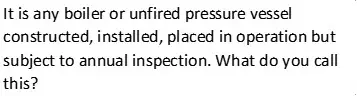
>
a)
Miniature boiler
b)
Existing installation
c)
New boiler
d)
Portable boiler
169.
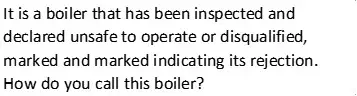
>
a)
Second hand boiler
b)
Reinstalled boiler
c)
Condemned boiler
d)
Unfired boiler
170.
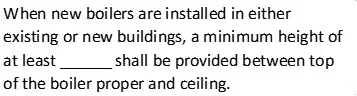
>
a)
1050 mm
b)
2130 mm
c)
1250 mm
d)
2050 mm
171.
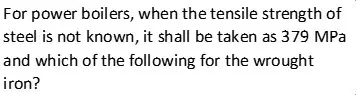
>
a)
379 N/mm²
b)
310 MPa
c)
450 MPa
d)
521 N/mm²
172.

>
a)
They pass condensate at steam temperature
b)
They operate by sensing condensate temperature
c)
They can be fitted into any position
d)
They are not affected by increasing back pressure
173.
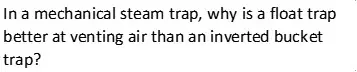
>
a)
A float can quickly adjust to the presence of air
b)
A float is fitted with an automatic air vent
c)
A float trap does not vent air better than bucket trap
d)
The air vent orifice is adjustable on a float trap
174.
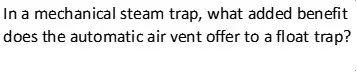
>
a)
It stops the trap from freezing in cold weather
b)
The trap can be use on larger backpressures
c)
It significantly increases the cold start-up capacity of the trap
d)
The condensate orifice can be the same size for all pressure gauges
175.

>
a)
It is able to withstand water hammer
b)
It can be used on higher pressure
c)
It can discharge air freely
d)
It cannot lose its water seal
176.
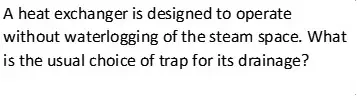
>
a)
Thermostatic trap
b)
Inverted bucket trap
c)
Thermodynamic trap
d)
Float trap with thermostatic air vent
177.

>
a)
An inverted bucket trap with an internal check valve mechanism
b)
A balanced pressure steam trap
c)
A float trap with automatic air vent
d)
A float trap with steam lock release mechanism
178.

>
a)
Wet steam supplied to the coil
b)
Too low a steam pressure onto the coil
c)
Condensate has to lift after the steam trap
d)
The coil falling in the direction of steam flow
179.

>
a)
Bimetallic steam traps are an ideal choice for rotating cylinders
b)
Rotating cylinders can not suffer from steam locking
c)
Strainers cannot be fitted to float traps which have a steam lock release
d)
Air vents around the thermodynamic and inverted bucket traps can considerably improve start-up times
180.

>
a)
Water particles suspended in steam
b)
Water allowed to build up in pipes
c)
Water droplets carried along the insides of pipes
d)
Wet steam passing through steam traps
181.

>
a)
None at all
b)
It reduces the drying rate of drying cylinders
c)
It increases the drying rate of drying cylinders
d)
It causes the steam trap to air bind
182.
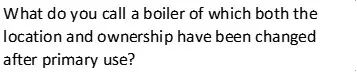
>
a)
Second hand boiler
b)
Surplus boiler
c)
Miniature boiler
d)
Reinstalled boiler
183.
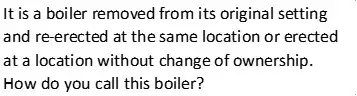
>
a)
Second hand boiler
b)
Surplus boiler
c)
Miniature boiler
d)
Reinstalled boiler
184.
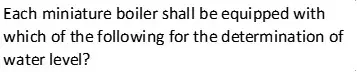
>
a)
Safety valve
b)
Fusible plug
c)
Water gage glass
d)
Pressure gages
185.
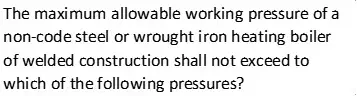
>
a)
1 atmosphere
b)
1 Bar
c)
100 kPa
d)
2 gage pressure
186.
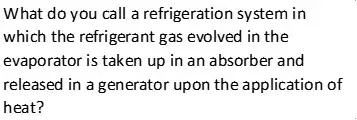
>
a)
Absorption refrigeration system
b)
Cascade refrigeration system
c)
Flooded refrigeration system
d)
Steam jet refrigeration system
187.
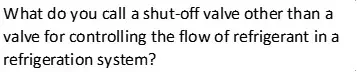
>
a)
Fusible valve
b)
Stop valve
c)
Check valve
d)
Relief valve
188.
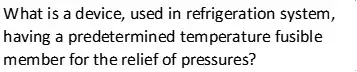
>
a)
Fusible valve
b)
Stop valve
c)
Check valve
d)
Relief valve
189.
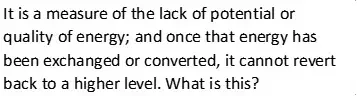
>
a)
Specific heat
b)
Entropy
c)
Internal energy
d)
Molecular energy
190.
>
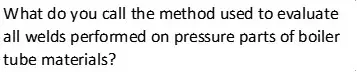
a)
Radiographic test
b)
Hydrostatic test
c)
Vacuum test
d)
Orsat analysis
191.
>
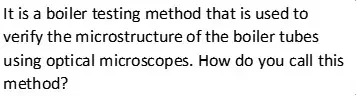
a)
Tube sampling
b)
Metallurgic replication
c)
Radiographic testing
d)
Optical testing
192.
>
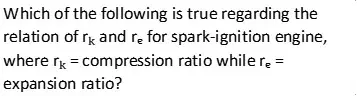
a)
rₖ > rₑ
b)
rₖ < rₑ
c)
rₖ = rₑ
d)
rₑ is not considered in the spark-ignition engine
193.
>
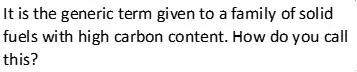
a)
Solid fuel
b)
Coal
c)
Anthracite
d)
Bituminous
194.
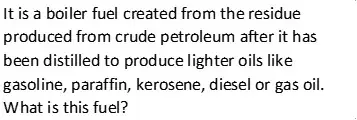
>
a)
Oil
b)
Kerosene
c)
Coke
d)
Peat
195.

>
a)
Coal
b)
Oil
c)
Gas
d)
Bunker
196.
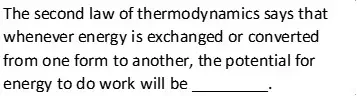
>
a)
Decreased
b)
Increased
c)
Zero
d)
Stagnant
197.

>
a)
It does so at constant entropy and temperature
b)
It does so at constant enthalpy and reducing temperature
c)
Both enthalpy and entropy reduce, and temperature remains constant
d)
Both enthalpy and entropy increase
198.
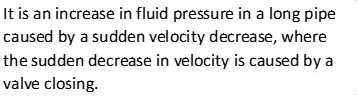
>
a)
Aero dynamics
b)
Water hammer
c)
Terminal velocity
d)
Drag
199.
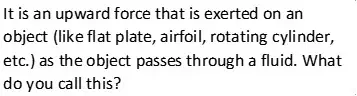
>
a)
Drag
b)
Lift
c)
Aero horsepower
d)
Terminal velocity
200.

>
a)
Drag
b)
Lift
c)
Aero horsepower
d)
Terminal velocity
201.
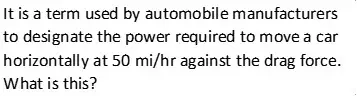
>
a)
Mechanical horsepower
b)
Aero horsepower
c)
Fuel power
d)
Fluid power
202.
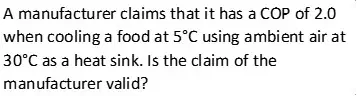
>
a)
Yes
b)
No
c)
Probably
d)
It needs experimental verification
203.

>
a)
Maximum
b)
Minimum
c)
Average
d)
Zero
204.

>
a)
Viscous and unviscous fluids
b)
Compressibility fluids
c)
Conservation of mass
d)
Steady and unsteady flows
205.

>
a)
Specific gravity of fluids
b)
Specific gravity of gases
c)
Specific gravity of liquids
d)
Specific gravity of solids
206.

>
a)
Maximum
b)
Minimum
c)
Zero
d)
Below zero
207.

>
a)
Converts kinetic energy into heat energy
b)
Changes internal energy into kinetic energy
c)
Converts potential energy into heat energy
d)
Changes enthalpic energy into kinetic energy
208.

>
a)
3000 rpm
b)
1000 rpm
c)
4000 rpm
d)
500 rpm
209.

>
a)
Waves of the ocean
b)
Thermal energy of ocean water
c)
Raw sea water
d)
Rise and fall of tides
210.
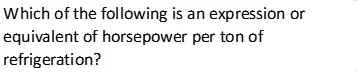
>
a)
4.715/COP
b)
COP/4.715
c)
COP x 4.715
d)
1/(4.715xCOP)
211.

>
a)
Internal energy
b)
Flow energy
c)
Enthalpy
d)
Entropy
212.
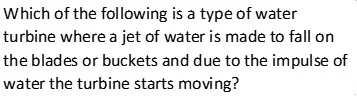
>
a)
Reaction turbine
b)
Steam turbine
c)
Francis turbine
d)
Pelton wheel
213.

>
a)
Axial centrifugal fan
b)
Mixed flow centrifugal fan
c)
Radial centrifugal fan
d)
Francis type fan
214.
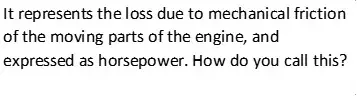
>
a)
Indicated Hp
b)
Brake Hp
c)
Combined Hp
d)
Friction Hp
215.
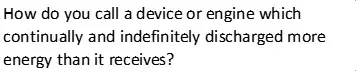
>
a)
Carnot engine
b)
Generating machine
c)
Stirling engine
d)
Perpetual motion machine
216.
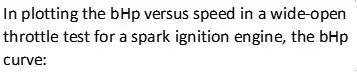
>
a)
is a Straight line
b)
tends to concave downward
c)
has no characteristic shape
d)
tends to concave upward
217.
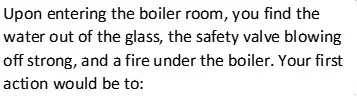
>
a)
Remove the fire with draft and damper open
b)
Cool the boiler down completely
c)
Prevent priming by not raising the safety valve or making change in operating of engines or boiler
d)
Cool the boiler down completely and prevent priming by not raising the safety valve
218.
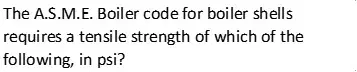
>
a)
10000 to 20000
b)
25000 to 45000
c)
55000 to 63000
d)
70000 to 85000
219.

>
a)
Once a day when the load is lightest
b)
Once a day under full load
c)
When the chemical concentration is greatest
d)
Once a shift
220.
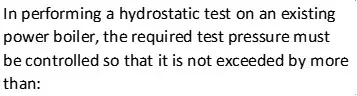
>
a)
2%
b)
4%
c)
6%
d)
8%
221.

>
a)
Replace all electric wiring
b)
Make an equipment inventory
c)
Replace all pump seals
d)
Repair all equipment which is not in operation
222.

>
a)
Train the staff to place flammable in fireproof containers
b)
Know how to attack fires regardless of size
c)
See that halls, corridors, and exits are not blocked
d)
Detect and eliminate every possible fire hazard
223.
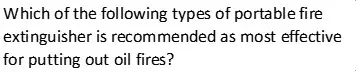
>
a)
Pump tank type
b)
Cartridge actuated type
c)
Soda acid type
d)
Foam type
224.
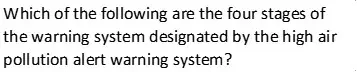
>
a)
Initial, chronic, acute, penetrating
b)
Forecast, alert, warning, emergency
c)
Light, medium, heavy, extra heavy
d)
Early, moderate, severe, toxic
225.

>
a)
Lime
b)
Copper sulfate
c)
Sulfuric acid
d)
Methylene blue
226.

>
a)
Saprophytic
b)
Dangerous
c)
Parasitic
d)
Pathogenic
227.

>
a)
Gamma radiation
b)
Transmutation radiation
c)
Walton radiation
d)
Betatron radiation
228.

>
a)
A certified plant mechanic
b)
At least 18 years old
c)
A holder of BSME degree
d)
A citizen of the Philippines
229.
>
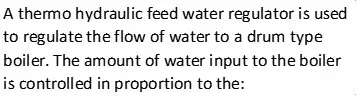
a)
Boiler load
b)
Setting of the feed pump relief valve
c)
Amount of water in the outer tube that flashes into steam
d)
Water level in the drum
230.

>
a)
5°F, 19.6 psig for the suction 86°F, 154.5 psig for the discharge
b)
5°F, 9.6 psig for the suction 96°F, 154.5 psig for the discharge
c)
10°F, 9.6 psig for the suction 96°F, 144.5 psig for the discharge
d)
5°F, 19.6 psig for the suction 96°F, 134.5 psig for the discharge
231.
>
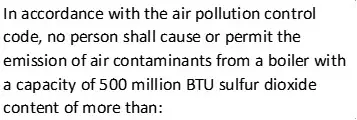
a)
300 parts per million by volume undiluted emissions measured at 15 percent excess air
b)
200 parts per million by volume of undiluted emissions measured at 10 percent excess air
c)
200 parts per million by volume undiluted emissions measured at 15 percent excess air
d)
300 per million by volume undiluted emissions measured at 10 percent excess air
232.
>
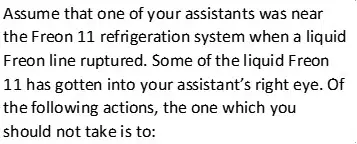
a)
Immediately call for an eye doctor specialist (medical doctor)
b)
Gently and quickly rub the Freon 11 out of the eye
c)
Uses a boric-acid solution to clean out the Freon 11 from his eye
d)
Wash the eye by gently blowing the Freon 11 out of his eye with air
233.
>
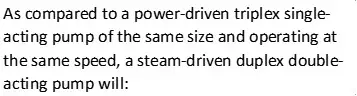
a)
Pump more water per minute
b)
Give a more uniform discharge
c)
Have a higher first cost
d)
Be more economical to operate
234.
>
a)
Condenser
b)
Cooler
c)
Cooling tower
d)
Evaporator
235.
>
a)
Direct-heat type dryer
b)
Indirect-heat type dryer
c)
Steam-heated type dryer
d)
Rotary Dryer
236.
>
a)
Expansion valve not open wide enough
b)
Expansion valve open too wide
c)
King valve not open wide enough
d)
Dirty dehydrator
237.
>
a)
Suction lift
b)
drawdown
c)
priming level
d)
clogging
238.

>
a)
Steam striking blades on angle
b)
No steam reaction to velocity
c)
Steam striking blades at zero angle
d)
Steam reversing direction
239.

>
a)
Carbon dioxide
b)
Hydrogen
c)
Oxygen
d)
Nitrogen
240.

>
a)
Create low steam quality
b)
Cause foaming
c)
Overheat blow off line
d)
Inhibit circulation and heat transfer
241.

>
a)
Absorptivity
b)
Emissivity
c)
Conductivity
d)
Reflectivity
242.
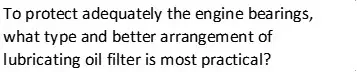
>
a)
Full flow type filter installed between the lubricating oil pump and bearings
b)
Splash lubricating system in the crank case
c)
Duplex filter installed before the lubricating pump
d)
Bypass filter with cleanable and replaceable elements
243.
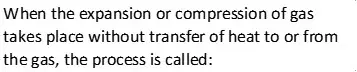
>
a)
Reversible
b)
Adiabatic
c)
Polytrophic
d)
Isothermal
244.

>
a)
Freon valve
b)
shut off valve
c)
king valve
d)
Master valve
245.
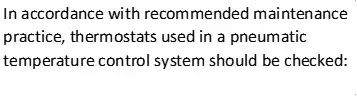
>
a)
Weekly
b)
Bi-monthly
c)
Monthly
d)
Once a year
246.
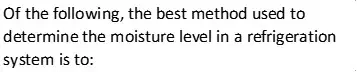
>
a)
Weigh the driver after it has been in the system for a period of time
b)
Use a moisture indicator
c)
Visually check the sight glass for particles of corrosion
d)
Test a sampler lubricating oil with phosphorus pentoxide
247.

>
a)
Prevent the products of decomposition from getting into the evaporator in the event of motor burn-out
b)
Condense out liquid refrigerant during compressor off cycles and compressor start-up
c)
Prevent the compressor unit form decreasing in capacity
d)
Prevent the liquid from dumping into the compressor crank-case
248.
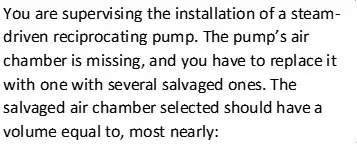
>
a)
Half of the position displacement of the pump
b)
1 ½ times the position displacement of the pump
c)
2 times the piston displacement of the pump
d)
2 ½ times the piston displacement of the pump
249.
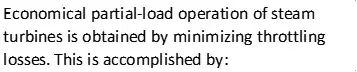
>
a)
Reducing the boiler pressure and temperature
b)
Throttling the steam flow into the uncontrolled set of nozzles
c)
Dividing the first-stage nozzles into several groups and providing a steam control valve for each group
d)
Controlling the fuel flow to the steam generator
250.

>
a)
Contains more heat energy
b)
Has a greater enthalpy of evaporation
c)
Has a smaller specific volume
d)
Condenses at a higher temperature
251.

>
a)
It contains no water droplets
b)
It causes severe erosion in pipes
c)
It may cause uneven heating of a product
d)
It has a temperature greater than 165°C
252.

>
a)
Has a larger specific heat capacity than water
b)
Has a dryness fraction of 0.99
c)
Must not be used as a heat transfer medium
d)
Has a temperature greater than 165°C
253.
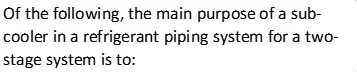
>
a)
Reduce the total power requirements and total heat rejection to the second stage
b)
Reduce the total power requirements and return oil to the compressor
c)
Improve the flow of evaporator gas per ton and increase the temperature
d)
Increase the heat rejection per ton and avoid system shutdown
254.
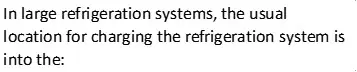
>
a)
Suction line
b)
Liquid line between the receiver shut-off valve and the expansion valve
c)
Line between the condenser and the compressor
d)
Line between the high pressure cut-off switch and the expansion valve
255.

>
a)
Increase in the full load current approximately by 10%
b)
Zero
c)
A decrease in the full load current of approximately 10%
d)
A decrease in the full load current 20%
256.
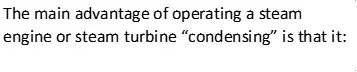
>
a)
Increases the mean effective pressure in the prime mover
b)
Decrease the condensate temperature
c)
Permits the use of exhaust steam to drive auxiliary equipment
d)
Eliminates the need for separating non-condensable from the steam
257.

>
a)
Horizontal swing-check valves
b)
Vertical swing-check valves
c)
Ball-check valves
d)
Spring-loaded check valves
258.

>
a)
Plate thickness to the rivet diameter
b)
Strength the riveted joint to the strength of a welded joint
c)
Strength of the riveted joint to the strength of the solid plate
d)
Number of rivets in the first row of the joint to the total number of rivets on one side of the joint
259.
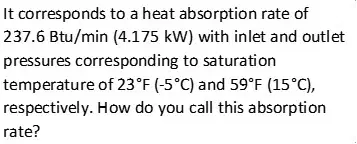
>
a)
American Unit of refrigeration
b)
British Unit of refrigeration
c)
European Unit of refrigeration
d)
Standard Unit of refrigeration
260.

>
a)
The external control is in a ‘dead’ area
b)
It is less likely to scale up
c)
It will respond more quickly to changes in water level
d)
Daily testing of the level control chamber is not required
261.

>
a)
To ensure the gauge cocks are operative
b)
To ensure there is sufficient water over the top fire tube
c)
To ensure the boiler water level is being properly sensed
d)
To check the boiler 1st and 2nd low water level alarms
262.

>
a)
Water level rises and lock-out occurs
b)
Reduced steam production
c)
Water level drops and lock-out occurs
d)
Steam velocity reduces and separator efficiency drops
263.

>
a)
To make it easier to open the boiler main stop valve
b)
To minimize undue stresses and eliminate damage
c)
To permit separators to remove more water
d)
To prevent stress on the boiler
264.

>
a)
It replaces the need for a separator after the boiler
b)
to remove air from the steam system
c)
To provide an extra separating function
d)
It is a requirement of the pressure systems regulations
265.

>
a)
Getting a boiler prepared for start-up
b)
A reduction in boiler pressure and carryover of water
c)
Occurrence of excessive TDS and carryover of water
d)
Balancing of boilers in a multi-boiler installation
266.

>
a)
Quick and easy to change to heavy fuel oil when required
b)
Price of fuel
c)
Price of interruptible gas lower than fixed supply
d)
Convenience of supply
267.

>
a)
Maximum working pressure
b)
Normal working pressure
c)
Hydraulic test pressure
d)
Feed pump maximum pressure
268.

>
a)
To control water level
b)
To drain the boiler
c)
To maintain TDS
d)
To remove sludge
269.

>
a)
Once a shift
b)
Twice a day
c)
Once a day
d)
Once a week
270.

>
a)
One is a check against the other
b)
One is a reserve
c)
It is a legal requirement
d)
To increase periods between maintenance
271.

>
a)
Raising the water temperature
b)
Lowering the water temperature
c)
Raising the pH value
d)
letting the water settle
272.

>
a)
The formation of scale
b)
The formation of sludge
c)
Corrosion
d)
Acidity
273.

>
a)
Magnesium sulphate
b)
Sodium carbonate
c)
Sodium bicarbonate
d)
Calcium bicarbonate
274.

>
a)
Carbonates and sulphates of sodium
b)
Calcium bicarbonate
c)
Carbonates and sulphates of magnesium
d)
Bicarbonate of sodium and magnesium
275.

>
a)
They separate out as soft scale and sludge
b)
They precipitate out solution and form hard scale
c)
Foaming and carryover occurs
d)
The TDS is increased
276.

>
a)
They are chemically treated to modify the pH
b)
The feedwater tank is raised to at least 85°C
c)
They are chemically treated to produce suspended solids
d)
They are removed by filtration means
277.
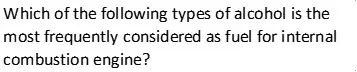
>
a)
Methyl alcohol
b)
Isopropyl alcohol
c)
Ethyl alcohol
d)
Alcogas
278.

>
a)
Control valve and actuator
b)
Control valve, actuator and sensor
c)
Control valve, actuator, capillary tube and sensor
d)
Control valve, actuator and capillary tube
279.
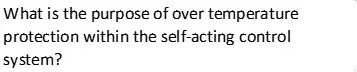
>
a)
To protect the valve from high temperature steam
b)
To protect the liquid fill in the capillary from boiling
c)
To protect the control system from irreversible damage
d)
To protect the application from overtemperature
280.
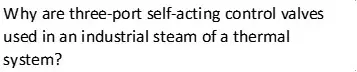
>
a)
To mix or divert liquids especially water
b)
To dump steam to waste under fault conditions
c)
Where cooling applications are required
d)
When large valves are required to meet large capacities
281.
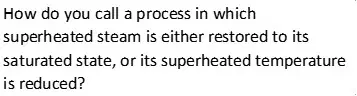
>
a)
Superheating
b)
Reheating
c)
Regenerative heating
d)
Desuperheating
282.

>
a)
Maximum attenuated working pressure
b)
Maximum allowable working pressure
c)
Maximum allowable with pressure
d)
Minimum allowable working pressure
283.

>
a)
It only has proportional control
b)
It has proportional and integral control but no derivative control
c)
It operates in an o/off fashion
d)
An external power source is required for it to operate
284.
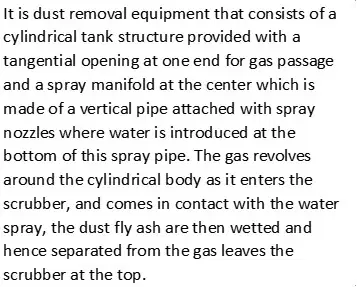
>
a)
Cinder trap or catcher
b)
Cyclonic Spray Scrubber
c)
Cyclone Separator
d)
Electrostatic Precipitator
285.
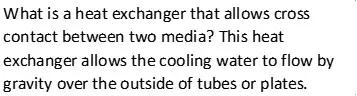
>
a)
Single-pass heat exchanger
b)
Double-pass heat exchanger
c)
Baudelot heat exchanger
d)
Shell-and-tube heat exchanger
286.

>
a)
3 to 5 times the machine weight
b)
4 to 6 times the machine weight
c)
2 to 4 times the machine weight
d)
2 to 4 times the machine weight
287.
>
a)
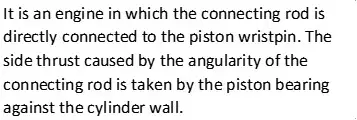
Opposed-piston engine
b)
Trunk piston engine
c)
Crosshead engine
d)
2-stroke engine
288.
>
a)
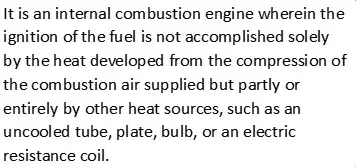
Spark-ignition engine
b)
Compression-ignition engine
c)
Surface-ignition engine
d)
Dual combustion engine
289.
>
a)
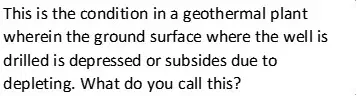
Ground subsidence
b)
Thermal pollution
c)
Chemical pollution
d)
Dissolved solids
290.
>
a)
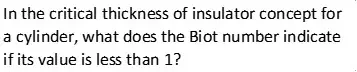
Condition for optimum heat flow
b)
Addition of insulation will increase heat transfer rate
c)
Additional insulation will decrease the heat transfer rate
d)
Heat transfer rate reaches a maximum
291.
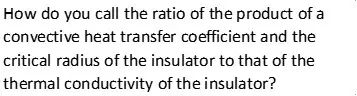
>
a)
Biot number
b)
Prandtl number
c)
Nusselt number
d)
Reynolds number
292.
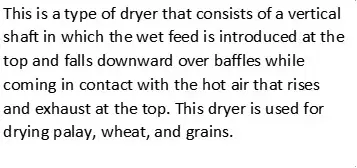
>
a)
Rotary dryer
b)
Hearth dryer
c)
Tower dryer
d)
Tray dryer
293.

>
a)
Remove mud drum water impurities
b)
Increase boiler priming
c)
Reduce steam pressure in the header
d)
Increase the boiler water level
294.
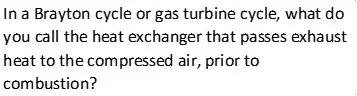
>
a)
Reheater
b)
Recuperator
c)
Heater
d)
Heat exchanger
295.

>
a)
Equal to the heat absorbed by the working substance from the regenerator
b)
Not equal to the heat absorbed by the working substance from the regenerator
c)
Dependent on the value of temperature in the heat addition process
d)
Measured during the constant temperature heat rejection process
296.
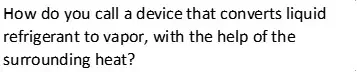
>
a)
Condenser
b)
Expansion valve
c)
Compressor
d)
Evaporator
297.
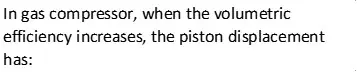
>
a)
Not been changed
b)
Been decreased
c)
Been increased
d)
Been insufficient data
298.

>
a)
Transmissivity
b)
Reflectivity
c)
Absorptivity
d)
Emissivity
299.
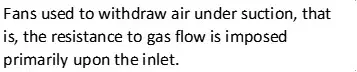
>
a)
Blowers
b)
Exhauster
c)
industrial fans
d)
Domestic fans
300.

>
a)
Surface tension
b)
Capillary rise
c)
Water gage rise
d)
Fluid column rise
100 %

