
 Worksheets
Latihanjism
Total questions: 209
Worksheet time: 6hrs 43mins

A
B
C
D

A
B
C
D

A
B
C
D

A
B
C
D

A
B
C
D

A
B
C
D
Our body has five senses that help us gather information about our surrounding. One of our five senses is ear. Which of the followings is an incorrect option for the functions of the ear?
Catching sound waves.
Maintaining body balance.
Keeping right body’s temperature.

Sahara Desert is an example of environment which is located in Africa. It is known as one of the hottest places on the Earth. Which of the following options does not describe the environmental condition in Sahara Desert?
It has dry and thin soil.
It has big temperature difference at day and nighttime.
It does not have any plant grows on its soil.

This is an illustration of Eddy standing in front of a flat mirror. There were his cat and toy behind the mirror. When he looked at the mirror, what were the objects did he see in the mirror?
Only himself
Himself, light bulb, and cupboard
Himself, light bulb, cupboard, cat, and toy

Eddy saw his image closely in the flat mirror as shown in the picture below. What was the result on the mirror when he turned his head to the left side?
His head in the mirror also turned left and looked the same.
His head in the mirror turned right and looked the same.
His head in the mirror turned right and looked smaller.

Below is the illustration of a doll when it is placed in front of the flashlight. The shadow formation of the doll will be different based on its distance from the flashlight. Which
flashlight position will create the tiniest shadow?
1
2
3

Before the analog watch was invented, people used a device called sundial for telling the time by the movement of the Sun. It has a pointer that will create a shadow based on the position of the Sun at that time. From the picture below, what time is shown by the sundial?
8 a.m.
1 p.m.
8 p.m.
Lenses are used in a variety of technical and scientific tools. Each of them has a specific function. Which of the following options is the tool to see a very small object?


Kenzo did an experiment with 3 different conditions of magnifying glasses to collect the sunlight and try to burn the black paper as illustrated below. Based on the three conditions as shown below, which of the following options did burn the black paper the fastest?
a
b
c

Long before the analog and digital clocks were founded, people used a sundial in which the sunlight was needed to find out the time. Sundials are very useful, especially during the day. One of the ways to create a simple sundial is by using a stick that is plugged into a
surface and using stones to mark the shadow movement.
Which explanation is the most appropriate to
illustrate why the shadow on the sundial moves ?
Shadow movement occurs because the Sun rotates.
Shadow movement occurs because the Sun revolves.
Shadow movement occurs because the Earth
revolves.
Shadow movement occurs because the Earth rotates.

The Eskimos in the Arctic Archipelago have already known how to adapt well with their environment since a long time ago. The materials and construction of their houses are special. They live temporarily in an igloo during the hunting time in winter when the temperature is around -50°C. Instead of feeling cold, the Eskimos feel warm if they stay inside the igloo.
What is the correct reason behind that phenomenon?
Snow is a good insulator that prevents the heat release from the igloo to the outside.
Snow is a good conductor that receives the heat easily from human body.
The dome shape is good for the heat release.
Igloo does not have any ventilation to prevent leaking of the heat to the air outside.

Without using a compass, we still can find a direction
from the shadow. Which of the following positions of
the shadow indicates the one in the afternoon (p.m.)?
1
2
3

A
B
C

A
B
C

A
B
C
Kate was doing an experiment using three different types of mirrors, which are plane, convex, and concave mirrors. Each mirror shows different image reflection. When Kate uses plane mirror in her bathroom, her reflection becomes upright, the same size, and reversed direction.
When Kate uses her mother’s magnifying mirror which is concave mirror, her reflection becomes bigger and upright. When Kate uses rear-view mirror from her father’s car which is convex mirror, how will her reflection look like?
Upright, the same size, has a wide field of view
Upside-down, bigger, has a narrow field of view
Upright, smaller, has a wide field of view

A. 1 - 2 – 3
B. 2 - 3 - 4
C. 3 - 5 - 6
One of the digestive organs in human body is mouth. It is the first organ where the digestion process starts. Which of the following options is not correct about the function of mouth?
To taste food with the taste sensor
To digest food with saliva
To chew food into smaller size

A
B
C

A
B
C
Evaporation is a process when liquid changes into gas. Evaporation does not always need a high temperature to occur. Which one of the following options is the example of evaporation in our daily life?
Water in the freezer
Water droplets on leaves in the morning
Sea water at noon

The Earth completes a rotation every 24 hours which is known as a whole day. Below is an
illustration of the Earth rotating on its axis. Which of the following options shows (1) the
period of time on area X and (2) the relevant activity during that time?
Daytime - Playing fireworks
Daytime - Hiking
Nighttime - Observing fireflies
Nighttime - Gardening
Below is the illustration of a doll when it is placed in front of the flashlight. The shadow formation of the doll will be different based on its distance from the flashlight. Which
flashlight position will create the tiniest shadow?
1
2
3
Choose the right shadow that can be created based on the sun position.


Zoe made a simple balance scale using a wooden stick and string to measure the weight of 4
objects as illustrated below. Study the following illustration carefully. Which object is the
heaviest?
a
b
c
d
A
B
C


Look at the following scales and fill in the blanks with “heavier than”, “lighter than” or “the same as”.
The tennis ball weighs _________ the apple.
The tennis ball weighs lighter than the apple.
The tennis ball weighs heavier than the apple.
The tennis ball weighs the same as the apple.

Look at the following scales and fill in the blanks with “heavier than”, "lighter than" or "the same as" ?
The tennis ball weighs ......... the book.
The tennis ball weighs lighter than the book.
The tennis ball weighs heavier than the book.
The tennis ball weighs the same as the book.

__________________ are consumers that eat ONLY MEAT (other animals)?
Omnivores
Carnivores
Producers
Herbivores

________________ are consumers that eat ONLY PLANTS.
Herbivores
Carnivores
Omnivores
Producers

__________________ are consumers that eat BOTH Plants and Animals for food.
Omnivores
Producers
Herbivores
Carnivores


A diurnal animal is active in the
day
sun
night
water
Nocturnal animals are active in the
sun
day
night
morning
Which animal is diurnal?


Which animal is nocturnal?


A giraffe is a _____________ animal.
nocturnal
diurnal

A
B
C
D

A
B
C
D

What is happening in the picture?
Push
Pull

Look at the picture. Which statement is CORRECT?
The reindeer is pushing the Santa.
The Santa is pushing the reindeer.
The reindeer is pulling the Santa.
The Santa is pulling the reindeer.

Pull
Push

Where will the tree's shadow be?
A
B
C

Which direction is right for creating this shadow
1
2
3

A
B
C
D
A
B
C
D
A
B
C
D
A
B
C
D
A
B
C
D
A
B
C
D
The Earth completes a rotation every 24 hours which is known as a whole day. Below is an
illustration of the Earth rotating on its axis. Which of the following options shows (1) the
period of time on area X and (2) the relevant activity during that time?
Daytime - Playing fireworks
Daytime - Hiking
Nighttime - Observing fireflies
Nighttime - Gardening

Sound is a vibration that travels through a medium as a wave. Freddy did an experiment to
prove this theory as illustrated below. He spread 1 tablespoon of salt on top of the bowl
which is covered with plastic wrap. He held the metal tray in the air but next to the bowl.
Then, by using a metal spoon, he hit the metal tray like a drum while observing the salt.
What is the result of this experiment?
The salt is not moving because sound vibration cannot be transferred through
different media.
The salt is moving because sound vibration is transferred through air and reach the
plastic wrap.
The salt is not moving because sound vibration has not enough power to move thing.
The salt is moving because sound vibration is transferred to the bowl first and then
reach the plastic wrap.

Gravity is a force that pulls objects toward the Earth. When objects are dropped, they will
fall to the ground. However, the air has a resistance that defies gravity and creates an
upward force. This resistance causes objects to fall at different speeds. Five children did an
experiment by dropping 5 cups of the same size from the second floor onto the ground. Each of them turned the cup upside down and dropped it at the same time. Which of the
following options shows all the cups falling more slowly?
1-3-5
2-3-4
3-4-5
1-3-4

There are several characteristics that categorize plants as living things. One of the examples
is the behavior of Mimosa pudica. It is well known as ‘sensitive plant’ because its leaves will
curl when we touch them. What is the characteristic of living thing that explains the
behavior of this plant?
Living things can move on their own
Living things will die without oxygen
Living things adapt to their environment
Living things respond to stimuli

One late afternoon, Kaito did an experiment by sticking a bar magnet with a tape to a
styrofoam plate to observe whether magnet can be used as a compass. When he put the
styrofoam plate on the water and turned it a few times, it finally stopped. In which direction
would the South pole of the magnet be pointing?
A
B
C
D

Jib and Sua did an experiment by blowing out a candle as illustrated below. Each of them
blew a candle which was placed behind an object. Jib used a round-shaped object while
Sua used a square-shaped one. The shape of objects will give a different impact to the air
movement. When they blew out the candles at the same time, whose candle would put
out easier and why?
Jib’s candle; it is because the air spreads in all direction.
Sua’s candle; it is because the air goes around the object.
Jib’s candle: it is because the air movement follows the shape of the object.
Sua’s candle; it is because the shape of the object makes the air move easier.
Puffer fish is mostly found in tropical and subtropical ocean. This fish has elastic stomach
that allows it to quickly take large amount of water to transform into a bigger size. What is
the purpose of that behavior?
To draw attention of their preys.
To get more oxygen when they are breathing.
To communicate with other puffer fish.
To protect themselves and scare their predators away.
River is a place where we can naturally find flowing water which will end up in sea, lake, or
another river. River consists of fresh water with many natural resources. What kind of
things we cannot utilize from the river?
The soil as natural fertilizer for plant
The small stones as construction material
The fish and shrimp as the sources of protein
The water as the source to water rice field
Zoe made a simple balance scale using a wooden stick and string to measure the weight of 4
objects as illustrated below. Study the following illustration carefully. Which object is the
heaviest?
a
b
c
d
Ecosystem is a geographic area where plants, animals, and other organisms live together
with abiotic components and interact with each other. There are many kinds of ecosystem
exist on the Earth. Ocean, rain forest, and desert are the examples of ecosystem where
they have different kinds of population and community. Which one of the following options
correctly shows the examples of populations which live in a pond ecosystem?
Snail, duck, cod fish, water lily
Duck, tadpoles, frog, lotus
Snail, frog, clownfish, water lily
Swan, tadpoles, coral, lotus
Recycling is the process of converting waste materials into reusable objects. It also allows
materials to be used more than once. The recycling process is one of the ways to reduce
pollutions in our environment. Recyclable materials include glass, paper, metal, plastic, and
so on. Mention 2 benefits of recycling.

James did an experiment by tying a magnet with a string and hanging it as shown in the
picture below. After spinning the magnet for a while, it had always pointed to the North
and South. He repeated the experiment many times and the result was always the same.
Why did it happen?
What type of clouds produce thunderstorms?
Chocolate clouds
Cotton Candy clouds
Cumulonimbus clouds
Large masses of ice that move slowly across land are (a)
What is the characteristic of the cumulus clouds?
Mention all the clouds name___
Culumus
Cumulus
Stratus
Nimbus
(a) clouds, like cauliflower are cumulus clouds
Draw an stratus cloud

Sing a song about sky
Record yourself explaining about the characteristics of nimbus clouds
Pick a picture of stratus clouds


The Earth completes a rotation every 24 hours which is known as a whole day. Below is an
illustration of the Earth rotating on its axis. Which of the following options shows (1) the
period of time on area X and (2) the relevant activity during that time?
Daytime - Playing fireworks
Daytime - Hiking
Nighttime - Observing fireflies
Nighttime - Gardening
Below is the illustration of a doll when it is placed in front of the flashlight. The shadow formation of the doll will be different based on its distance from the flashlight. Which
flashlight position will create the tiniest shadow?
1
2
3
Choose the right shadow that can be created based on the sun position.
Zoe made a simple balance scale using a wooden stick and string to measure the weight of 4
objects as illustrated below. Study the following illustration carefully. Which object is the
heaviest?
a
b
c
d
A
B
C
Look at the following scales and fill in the blanks with “heavier than”, “lighter than” or “the same as”.
The tennis ball weighs _________ the apple.
The tennis ball weighs lighter than the apple.
The tennis ball weighs heavier than the apple.
The tennis ball weighs the same as the apple.
Look at the following scales and fill in the blanks with “heavier than”, "lighter than" or "the same as" ?
The tennis ball weighs ......... the book.
The tennis ball weighs lighter than the book.
The tennis ball weighs heavier than the book.
The tennis ball weighs the same as the book.
__________________ are consumers that eat ONLY MEAT (other animals)?
Omnivores
Carnivores
Producers
Herbivores
________________ are consumers that eat ONLY PLANTS.
Herbivores
Carnivores
Omnivores
Producers
__________________ are consumers that eat BOTH Plants and Animals for food.
Omnivores
Producers
Herbivores
Carnivores
A diurnal animal is active in the
day
sun
night
water
Nocturnal animals are active in the
sun
day
night
morning
Which animal is diurnal?
Which animal is nocturnal?
A giraffe is a _____________ animal.
nocturnal
diurnal
A
B
C
D
A
B
C
D
What is happening in the picture?
Push
Pull
Look at the picture. Which statement is CORRECT?
The reindeer is pushing the Santa.
The Santa is pushing the reindeer.
The reindeer is pulling the Santa.
The Santa is pulling the reindeer.
Pull
Push
Where will the tree's shadow be?
A
B
C
Which direction is right for creating this shadow
1
2
3

Jenna learned about pollination in her science class. Pollination is the transfer of pollen grain from male to female flowers to produce fruits and seeds. This process could be done with the help of animals known as pollinators.
Jenna found some animals in her backyard as illustrated below and observed which ones are pollinators.
Which of the following options shows all the correct pollinators?
Bee, bettle, mosquito, snail
beetle, grasshopper, mosquito, snail
butterfly, fly, grasshopper, hummingbird
bee, butterfly, fly, hummingbird
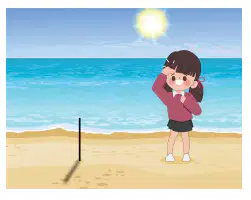
Airi placed a stick into the sand on the beach as shown below. She then observed the changes in the length of the shadow from 7 am to 5 pm and recorded it in a graph. Which of the following graphs correctly display Airi's observation?
(Note : the sun is at 90 degree angle at noon)


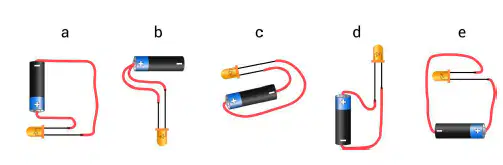
Light-emitting diodes (LED) are special lights that use less electricity but produce more light than regular bulbs. This helps save electricity and reduce waste. For this to work, the longer leg must be connected to the positive pole of the battery. Otherwise, the light will not turn on. Look at the illustrations below and see how the LEDs are connected to a battery.
Which of the following options shows all the circuit that will light up?
a and e
a, c, and d
b, c, and d
only e
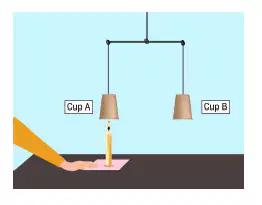
Clara was balancing two paper cups using a stick and strings. The cups were hung upside down and balanced in the beginning. Then, she placed a candle under cup A and observed whether the density of air changed depending on the temperature.
Which of the following options correctly describes the result of the experiment
Cups A and B moved up and down alternately
Cup A went up and cup B went down
Cup B went up and cup A went down
Cups A and B remained in their original position
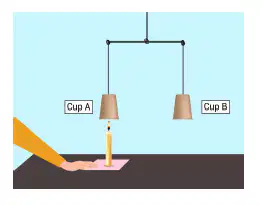
Next, Clara moved the candle under cup B and observed for a few seconds. Based on the result, which of the following correctly describes the density of air in cups A and B
The air in both cups A and B became lighter
The air in cup A became lighter than in cup B
The air in cup B became lighter than in cup A
The density of air was not affected by the temperature
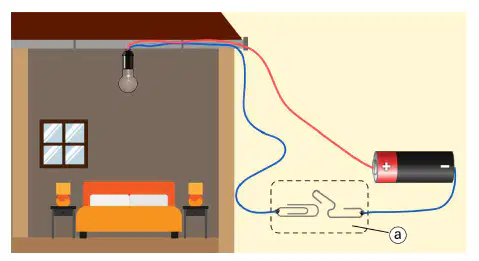
Naomi created a toy house with lights that can be turned on and off using switch (a) made from paper clips. While the light is off, she is now deciding on the material for the sheet that will be placed under switch (a)
Among the four materials, which one is not suitable to be placed under switch (a) ?
Rubber sheet
Drawing paper
Plastic sheet
Aluminium foil
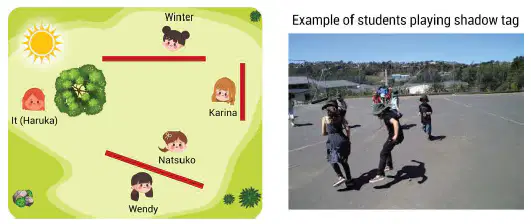
One afternoon, around 2 PM, 5 students are playing shadow tag on the school playground. When 'it' steps on another student's shadow, that student becomes the new 'it'. Below are their positions on the playground which has a small tree and three brick walls.
If the students do not move from their positions, whose shadow is the most difficult to be stepped on?
Winter
Natsuko
Wendy
Karina
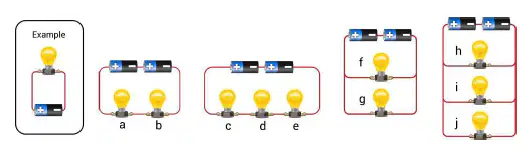
The following illustrations show simple electric circuits with batteries and light bulb (s) . The example shows a circuit using single battery and a light bulb. Among light bulbs 'a' to 'j', find all the bulbs that have the same brightness as the example
a and b
a, b, f, g
c, d, e
h, i, j
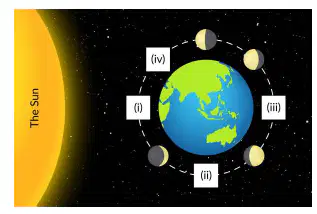
The moon appear to change shape as its position around the Earth changes. At the same time, the Earth moves around the Sun in its orbit. This result in a total of eight phases in 29 days.
Which of the following options correctly indicates the phases at (i) , (ii), (iii), and (iv)


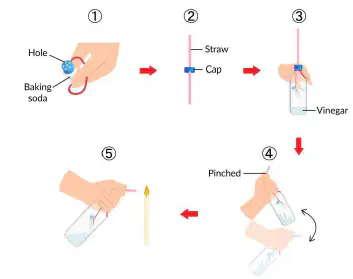
David made a fire extinguishers using baking soda, a medicine container, a straw and a plastic bottle. He put baking soda in the medicine container, then hung it inside a bottle filled with vinegar. He closed the bottle tightly using a bottle cap attached with a straw as shown in illustration (2). Finally, he shook the bottle quickly and pointed the straw at the candle flame to extinguish it.
What gas came out of the bottle?
Oxygen
Carbon dioxide
Nitrogen
Hydrogen
Is mass and weight is the same?
Yes
No

Which force pulls objects towards the Earth
Friction
Fore
Air resistance
Gravity
what are the major organs of the circulatory system
vein, arteries, capillaries, heart
Nose and Mouth, Lungs, Diaphragm, Alveoli
Muscles, Bones, Ligament, Tendon
Brain, Spinal Cord, Nerves, Neuron
what are the major organs of the respiratory system
vein, arteries, capillaries, heart
Nose and Mouth, Lungs, Diaphragm, Alveoli
Muscles, Bones, Ligament, Tendon
Brain, Spinal Cord, Nerves, Neuron
what are the major organs of the muscular skeletal system
vein, arteries, capillaries, heart
Nose and Mouth, Lungs, Diaphragm, Alveoli
Muscles, Bones, Ligament, Tendon
Brain, Spinal Cord, Nerves, Neuron
what are the major organs of the digestive system
vein, arteries, capillaries, heart
Skin, Lungs, Kidneys, Bladder
Esophagus, Stomach, Small Intestine, Large Intestine
Brain, Spinal Cord, Nerves, Neuron
Match the following with there function
Digestive system
Break down food into substances that the body uses for energy
Excretory system
Removing wastes produced by daily actives to do other daily life activities
Muscular skeletal system
support body give shape protect organs area for muscles to move store minerals and make blood cells
Nervous system
Control and coordinate the body’s activities. helps to sense change in environment
Circulatory system
Transport needed substances throughout the body and carry away the wastes
Match the following with there function
Digestive system
Break down food into substances that the body uses for energy
respiratory system
take in oxegen and remove carbon dioxide from body to preform daily life activities .
Muscular skeletal system
support body give shape protect organs area for muscles to move store minerals and make blood cells
Nervous system
Control and coordinate the body’s activities. helps to sense change in environment
Circulatory system
Transport needed substances throughout the body and carry away the wastes

What is this science tool?
jar
beaker
thermometer
ruler

What does this science tool do?
used for heating a liquid
used for measuring volume of a liquid
used for measuring mass
used for measuring volume of a sound

Name this tool.
Thermometer
Triple Beam Balance
Pan Balance
Safety Goggles
A water molecule has the chemical formula H2O. This means that the water molecule is made up of
Two hydrogen atoms and one oxygen atom
Two oxygen atoms and one hydrogen atom
Two hydrogen atoms and two oxygen atoms
Two molecules of water
Which of these can rapidly affect Earth’s surface?
earthquakes
annual rainfall
sediment deposits
frozen precipitation
How does a volcano cause a constructive change to the Earth's surface?
It floods the land.
It adds new land.
It takes land away.
It breaks apart land.

What is pictured in the diagram?
canyon
fault
tornado
volcano
What is a sign that a chemical change has occurred?
The physical properties are the same
The state of the matter has changed
The production of heat, light, or smoke is observed
The substance seems to have disappeared
The Earth completes a rotation every 24 hours which is known as a whole day. Below is an
illustration of the Earth rotating on its axis. Which of the following options shows (1) the
period of time on area X and (2) the relevant activity during that time?
Daytime - Playing fireworks
Daytime - Hiking
Nighttime - Observing fireflies
Nighttime - Gardening
Sound is a vibration that travels through a medium as a wave. Freddy did an experiment to
prove this theory as illustrated below. He spread 1 tablespoon of salt on top of the bowl
which is covered with plastic wrap. He held the metal tray in the air but next to the bowl.
Then, by using a metal spoon, he hit the metal tray like a drum while observing the salt.
What is the result of this experiment?
The salt is not moving because sound vibration cannot be transferred through
different media.
The salt is moving because sound vibration is transferred through air and reach the
plastic wrap.
The salt is not moving because sound vibration has not enough power to move thing.
The salt is moving because sound vibration is transferred to the bowl first and then
reach the plastic wrap.
Gravity is a force that pulls objects toward the Earth. When objects are dropped, they will
fall to the ground. However, the air has a resistance that defies gravity and creates an
upward force. This resistance causes objects to fall at different speeds. Five children did an
experiment by dropping 5 cups of the same size from the second floor onto the ground. Each of them turned the cup upside down and dropped it at the same time. Which of the
following options shows all the cups falling more slowly?
1-3-5
2-3-4
3-4-5
1-3-4
There are several characteristics that categorize plants as living things. One of the examples
is the behavior of Mimosa pudica. It is well known as ‘sensitive plant’ because its leaves will
curl when we touch them. What is the characteristic of living thing that explains the
behavior of this plant?
Living things can move on their own
Living things will die without oxygen
Living things adapt to their environment
Living things respond to stimuli
One late afternoon, Kaito did an experiment by sticking a bar magnet with a tape to a
styrofoam plate to observe whether magnet can be used as a compass. When he put the
styrofoam plate on the water and turned it a few times, it finally stopped. In which direction
would the South pole of the magnet be pointing?
A
B
C
D
Jib and Sua did an experiment by blowing out a candle as illustrated below. Each of them
blew a candle which was placed behind an object. Jib used a round-shaped object while
Sua used a square-shaped one. The shape of objects will give a different impact to the air
movement. When they blew out the candles at the same time, whose candle would put
out easier and why?
Jib’s candle; it is because the air spreads in all direction.
Sua’s candle; it is because the air goes around the object.
Jib’s candle: it is because the air movement follows the shape of the object.
Sua’s candle; it is because the shape of the object makes the air move easier.
Puffer fish is mostly found in tropical and subtropical ocean. This fish has elastic stomach
that allows it to quickly take large amount of water to transform into a bigger size. What is
the purpose of that behavior?
To draw attention of their preys.
To get more oxygen when they are breathing.
To communicate with other puffer fish.
To protect themselves and scare their predators away.
River is a place where we can naturally find flowing water which will end up in sea, lake, or
another river. River consists of fresh water with many natural resources. What kind of
things we cannot utilize from the river?
The soil as natural fertilizer for plant
The small stones as construction material
The fish and shrimp as the sources of protein
The water as the source to water rice field
Zoe made a simple balance scale using a wooden stick and string to measure the weight of 4
objects as illustrated below. Study the following illustration carefully. Which object is the
heaviest?
a
b
c
d
Ecosystem is a geographic area where plants, animals, and other organisms live together
with abiotic components and interact with each other. There are many kinds of ecosystem
exist on the Earth. Ocean, rain forest, and desert are the examples of ecosystem where
they have different kinds of population and community. Which one of the following options
correctly shows the examples of populations which live in a pond ecosystem?
Snail, duck, cod fish, water lily
Duck, tadpoles, frog, lotus
Snail, frog, clownfish, water lily
Swan, tadpoles, coral, lotus
Recycling is the process of converting waste materials into reusable objects. It also allows
materials to be used more than once. The recycling process is one of the ways to reduce
pollutions in our environment. Recyclable materials include glass, paper, metal, plastic, and
so on. Mention 2 benefits of recycling.
James did an experiment by tying a magnet with a string and hanging it as shown in the
picture below. After spinning the magnet for a while, it had always pointed to the North
and South. He repeated the experiment many times and the result was always the same.
Why did it happen?
Joy wants to make an electrical circuit using a battery, a wire, and a small bulb without a socket. She assembled the electrical circuit as illustrated below. However, the bulb did not light up.
She tried the following ways to turn on the light bulb. Which one can turn on the light bulb?


Swallowtail butterflies develop starting from eggs, larvae, pupae, to adults. What do you call this type of development, and which insect undergo the same phases of growth?
Complete metamorphosis, cicada
Complete metamorphosis, silk moth
Incomplete metamorphosis, mosquito
Incomplete metamorphosis, dragonfly
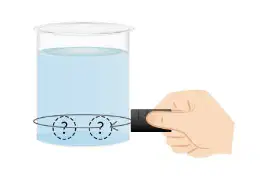
Four students, Andy, Benny, Celine, and Diana did an experiment using magnets to observe whether magnets still can attract objects underwater. Below were the two objects each of them picked up at school:
Andy : copper coins and marbles
Benny : push pins and iron nails
Celine : paper clips and steel balls
Diana : building blocks and safety pins
Then, they put the objects into four different jars of water. They moved the magnet around the jar to attract the objects inside the water as illustrated.
Whose objects were attracted by the magnet?
Andy & Celine
Benny & Celine
All of them
None of them
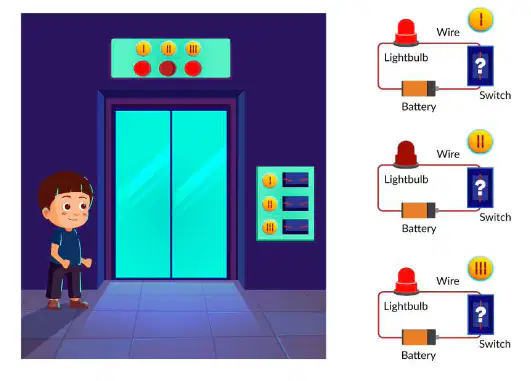
One day, Leo played an RPG game. His character needed to open a secret chamber by turning three electrical circuits (i), (ii), and (iii) on, off, and on respectively as illustrated below. His character must put one of the following objects as a switch for each circuit.
Silver spoon | Paper clip | Copper coin | Glass rod | Aluminum ruler | Wooden chopstick
By following the codes, which of the following options below indicates the correct objects to
open the secret chamber?
Circuit (i): Silver spoon
Circuit (ii) : Paper clip
Circuit (iii) : Copper coin
Circuit (i): Copper coin
Circuit (ii) : Glass rod
Circuit (iii) : Aluminium ruler
Circuit (i): Wooden Chopstick
Circuit (ii) : Silver Spoon
Circuit (iii) : Paper clip
Circuit (i): Glass rod
Circuit (ii) : Aluminium ruler
Circuit (iii) : Wooden chopstick
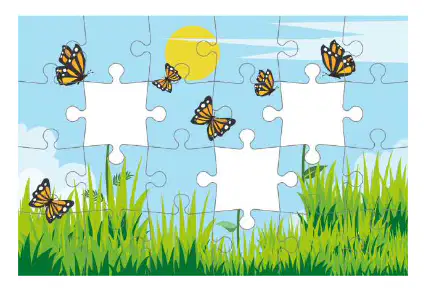
After Leo’s character entered the secret chamber, he found a large puzzle with missing pieces. The puzzle is about butterflies feeding on three kinds of flowers.
Leo’s character needed to complete the mission by placing three missing pieces correctly. Which one he should not place on the puzzle?


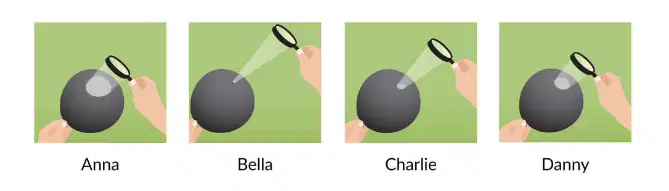
On a sunny day, four students were using magnifying glasses to focus the sunlight on black balloons as illustrated below. They tried to pop the balloons with the heat from the Sun.
Which of the following options shows the students who popped the balloons in order from the fastest to the slowest?
Anna – Danny – Charlie – Bella
Charlie – Danny – Anna – Bella
Bella – Charlie – Danny – Anna
Danny – Bella – Charlie – Anna
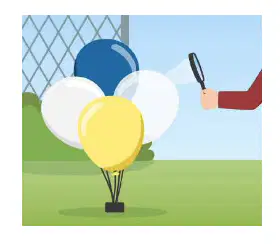
After they found out the way to make the balloon popped the fastest, they tried to pop other balloons with different colors. They measured the time until each balloon burst using a stopwatch.
Which of the following options is the incorrect description for the above experiment?
The transparent balloon popped faster than the blue one
The blue balloon popped faster than the yellow one
The yellow balloon popped faster than the white one
The white balloon popped faster than the transparent one
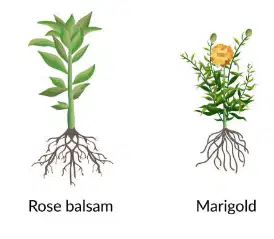
A plant body can be divided into root, stem, and leaf regardless of grass or tree. Each part has its own function. Which of the following options incorrectly describes the function of the root?
Absorbing water and nutrients dissolved in it from the soil.
Supporting the plant body so it does not fall.
Absorbing air from spaces in the soil.
Producing nutrients by receiving sunlight and then carrying them throughout the plant body.
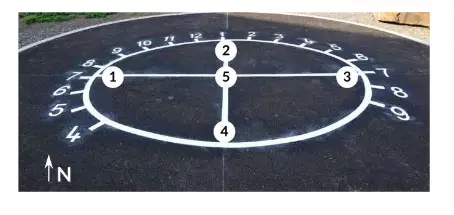
The Sun appears to move across the sky because the Earth rotates on its axis. This phenomenon is applied to the playground sundial which can show the hours on a sunny day.
Where is the direction of South and West?
South: 1, West: 2
South: 2, West: 3
South: 3, West: 4
South: 4, West: 1
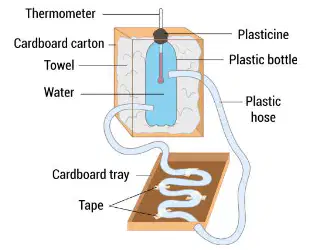
Brian built a handmade water heater to study how heat is transferred from high temperature to low temperature. If heat is absorbed by the hose placed in the cardboard tray, the water in the bottle becomes warmer. The experiment will be successful if the temperature of the water in the plastic bottle is increased.
The experimental set was placed in 4 different places. Which of the following options indicates the best place to raise the water temperature?


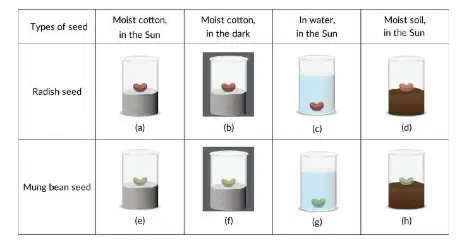
Nagi did an experiment to observe seed germination. She had two kinds of seeds: radish seed and mung bean seed. She placed the seeds in separate jars under various experimental conditions as illustrated below. The temperature of all the jars is the same at 25°C.
After three days, she noticed that only seeds in jars (b), (e), (f), and (h) had germinated. Based on the experiment results, which of the following options is not the conclusion of the experiment?
Oxygen is essential for seeds to germinate.
Light is not necessary for germination.
Radish seed is intolerant to light, and therefore cannot germinate in bright
conditions.
Mung bean seed needs light to germinate, while radish seed does not.
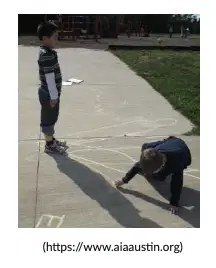
Shadow tracing is a way of studying how people used the Sun’s shadow to tell the time long before we had watches and clocks. There are two roles in shadow tracing: the shadow maker and the shadow tracer who outlines the shadows of the shadow maker.
One day, Dane and Kevin were tracing shadows at 4 different times of the day and measuring the length of the shadows with a tape measure.
Which of the following options shows the exact time, the length of the shadow, and the direction in which the shadow appears?
Time : 8.00 AM
Shadow : Long
Direction : East
Time : 12.00 PM
Shadow : Short
Direction : South
Time : 2.00 PM
Shadow : Short
Direction : West
Time : 5.00 PM
Shadow : Long
Direction : East
Haruka learned that many deciduous trees are planted along the main streets in Japan. Most deciduous trees shed their leaves in autumn to winter when sunlight is weak, allowing sunlight to pass through. On the other hand, the leaves are more abundant in summer to provide shade for pedestrians.
Which of the following options incorrectly describes the characteristics of the plants selected for street trees?
Beautiful in appearance but does not bloom in spring or summer
Resistant to air pollution
Resistant to wind
Straight and strong even though the branches are trimmed
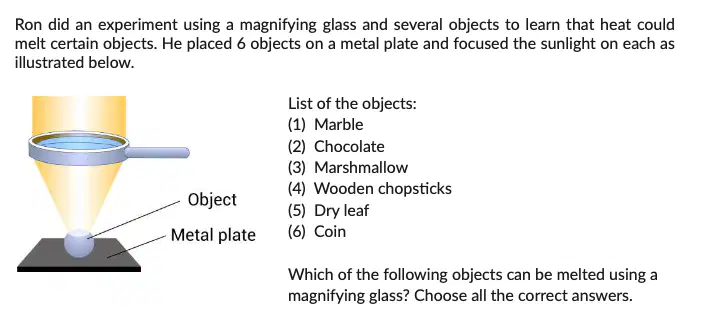
(1) and (6)
(2) and (3)
(4) and (5)
(2) and (5)
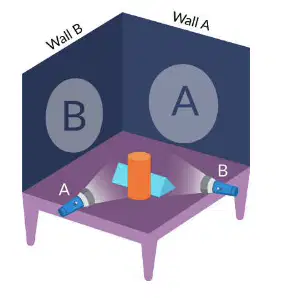
Light falls on cylindrical and prism-shaped blocks from two different positions A and B. Which of the following options correctly shows the shapes of the shadows formed on walls A and B?


Our body has five senses that help us gather information about our surrounding. One of our five senses is ear. Which of the followings is an incorrect option for the functions of the ear?
Catching sound waves.
Maintaining body balance.
Keeping right body’s temperature.
Sahara Desert is an example of environment which is located in Africa. It is known as one of the hottest places on the Earth. Which of the following options does not describe the environmental condition in Sahara Desert?
It has dry and thin soil.
It has big temperature difference at day and nighttime.
It does not have any plant grows on its soil.
This is an illustration of Eddy standing in front of a flat mirror. There were his cat and toy behind the mirror. When he looked at the mirror, what were the objects did he see in the mirror?
Only himself
Himself, light bulb, and cupboard
Himself, light bulb, cupboard, cat, and toy
Eddy saw his image closely in the flat mirror as shown in the picture below. What was the result on the mirror when he turned his head to the left side?
His head in the mirror also turned left and looked the same.
His head in the mirror turned right and looked the same.
His head in the mirror turned right and looked smaller.
Below is the illustration of a doll when it is placed in front of the flashlight. The shadow formation of the doll will be different based on its distance from the flashlight. Which
flashlight position will create the tiniest shadow?
1
2
3
Before the analog watch was invented, people used a device called sundial for telling the time by the movement of the Sun. It has a pointer that will create a shadow based on the position of the Sun at that time. From the picture below, what time is shown by the sundial?
8 a.m.
1 p.m.
8 p.m.
Lenses are used in a variety of technical and scientific tools. Each of them has a specific function. Which of the following options is the tool to see a very small object?
Kenzo did an experiment with 3 different conditions of magnifying glasses to collect the sunlight and try to burn the black paper as illustrated below. Based on the three conditions as shown below, which of the following options did burn the black paper the fastest?
a
b
c
Long before the analog and digital clocks were founded, people used a sundial in which the sunlight was needed to find out the time. Sundials are very useful, especially during the day. One of the ways to create a simple sundial is by using a stick that is plugged into a
surface and using stones to mark the shadow movement.
Which explanation is the most appropriate to
illustrate why the shadow on the sundial moves ?
Shadow movement occurs because the Sun rotates.
Shadow movement occurs because the Sun revolves.
Shadow movement occurs because the Earth
revolves.
Shadow movement occurs because the Earth rotates.
The Eskimos in the Arctic Archipelago have already known how to adapt well with their environment since a long time ago. The materials and construction of their houses are special. They live temporarily in an igloo during the hunting time in winter when the temperature is around -50°C. Instead of feeling cold, the Eskimos feel warm if they stay inside the igloo.
What is the correct reason behind that phenomenon?
Snow is a good insulator that prevents the heat release from the igloo to the outside.
Snow is a good conductor that receives the heat easily from human body.
The dome shape is good for the heat release.
Igloo does not have any ventilation to prevent leaking of the heat to the air outside.
Without using a compass, we still can find a direction
from the shadow. Which of the following positions of
the shadow indicates the one in the afternoon (p.m.)?
1
2
3
A
B
C
A
B
C
A
B
C
Kate was doing an experiment using three different types of mirrors, which are plane, convex, and concave mirrors. Each mirror shows different image reflection. When Kate uses plane mirror in her bathroom, her reflection becomes upright, the same size, and reversed direction.
When Kate uses her mother’s magnifying mirror which is concave mirror, her reflection becomes bigger and upright. When Kate uses rear-view mirror from her father’s car which is convex mirror, how will her reflection look like?
Upright, the same size, has a wide field of view
Upside-down, bigger, has a narrow field of view
Upright, smaller, has a wide field of view
A. 1 - 2 – 3
B. 2 - 3 - 4
C. 3 - 5 - 6
One of the digestive organs in human body is mouth. It is the first organ where the digestion process starts. Which of the following options is not correct about the function of mouth?
To taste food with the taste sensor
To digest food with saliva
To chew food into smaller size
A
B
C
A
B
C
Evaporation is a process when liquid changes into gas. Evaporation does not always need a high temperature to occur. Which one of the following options is the example of evaporation in our daily life?
Water in the freezer
Water droplets on leaves in the morning
Sea water at noon

An electromagnet is a magnetic field produced by electric current. Different from a permanent magnet, the strength of an electromagnet can be changed easily.
Based on the illustrations above, which one has the most powerful electricity?
b
c
d
e

How many times more powerful (d) compared to (a)?
2 times
5 times
4 times
3 times
A solar eclipse is an astronomical phenomenon when the sky gets dark because the sunlight cannot reach the Earth. It can be a total eclipse, partial eclipse, or annual eclipse. A solar eclipse occurs when the (A) - (B) - (C) are in one parallel line. It is a rare phenomenon and lasts only in several minutes. Which one of the following options is the correct answer to replace (A), (B), and (C)?
(A): Sun, (B): Earth, (C): Moon
(A): Earth, (B): Asteroid, (C): Sun
(A): Sun, (B): Moon, (C): Earth
(A): Moon, (B): Sun, (C): Earth
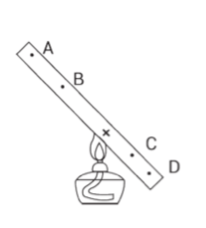
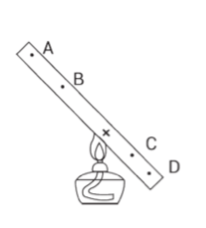
There are three kinds of heat movements; two of them are conduction and convection. Conduction is a heat transfer via direct molecular collision in solids whereas convection is a heat transfer in liquids.
The illustration above shows that an iron bar is heated with bunsen. If the position of the fire is at (x), in which point heat will transfer the last?
A
B
C
D
If we put bunsen at the bottom of a beaker filled with water as illustrated below, in which point will heat transfer the last?
A
B
C
D
The human reflex system is an automatic and rapid response of humans to a stimulus that minimizes any damage to the body from potentially harmful conditions. Which one of the following options is not the example of human reflex movement?
Changing the size of pupil in the eyes when very bright light is coming.
Clapping hands after watching performances.
Removing hand instantly from a sharp object.
Blinking eyes when an insect comes very close to the eyes.
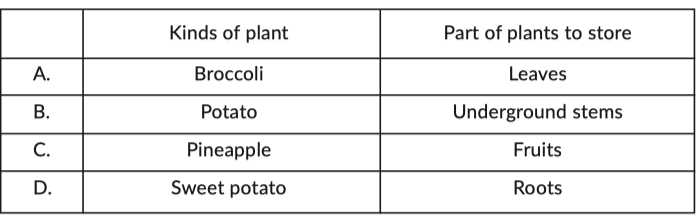
Excess food is known as starch which is stored in various parts of the plants such as leaves, stems, roots, flowers, fruits, and seeds. Below are the examples of kinds of plants and places to store the food. Which one of the following options is false?
A
B
C
D
Humans are an important part of the ecosystem that always interacts with other organisms to survive. One of the organisms that support the human’s life is microorganisms. The following options are the statements on how microorganisms support a human’s life. Which description is not correct?
Microorganisms help decomposing dead bodies which are buried in the soil so the plants can absorb the nutrients from the soil.
Microorganisms enter plants to produce elements of the nutrients needed by the plants so they can eventually be consumed by humans.
Some microorganisms are added to the dough before making bread which act as an preservative agent to create carbon dioxide.
Microorganisms produce nutrients that are used by plants to grow and eventually be consumed by humans.
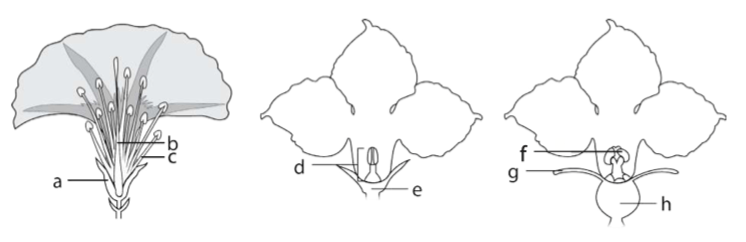
The illustrations below show the sections of flowers of morning glory and pumpkin.
Among d to h, which one(s) has the same function as c?
d and f
d
f
f
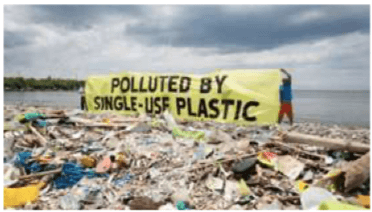
Environmental issues are closely related to humans’ life, therefore we need to maintain a clean living lifestyle. Cleanliness and preservation of nature directly affect our lives. But in this century, alongside with the increase of human population in the world, the level of consumption also increases as well as the amount of plastic waste. This case becomes one of the serious environmental problems that occur in many countries.
Below are the reasons why there are many plastic wastes. Which one of the following options is not true?
Plastic is a material that is difficult to be decomposed by microorganisms; it takes 10-1000 years for plastic wastes to be decomposed.
People like the use of plastic because it is convenient, thus it is difficult to stop plastic usage.
The absence of substitutes for plastic makes it difficult to replace, thus it causes the accumulation of plastic wastes everywhere.
Plastic is one of the materials that is easily processed by microorganisms, that is why it is safe to use in daily life.
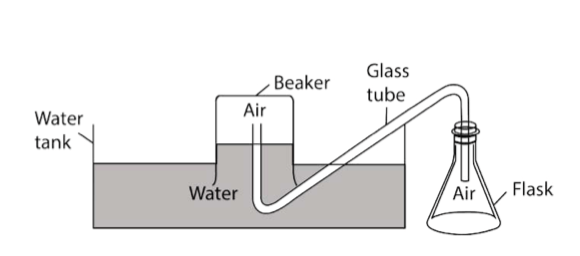
Preeda used the experiment kits illustrated above to see how water level changes inside the beaker. She put the glass tube inside the beaker and did 2 experiments mentioned in question 11 and 12.
When Preeda cools the beaker, what will happen to the water level inside the beaker?
The water level will increase.
The water level will decrease.
The water level will not change.
There is a possibility of both increase and decrease in water level.
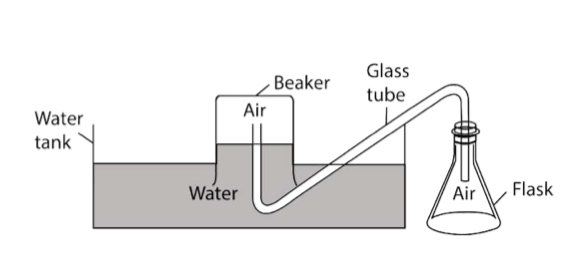
When Preeda warms both the beaker and flask at the same time, what will happen to the water level inside the beaker?
There is a possibility of both increase and decrease in water level.
The water level will not change.
The water level will not change.
The water level will decrease.
Electricity is very important in our daily activities. Below are the kinds of power sources to generate electricity.
(1) Coal
(2) Hydroelectricity
(3) Fossil fuel
(4) Solar energy
Which one is the correct order of the power sources that give hazardous effect for the environment from the biggest to the smallest one?
1-2-3-4
3-4-2-1
3-1-4-3
1-3-2-4
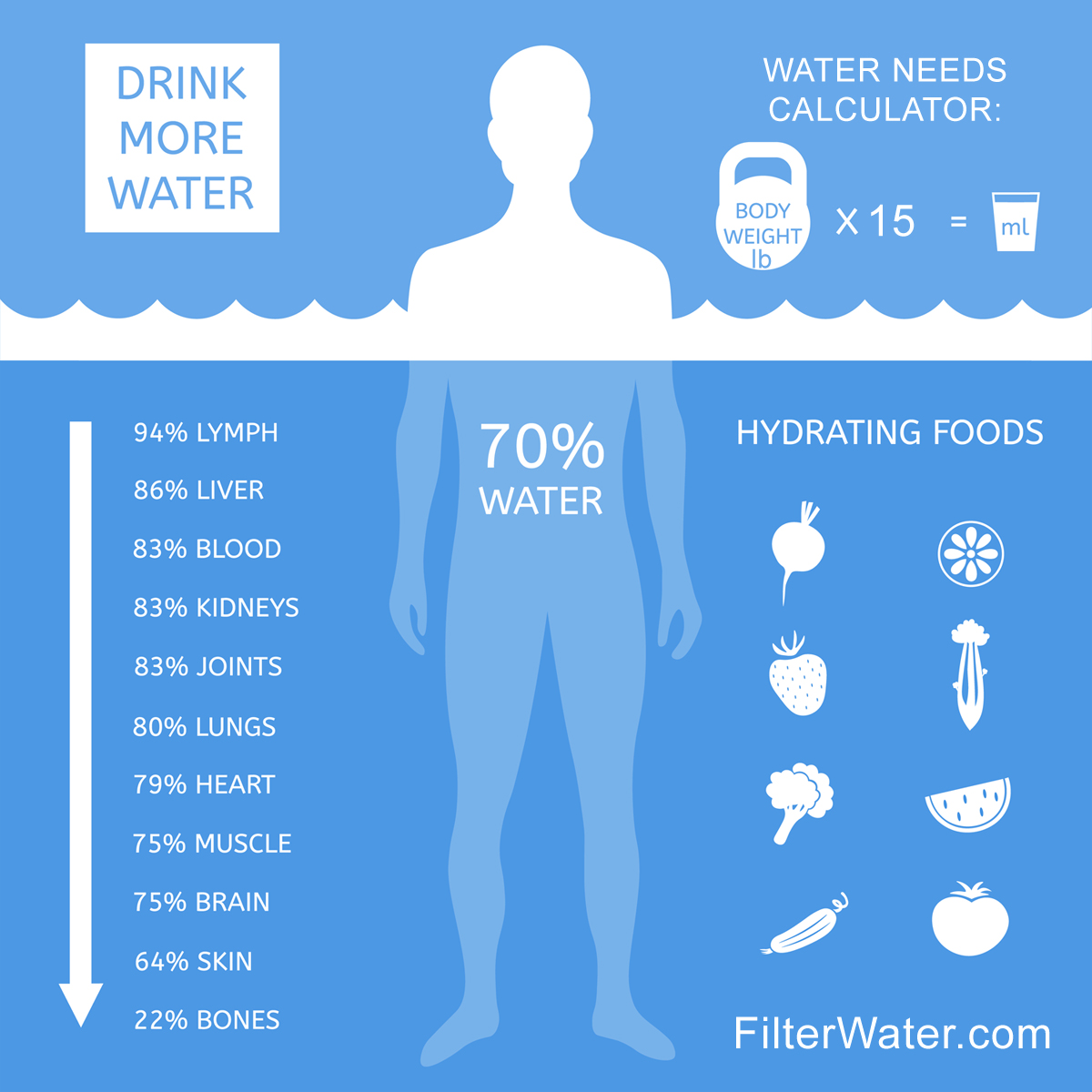
Water is very essential for living things to do almost all of biological processes. Plants use water to do photosynthesis whereas animals and humans use water to drink and to grow crops. The average adult’s body is composed of about 60%-70% of water. In human body, water helps carrying many things needed for the metabolism process. Which one of the following options does water not carry in our body?
Protein
Waste minerals
Fat
Carbohydrate
Every object in space has a different way to look shining but only stars emit their own rays.
One of the space objects, meteor, looks shining because of the friction with the Earth’s atmosphere. Another space object, comet, is composed of substances like ice and metals. Which one of the following options is the correct reason why comet looks shining from the Earth?
It is because it absorbs the rays from the Sun.
It is because it reflects the rays from the Sun.
It is because it refracts the rays from the Sun.
It is because it bends the rays from the Sun.
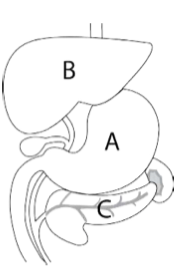
Organ B is the biggest internal organ located in the upper right of the stomach and is protected by the rib. The organ can regenerate itself after injury, therefore healthy people can donor some parts of their organ to patients in need.
The following explanations are about the functions of organ B. Choose the option which has all the incorrect answers.
i. Store excess carbohydrate
ii. Produce digestive enzymes
iii. Convert ammonia to urea
iv. Absorb nutrients and minerals from food
v. Decompose alcohol
vi. Produce digestive juice to break down sugar
iii and iv
iii and v
iv and vi
i and ii
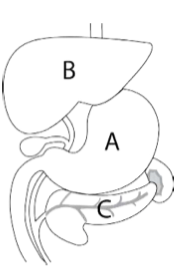
Organ C extends horizontally to the back of our stomach; it has an essential metabolism function to produce insulin hormone. This organ also produces digestive juice to convert the nutrition from food into energy. Which one of the following nutrition cannot be digested by organ C?
Vitamin
Protein
Carbohydrate
Fat
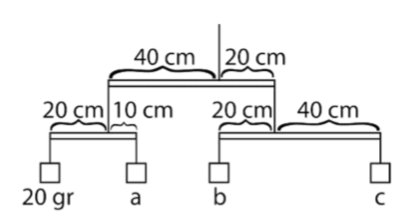
A simple balance scale was made using wooden dowel, strings, and weights as illustrated below. Assume that the wooden dowel and strings have no weight. Which one of the following options has all the correct weights to be hung at a, b, and c?
a: 40 g, b: 40 g, c: 80 g
a: 10 g, b: 80 g, c: 40 g
a: 10 g, b: 20 g, c: 40 g
a: 40 g, b: 80 g, c: 40 g
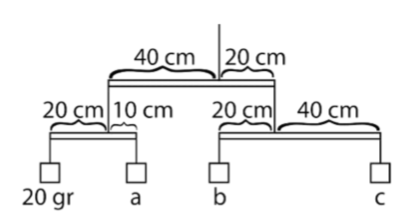
In the Physics class, Sally will do experiment using a U-shaped water tank. The left and right sides of the tank have different cross-sectional areas as shown in the illustration below. The left side is 15 cm 2 with 150 g wooden toy put on piston A. If the right side of the tank has twice cross-sectional area as the left one, what is the correct weight of the toy that should be put on piston B to make the height of the water surface balanced? Assume that the pistons have no weight.
180 g
165 g
300 g
315 g
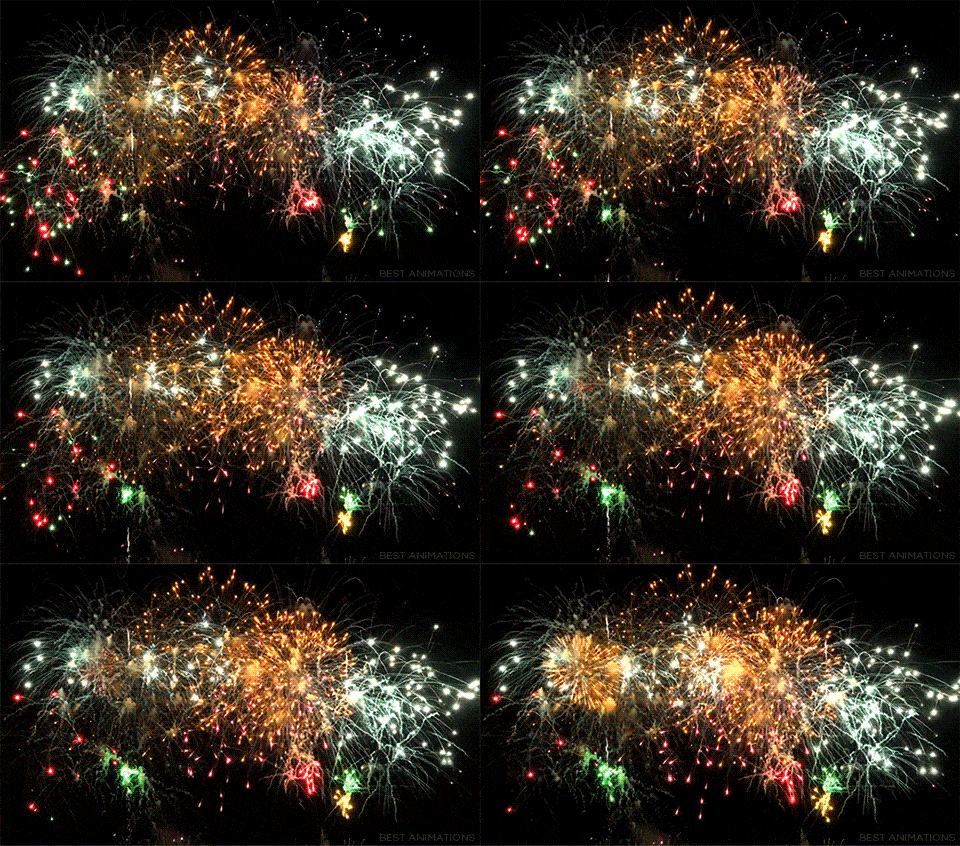
Fireworks are associated with joyous celebration. We love it because it is so beautiful and colorful. An exploding firework is actually a chemical reaction which is happening rapidly. How do fireworks produce many different colors?
Fireworks are made of iron powder that reacts with oxygen.
Fireworks are made of various metal salts that react with oxygen.
There are many metal powders inside the fireworks tubes which are very explosive that react with hydrogen.
The heavy metals are incorporated with carbon dioxide to produce many colors.
1. Plants are essential components for ecosystem because they supply almost all energy or food for other organisms. They are able to directly utilize the sunlight to survive. Through a process called photosynthesis, the light from the Sun is converted into energy. Besides photosynthesis, plants also do respiration. They breathe by using one of the gas and produce another gas. What kind of gas that plants produce during day time and night time?
A. Day time: Carbon Dioxide
Night time: Carbon Dioxide
B. Day time: Oxygen
Night time: Carbon Dioxide
C. Day time: Carbon Dioxide
Nighttime: Oxygen
D. Day time: Oxygen
Nighttime: Oxygen
2. The following description is about human body parts. Read and find which part of the human body is described below.
..... help our body to chew the food and then move it through the digestive system. They also keep our heart beats, and make the chest rise and fall during breathing. Moreover, when we talk and smile, they also help us to communicate.
bones
mouth
muscles
esophagus

3. Butterfly is one of insects which has a particular life cycle called metamorphosis. To become a butterfly, it has to go through 4 stages; egg, larva, pupa, and butterfly. Each stage has different characteristics. Which of the following options is correct between the description and the stage?
i. In this stage, they need to eat a lot and start growing.
ii. In this stage, they need to reproduce and lay their eggs on some leaves.
i. pupa
ii. larva
i. larva
ii. butterfly
i. egg
ii. pupa
i. butterfly
ii. egg
4. There are many kinds of materials we use in our daily life. For example; bed in our bedroom is made from wood, cabinet in our living room is made from wood and also glass. Below are the list of things and their original source of materials. Which option has all the correct answer?
I. sandals-wood
II. coat wool
III. body lotion wax
IV. button plastic
V. coin ceramic
VI. window glass
VII. paper rice straw
I, II, III, and IV
I, III, V, and VI
II, IV, VI and VII
II, III, V, and VI
5. Metamorphosis is a transformation process of an animal from birth to become an adult that happens through several steps. The animals that undergo metamorphosis have a distinct difference in appearance between their young and adult. Which one of the following animals does not experience metamorphosis?
salamander
lizard
butterfly
frog

