
 Worksheets
FSKS 123: Chapter 16 (Waves)
Total questions: 10
Worksheet time: 41mins
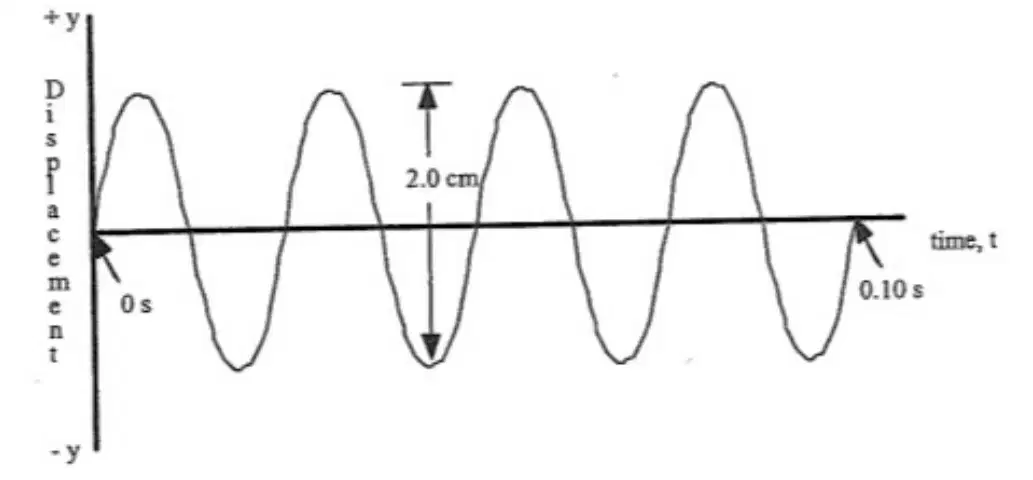
The distance between 4 peaks is 0.7 m. The wavelength of the wave is (a) m. The period of the wave is (b) s. The frequency of the wave is (c) Hz. The amplitude of the wave is (d) cm. The speed of the wave is (e) m/s
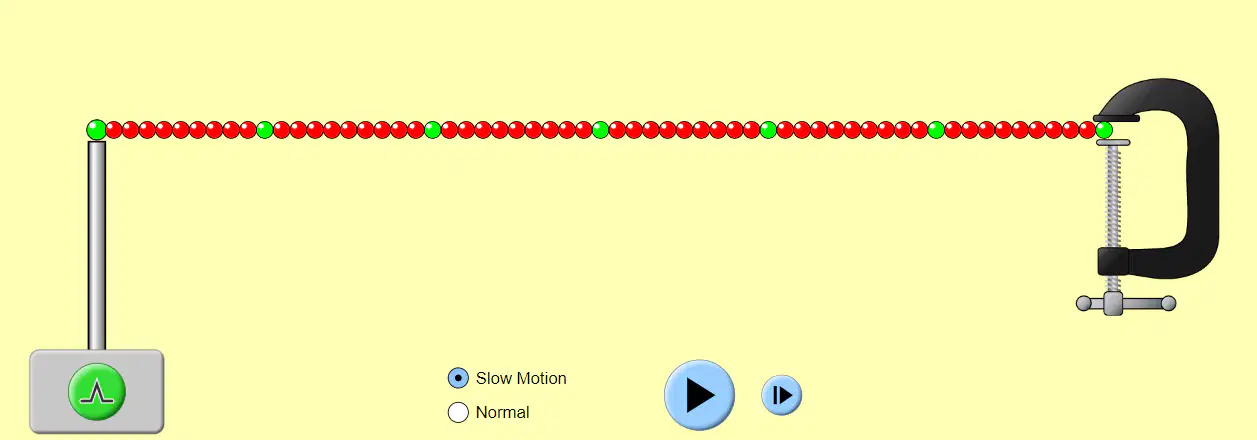
A transverse wave on a string has an amplitude 3A.
A tiny spot on the string is colored Green. As one cycle of the wave passes by, what is the total distance traveled by the green spot?
3 A
6 A
31 A
12 A
As a wave moves through a medium at a speed v, the particles of the medium move in simple harmonic motion about their undisturbed positions.
When the amplitude of the wave triples, the wave speed v ______________.
becomes 3 times bigger
stays the same
becomes one third (1/3)
becomes 9 times bigger
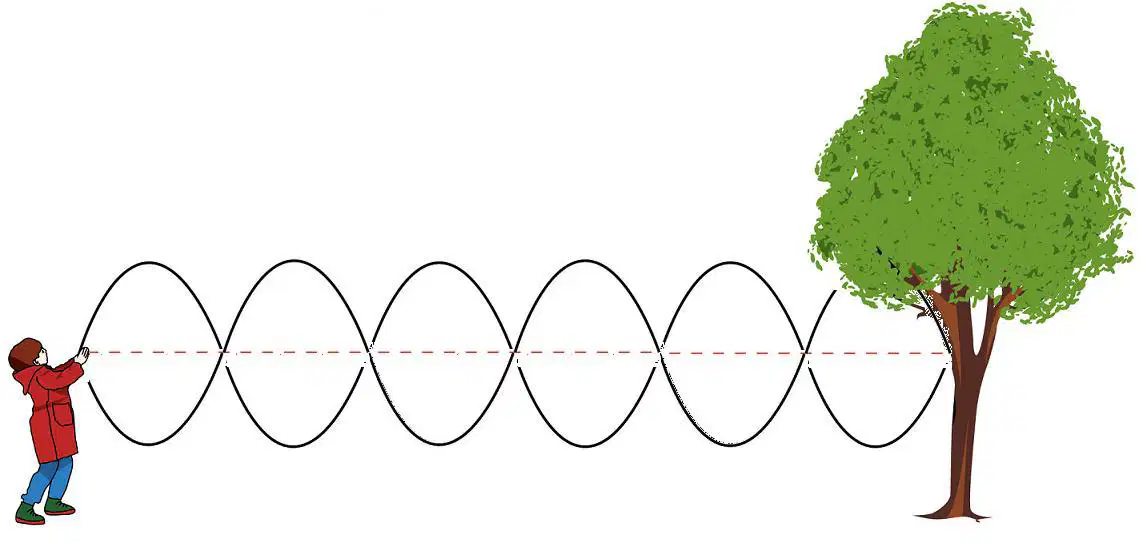
The speed of a wave on a string increases when you increase the (a) of the rope, but wave speed decreases when you increase the (b) of the rope

At a distance of 4.5 m from a loudspeaker, the sound intensity is 4.0×10⁻²W/m . Assuming that the loudspeaker radiates sound uniformly in all directions, find the total power radiated by the loudspeaker
10.18 W
1.57 × 10⁻⁴ W
2.26 W
6361.73 W
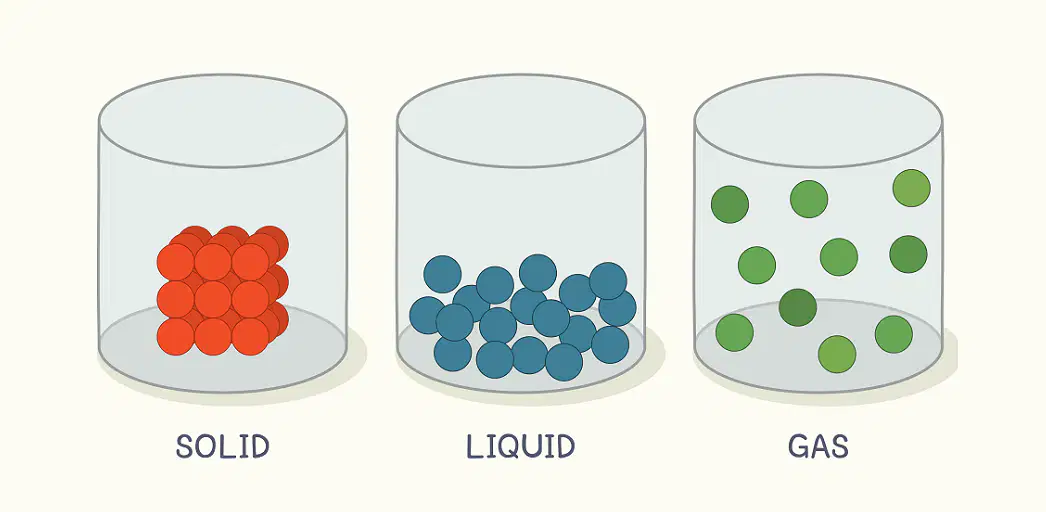
v=ρ γ kT
v=ρ Bad
v=ρ Y
Waves travel slowest here
Waves travel with intermediate speed
Nice for breathing
Lekker for drinking
Yummy for eating
Waves travel fastest here

At a certain distance from a sound source, the intensity level is 70 dB and a frequency of 750 Hz. What is the intensity of the sound in m2W ?
The threshold intensity is I0 =1 × 10⁻¹² W.m−2
1.0 ×10⁻⁵ m2W
2.0 ×10⁻⁶ m2W
5.0 ×10⁻⁷ m2W
1.0 ×10⁻³ m2W

When I double the distance between me and the sound of my girlfriend complaining, the sound intensity I becomes
2I
2I
4I
4I
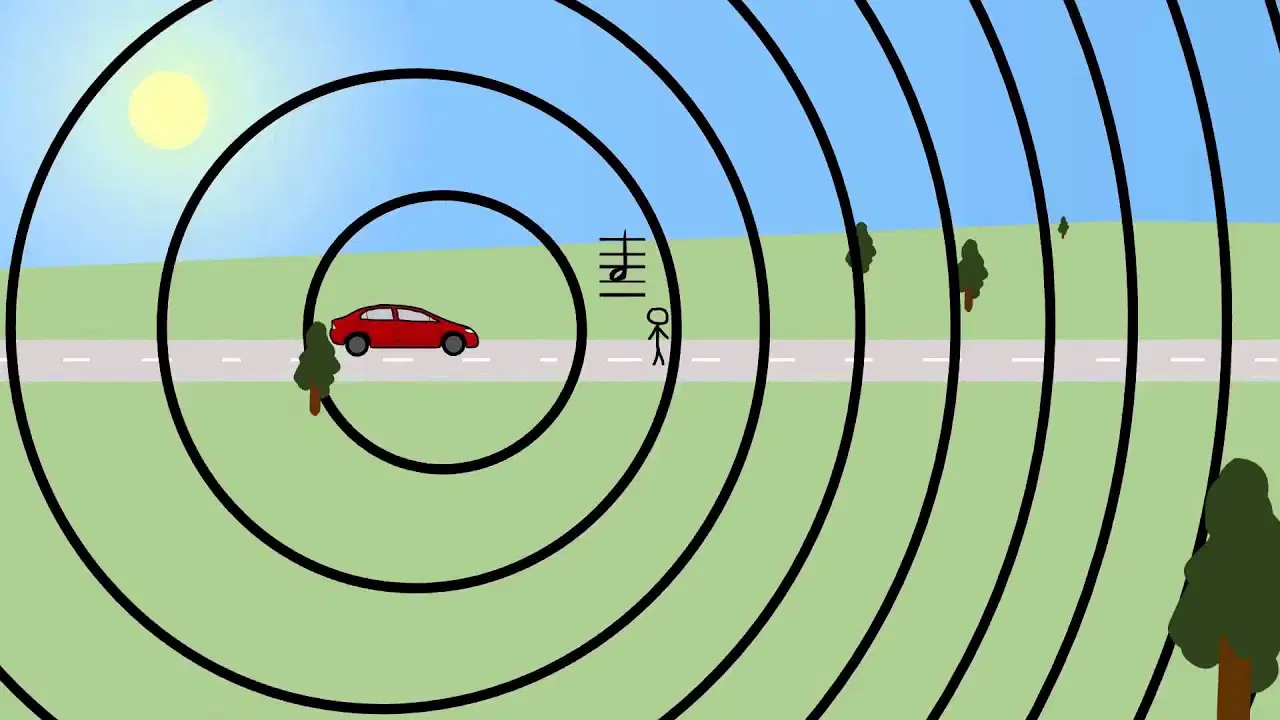
Match the form of the doppler effect equation with the scenario described (CHECK FORMULA SHEET)
Source approaching stationary observer
fo = fs (v−vsv)
Source moving away from stationary observer
fo = fs (v+vsv)
Source and observer moving away from each other
fo = fs (v+vsv−vo)
Source and observer moving towards each other
fo = fs (v−vsv+vo)
Source and observer stationary
fo=fs

A blue car travels down the highway at a speed of 60km/h. The car's horn makes a sound at a frequency of 660 Hz.
A red passenger car traveling at 44 km/h is on the other side of the highway.
What is the frequency of the horn heard by a passenger in the red car?
489 Hz
607 Hz
718 Hz
482 Hz

