
 Worksheets
Biology Final Review
Total questions: 100
Worksheet time: 1hrs 23mins
Cells that contain a nucleus and other membrane bound organelles are called:
Prokaryotic
Eukaryotic
Simple
Bacteria
Eukaryotic cells all have MITOCHONDRIA. What is the function?
To create proteins for the cell
To clean out cell waste
To generate energy from glucose
To store DNA
A type of cell has a nucleus, lysosomes, cell membrane & chloroplast. The type of cell is:
Animal Cell
Plant Cell
Bacteria
All of the above
None of the Above
What cell part is responsible for the conversion of sunlight and water into glucose (photosynthesis)?
Lysosome
Central Vacuole
Endoplasmic Reticulum
Chloroplast
Select all cell organelles that are found ONLY in plant cells.
Cell Wall
Central Vacuole
Cell Membrane
Chloroplast
Golgi Apparatus
A cell has a cell wall, ribosomes, but NO nucleus. What type of cell is it?
Plant Cell
Bacteria Cell
Animal Cell
What makes up a nucleotide?
Sugar
Polymer
Nitrogen Base
Polypeptide
Phosphate
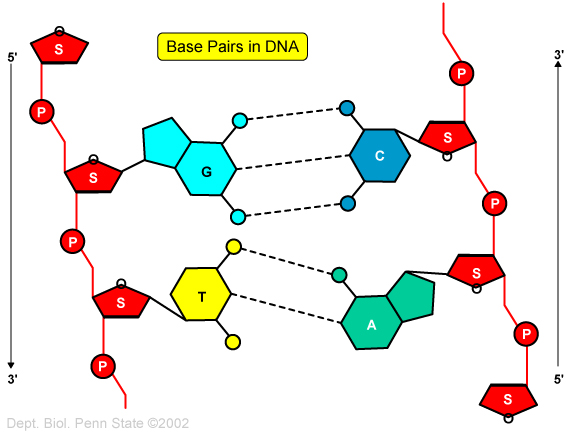
What kind of bonds hold nitrogen bases together?
Polymer Bonds
Hydrogen Bonds
Ionic Bonds
Peptide Bonds
Which nitrogen base pairs up with Thymine in a DNA molecule?
Guanine
Adenine
Cytosine
Adrenaline
What is the complementary strand of the DNA sequence ATA GCC AGC AAG? (Include spaces)
(a)
Which nitrogen base in found only in mRNA?
Thymine
Lysine
Uracil
Cytosine
RNA and DNA are both made up of building blocks called...
Cells
Proteins
Nucleotides
Atoms
Every 3 nucleotides codes for an
Codon
Amino Acid
Protein
Polypeptide
The building blocks of proteins are...
(a)

What was the population of Woodland in 2000?
*
800
1,000
1,200
1,400
Sodium and potassium are necessary electrolytes. As a result, the human body uses a great deal of energy keeping these electrolytes in balance. Explain why the body needs to use energy for this process.
ATP is required to release potassium ions outside the cell.
ATP is required to allow entry of sodium ions inside the cell.
ATP is required to allow entry of potassium and sodium ions inside the cell.
ATP is required to move sodium ions against their concentration gradient outside the cell.
A valid inference is
*
always based on evidence.
always free from bias.
always correct.
always agreed upon by many people.
The word helix means spiral. What does this tell you about the structure of DNA, which is a double helix molecule?
The nucleotides of the two strands bond together with spiral bonds.
A double-stranded DNA molecule is composed of two linear strands that run opposite to each other, or anti-parallel, and twist together to resemble a twisted ladder.
DNA is a double helix because it has two strands held together like a spiral staircase.
Nucleotides are spiral-shaped molecules that bond together to form DNA.

This graph above shows the body temperature of an animal in various hours of the day. What can be said about this animal?
The animal keeps its body temperature relatively constant.
The animal is most active during the morning hours.
The animal is more active when its body temperature is above 30°C.
The animal is active at night.

According to the graph, which town grew the fastest?
Smallville
Westfield
Ashenvale
Riverton
In DNA, cytosine always pairs with
guanine
uracil
thymine
adenine
Vestigial structures show
how an ancestor may have lived
how old a fossil is
what the organism is not related to
usefulness in the organism that has it
DNA has
a left handed twist
a single strand
genetic information stored in it
a straight chain structure
DNA is made up of phosphates, sugars, and
proteins
lipids
bases
iodine
Organisms that rely on other organisms for food are called
producers
autotrophs
consumers
saprophytes
All animals
breathe oxygen with lungs
have a 4 chambered heart
are heterotrophic
can reproduce asexually

The amount of energy expected to be transferred from one trophic level to another is ___?
1%
10%
90%
100%

Identify the cellular organelle that the process of photosynthesis occurs in:
mitochondria
chloroplast
nucleus
vacuole

Identify the gas that is an input (reactant) of photosynthesis:
oxygen
Water
carbon dioxide
nitrogen

Identify the cellular organelle that the process of cellular respiration occurs in:
mitochondria
chloroplast
nucleus
golgi

What is the simplest level of organization in the body?
cell
tissue
organ
organ system
Which of the following levels of organization BEST represents the sequence from smallest to largest?
Cell, tissue, organism, organ
Cell, organism, organ, tissue
Cell, tissue, organ, organ system
Cell, organism, tissue, organ system
A gene is_______________________.
located only in sex cells
a whole chromosome
a section of DNA that codes for a trait
not expressed in the dominant form

The diagram shows homologous chromosomes during prophase I of meiosis. Which of the following correctly describes the process being illustrated?
Segregation of sister chromatids
Mutation in which the DNA content of the gene is altered
Crossing over in which alleles are exchanged
Condensation and segregation of alleles

w= non-white hair
If you cross a horse with WW and a horse with ww what fraction of the offspring would be expected to have white hair?



The mutated DNA segment is TTCGCAAG. This is an example of ______ mutation.

Photosynthesis uses CO2 to create
O2
Sugar / glucose
Water
ATP

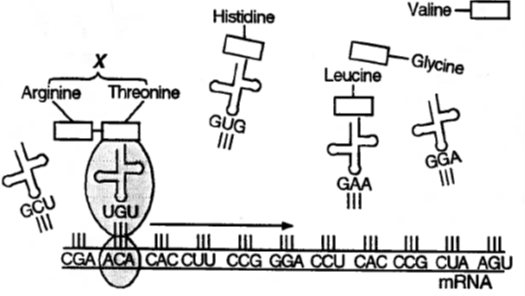
What process is pictured?
Transcription
Translation
DNA replication
Cloning

Why is water moving OUT of the cell?
The cell is surrounded by a hypotonic environment
The cell is surrounded by a hypertonic environment
The cell is hypertonic
Water always moves out of cells
When movement of a solute from high to low concentration occurs through a transport (carrier) protein
Facilitated diffusion
Active transport
Simple diffusion
Exocytosis
Which has more ENERGY?
ATP
ADP
AMP
None of these
Which group of organic molecules speed up chemical reactions and serve as immune defense mechanisms?
proteins
carbohydrates


consumes producers.
carnivore
secondary consumer
tertiary consumer
herbivore or primary consumer
contain a membrane bound nucleus and organelles.
bacteria
prokaryote
eubacteria
eukaryote
programmed cell death
cytokinesis
mitosis
apoptosis
meiosis
Why did Gregor Mendel study pea plants?
Because he loved pea plants
Because he could easily control their fertilization by transferring pollen with a small paintbrush.
Because pea plants were the only thing around
Becuase pea plants are known to have better accuracy at showing genotypes
The differential survival and reproduction of individuals due to differences in phenotype.
Natural selection
evolution
inheritance of traits
genetic variation
Which ones are in the correct order and part of the cell cycle
Interphase
Prophase
Metaphase
Anaphase
Telophase
Cytokinesis
Telophase
Interphase
Prophase
Metaphase
Anaphase
Cytokinesis
Metaphase
Anaphase
Telophase
Interphase
Prophase
Cytokinesis
Metaphase
Telophase
Anaphase
Interphase
Prophase
Cytokinesis
What is a genetic change that allows an organism to survive natural selection in their environment?
adaptation
gradualism
vestigial structure
learned behaviors
Evidence for evolution includes all of the following except...
global warming
similarities in DNA sequences between organisms
fossils
homologous structures
Natural selection acts directly on phenotypes, whereas evolution acts directly on
only male species
genes
phenotypes
populations
Natural selection can best be defined as the...
survival of the biggest organisms in a population.
elimination of the smallest organisms by the biggest organisms.
survival and reproduction of the organisms that cannot migrate.
survival and reproduction of the organisms that are genetically best adapted to the environment
The order of taxonomy classification system from least specific to most specific...
Species - Class - Order - Kingdom - Genus - Phylum - Family
Family - Phylum - Order - Class - Species - Kingdom - Species
Kingdom - Phylum - Class - Order - Family - Genus - Species
Genus - Kingdom - Phylum - Order - Class - Species - Family
What two body systems work together to provide body cells with a constant supply of oxygen while removing carbon dioxide waste products?
nervous and endocrine
reproductive and skeletal
excretory and integumentary
circulatory and respiratory
Commensalistic interactions between species are rare. Which of the following is an example of this type of symbiotic relationship?
barnacles attached to a whale
intestinal worms in a dog
a bee and a buttercup flower
the roots of neighboring cacti


Cancer is defined as the
uncontrolled division of mutated cells
normal division of cells
normal DNA replication
abnormal ATP synthesis
A ________________is a critical point where stop and go signals can regulate the cycle
tumor
checkpoint
growth factor
oncogene
Label the nucleotide
Phosphate
Sugar
Nitrogenous base
(a) + oxygen ⇒ water + (b) + (c)
The (a) are responsible for converting glucose (food) into (b) for the cell.
Cytokinesis is the division of the (a)


Predation

Symbiosis

Commensalism

Parasitism

What are the oldest fossils and why?
B, C- because they are closest to the top
A, B- because they are closest to the bottom
They are all the same age- because they are all found on layer 2
A, B- because they are found closest to the top
Mutation: ATC GCAT
What mutation occurred?
deletion
insertion
silent
transverse

What comparative anatomy structure has similar form/structure but different function?
Analogous Structures
Homologous Structures
Vestigial Structures
An organism's scientific name is based on how it is classified. Which of the following levels of classification determine the name?
kingdom & phylum
class & species
domain & order
genus & species

Which of the two organisms are the most related?
Tiger and Polar Bear
Polar Bear and Mountain Lion
Mountain Lion and Tiger
Zebra and Tiger

Use the dichotomous key to identify Bird X?
Certhidea
Geospiza
Camarhynchus
Platyspiza

What process results in the division of 1 cell into 2 identical daughter cells?
Mitosis
Meiosis
G1
Cross-Over

