
 Worksheets
Growth Mindset Review
Total questions: 37
Worksheet time: 28mins

A growth mindset is the belief that - (Una mentalidad de crecimiento es la creencia de que:)
mistakes mean failure. (los errores significan fracaso.)
skills can't be improved. (las habilidades no se pueden mejorar.)
your intelligence can't change. (tu inteligencia no puede cambiar.
hard work can make you smarter. (el trabajo duro puede hacerte más inteligente.)

Your brain is most like a - (Tu cerebro es más como un -)
muscle that can grow with exercise. (músculo que puede crecer con el ejercicio.)
published book that always stays the same. (libro publicado que siempre permanece igual.
tank of gas that gets used up and needs refilling. (tanque de gasolina que se agota y necesita ser llenado.)
lawn that you need to mow when it gets too long. (césped que debe cortar cuando se alarga demasiado.)

What causes your brain to improve? (¿Qué hace que su cerebro mejore?)
simply making mistakes (simplemente cometiendo errores)
getting the correct answer (obteniendo la respuesta correcta)
making mistakes, and then analyzing them (cometer errores y luego analizarlos)
getting correct answers and not reviewing them (obtener respuestas correctas y no revisarlas)

True or False: Improving your brain is easy. (Verdadero o falso: mejorar tu cerebro es fácil.)
TRUE (Verdadero)
FALSE (falso)

Having a growth mindset helps you - (Tener una mentalidad de crecimiento te ayuda a:)
avoid ever making mistakes. (Evite cometer errores.)
change your brain immediately. (cambia tu cerebro inmediatamente.)
do well on tests without studying. (hacer bien los exámenes sin estudiar.)
become better at things slowly over time. (mejorar en las cosas lentamente con el tiempo.)

When you have a growth mindset, (Cuando tienes una mentalidad de crecimiento,)
you automatically have strong neural connections. (automáticamente tienes fuertes conexiones neuronales.)
you push yourself and learn from your mistakes. (te esfuerzas y aprendes de tus errores.)
people always think that you're smart. (la gente siempre piensa que eres inteligente.)
you always do well on tests. (siempre te va bien en las pruebas.)

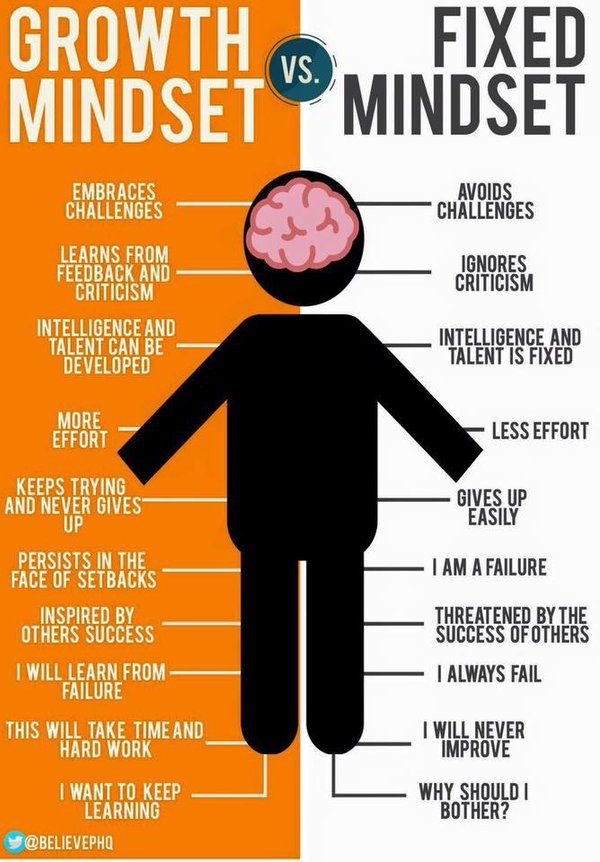
Someone with a growth mindset would - (Alguien con una mentalidad de crecimiento:)
join the robotics club, even though it looks challenging. (únete al club de robótica, aunque parezca un desafío.)
get discouraged after making a mistake on an assignment. (desanimarse después de cometer un error en una tarea.)
believe that a bad grade on a math test means they're not smart. (creen que una mala nota en un examen de matemáticas significa que no son inteligentes.)
avoid trying out for the school play because they're afraid of looking silly. (evite probar para la obra de la escuela porque tienen miedo de parecer tontos.)

What can a growth mindset help with? (¿En qué puede ayudar una mentalidad de crecimiento?)
sports (deportes)
school (escuela)
hobbies (aficiones)
all of the above (todas las anteriores)

A person WITHOUT a growth mindset would most likely ________ when faced with a challenge. (Una persona SIN una mentalidad de crecimiento probablemente ________ cuando se enfrente a un desafío.)
give up (darse por vencido)
ask for help (pedir ayuda)
work harder (trabajo duro)
not be afraid (no tengas miedo)

What should you do when you make a mistake on a math test? (¿Qué debe hacer cuando comete un error en un examen de matemáticas?)
Tell your parents that the test was too hard. (Diles a tus padres que la prueba fue demasiado difícil.)
Understand that you were born bad at math. (Entiende que naciste mal en matemáticas.)
Analyze your mistakes, and adjust how you study. (Analiza tus errores y ajusta tu forma de estudiar.)
Blame the teacher for not teaching you how to do the math correctly. (Culpe al maestro por no enseñarle cómo hacer las matemáticas correctamente.)




Your brain is hard-wired and fixed by the time you become an adult.


I want to learn how to juggle. I'm going to start practicing everyday after school.


__________________________.

_____________________.


You can learn from ______ & ________.

