
 Worksheets
maths & science
Total questions: 150
Worksheet time: 2hrs 53mins
Sum of the zeros of the polynomial x2+7x+10 are
7
-7
10
-10
The zeros of the quadratic polynomial x2 +99x+127 are
Both Positive
Both Negative
One Positive and one negative
Both Equal
A polynomial of degree three is called
Linear Polynomial
Quadratic Polynomial
Cubic Polynomial
None of these
The graph of the linear polynomial will meet x axis at
1 point
2 points
3 points
No Points
A constant polynomial has degree
0
1
2
3
The zero of the polynomial p(x)=2x-1 is
2
1
1/2
-1/2
If one zero of the quadratic polynomial x² + 3x + k is 2, then the value of k is
10
-10
5
-5
If one of the zeroes of the quadratic polynomial (k – 1) x² + kx + 1 is – 3, then the value of k is
−34
32
−32
A quadratic polynomial, whose zeroes are -3 and 4, is
x²- x + 12
x² + x + 12
2x2+2x−24
3x3 – 6x
Every real number is a zero of the zero polynomial
A quadratic polynomial whose zeros are -3 and 4 are
x2-x+12
x2 +x+12
x2/2-x/2-6
2x2+2x-24
A constant polynomial has degree
0
1
2
3
Graph of a quadratic polynomial is a
straight line
circle
parabola
ellipse
If sum of the squares of zeroes of the quadratic polynomial 6x2 + x + k is 25/36, the value of k is:
4
-4
2
-2
What is the degree of this polynomial?
2x4 - 3x5 + x
-3
2
4
5
if 1 is a zero of polynomial p(x)=ax2 -3(a-1)-1, then the value of a is
2
3
1
-2
if 1 is a zero of polynomial p(x)=ax2 -3(a-1)-1, then the value of a is
2
3
1
-2
if 1 is a zero of polynomial p(x)=ax2 -3(a-1)-1, then the value of a is
2
3
1
-2
Sum of the zeros of the polynomial x2+7x+10 are
7
-7
10
-10
A polynomial of degree three is called
Linear Polynomial
Quadratic Polynomial
Cubic Polynomial
None of these
The graph of the linear polynomial will meet x axis at
1 point
2 points
3 points
No Points
A constant polynomial has degree
0
1
2
3
The zero of the polynomial p(x)=2x-1 is
2
1
1/2
-1/2
A quadratic polynomial, whose zeroes are -3 and 4, is
x²- x + 12
x² + x + 12
2x2+2x−24
Graph of a quadratic polynomial is a
straight line
circle
parabola
ellipse
If sum of the squares of zeroes of the quadratic polynomial 6x2 + x + k is 25/36, the value of k is:
4
-4
2
-2
Point (0 , -7) lies______
x-coordinate of a point is also known as _____
Ordinate
Origin
Abscissa
Ordered pair
Point (1 , -1) and (-1 , 1) lies in the same quadrant
What is the mirror image of (3 , 9) considering x-axis as mirror?
(3 , -9)
(9 , 3)
(-9 , -3)
(-3 , -9)


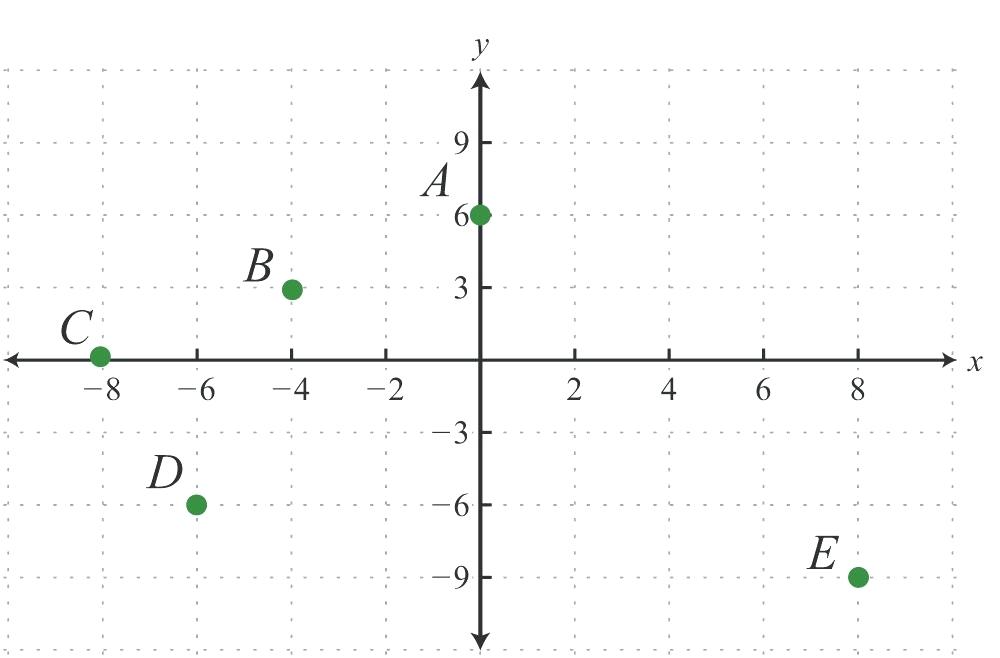
What is the coordinates of point C?
(0,6)
(-4,3)
(-8,0)
(-6,-6)
A point lies on y-axis at a distance of 2 units from the x-axis .Its coordinates are (2,0)
True
False
If (a ,8) lies on y-axis , then what is the value of a?
8
1
0
-8
If abscissa is negative and ordinate is zero it will lie on third quadrant?
True
False

What is the coordinate of Q?
(2 , -2)
(4 ,3)
(-2 ,3)
(-4 , -2)
Point (0,-11) lies
In the third quadrant
On the negative y-axis
On the positive x-axis
On the fourth quadrant
If abscissa is negative and ordinate is zero it will lie on third quadrant?
True
False
Sign of abscissa and ordinate of a point in the fourth quadrant are respectively
+ , -
- , -
- , +
+ , +
Point (0,-11) lies
In the third quadrant
On the negative y-axis
On the positive x-axis
On the fourth quadrant
A point lies on y-axis at a distance of 2 units from the x-axis .Its coordinates are (2,0)
True
False
Ordinate is positive and abscissa is negative then the point belongs to ................. quadrant.
I
II
III
IV

Are the lines shown parallel. perpendicular, or neither?
Parallel
Perpendicular
Neither
The coordinates of origin are _______
(0,1)
(1,0)
(0,0)
(1,1)
The other name of Y coordinate is.........
abscissa
ordinate
Cartesian plane
ordered pair
Which axis runs horizontally (side to side)?
x
y

Lemon juice is ....................... in taste
Sour
Bitter
Salty
Sweet
Which of the following is a Mineral Acid?
Citric Acid
Oxalic Acid
Glycolic Acid
Sulphuric Acid
Fruits such as oranges , lemon etc, contain ........................... Acid
Citric
Lactic
Ascorbic
Acetic
Which one of the following is not a neutral substance ?
Glucose
Sodium Hydroxide
Urea
Sugar
Bases are generally ............................ to touch
Hot
Cold
Soapy
Rough
Bases turn Red litmus to ...................
Green
Yellow
Blue
Black
If the given solution neither changes the colour of the red litmus nor blue litmus paper , it is ..........................
An Acid
A base
Neutral
Colourless
Hydrochloric Acid solution affect .......................... litmus paper
Red
Blue
Both of these
None of these
Bases turn yellow turmeric paper to ...........................
Green
Red
Pink
Orange
Methyl Orange is a
Natural
Human-Made
Pink
Colourless
Which method is recommended to dilute an acid
An acid is added to water
Water added to acid
The Substance which turns Blue litmus red is ......................
Basic
Acidic
Neutral
All of these
Which of the following is a property of an Acid ?
Sour taste
Sweet Taste
Bitter Taste
Salty Taste
Milk of magnesia contains .............................
Sodium
Potassium
Magnesium
Ammonium
Manure is added , when the soil is too ...................................
Acidic
Basic
Neutral
None of these
A drop of solution 'X' is placed on a strip of pH paper. A deep red colour is produced. The solution 'X' is
NaOH
HCl
H2O
Na2CO3
Which of the following base is used in the manufacture of bleaching powder?
Sodium hydroxide
Calcium hydroxide
Potassium hydroxide
Magnesium hydroxide
A colourless and odourless gas is liberated when hydrochloric acid is added to a solution of washing soda. The name of the gas is
Carbon dioxide
Nitrogen dioxide
Sulphur dioxide
Sulphur trioxide
The compounds obtained on heating baking soda are
Sulphur dioxide and sodium carbonate
Sodium bicarbonate, water and carbon dioxide
Sodium carbonate, water and carbon dioxide
Hydrochloric acid and water
What are the properties of acids?
Acids have a salty taste and turn red litmus paper yellow
Acids have a sour taste, turn blue litmus paper red, and react with metals to produce hydrogen gas.
Acids have a bitter taste and turn blue litmus paper green
Acids have a sweet taste and turn red litmus paper blue
How do acids taste and feel?
Sour and can cause a burning sensation
Bitter and slimy
Salty and grainy
Sweet and cooling
What are some common examples of acids?
Citric acid, sulfuric acid, hydrochloric acid, and acetic acid
Sodium hydroxide, potassium hydroxide, calcium hydroxide, and magnesium hydroxide
Lactic acid, nitric acid, carbonic acid, and phosphoric acid
Ammonia, bleach, vinegar, and baking soda
What are the properties of bases?
Bitter taste, slippery feel, and ability to turn red litmus paper blue
No taste, dry texture, and ability to turn blue litmus paper yellow
Sweet taste, slimy texture, and ability to turn red litmus paper green
Sour taste, rough texture, and ability to turn blue litmus paper red
How do bases feel and taste?
Slippery and bitter
Gritty and salty
Rough and sweet
Smooth and sour
What are some common examples of bases?
Bleach, window cleaner, dish soap
Sodium hydroxide, potassium hydroxide, ammonia
Hydrochloric acid, sulfuric acid, nitric acid
Vinegar, lemon juice, orange juice
What happens during a neutralization reaction?
Carbon dioxide and water are formed
Water and a salt are formed
Hydrogen and a base are formed
Oxygen and a metal are formed
What are the products of a neutralization reaction?
carbon dioxide and water
sugar and water
oil and vinegar
salt and water
Give an example of a neutralization reaction.
Vinegar + Baking soda -> Carbon dioxide + Water
Hydrochloric acid + Sodium hydroxide -> Sodium chloride + Water
Sulfuric acid + Potassium hydroxide -> Potassium sulfate + Water
Nitric acid + Calcium hydroxide -> Calcium nitrate + Water
What does the pH scale measure?
temperature
density
acidity or alkalinity
weight
What is the range of the pH scale for acids?
1 to 8
7 to 14
0 to 10
0 to 6.9
What is the range of the pH scale for bases?
1 to 7
0 to 7
7 to 14
14 to 0
What are indicators and how are they used?
Substances that change color in the presence of acids or bases and are used to determine the pH of a solution.
Substances that change color in the presence of metals and are used to determine the conductivity of a solution.
Tools used in mathematics to represent numerical values and are used to calculate the volume of a solution.
Chemicals that emit light when exposed to UV radiation and are used to measure the temperature of a solution.
Give an example of an indicator.
Ruler
Litmus paper
Pencil
Calculator
How do indicators help in determining the nature of a substance?
By producing a foul smell when heated
By emitting a sound when in contact with water
By changing color in the presence of acids or bases
By becoming heavier in the presence of oxygen

What is the meaning of the above hazard warning symbol?
Corrosive
Explosive
Toxic
Radioactive
The pH of pure water
5.6
7.0
8.1
0.0
Acid in our stomach:
Hydrochloric acid
Sulfuric acid
Acetic acid
Carbonic acid
Acid in car battery:
Hydrochloric acid
Sulfuric acid
Acetic acid
Carbonic acid

A substance is found to have the following characteristics:
Very bitter taste
Feels slippery to the touch
Produces OH- ions when dissolved in water
In what category would the substance be classified?
acid
base
enzyme
fatty acid
HNO2
a base
a salt
an acid
an ionic compound
KOH is ...
an acid
a base
a salt
an ionic compound
What is the [H+] if the pH is 4.0?
1.0 x 10⁻¹⁰ M
1.0 x 10⁻⁴ M
1.0 x 10⁻¹⁴ M
1.0 x 10⁻⁷ M
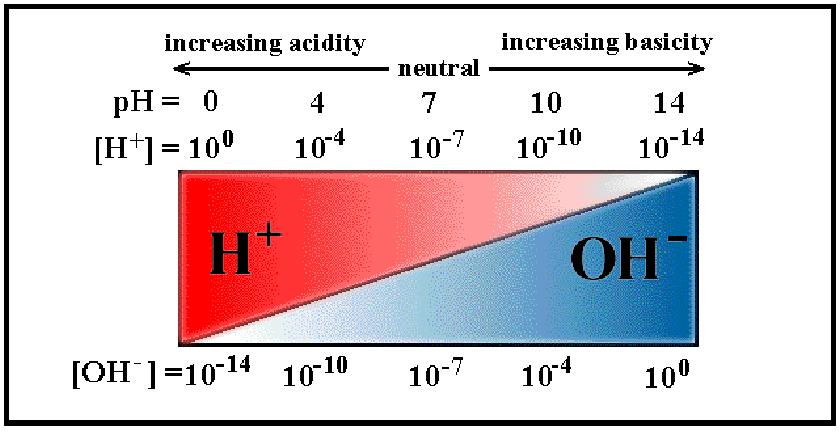
True or false: a neutral solution has equal amounts of H+ and OH-.
True
False
NaOH may be found in drain cleaners and as a component of soaps. Is NaOH an acid or a base?
Acid
Base
Neither (Neutral)

HCl is found in household products, including some toilet bowl cleaners. Is HCl an acid or a base?
Acid
Base
Neither (Neutral)

Is pure water acidic, basic, or neutral?
Acidic
Basic
Neutral
sulfuric acid
HSO3
H2SO3
H2SO4
H3SO4
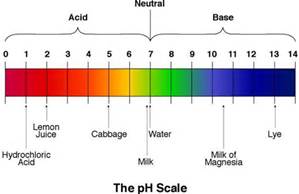
Fruits such as oranges , lemon etc, contain ........................... Acid
Citric
Lactic
Ascorbic
Acetic
Bases are generally ............................ to touch
Hot
Cold
Soapy
Rough
Milk of magnesia contains .............................
Sodium
Potassium
Magnesium
Ammonium
A substance has a pH value of 8. It is most likely to be what?
Strong acid
Weak acid
Strong base
Weak base
Which list of salts are all insoluble in water?
Lead sulfate, copper carbonate, silver chloride
Copper sulfate, sodium carbonate, potassium chloride
Sodium sulfate, ammonium carbonate, magnesium chloride
Potassium sulfate, potassium carbonate, copper chloride
Which of the following values would represent the pH of a strong base?
1
8
7
13
Acid is?
A substance that reacts to metals and carbonates, and has a Ph of below 7.
Often used in drain cleaner.
Something that can only be found in a lab
A bitter tasting substance
A base is
A substance that feels slippery, has a higher Ph than 7, and is often used in drain cleaner.
Has a Ph of below 7 and can react to metal and carbonates
Is only found in a lab
Something water can never be
An indicator is?
A lab manual or guide
Something like litmus paper that can tell you if a substance is acidic or basic
A PS4 game where you pretend to direct traffic
Something only scientists in a lab can use
Do acids and bases conduct electricity?
Only acids conduct electricity
Only bases conduct electricity
Bases and acids conduct electricity
Neither conduct electricity
When you neutralize acid with a base you create
a Salt and water
You can not neutralize acid with a base
You create carbon dioxide
A moderate sized explosion
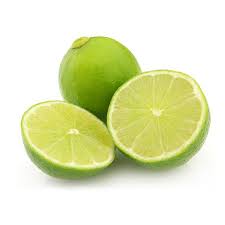
Which of these taste sour?
acids
bases
salts
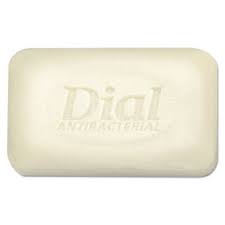
Which of these feel slippery?
bases
acids
salts
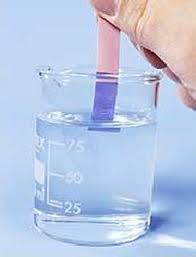
Which of these turn red litmus paper blue?
acids
bases
salts
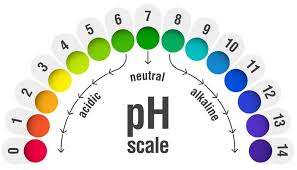
The pH scale is used to determine the strength of
acids and bases
chemical bonds
electrical charges
particles in a solution
Chemicals formed when an acid and a base combine.
salts
noble gases
metalloids
hydroxides

How would you best describe your science class this year?
awesome
very strange
dull

